 flip
flipRoasted Hare with Garos and Imperial Table Spices
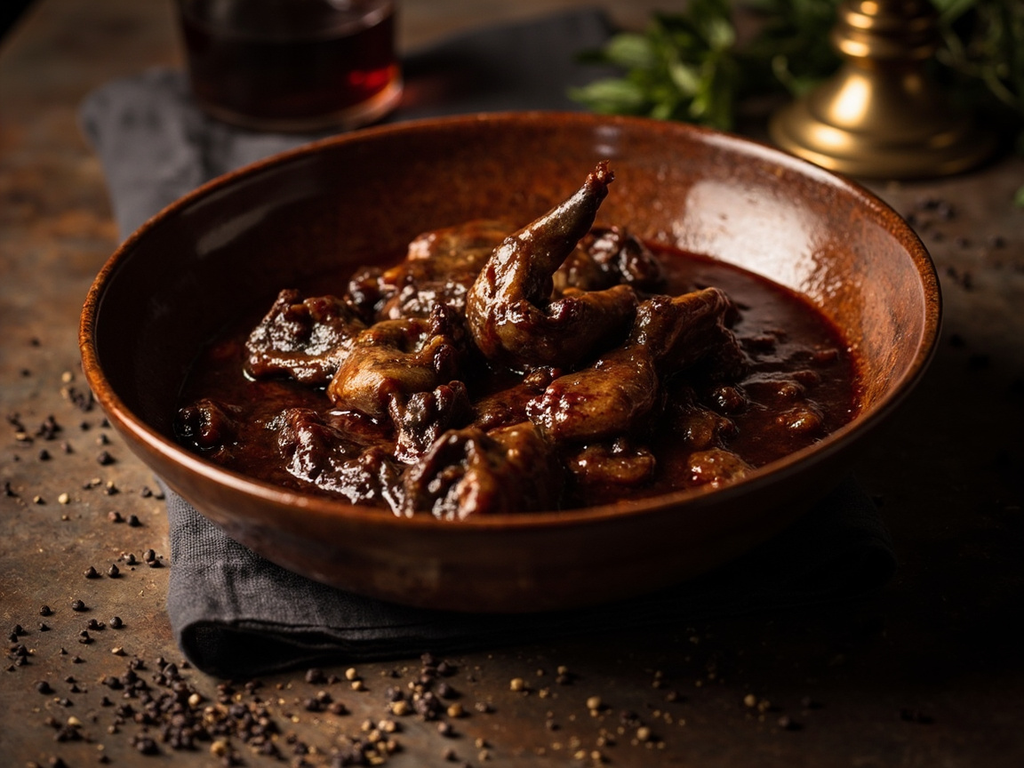
Roasted Hare with Garos and Imperial Table Spices
Why this dish? Andronic III, a warrior prince passionate about hunting and campaigns, hosted in Constantinople and Didymoteicho, his heart-city in Thrace. Game lifted with garos, honey, and pepper — a luxury imported product — was the kind of dish that distinguished an emperor's table from a subject's.
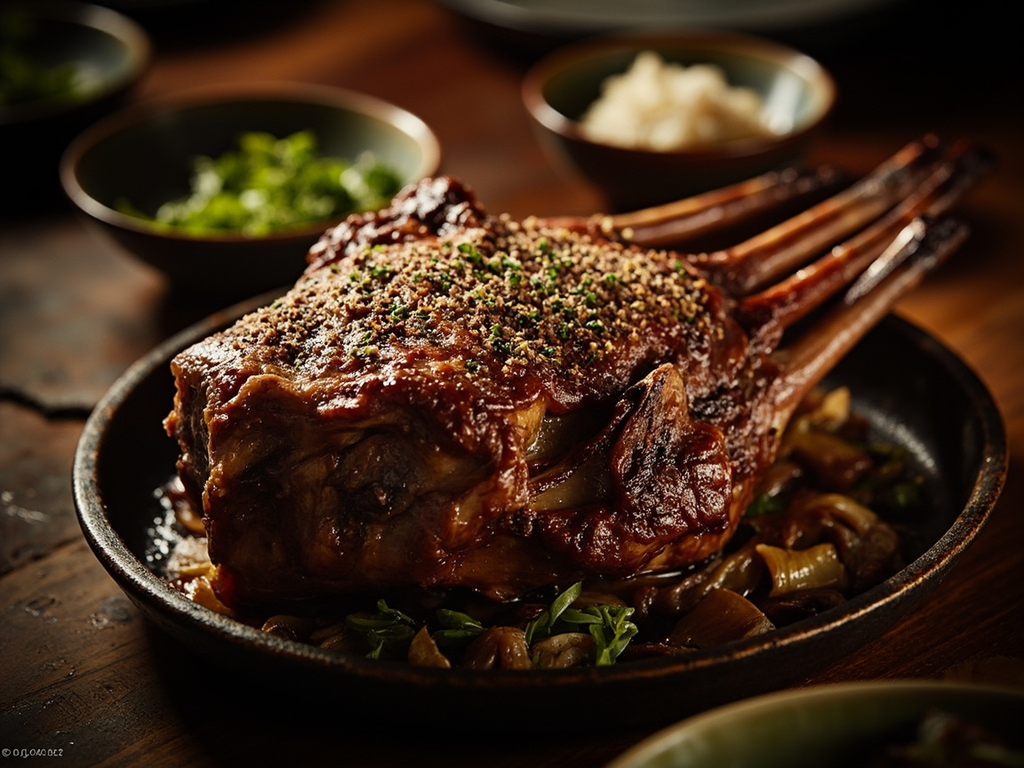
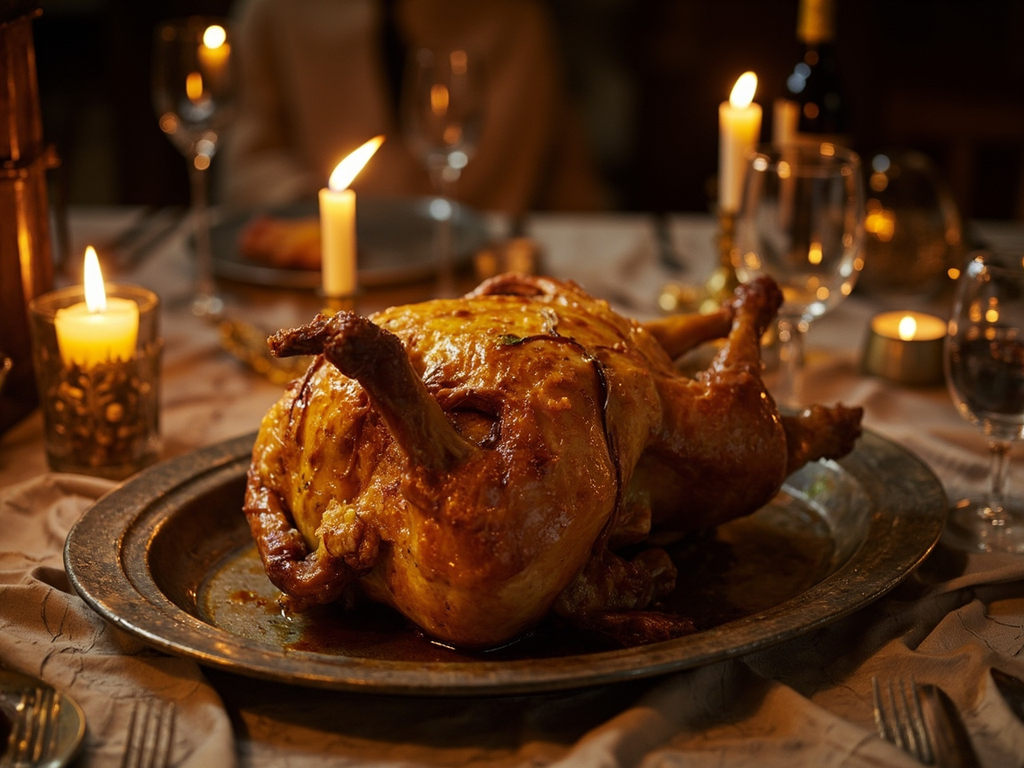
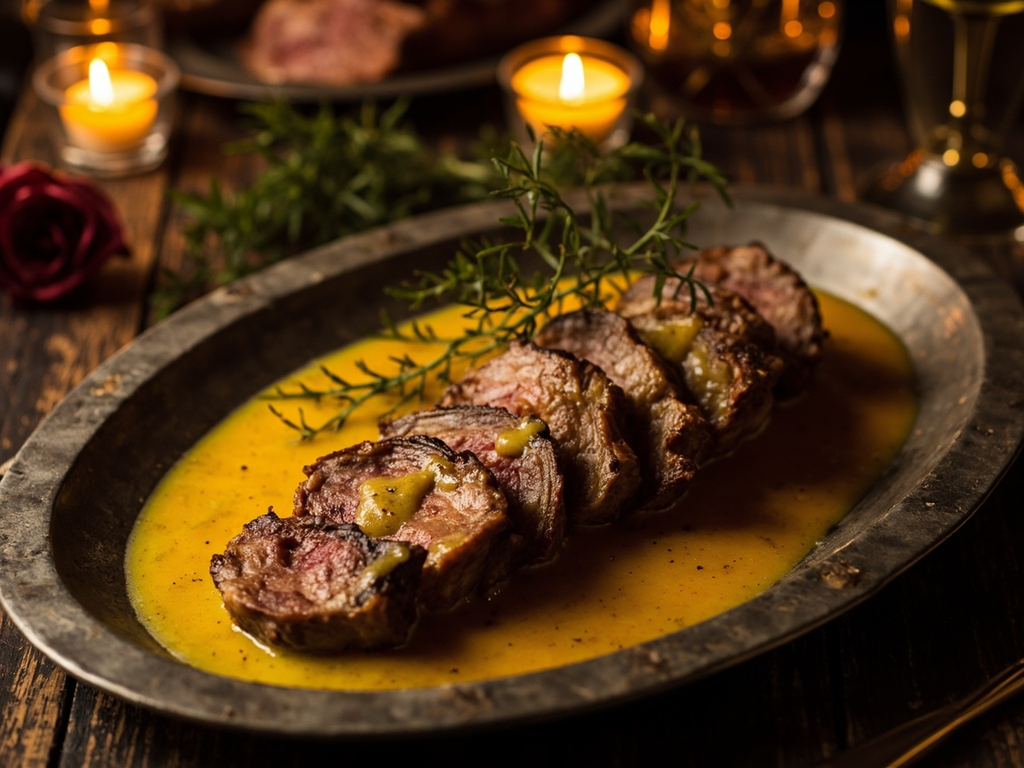
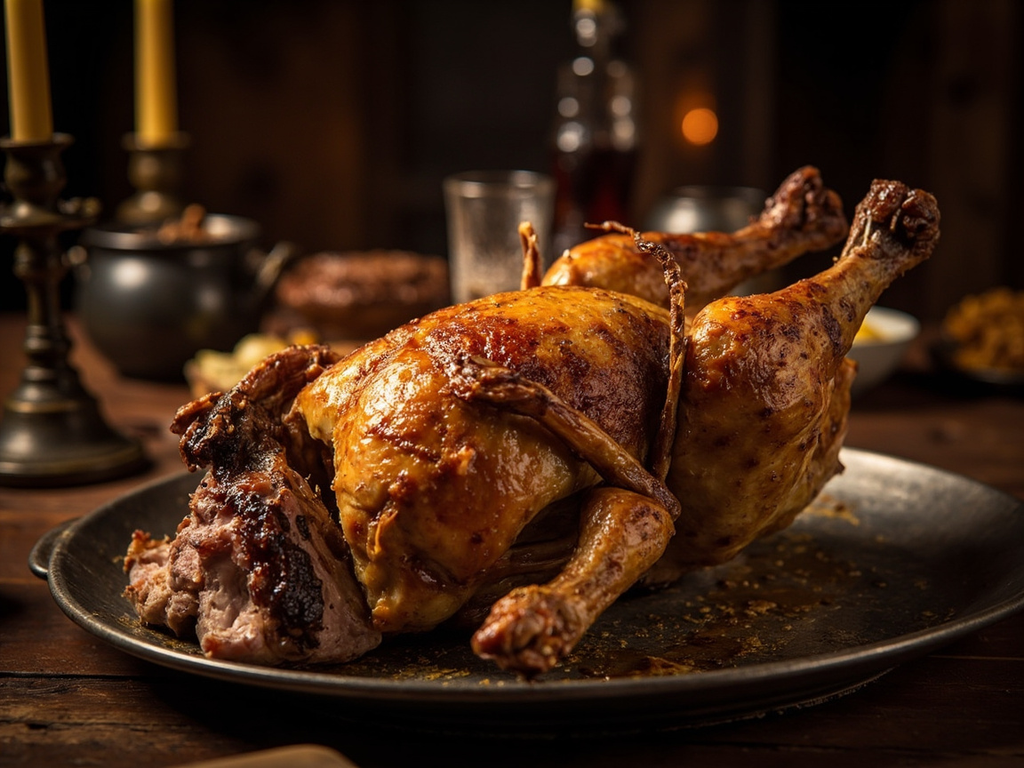
Pieces of hare browned then simmered in a base of wine, garos, and honey, accented with pepper, cumin, and coriander. A dark, salty, deeply umami sauce, where a touch of honey rounds the spices.
When I returned from the hunt or the armies, this is how they dressed the hare before Me and My archons. My cook first seared it in oil, then drowned it in wine and a few drops of garos — that liquid salt of fishes that Rome passed to Us — before throwing in pepper from the East and a finger of honey. Beware of putting too much honey: it should only polish the spices, not cover them. On such meat, an emperor forgets for a moment the Turks pressing Our borders.
- •Hare — one, in pieces (game meat)
- •Garos (fish brine) — a few drops (umami salt signature)
- •Honey — a little (roundness)
- •Wine — enough to cover (braising liquid)
- •Pepper, cumin, coriander — to discretion (precious spices)
- •Olive oil — as needed (for searing)
Roasted Hare with Garos and Imperial Table Spices
Pieces of hare browned then simmered in a base of wine, garos, and honey, accented with pepper, cumin, and coriander. A dark, salty, deeply umami sauce, where a touch of honey rounds the spices.
Why this dish? Andronic III, a warrior prince passionate about hunting and campaigns, hosted in Constantinople and Didymoteicho, his heart-city in Thrace. Game lifted with garos, honey, and pepper — a luxury imported product — was the kind of dish that distinguished an emperor's table from a subject's.
When I returned from the hunt or the armies, this is how they dressed the hare before Me and My archons. My cook first seared it in oil, then drowned it in wine and a few drops of garos — that liquid salt of fishes that Rome passed to Us — before throwing in pepper from the East and a finger of honey. Beware of putting too much honey: it should only polish the spices, not cover them. On such meat, an emperor forgets for a moment the Turks pressing Our borders.
Ingredients (period version)
- Hare — one, in pieces (game meat)
- Garos (fish brine) — a few drops (umami salt signature)
- Honey — a little (roundness)
- Wine — enough to cover (braising liquid)
- Pepper, cumin, coriander — to discretion (precious spices)
- Olive oil — as needed (for searing)
Ingredients
- Rabbit or hare — 1.2 kg in pieces (meat)
- Colatura di alici (or nuoc-mam, or 4 anchovy fillets) — 1 tbsp (modern garos substitute)
- Honey — 1 tbsp (roundness)
- Red wine — 300 ml (braising liquid)
- Black pepper — 1 tsp, cracked (spice)
- Ground cumin and coriander — 1 tsp each (spices)
- Olive oil — 3 tbsp (for searing)
Method
- Sear the meat pieces in olive oil until well browned, then set aside.
- Deglaze the pot with red wine, add colatura, honey, and spices.
- Return the meat, cover, and simmer on low heat for 1 to 1.5 hours until the meat falls off the bone.
- Uncover at the end to reduce the sauce to a dark, glazing jus; adjust salt (colatura is already salty).
How it was made : Byzantine cuisine inherited from Rome the taste for sweet-sour sauces with garum, honey, wine, and spices, long described by Apicius. Pepper, cumin, and coriander, imported via trade routes, marked status: only wealthy tables used them abundantly. Game was a noble dish tied to aristocratic hunting.
The contemporary twist : Serve shredded over polenta… no — over barley semolina or grilled flatbread, with the dark sauce as a mirror, a 'imperial game' revisited.
Andronikos III Palaiologos · Charactorium