 flip
flipCaravan Cumin Roasted Mutton
Caravan Cumin Roasted Mutton
Why this dish? An Lushan was famous for his monstrous gluttony and gigantic feasts, favored by Emperor Xuanzong and Consort Yang Guifei. Cumin-scented roasted mutton, the king dish of the steppe cuisine from which he came, was exactly the kind of centerpiece set on his general's table.
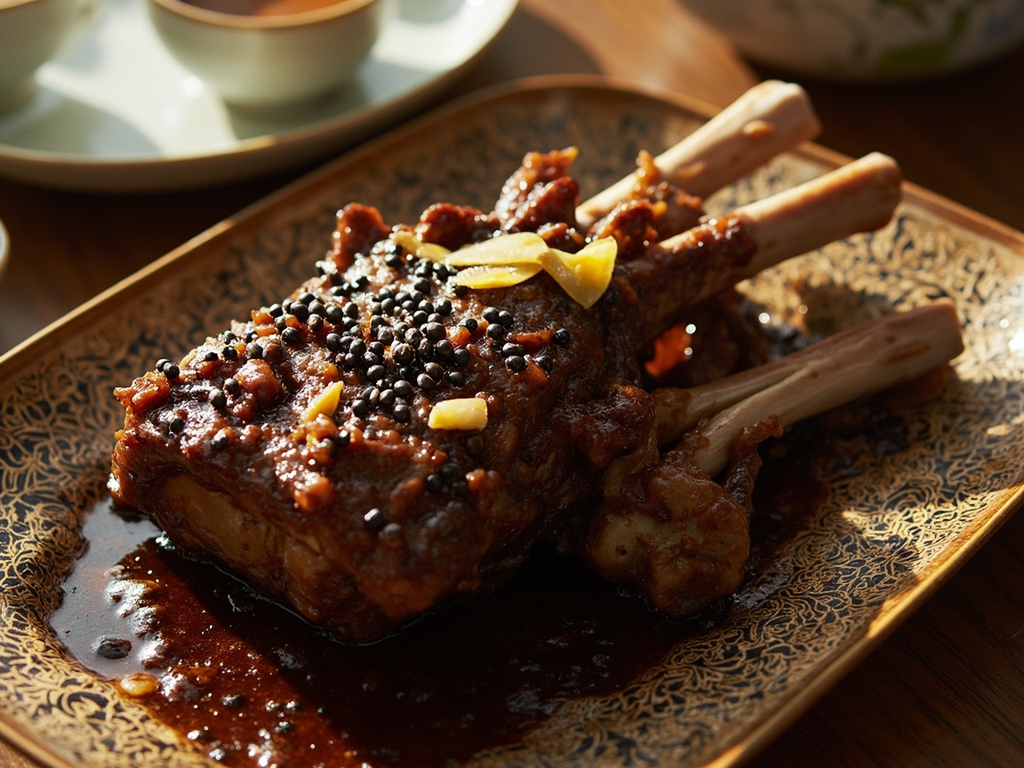
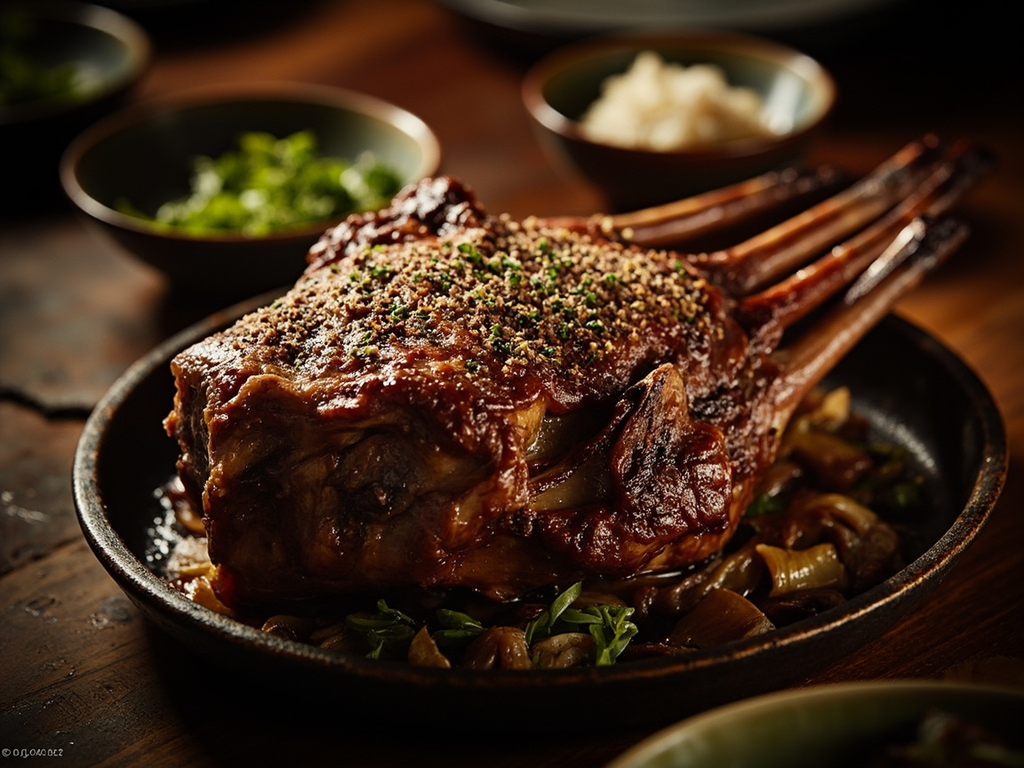
Roasted lamb shoulder, golden and fatty crust, generously rubbed with cumin, salt and onion — the iconic meat of the Western horsemen, served to be carved in the midst of celebration.
Come closer, and don't be afraid to stain your sleeves! Here is the meat of men, the one that smells of fire and the cumin of my ancestors. You rub the leg with this burning seed brought by caravans, you hang it over the embers, and the dripping fat makes the hearth sing. At my table, they didn't bring one beast, they brought ten! And I, this belly you see — the Emperor himself once asked me what was inside it, and I replied: nothing but a heart wholly devoted to my sovereign. But in truth, my friend, there was also a lot of mutton.
- •Mutton shoulder or leg — a fine piece (main meat)
- •Cumin (seeds) — generously (signature spice)
- •Salt — by hand (seasoning)
- •Onion or scallion — a few (aromatic)
- •Sichuan pepper — a little (tingling heat)
- •Sesame oil — a drizzle (glaze)
Caravan Cumin Roasted Mutton
Roasted lamb shoulder, golden and fatty crust, generously rubbed with cumin, salt and onion — the iconic meat of the Western horsemen, served to be carved in the midst of celebration.
Why this dish? An Lushan was famous for his monstrous gluttony and gigantic feasts, favored by Emperor Xuanzong and Consort Yang Guifei. Cumin-scented roasted mutton, the king dish of the steppe cuisine from which he came, was exactly the kind of centerpiece set on his general's table.
Come closer, and don't be afraid to stain your sleeves! Here is the meat of men, the one that smells of fire and the cumin of my ancestors. You rub the leg with this burning seed brought by caravans, you hang it over the embers, and the dripping fat makes the hearth sing. At my table, they didn't bring one beast, they brought ten! And I, this belly you see — the Emperor himself once asked me what was inside it, and I replied: nothing but a heart wholly devoted to my sovereign. But in truth, my friend, there was also a lot of mutton.
Ingredients (period version)
- Mutton shoulder or leg — a fine piece (main meat)
- Cumin (seeds) — generously (signature spice)
- Salt — by hand (seasoning)
- Onion or scallion — a few (aromatic)
- Sichuan pepper — a little (tingling heat)
- Sesame oil — a drizzle (glaze)
Ingredients
- Lamb shoulder — 1.2 kg (meat)
- Cumin seeds — 2 tbsp (signature spice)
- Coarse salt — 1.5 tbsp (seasoning)
- Onion — 2 (aromatic bed)
- Sichuan peppercorns — 1 tsp (heat)
- Sesame oil — 2 tbsp (glaze)
Method
- Coarsely crush cumin and Sichuan pepper in a mortar with salt.
- Score the lamb shoulder, rub with sesame oil then the spice mixture, pressing in well.
- Slice onions and arrange as a bed in a dish; place meat on top. Let rest 1 hour.
- Roast at 160°C for 2h30, basting regularly with cooking juices.
- Increase to 220°C for the last 15 minutes to sear the crust and make it crispy.
- Let rest 10 minutes, sprinkle with a little fresh cumin, and carve at the table into large pieces.
How it was made : Mutton was the dominant meat in northern China under the Tang, and its roasting with cumin and salt directly echoes the techniques of steppe and oasis peoples. The hushi fashion brought these flavors even into the aristocratic banquets of the capital.
The contemporary twist : Serve the whole piece on a board with the knife stuck in it, and let everyone help themselves with freshly toasted cumin: a Tang dynasty war-chief barbecue.
Sources : Edward H. Schafer, The Golden Peaches of Samarkand: A Study of T'ang Exotics, University of California Press, 1963
An Lushan · Charactorium