 flip
flipHippocras with Ginger and Grains of Paradise
Hippocras with Ginger and Grains of Paradise
Why this dish? The medieval banquet that stages me always closes with hippocras, the spiced wine drunk to 'seal the stomach' after the gilded meats. Where the cockentrice in my image was carried in, this hot spiced wine is then poured — the last cup of the feast.
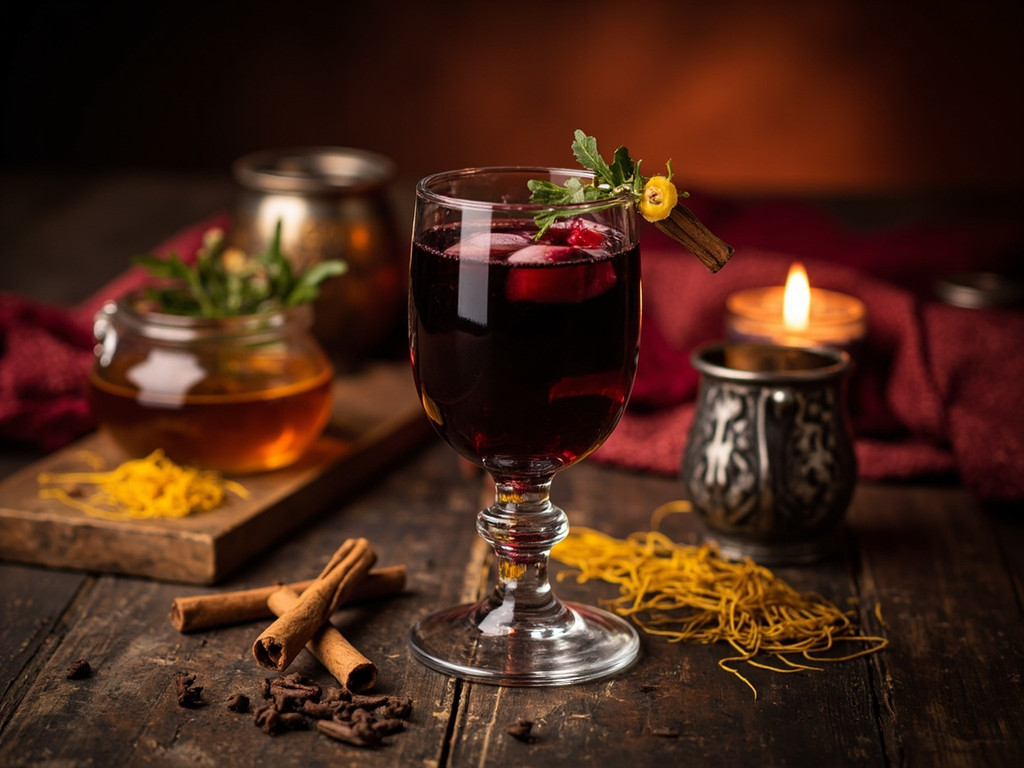
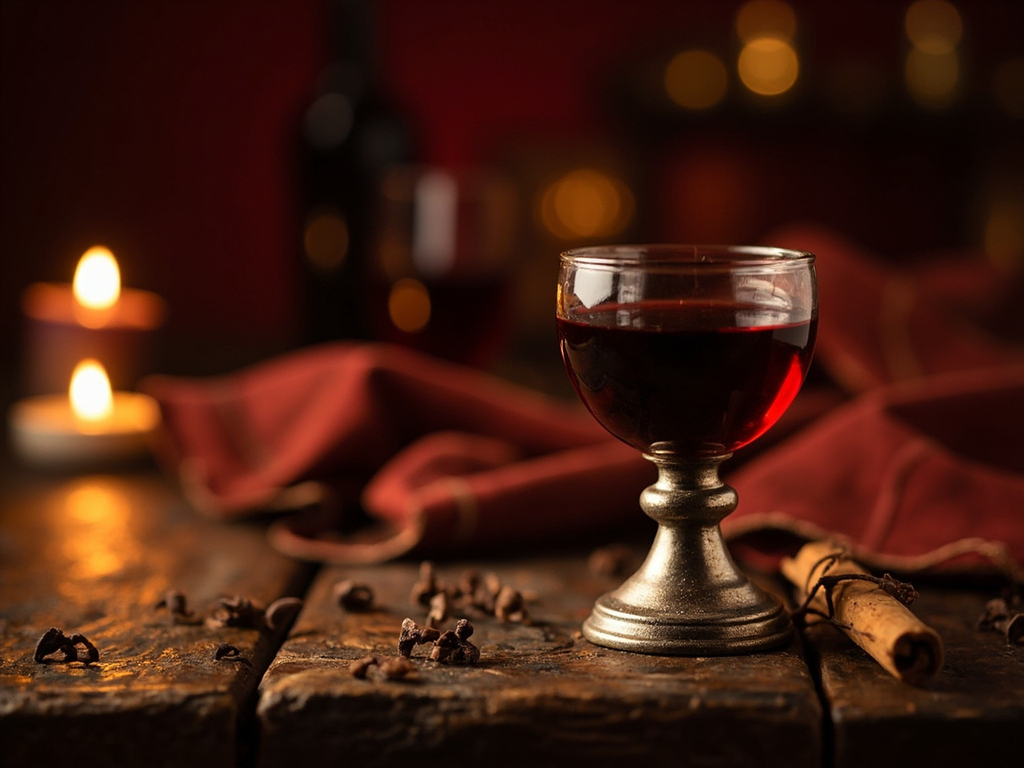
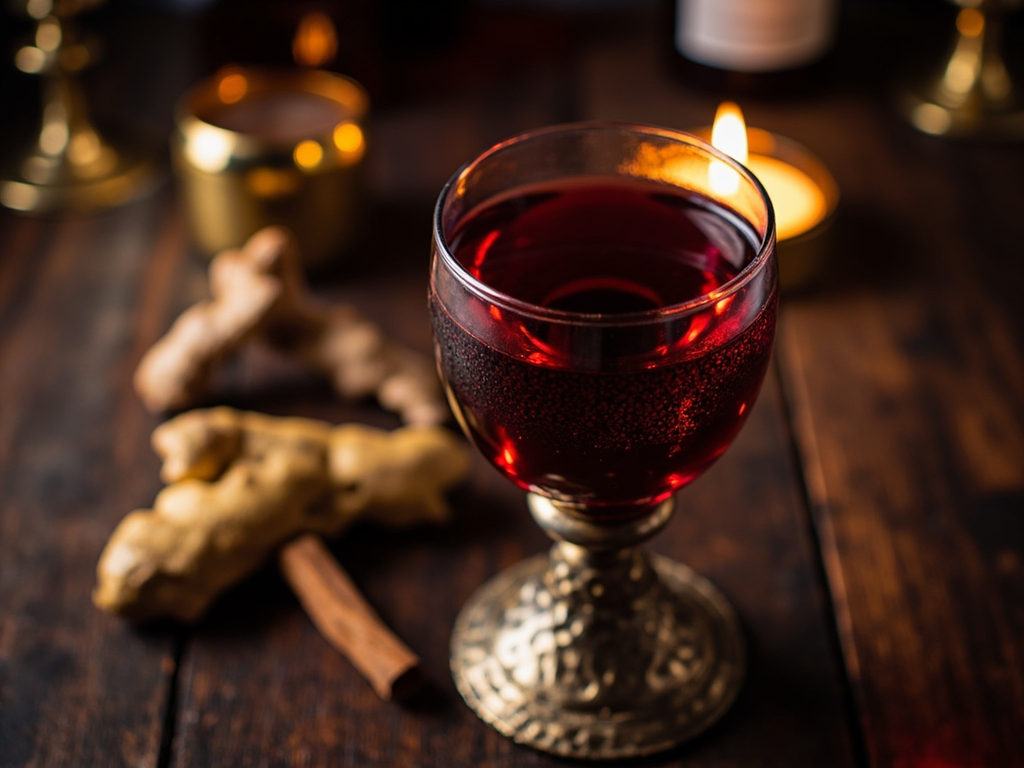
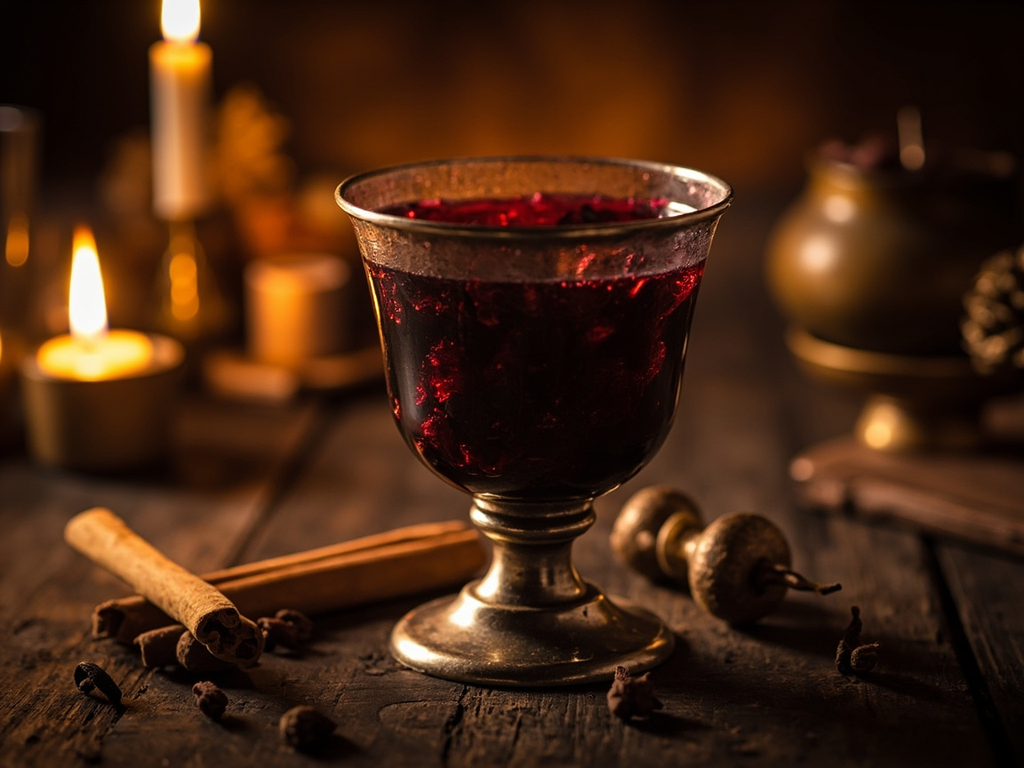
A red wine perfumed with ginger, cinnamon, grains of paradise, and clove, sweetened with honey or sugar, filtered until clear and bright. Served warm or cool at the end of the meal, spicy and comforting.
The feast ends, the gilded monster is but a carcass, and the hippocras is poured. Taste this wine where the grain of paradise sings: it is passed and passed again through Hippocrates' sleeve until it is clear as an eyelidless eye. Drink a cup to seal your stomach and your valor — for you have supped at the table of the king of serpents, and come out alive.
- •Red wine — a pitcher (base)
- •Honey or sugar — to taste (sweetness)
- •Ginger, cinnamon, grains of paradise, cloves — a good pinch of each (signature spices)
- •A hint of nutmeg and long pepper — very little (warmth)
Hippocras with Ginger and Grains of Paradise
A red wine perfumed with ginger, cinnamon, grains of paradise, and clove, sweetened with honey or sugar, filtered until clear and bright. Served warm or cool at the end of the meal, spicy and comforting.
Why this dish? The medieval banquet that stages me always closes with hippocras, the spiced wine drunk to 'seal the stomach' after the gilded meats. Where the cockentrice in my image was carried in, this hot spiced wine is then poured — the last cup of the feast.
The feast ends, the gilded monster is but a carcass, and the hippocras is poured. Taste this wine where the grain of paradise sings: it is passed and passed again through Hippocrates' sleeve until it is clear as an eyelidless eye. Drink a cup to seal your stomach and your valor — for you have supped at the table of the king of serpents, and come out alive.
Ingredients (period version)
- Red wine — a pitcher (base)
- Honey or sugar — to taste (sweetness)
- Ginger, cinnamon, grains of paradise, cloves — a good pinch of each (signature spices)
- A hint of nutmeg and long pepper — very little (warmth)
Ingredients
- Full-bodied red wine — 75 cl (base)
- Honey (or sugar) — 60 to 80 g (sweetness)
- Freshly grated ginger — 1 tsp (spice)
- Cinnamon — 1 stick (spice)
- Grains of paradise (or cardamom) + 2 cloves — 1/2 tsp + 2 (signature)
- Grated nutmeg — a knife tip (warmth)
Method
- Gently warm the wine with the honey, without boiling.
- Add all the spices and let infuse off the heat for 1 to 2 hours (longer = more flavorful).
- Filter carefully through a fine cloth (the equivalent of 'Hippocrates' sleeve') until the wine is clear.
- Serve warm in winter, or chilled in summer, in small cups — it is a closing wine, to be drunk in small quantities.
How it was made : Hippocras (named after Hippocrates, because it was filtered through a conical bag called 'Hippocrates' sleeve') is one of the best-documented medieval drinks. The Ménagier de Paris and Le Viandier give precise recipes, based on wine, sugar or honey, and a blend of noble spices — ginger, cinnamon, grains of paradise, cloves. It was served at the 'boute-hors', right at the end of the meal.
The contemporary twist : Served on ice with a zest, hippocras becomes a 'medieval sour' for the end of dinner — same spices, cocktail spirit.
Sources : Le Ménagier de Paris (c. 1393) · Taillevent, Le Viandier (14th century) · Le Vivendier (c. 1450)
Basilisk · Charactorium