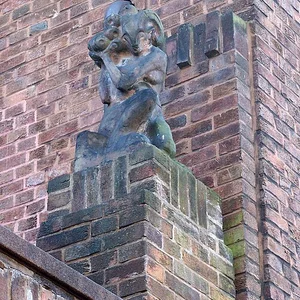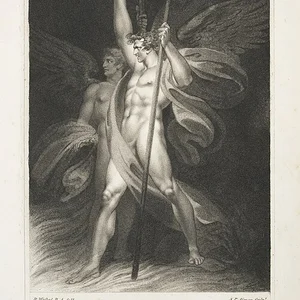

An ancient Philistine deity (Baal-Zebub, "Lord of the Flies"), worshipped at Ekron. Reinterpreted in the Judeo-Christian tradition as one of the princes of demons, a central figure in medieval demonology.
Beelzebub
Beelzebub
7 min read
Frequently asked questions
Key Facts
- Baal-Zebub was worshipped at Ekron (Philistia) as an oracle and healing deity, mentioned in the Book of Kings (2 Kings 1:2-3)
- The name "Baal-Zebub" means "Lord of the Flies" in Hebrew
- In the New Testament (Matthew 12:24), Beelzebub is referred to as "the prince of demons"
- In the Middle Ages, Christian demonology cast him as one of the seven princes of Hell, associated with the sin of gluttony or pride depending on the source
- William Golding's novel Lord of the Flies (1954) draws directly on the symbolism of Beelzebub
Works & Achievements
The only canonical text in the Hebrew Bible to explicitly mention Baal-Zebub as a Philistine deity consulted at Ekron. It is the primary source on the historical origins of the character.
These foundational texts of Christianity transform Beelzebul into the prince of demons, ensuring the transmission of his name and symbolic power throughout Western culture.
The first systematic attempt to classify demons during the Renaissance. Weyer describes Beelzebub as a great prince of Hell, leaving a lasting influence on modern demonology.
An encyclopedia of medieval and modern demonology that popularized the iconographic depictions of Beelzebub, notably his form as a giant fly, an image that persists in the collective imagination to this day.
A major English epic poem in which Beelzebub appears as Satan's second-in-command following the fall. Milton portrays him as an eloquent and strategic figure, cementing his place in literary tradition.
A novel that draws directly on the name Beelzebub ("Lord of the Flies") to explore the darker side of human nature. Widely taught in secondary schools, it stands as a testament to the character's enduring cultural legacy.
Anecdotes
The name Beelzebub comes from the Hebrew Baal-Zebub, meaning "Lord of the Flies." Some historians believe this name was actually a mocking distortion of the title Baal-Zebul ("Lord of the Heavenly Dwelling"), invented by Hebrew biblical authors to ridicule a rival deity of the Philistines. This ironic wordplay transformed a prestigious god into the master of pestilent insects.
In the Second Book of Kings (chapter 1), the king of Israel Ahaziah, injured after a fall, sends messengers to consult Baal-Zebub at Ekron to find out whether he will recover. The prophet Elijah intercepts the messengers and rebukes them for consulting a foreign god rather than the God of Israel. This episode is the only explicit mention of Baal-Zebub in the Hebrew Bible.
During the Middle Ages, Christian demonologists incorporated Beelzebub into elaborate infernal hierarchies. In the Dictionnaire infernal by Collin de Plancy (1818, drawing on medieval traditions), he is described as the "prince of demons," sometimes confused with or associated with Lucifer himself. He was said to have the power to incite pride and gluttony in humans.
The theologian Johann Weyer, in the sixteenth century, published De Praestigiis Daemonum (1563), in which he proposed a rigorous classification of demons. Beelzebub appears there as one of Satan's lieutenants, commanding a legion of seventy-nine demons. This attempt to "rationalize" demonology reflects the Renaissance fascination with taxonomy and natural order.
Primary Sources
"Ahaziah fell through the lattice of his upper room in Samaria and injured himself. So he sent messengers, saying to them: Go and consult Baal-Zebub, the god of Ekron, to see if I will recover from this injury."
"The Pharisees said: It is by Beelzebul, the prince of demons, that he drives out demons." Jesus responded by pointing out the internal contradiction of this accusation.
Weyer describes Beelzebub as a high-ranking prince in the infernal hierarchy, commanding legions of demons and responsible for instilling several deadly vices in mankind.
"Beelzebub, one of the most powerful demons after Lucifer; he is depicted in the form of an enormous fly and presides over the flies that multiply in summer."
Key Places
The principal Philistine city and center of the cult of Baal-Zebub, mentioned in the Bible as the place where King Ahaziah sent messengers to consult the god's oracle. Archaeological excavations have uncovered a significant sanctuary dating to the first millennium BCE.
From Jerusalem, the Hebrew prophets condemned the consultation of foreign deities such as Baal-Zebub, setting monotheistic Yahwism against the surrounding Canaanite cults.
Capital of the northern Kingdom of Israel, from which King Ahaziah sent his messengers to Ekron to consult Baal-Zebub. The prophet Elijah intercepted them along the way.
It was in Rome, over the course of the medieval centuries, that official Church doctrine on demons took shape. Theologians of the Roman Curia established Beelzebub's place within the Christian infernal hierarchy.
Typical Objects

Zoomorphic figurines representing flies have been found in excavations of Philistine sites. They symbolize the power of Baal-Zebub over insects and disease.

In Philistine cities such as Ekron, priests used engraved clay tablets to deliver oracles. It was by consulting such an oracle that King Ahaziah sought to learn his fate.

Horned altars (with projections at the four corners) were typical of Semitic cults. One such altar, discovered at Tel Miqne/Ekron, was likely dedicated to Baal-Zebub.

In the Middle Ages, texts such as the Lemegeton and The Key of Solomon described Beelzebub as an entity that could be summoned through precise rituals. These manuscripts circulated clandestinely among clerics and scholars.

Given the power attributed to Beelzebub in Christian demonology, medieval exorcists used blessed crosses and relics to drive him back during exorcism ceremonies.

Medieval grimoires assigned him a specific seal — a graphic symbol used to summon him or to ward against him. This type of seal circulated in ceremonial magic circles.
School Curriculum
Vocabulary & Tags
Key Vocabulary
Tags
Daily Life
Morning
In the context of Philistine worship, the priests of Baal-Zebub at Ekron began their day with ritual ablutions and the lighting of the sacred fire on the altar. Morning offerings — oil, grain, and sacrificed animals — were presented to seek oracles from the god.
Afternoon
The afternoon was devoted to consulting worshippers and royal messengers who came seeking omens. The priests interpreted divine signs (the behavior of flies, the smoke from sacrifices) and delivered their oracles in the form of codified responses.
Evening
In the evening, ritual processions and chants brought the ceremonies to a close. In the Christian medieval tradition, Beelzebub was believed to be most active at night, inspecting his demonic legions and tempting sleeping souls through disturbing dreams.
Food
The Philistine temple staff consumed a portion of the food offerings (bread, wine, sacrificial meat), in keeping with common Semitic cultic practices. These ritual meals had a sacred dimension, marking the community of priests in communion with their deity.
Clothing
Philistine priests likely wore white linen tunics, specific headdresses, and metal ornaments (engraved bronze pectorals), similar to the priestly garments of neighboring Canaanite and Aegean cultures, as documented by archaeology.
Housing
The high priest resided near the temple at Ekron, in rooms adjoining the sanctuary. Excavations at Tel Miqne have revealed an impressive 7th-century BCE architectural complex including storage rooms, cult spaces, and priestly living quarters.
Historical Timeline
Period Vocabulary
Visual Style
Style visuel entre bas-relief proche-oriental de l'Antiquité et enluminure médiévale chrétienne, dominé par les textures de pierre, les teintes ocre du désert et les jaunes sulfureux de la démonologie gothique.
Sound Ambience
Ambiance sonore double : sanctuaire philistin de l'Antiquité (bourdonnement de mouches, chants rituels, encens) et scriptorium médiéval (prières d'exorcisme, plume sur parchemin, cloche nocturne).
Liens externes & ressources
Références
Œuvres
Second Livre des Rois (Bible hébraïque)
VIIIe-VIIe siècle av. J.-C.
Évangiles synoptiques (Matthieu, Marc, Luc)
Ier siècle apr. J.-C.
De Praestigiis Daemonum — Johann Weyer
1563
Dictionnaire Infernal — Collin de Plancy
1818
Paradise Lost — John Milton
1667
Sa Majesté des Mouches (Lord of the Flies) — William Golding
1954