 flip
flipSweet Barley Beer with Honey and Date (henqet)
Sweet Barley Beer with Honey and Date (henqet)
Why this dish? Beer was Egypt's national drink, consumed by everyone from laborer to pharaoh. On the colossal construction sites of Ramesses II—the Ramesseum, Pi-Ramesses, Abu Simbel—workers were partly paid in loaves and jugs of beer. At the royal table, it was made sweeter, honeyed and perfumed.
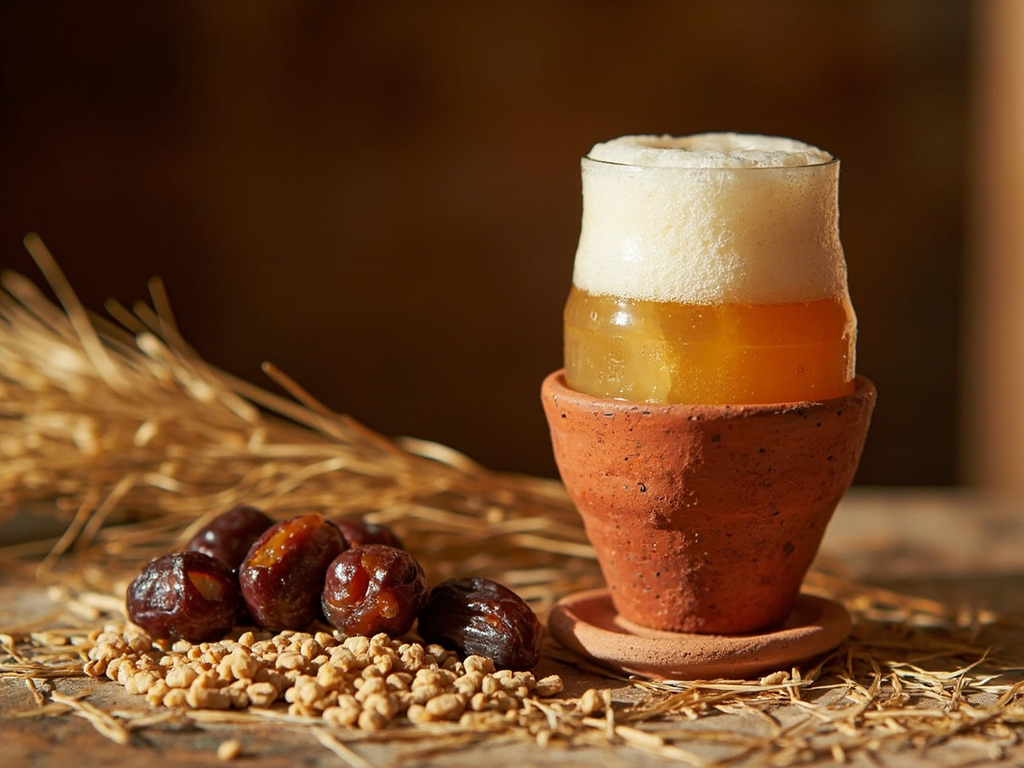
A thick, low-alcohol, cloudy and nourishing beer, sweetened with honey and date. Closer to a fermented porridge-drink than our filtered beers.
People think the pharaoh drinks only wine from the Delta vineyards—but beer, henqet, flows on every table in Egypt, and on my worksites I distribute thousands of jugs to those who raise my colossi. At my table, it is made sweet: honey and date are melted into it, and it nourishes as much as it quenches. Drink to my health, and may the gods grant you millions of years as they have me.
- •Lightly baked barley loaves — a few (fermentable starch)
- •Malted barley grains (sprouted) — one part (sugars / enzymes)
- •Dates — a handful (sugar / perfume)
- •Honey — a little (sweetness)
- •Water — as needed (base)
Sweet Barley Beer with Honey and Date (henqet)
A thick, low-alcohol, cloudy and nourishing beer, sweetened with honey and date. Closer to a fermented porridge-drink than our filtered beers.
Why this dish? Beer was Egypt's national drink, consumed by everyone from laborer to pharaoh. On the colossal construction sites of Ramesses II—the Ramesseum, Pi-Ramesses, Abu Simbel—workers were partly paid in loaves and jugs of beer. At the royal table, it was made sweeter, honeyed and perfumed.
People think the pharaoh drinks only wine from the Delta vineyards—but beer, henqet, flows on every table in Egypt, and on my worksites I distribute thousands of jugs to those who raise my colossi. At my table, it is made sweet: honey and date are melted into it, and it nourishes as much as it quenches. Drink to my health, and may the gods grant you millions of years as they have me.
Ingredients (period version)
- Lightly baked barley loaves — a few (fermentable starch)
- Malted barley grains (sprouted) — one part (sugars / enzymes)
- Dates — a handful (sugar / perfume)
- Honey — a little (sweetness)
- Water — as needed (base)
Ingredients
- Crushed barley malt (or hulled barley) — 500 g (starch / sugars)
- Stale wholemeal bread — 200 g (starch (bread method))
- Dates — 150 g (sugar / perfume)
- Honey — 2 tbsp (sweetness)
- Water — 2.5 L (base)
- Baker's yeast (or wild yeast) — 1 packet (fermentation)
Method
- Heat (without boiling, ~65 °C) the crushed malt and crumbled bread in the water for 1 h to extract sugars.
- Add chopped dates and honey, stir; let steep warm for 30 min.
- Strain roughly through a cloth (Egyptian beer remained cloudy).
- Cool to lukewarm, add yeast, cover with a cloth.
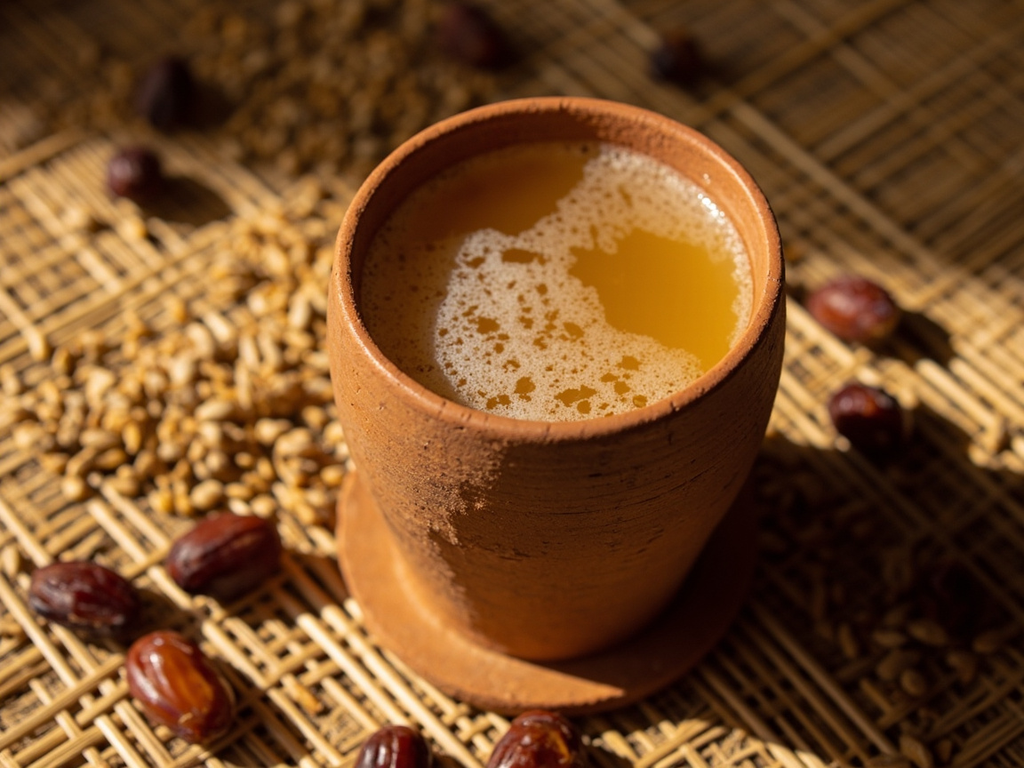
- Let ferment 2–3 days at room temperature; serve cool, unfiltered, in a clay cup.
- Note: slightly alcoholic drink; a non-alcoholic version is possible by stopping fermentation very early and refrigerating.
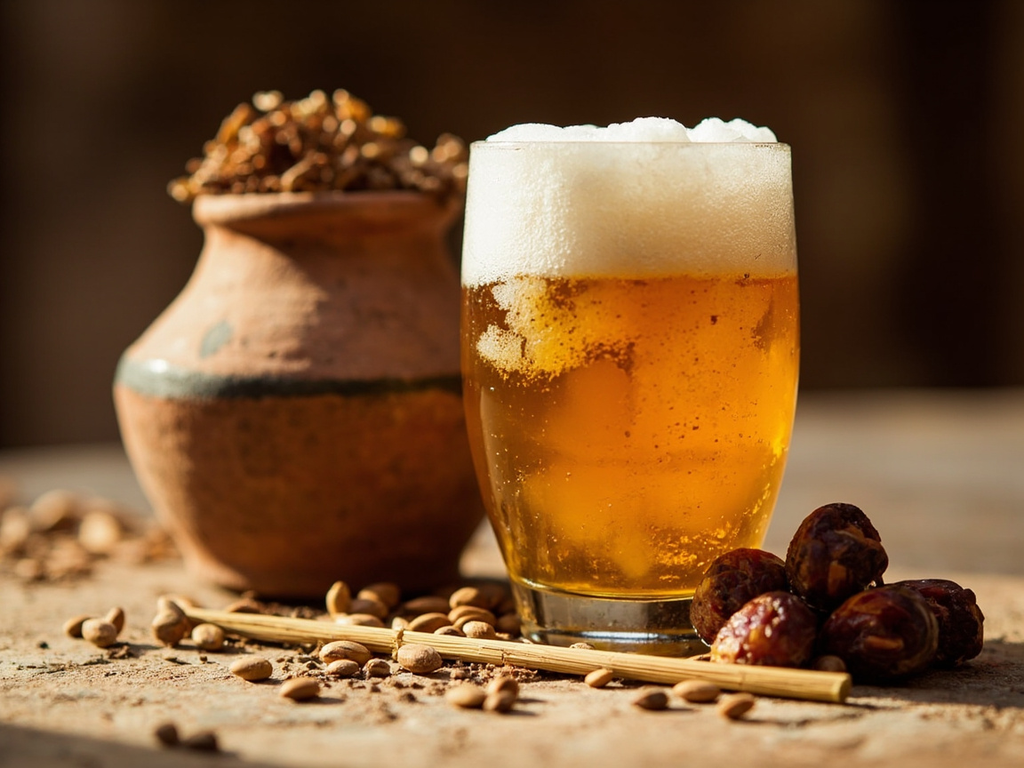
How it was made : Egyptians brewed by mixing malted grains and lightly baked barley loaves, fermenting in large jars; beer was sometimes sipped through a straw to avoid sediment. Rich in calories and yeast, beer was a food in itself—and a wage. Hops unknown: bitterness and preservation came from other herbs or from fermentation alone.
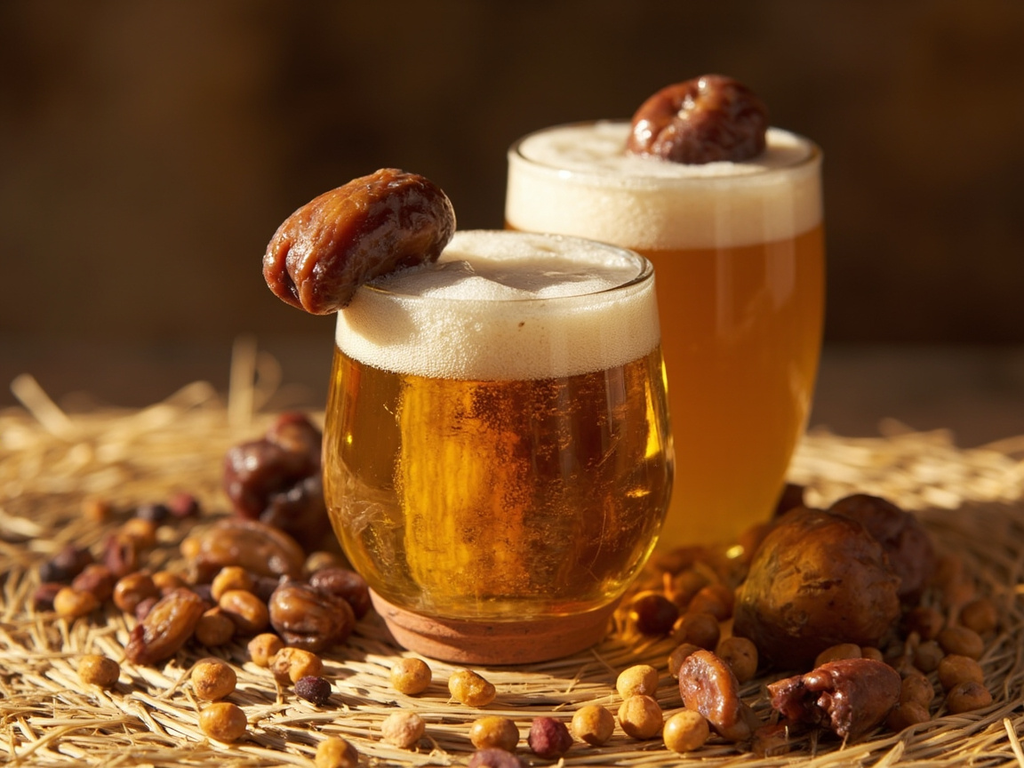
The contemporary twist : Serve chilled in stoneware cups, with a stick of licorice or a few coriander seeds to recall ancient aromatics—a refreshing “banquet henqet.”
Sources : Delwen Samuel, “Investigation of Ancient Egyptian Baking and Brewing Methods by Correlative Microscopy”, Science, 1996 · Barry Kemp, Ancient Egypt: Anatomy of a Civilization
Ramesses II · Charactorium