 flip
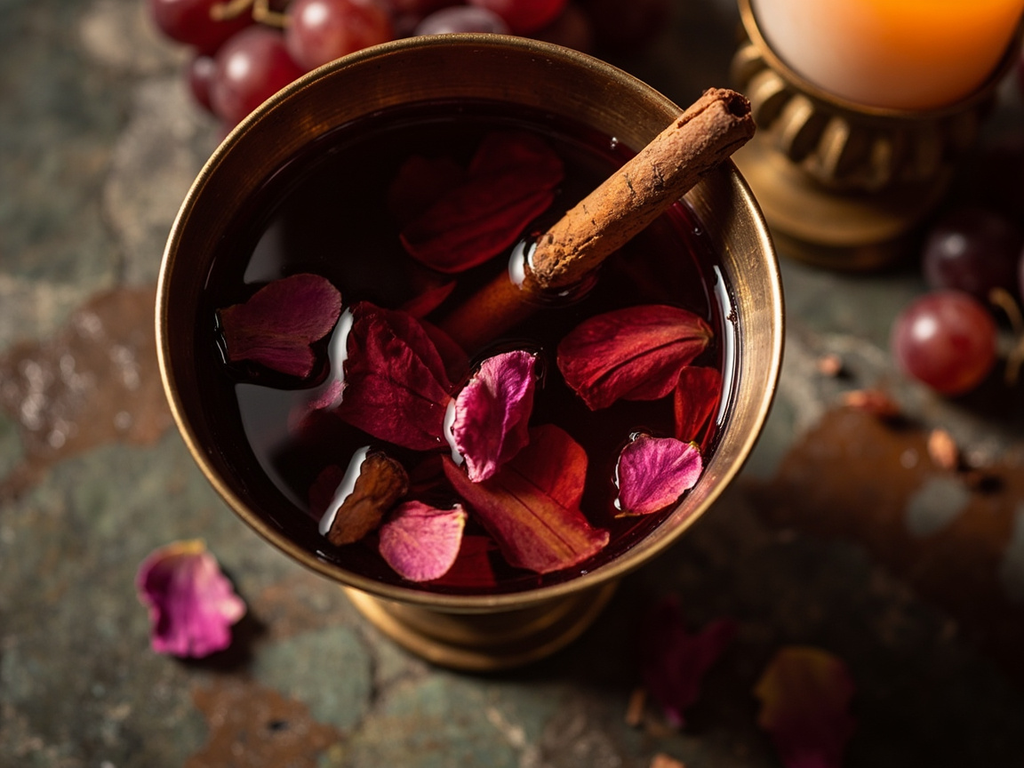
flipHoneyed Wine with Eastern Spices (Mulled Wine)
Honeyed Wine with Eastern Spices (Mulled Wine)
Why this dish? At the symposion, wine was never drunk pure — that would be barbaric. Through the port of Alexandria came Eastern spices that Berenice could have thrown into the mixing bowls of her court: a Greek wine sweetened with honey and perfumed, the very image of the commercial crossroads that was her capital.
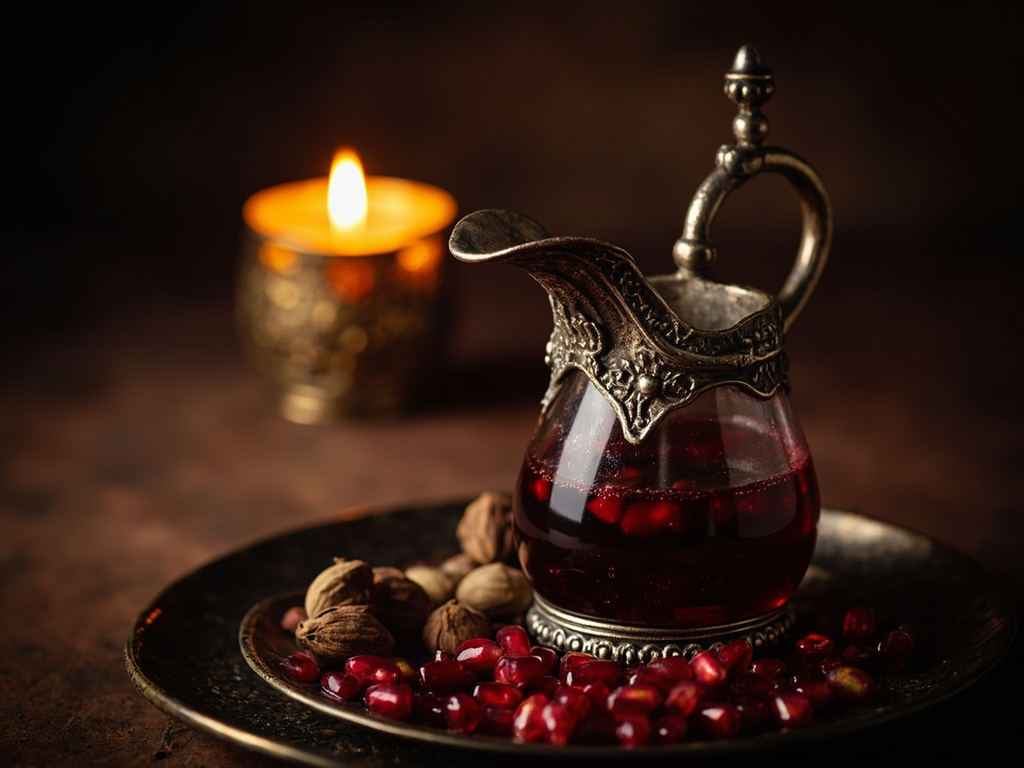
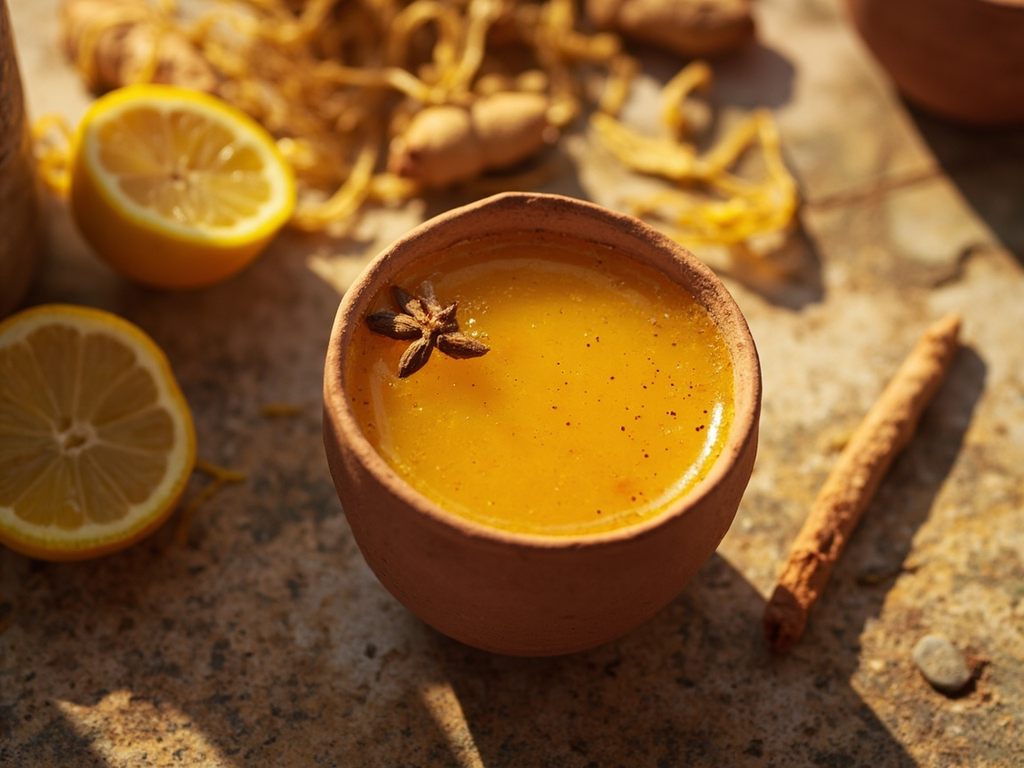
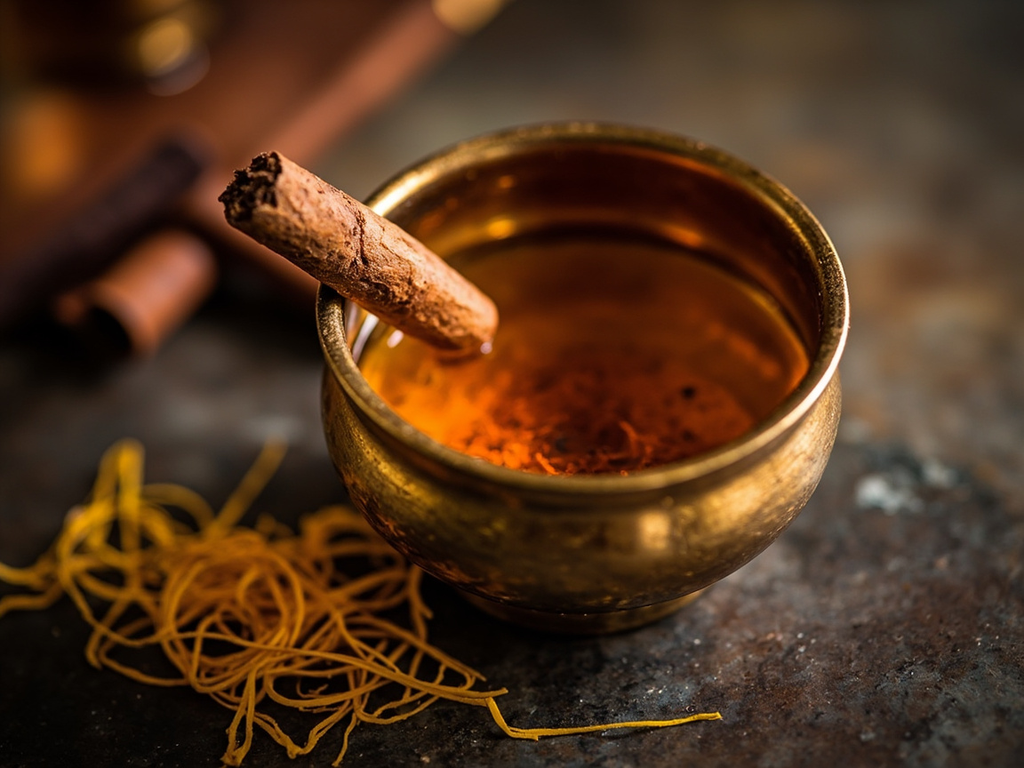
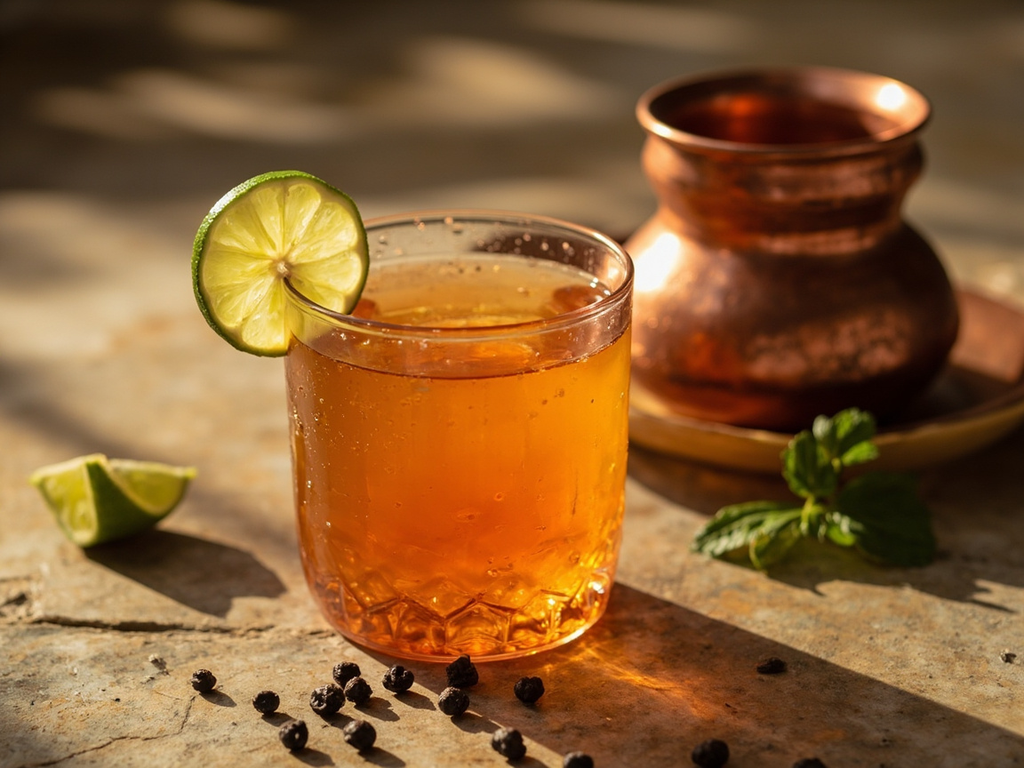
Greek wine cut with water, warmed with honey, cinnamon, and pepper from the East. The civilized drink of the Hellenic banquet, sweet and fragrant, served warm or chilled.
Learn this first: drinking wine without cutting it with water is to behave like a barbarian, and I would not suffer it at my table. Into the krater I pour one part wine to three or four of water, then I melt honey in it, and add those fragrant powders that my merchants bring through the great port. We stir, we taste, we laugh — it is the hour for words, no longer for eating. Hold your cup with measure: in Alexandria, one judges a mind by the way it handles wine.
- •Greek wine (red or white) — one part (base)
- •Water — three parts (dilution)
- •Honey — to taste (sweetness)
- •Cinnamon (cassia) — a piece of bark (Eastern spice)
- •Long pepper — a few grains (spice)
- •Dried rose petals — a pinch (fragrance)
Honeyed Wine with Eastern Spices (Mulled Wine)
Greek wine cut with water, warmed with honey, cinnamon, and pepper from the East. The civilized drink of the Hellenic banquet, sweet and fragrant, served warm or chilled.
Why this dish? At the symposion, wine was never drunk pure — that would be barbaric. Through the port of Alexandria came Eastern spices that Berenice could have thrown into the mixing bowls of her court: a Greek wine sweetened with honey and perfumed, the very image of the commercial crossroads that was her capital.
Learn this first: drinking wine without cutting it with water is to behave like a barbarian, and I would not suffer it at my table. Into the krater I pour one part wine to three or four of water, then I melt honey in it, and add those fragrant powders that my merchants bring through the great port. We stir, we taste, we laugh — it is the hour for words, no longer for eating. Hold your cup with measure: in Alexandria, one judges a mind by the way it handles wine.
Ingredients (period version)
- Greek wine (red or white) — one part (base)
- Water — three parts (dilution)
- Honey — to taste (sweetness)
- Cinnamon (cassia) — a piece of bark (Eastern spice)
- Long pepper — a few grains (spice)
- Dried rose petals — a pinch (fragrance)
Ingredients
- Dry red or white wine — 250 ml (base)
- Water — 250 to 500 ml to taste (dilution)
- Honey — 2 to 3 tbsp (sweetness)
- Cinnamon stick — 1 (Eastern spice)
- Long pepper or black pepper — 3 grains (spice)
- Rose water or dried petals — 1 tsp / 1 pinch (fragrance)
Method
- Pour wine into a saucepan with honey, cinnamon, and pepper, and gently heat without boiling to infuse the spices, 5 to 10 minutes.
- Strain, then dilute with water (hot or cold) depending on whether you want the drink warm or chilled; adjust honey.
- Scent with a hint of rose water or a few petals just before serving.
- Present in a wide cup; serve with moderation, as at the symposion.
How it was made : Greeks always mixed their wine with water (krasis), often at one-third or one-quarter wine; drinking it pure was considered a mark of barbaric drunkenness. It was aromatized with honey (the famous oenomel), spices, and flowers. Cinnamon, pepper, and nard arrived via trade routes to Alexandria, the hub of Hellenistic commerce.
The contemporary twist : Served chilled in summer with a slice of fresh fig on the rim of the cup, under the name "Cup of Alexandria."
Sources : Athenaeus of Naucratis, Deipnosophistae (on krasis) · Plutarch, Table Talk
Berenice I · Charactorium