 flip
flipRoasted Poultry with Silphion and Grape Must
Roasted Poultry with Silphion and Grape Must
Why this dish? Silphion came from Cyrene, a province of the Lagid kingdom ruled by Ptolemy I, husband of Berenice. Serving poultry perfumed with this most precious condiment of the ancient world displayed the wealth and extent of the Ptolemaic domain on the queen's very table.
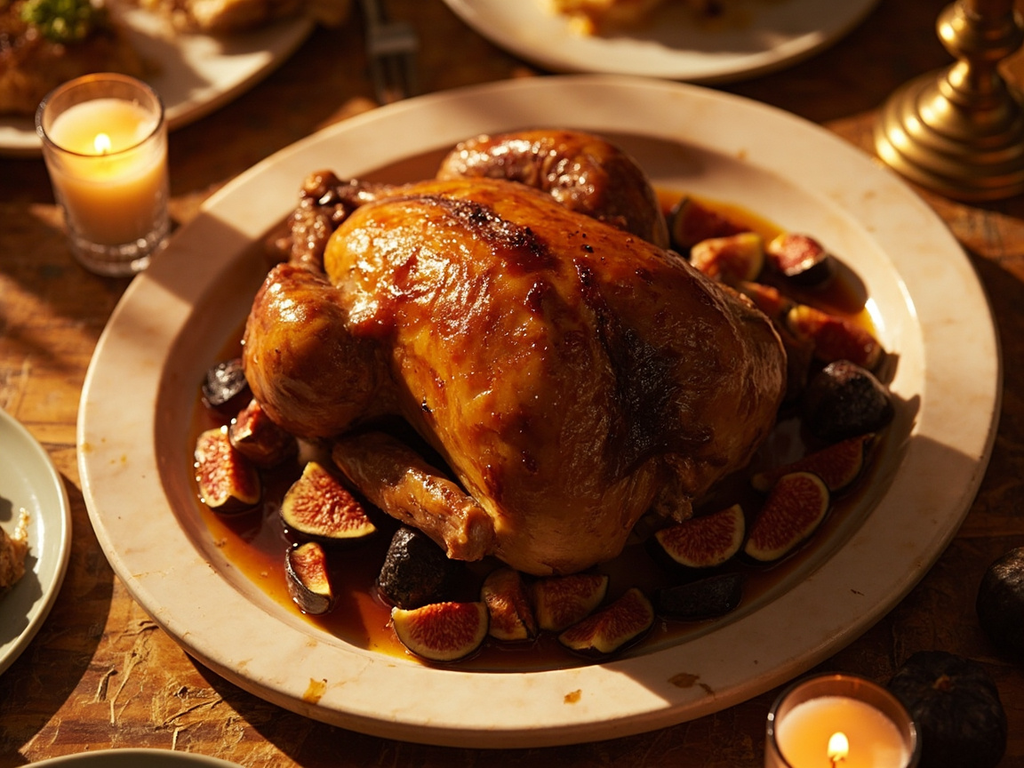
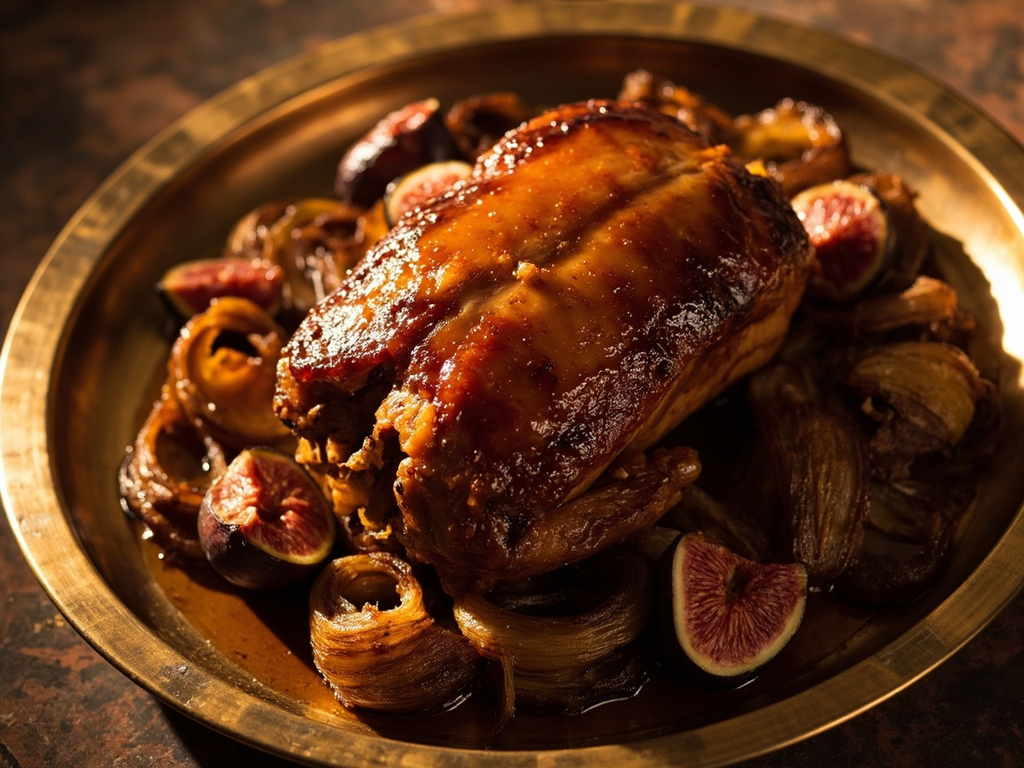
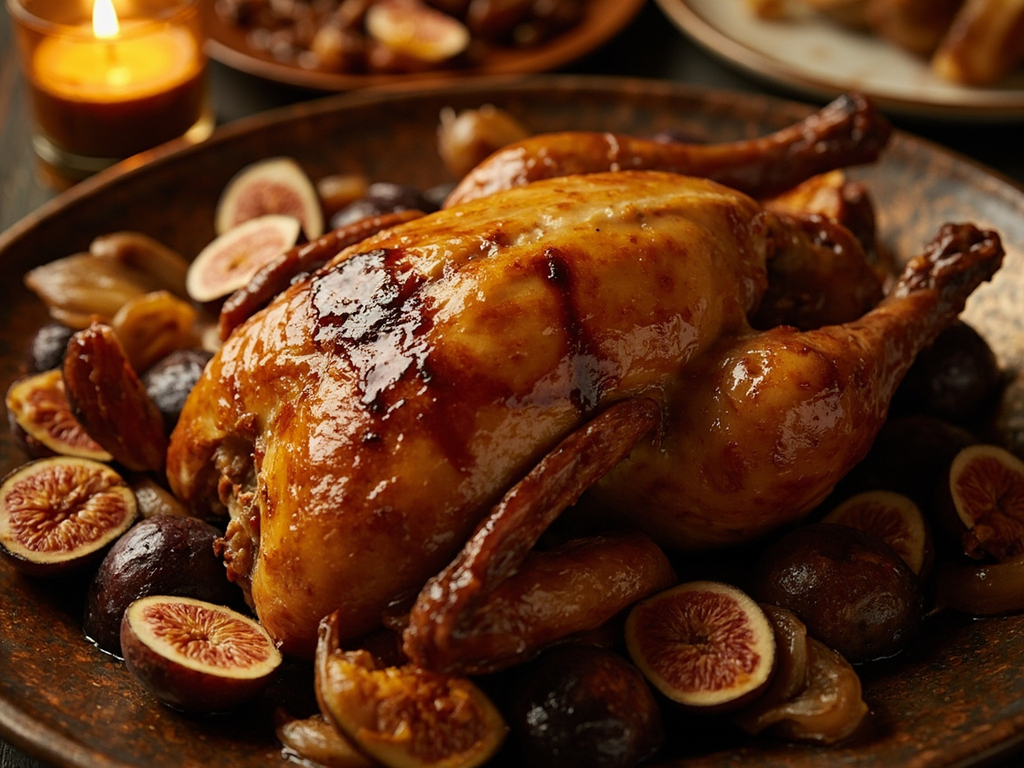
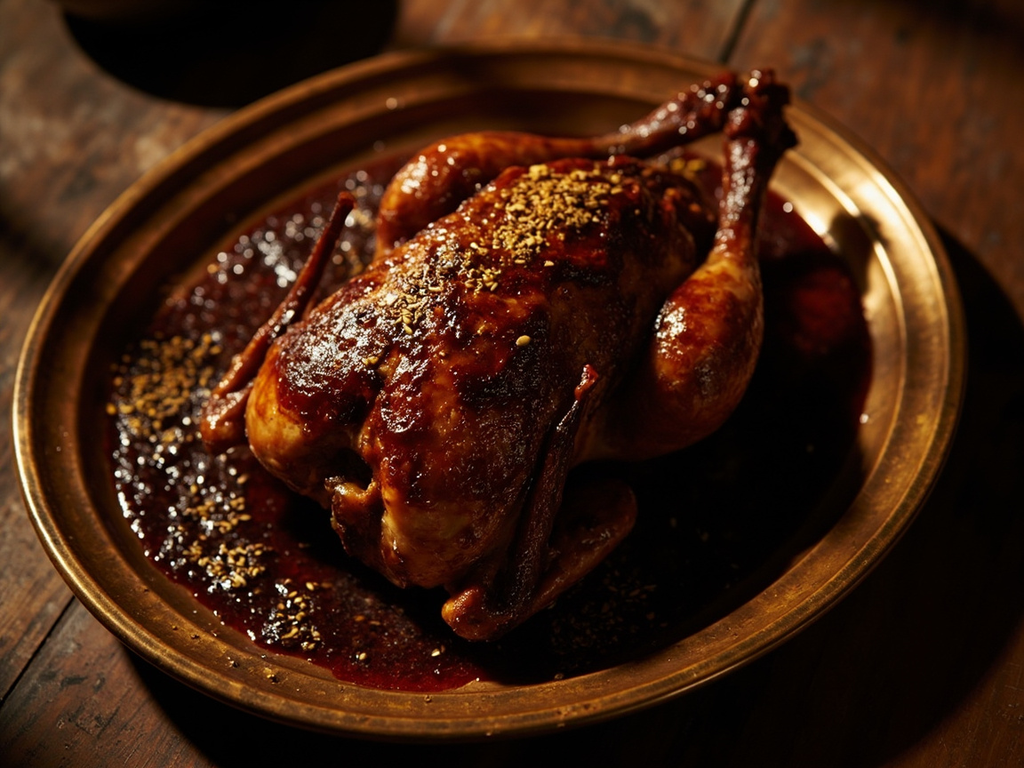
A roasted poultry lacquered with a syrup of grape must, seasoned with silphion and coriander, as favored at Hellenic banquets. Sweet-savory, profound, royal.
At my weddings and feasts, I wanted even the flesh of the birds to convey the extent of what we ruled. This silphion, my kitchen gets it from Cyrene, where my husband also reigns: a hint suffices, for it is more precious than gold. Rub the bird with it, baste it with the thickened must from our vines, and let the oven give it a gleaming coat. When the scent fills the palace, my guests know without my speaking where my power comes from.
- •Young poultry (pullet or guinea fowl) — one piece (base)
- •Grated silphion — a pinch (signature)
- •Reduced grape must (epsema) — one cup (sweet lacquer)
- •Coriander seeds — a pinch (spice)
- •Honey — a drizzle (sweetness)
- •Garum (fish sauce) — a few drops (savory umami)
- •Olive oil — as needed (fat)
Roasted Poultry with Silphion and Grape Must
A roasted poultry lacquered with a syrup of grape must, seasoned with silphion and coriander, as favored at Hellenic banquets. Sweet-savory, profound, royal.
Why this dish? Silphion came from Cyrene, a province of the Lagid kingdom ruled by Ptolemy I, husband of Berenice. Serving poultry perfumed with this most precious condiment of the ancient world displayed the wealth and extent of the Ptolemaic domain on the queen's very table.
At my weddings and feasts, I wanted even the flesh of the birds to convey the extent of what we ruled. This silphion, my kitchen gets it from Cyrene, where my husband also reigns: a hint suffices, for it is more precious than gold. Rub the bird with it, baste it with the thickened must from our vines, and let the oven give it a gleaming coat. When the scent fills the palace, my guests know without my speaking where my power comes from.
Ingredients (period version)
- Young poultry (pullet or guinea fowl) — one piece (base)
- Grated silphion — a pinch (signature)
- Reduced grape must (epsema) — one cup (sweet lacquer)
- Coriander seeds — a pinch (spice)
- Honey — a drizzle (sweetness)
- Garum (fish sauce) — a few drops (savory umami)
- Olive oil — as needed (fat)
Ingredients
- Guinea fowl or free-range chicken — 1 (about 1.4 kg) (base)
- Asafoetida (hing) or 2 cloves confit garlic — 1 small pinch (silphion substitute)
- Reduced grape must or reduced sweet wine (or reduced grape juice) — 100 ml (sweet lacquer)
- Ground coriander seeds — 1 tsp (spice)
- Honey — 1 tbsp (sweetness)
- Nuoc mam (modern garum substitute) — 1 tsp (savory umami)
- Olive oil — 2 tbsp (fat)
Method
- Mix oil, coriander, asafoetida (or crushed confit garlic) and garum/nuoc mam into a marinade, and rub the poultry inside and out. Let rest 1 hour.
- Preheat oven to 200 °C.
- Reduce grape must (or juice) with honey until syrupy and coating.
- Roast the poultry for 50 to 70 minutes depending on size, basting regularly with its juices.
- In the last 15 minutes, brush with the must syrup in several layers for a glossy lacquer.
- Let rest 10 minutes before carving, and serve with the juices.
How it was made : Silphion, the king condiment of Cyrene, flavored meats and sauces throughout the Greek world; it was exploited until extinction under the Roman Empire. Reduced grape must (epsema/defrutum) was used to lacquer and sweeten, and garum provided salty umami. The sweet-savory-umami combination is typical of ancient haute cuisine.
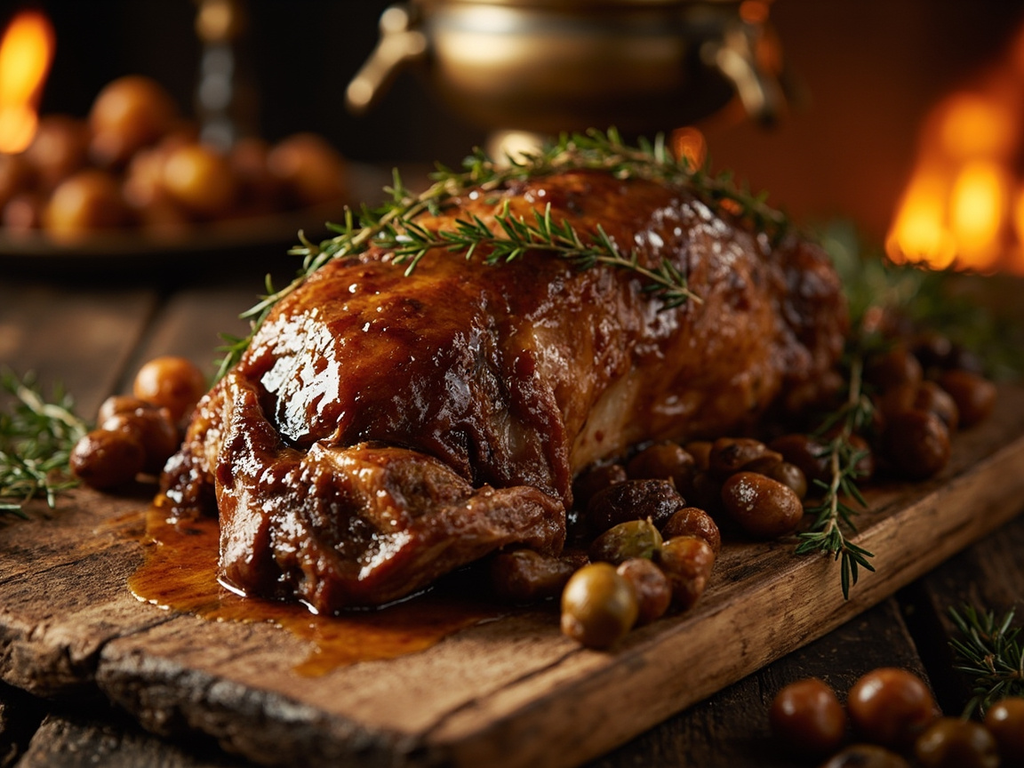
The contemporary twist : Carved and arranged on a large board, mirror-like lacquer and a sprinkle of toasted coriander seeds, as a sharing piece.
Sources : Apicius, De re coquinaria (uses of laser/silphium and defrutum) · Andrew Dalby, Dangerous Tastes: The Story of Spices
Berenice I · Charactorium