 flip
flipTortilla de rescoldo (ash-baked flatbread)
Tortilla de rescoldo (ash-baked flatbread)
Why this dish? On the family estate of Las Canteras, near Chillán where he was born, Bernardo learned the life of the *campo*. This flatbread buried in the hot ashes of the hearth was the bread of *huasos* and soldiers: it was found both at the rustic table of an hacienda and at the bivouac, before crossing the cordillera.
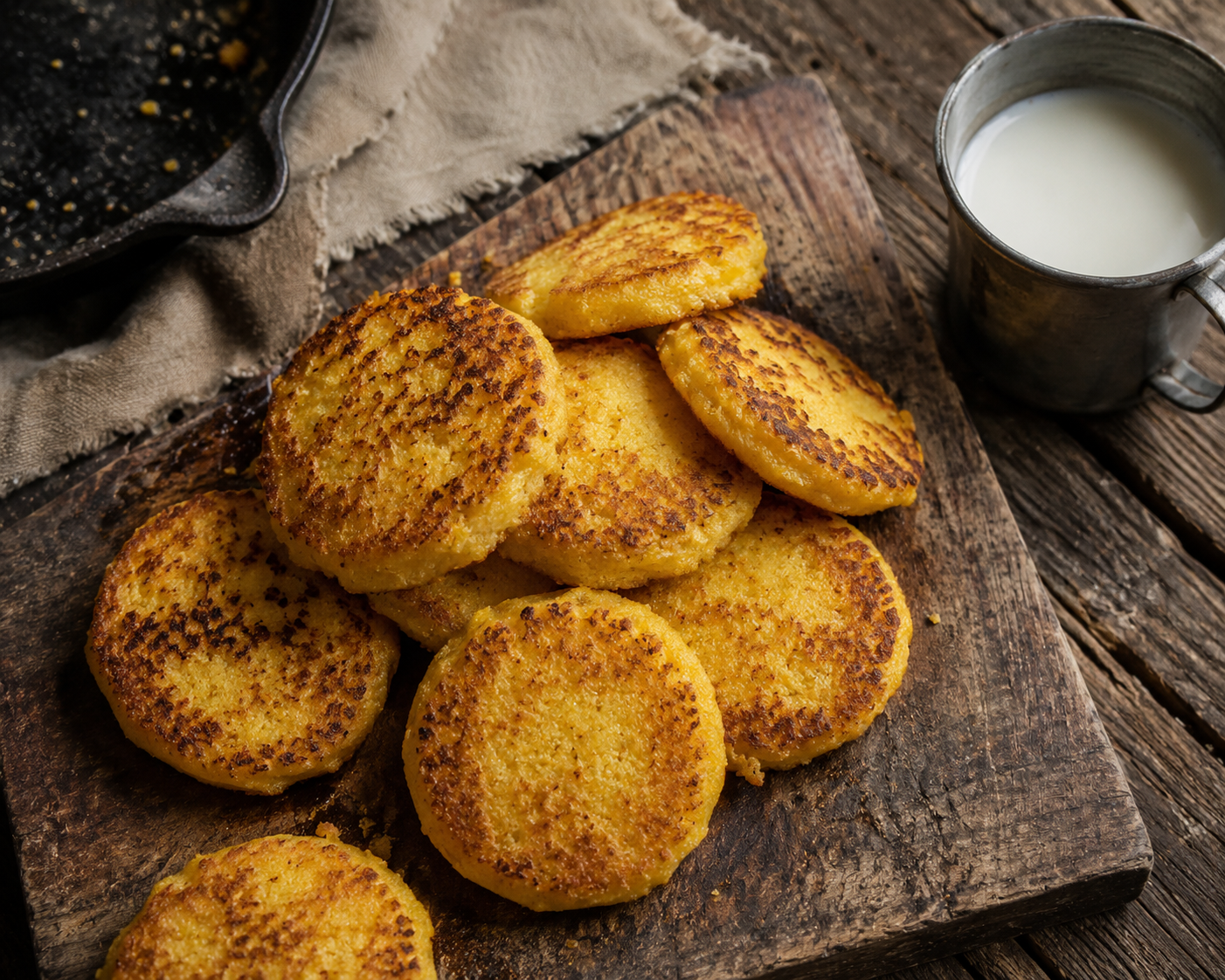
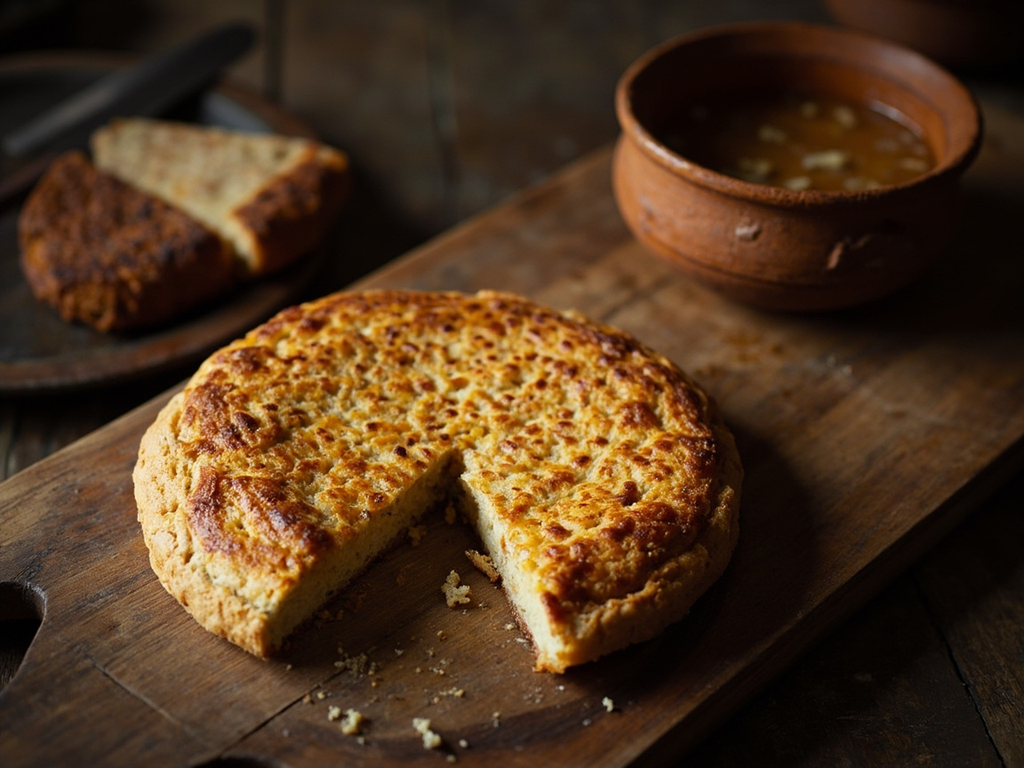
A round, golden flatbread with a crust cracked by the ashes and a dense, buttery crumb. It is broken by hand, still warm, to dip into a broth or fill with a little farm cheese.
Remember, friend reader, that I was born in Chillán and that the *campo* was my first teacher. At Las Canteras, our people buried the dough in the *rescoldo*, the still-live embers of the hearth, and the flatbread emerged golden, marked by the fire. On campaign, before Chacabuco, this was all the bread of the soldier of the fatherland: we broke it with bare hands and thanked heaven. Brush off the ash well, break it warm — a simple bread is better than a badly earned feast.
- •Wheat flour — a good measure (base of the flatbread)
- •Beef fat (grasa) or lard — a generous spoonful (softness and structure)
- •Warm water — as needed (to bind the dough)
- •Salt — a pinch (seasoning)
Tortilla de rescoldo (ash-baked flatbread)
A round, golden flatbread with a crust cracked by the ashes and a dense, buttery crumb. It is broken by hand, still warm, to dip into a broth or fill with a little farm cheese.
Why this dish? On the family estate of Las Canteras, near Chillán where he was born, Bernardo learned the life of the *campo*. This flatbread buried in the hot ashes of the hearth was the bread of *huasos* and soldiers: it was found both at the rustic table of an hacienda and at the bivouac, before crossing the cordillera.
Remember, friend reader, that I was born in Chillán and that the *campo* was my first teacher. At Las Canteras, our people buried the dough in the *rescoldo*, the still-live embers of the hearth, and the flatbread emerged golden, marked by the fire. On campaign, before Chacabuco, this was all the bread of the soldier of the fatherland: we broke it with bare hands and thanked heaven. Brush off the ash well, break it warm — a simple bread is better than a badly earned feast.
Ingredients (period version)
- Wheat flour — a good measure (base of the flatbread)
- Beef fat (grasa) or lard — a generous spoonful (softness and structure)
- Warm water — as needed (to bind the dough)
- Salt — a pinch (seasoning)
Ingredients
- All-purpose flour (T65) — 500 g (base of the flatbread)
- Lard (or melted butter) — 80 g (softness and structure)
- Warm water — about 200 ml (to bind the dough)
- Baking powder — 1 teaspoon (light leavening (modern option))
- Salt — 1 teaspoon (seasoning)
Method
- Mix flour, salt, and baking powder, then rub in the lard with your fingertips until a coarse meal forms.
- Add warm water little by little and knead for 5 minutes to obtain a soft, smooth dough. Let rest for 20 minutes under a cloth.
- Shape into a thick disc about 3 cm thick and prick with a fork.
- If no ashes are available, bake in a 200°C oven on a hot baking sheet for 30 to 35 minutes, turning halfway, until the crust sounds hollow.
- For period spirit: brush a veil of flour on the crust to mimic the ash mark. Serve warm, broken by hand.
How it was made : The *rescoldo* refers to the embers mixed with ash from the rural Chilean hearth. The flatbread was literally buried in this hot ash, without a mold or oven: the crust became covered with ash that was brushed off before eating. It was the most economical bread of the *campo*, long attested in Criollo cuisine.
The contemporary twist : Served in wedges with whipped butter blended with merkén (smoked Mapuche chili) and a thin slice of Chanco cheese, as a nod to the flavors of southern Chile.
Sources : Eugenio Pereira Salas, Apuntes para la historia de la cocina chilena, 1943 · Oreste Plath, Folklore chileno
Bernardo O'Higgins · Charactorium