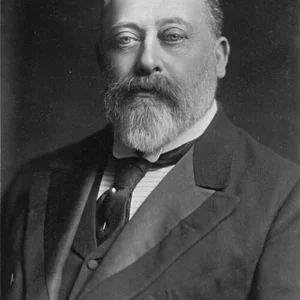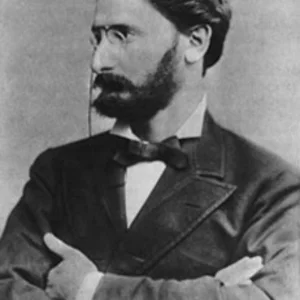

American journalist and publisher of Hungarian origin (1847–1911), founder of modern journalism. He built a press empire and established the famous Pulitzer Prize, the supreme award in American journalism.
Joseph Pulitzer(1847 — 1911)
Joseph Pulitzer
Hongrie, États-Unis
10 min read
Frequently asked questions
Famous Quotes
« Our Republic and its press will rise or fall together.»
Key Facts
- 1847: Born in Makó, Hungary
- 1864: Immigrates to the United States to fight in the Union Army during the Civil War
- 1883: Acquires the New York World and makes it the most widely read newspaper in the United States
- 1898: Major role in the controversial coverage of the Spanish-American War (yellow journalism)
- 1911: Bequeaths two million dollars to Columbia University to establish the School of Journalism and the Pulitzer Prize
Works & Achievements
Pulitzer's first major publication, born from the merger of the St. Louis Dispatch and the Evening Post. He turned it into a progressive newspaper renowned for its investigations into local corruption, laying the groundwork for his editorial model before his conquest of New York.
Pulitzer's editorial masterpiece, bought out of bankruptcy and transformed within a few years into the most widely circulated newspaper in the United States. A symbol of engaged popular journalism, it championed the great social battles of the Gilded Age and shaped a generation of journalists.
Pulitzer launched a fundraising appeal in the World to finance the pedestal, which had yet to be funded. Within five months, more than 100,000 Americans of all walks of life — including many immigrants — contributed the necessary sum, in a civic groundswell orchestrated by the press.
Through a testamentary gift of two million dollars, Pulitzer established a school of journalism and annual prizes covering reporting, literature, theater, and music. These prizes, awarded since 1917, have become the highest journalistic and literary distinction in the United States.
The evening edition of the New York World, launched to reach an audience of workers and employees returning home from work. Its lighter format — local news, sports, comic strips — foreshadowed the tabloids of the twentieth century.
A founding text in which Pulitzer lays out the social mission of his newspaper: taxation of large fortunes, fighting monopolies, defending immigrants, and punishing corrupt officials. This manifesto had a lasting influence on the American conception of public-interest journalism.
Anecdotes
In 1864, young Joseph Pulitzer was just seventeen years old when he arrived in Boston without speaking a word of English. Recruiters were waiting for him on the dock: the Union Army was short of soldiers and looking for immigrants. He immediately enlisted in the Lincoln Cavalry and fought in the final months of the Civil War, even though he still could not understand the orders being shouted at him.
Pulitzer was so obsessed with noise that this phobia ended up dictating his entire way of life. Having grown nearly blind and hypersensitive to sound, he had a soundproofed cabin built aboard his yacht — the “Vault” — lined with cork and felt. From there he would send telegrams of instructions to his editors while anchored in the calm waters of the Caribbean or the Mediterranean, because even the scratch of a pen could send a jolt of pain through him.
In 1889, Pulitzer launched a challenge that captured the world's attention: his journalist Nellie Bly would attempt to beat the fictional record of Phileas Fogg from Jules Verne's novel. She completed the journey in 72 days, 6 hours, and 11 minutes — less than the 80 days of the fictional hero. Readers of the New York World could follow the adventure day by day, in a press stunt that sent circulation soaring.
When Pulitzer bought the New York World in 1883 for $346,000, the paper was bankrupt and printing just 15,000 copies. In less than five years, through public-interest campaigns — a fundraising drive for the pedestal of the Statue of Liberty in 1885, investigations into corruption, pages dedicated to immigrants — he drove circulation to 250,000 copies, a world record.
Pulitzer died on October 29, 1911, aboard his yacht Liberty, off Charleston. In his will, written seven years earlier, he bequeathed two million dollars to Columbia University to found a school of journalism and to establish annual prizes recognizing excellence in the press. The first Pulitzer Prizes were awarded in 1917 — he never lived to see them, but his name has since become synonymous with the highest distinction in American journalism.
Primary Sources
I desire to encourage public service, public morals, American literature, and the advancement of education. I therefore give and bequeath to the Trustees of Columbia University in the City of New York the sum of two millions of dollars.
There is room in this great and growing city for a journal that is not only cheap but bright, not only bright but large, not only large but truly democratic — dedicated to the cause of the people rather than that of purse potentates.
Tax Luxuries. Tax Inheritances. Tax Large Incomes. Tax Monopolies. Tax the Privileged Corporations. A Tariff for Revenue. Reform the Civil Service. Punish Corrupt Officers. Punish Vote Buying. Punish Employers who coerce their Employees in Elections.
Accuracy, terseness, accuracy — there is no excuse for a mistake in a name, no excuse for a wrong fact. I want you to make The World the most accurate newspaper in the United States.
I am deeply interested in the progress of journalism, not only as a powerful instrument for good government and public morality, but as a profession worthy of the best literary and intellectual training that our institutions of learning can afford.
Key Places
Joseph Pulitzer's birthplace, then part of the Austro-Hungarian Empire. It was in this small town on the Great Hungarian Plain that he grew up in a middle-class Jewish family before emigrating at the age of seventeen.
The city where Pulitzer launched his journalism career and founded the St. Louis Post-Dispatch in 1878. It was here that he built his first fortune and his reputation as an investigative journalist before setting his sights on New York.
Headquarters of the New York World, the skyscraper erected by Pulitzer in 1890 at the corner of Park Row and Frankfort Street was the tallest building in New York at the time of its opening. The building symbolized the power of his new popular press empire.
The institution to which Pulitzer bequeathed two million dollars to establish the Graduate School of Journalism (inaugurated in 1912) and the Pulitzer Prizes. Columbia remains to this day the institution that administers and awards these prizes each year.
Pulitzer's summer retreat, where he frequently withdrew to escape the noise of New York City that had become unbearable to him. This seaside resort favored by American high society during the Gilded Age became the setting for his long, gradual withdrawal from public life.
It was off the coast of this city that Pulitzer died on October 29, 1911, aboard his yacht Liberty. He had spent his final years on board the vessel, the only place where he could find enough quiet to work despite his near-total blindness.
Typical Objects

These rotary presses, capable of printing hundreds of thousands of copies per day, were the industrial tool of the press revolution that Pulitzer embodied. He invested heavily in the latest models to meet his deadlines and crush the competition through sheer volume.

Nearly blind, Pulitzer ran his press empire from his yacht through daily telegrams to his editors-in-chief. The telegraph was his vital link to the newsrooms in New York and Paris.

The New York World was the vehicle for all of Pulitzer's innovations: a price lowered to one cent, illustrations, comic strips (including the Yellow Kid, which gave rise to the term 'yellow press'), and a color Sunday supplement. Each issue embodied his philosophy of a popular, engaged newspaper.

Pulitzer suffered from serious deterioration of his eyesight from the 1880s onward, eventually becoming almost entirely blind. He used powerful magnifying glasses and had specially trained secretaries read proofs and dispatches aloud to him in an unusually soft, measured voice.

Pulitzer's yacht was fitted with a cabin lined with cork, felt, and double glazing to muffle outside noise. It was from this space that the press magnate ran his newspapers during his cruises, drafting his orders on the typewriter on sheets that were then delivered by courier.

Pulitzer was an early advocate for introducing the typewriter into his newsrooms, using it to speed up article production and standardize the legibility of copy. His personal secretaries were equipped with them and would sometimes read dispatches aloud to him straight from the keyboard.

Pulitzer was among the first American publishers to systematically incorporate illustration and political caricature into a major daily newspaper. He recruited talented cartoonists and used these images to reach less literate readers, particularly newly arrived immigrants.
School Curriculum
Vocabulary & Tags
Key Vocabulary
Tags
Daily Life
Morning
In his later years, Pulitzer rose late, attended by several secretaries who rotated every two hours to spare their voices. One of them would read aloud — in a very low voice — the night's dispatches and the first editions of rival newspapers. He would dictate his telegram instructions back to his New York newsrooms, sometimes from the soundproofed cabin of his yacht, the *Liberty*.
Afternoon
Afternoons were devoted to working meetings with his editors-in-chief, who were required to give him detailed accounts of every section. Pulitzer, though physically absent, steered his papers from a distance with tyrannical precision. He also read — or had read to him — circulation reports, competitive analyses, and political dossiers prepared by his assistants.
Evening
Dinners aboard the *Liberty* or at his residences in Bar Harbor often brought together political figures, writers, and diplomats. Pulitzer loved intellectual and political discussion, but his extreme sensitivity to noise meant guests were expected to speak softly. He retired early, exhausted by the constant strain his worsening blindness placed on him.
Food
Pulitzer suffered from numerous digestive ailments and followed a strict diet prescribed by his physicians. He avoided hard liquor, preferred light wines, and ate little but at fixed hours. Aboard the yacht, his personal chef prepared simple meals suited to his fragile health: lean meats, cooked vegetables, and broths.
Clothing
During his successful New York years, Pulitzer had his suits made by the finest tailors in Manhattan and London — a dark three-piece suit, top hat, and walking cane, the required dress for a press magnate of the Gilded Age. Once he became an invalid and took to living at sea, he adopted a plainer wardrobe: a grey flannel jacket and a silk scarf knotted at the neck to protect his sensitive throat.
Housing
Pulitzer owned a monumental private mansion at 7 East 73rd Street in Manhattan, an entire wing of which he had soundproofed with cork and double-glazed windows for his stays in the city. His true primary residence, however, was the yacht *Liberty* — a 65-meter steam-powered vessel fitted with his famous silent cabin, libraries, and salons where he could work and entertain far from the noise of the city.
Historical Timeline
Period Vocabulary
Liens externes & ressources
Références
Œuvres
St. Louis Post-Dispatch
1878
New York World
1883-1931
Campagne pour le piédestal de la Statue de la Liberté
1885
Donation à Columbia University et création des prix Pulitzer
1903-1904
New York Evening World
1887
Plateforme éditoriale du New York World (1883)
1883