 flip
flipAugsburg Obatzda, the Worker's Board
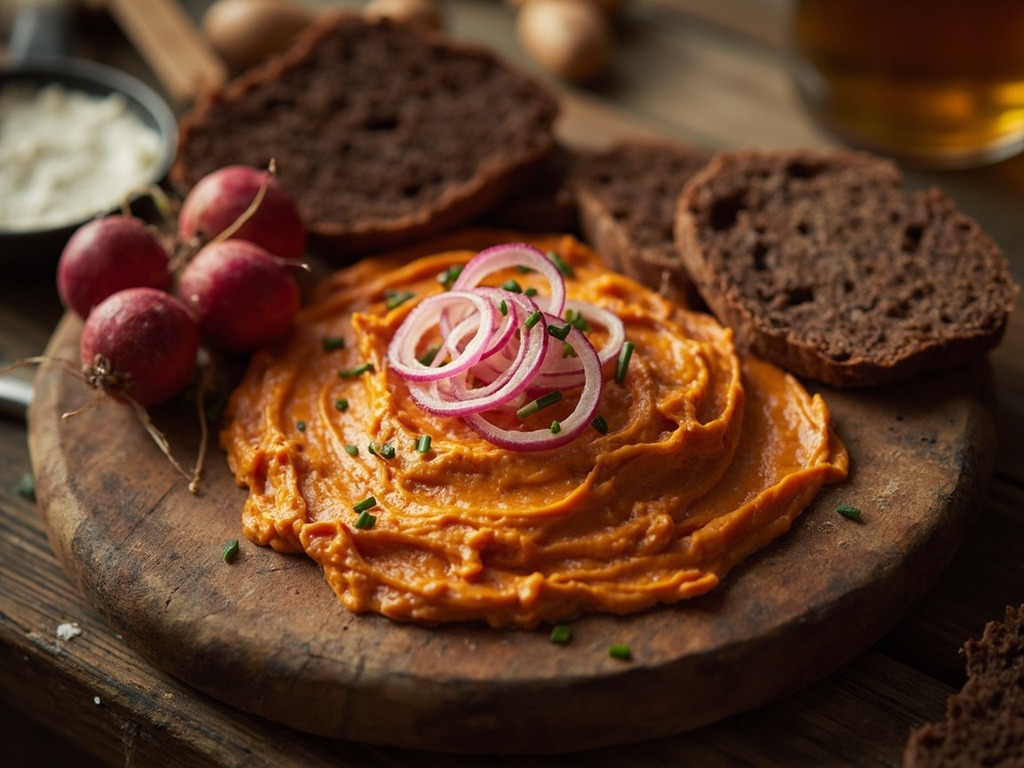
Augsburg Obatzda, the Worker's Board
Why this dish? Brecht was born in Augsburg, Bavaria, into a modest background, and claimed simple tastes as a 'man of the people'. Obatzda — a spread made from overripe cheese salvaged rather than thrown away — is the archetype of the frugal, waste-not Bavarian Brotzeit that soaked his childhood.
A creamy paste made by mashing a ripe camembert with butter, onion, and paprika, spread on rye bread. Born in Bavarian breweries in the 1920s, it is the quintessential popular cold meal: nothing wasted, everything spread.
Listen to me, comrade: first the grub, then the morals. Back home in Augsburg, we didn't throw out a cheese just because it stank — we mashed it with a bit of butter, some onion, a pinch of red, and there was your dinner spread on black bread. No bourgeois fuss, no silverware: a knife, a board, and you ate standing up if need be. That's honest cooking, the kind that feeds the working man — and doesn't lie to him about what he's swallowing.
- •Ripe Camembert or Romadur — one whole cheese (salvaged creamy base)
- •Softened butter — a good knob (binder)
- •Onion — one small (bite)
- •Sweet paprika powder — a generous pinch (color and flavor)
- •Caraway (Kümmel) — a pinch (signature spice)
- •Rye bread — as needed (base)
Augsburg Obatzda, the Worker's Board
A creamy paste made by mashing a ripe camembert with butter, onion, and paprika, spread on rye bread. Born in Bavarian breweries in the 1920s, it is the quintessential popular cold meal: nothing wasted, everything spread.
Why this dish? Brecht was born in Augsburg, Bavaria, into a modest background, and claimed simple tastes as a 'man of the people'. Obatzda — a spread made from overripe cheese salvaged rather than thrown away — is the archetype of the frugal, waste-not Bavarian Brotzeit that soaked his childhood.
Listen to me, comrade: first the grub, then the morals. Back home in Augsburg, we didn't throw out a cheese just because it stank — we mashed it with a bit of butter, some onion, a pinch of red, and there was your dinner spread on black bread. No bourgeois fuss, no silverware: a knife, a board, and you ate standing up if need be. That's honest cooking, the kind that feeds the working man — and doesn't lie to him about what he's swallowing.
Ingredients (period version)
- Ripe Camembert or Romadur — one whole cheese (salvaged creamy base)
- Softened butter — a good knob (binder)
- Onion — one small (bite)
- Sweet paprika powder — a generous pinch (color and flavor)
- Caraway (Kümmel) — a pinch (signature spice)
- Rye bread — as needed (base)
Ingredients
- Very ripe Camembert — 250 g (creamy base)
- Soft butter — 60 g (binder)
- Red onion — 1 small, finely chopped (bite)
- Sweet paprika — 1 tsp (color and flavor)
- Caraway seeds — 1/2 tsp (signature spice)
- Whole-grain rye bread — 6 slices (base)
- Chives — a few sprigs (garnish)
Method
- Take the camembert and butter out 1 hour ahead so they soften.
- Mash the cheese (including rind) with the butter using a fork until a coarse paste forms.
- Stir in paprika, caraway, and half the onion; season lightly with salt.
- Let rest 30 min in the fridge for flavors to meld.
- Mound on a plate, sprinkle with remaining onion and chives, serve with rye bread and radishes.
How it was made : In Bavarian breweries, Obatzda was served with a dark beer and pretzels. It was a clever way to use overripe unsold cheeses — a recovery dish that became a regional institution by the early 20th century.
The contemporary twist : Served as a quenelle on a slate board with pink radishes sliced on a mandoline, the 'worker's paste' becomes a bistro amuse-bouche — a nice Brechtian-distancing wink at gastronomic luxury.
Bertolt Brecht · Charactorium