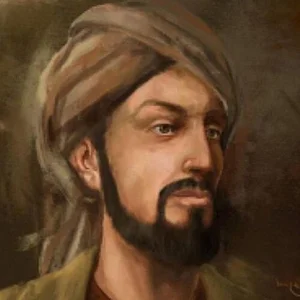

Chinese artisan and inventor of the 11th century, Bi Sheng invented movable type printing using baked clay around 1040, under the Song Dynasty. His invention predates Gutenberg's in Europe by four centuries.
Frequently asked questions
Key Facts
- Around 1040: invention of movable type in baked clay under the Northern Song Dynasty
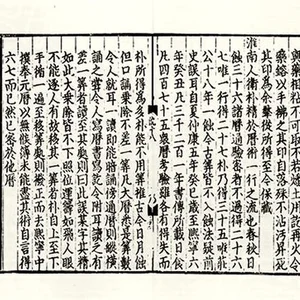
- His technique is described by Shen Kuo in the *Mengxi Bitan* (around 1088)
- The type pieces were made from fired clay and set on a resin plate for printing
- His invention predates Gutenberg's press (around 1450) in Europe by four centuries
- Movable type in wood and later in metal was further developed after him across East Asia
Works & Achievements
An invention involving the carving of individual characters onto fired clay cubes, their arrangement on an iron plate, and their reuse after printing. The first documented movable type system in the world, it predates Gutenberg's invention by four centuries and establishes the fundamental principle underlying all modern typography.
A technical innovation involving the setting of movable type onto an iron plate using a heated mixture of resin, wax, and ash, which was then allowed to cool. This reversible process allowed a page to be composed, printed, and then the type retrieved intact — the central principle of movable type printing.
A productivity method documented by Shen Kuo: Bi Sheng worked simultaneously with two iron plates. While one cooled and was used for printing, he composed the next page on the second — a workflow organization that doubled the output of the workshop.
A system for sorting thousands of fired clay characters into compartments labeled by phonetic category (rhyme), allowing the printer to quickly locate the desired character. This organizational innovation is just as important as the technique itself in making the system practically usable.
Anecdotes
Around 1040, Bi Sheng developed a revolutionary method: he carved individual characters from fine clay, fired them in a kiln to harden them, then arranged them on an iron plate coated with a mixture of pine resin, wax, and paper ash. By heating the plate, the characters became firmly anchored; once cooled, the surface was ready for printing. After each print run, reheating released the characters so they could be reused indefinitely.
The scholar Shen Kuo described Bi Sheng's invention in detail in his encyclopedia, written around 1088 — roughly forty years after the craftsman's death. He reports that Bi Sheng's fired-clay characters were carefully preserved by the inventor's own nephews after his passing. This firsthand account is the only near-contemporary source to have survived about this ordinary man who became a pioneer of written communication.
Bi Sheng organized his thousands of characters with an engineer's precision: he stored them in compartmentalized wooden boxes sorted by phonetic category, labeling each compartment with the family of signs it contained. For the most frequently used characters, he made several dozen identical copies in advance. This system anticipated by four centuries the type cases used in European printing houses of the Renaissance.
The challenge of Bi Sheng's system lay in the complexity of Chinese writing: whereas the Latin alphabet has only a few dozen letters, Song-dynasty script required thousands of different characters. Bi Sheng had to produce and store hundreds of duplicates for the most common signs, which explains why woodblock printing — printing from engraved wooden boards — remained dominant in China despite his revolutionary invention.
Gutenberg invented his metal movable-type press around 1450 in Europe, four centuries after Bi Sheng. In the twentieth century, the British historian Joseph Needham highlighted China's priority in his monumental work 'Science and Civilisation in China', noting that similar systems were subsequently developed in Korea using bronze type as early as the thirteenth century, in direct continuity with Bi Sheng's innovation.
Primary Sources
During the Qingli reign period, a commoner named Bi Sheng invented movable type printing. His method consisted of carving characters in fine clay, as thin as the edge of a coin, then firing them to harden them. He prepared an iron plate coated with a mixture of pine resin, wax, and paper ash. When he wanted to print, he placed an iron frame on the plate, arranged the type tightly together, then heated the whole thing; as soon as the mixture melted, he pressed a flat board against the type to level it, and the impression came out perfectly even.
For rarely used characters, they are made to order and can be obtained in an instant. When not in use for printing, each type piece was stored in its designated compartment. After Bi Sheng's death, his clay type pieces were collected by my nephews, who still keep them to this day.
Key Places
A city in central China identified as the probable birthplace of Bi Sheng. A museum dedicated to movable type printing now stands there, and the city actively promotes this heritage as part of the world's technical legacy.
Capital of the Northern Song dynasty, a metropolis of roughly one million inhabitants and a hub of the printed book trade. It was in this bustling city that printing techniques flourished most under the Song.
The retirement estate of the scholar Shen Kuo, where around 1088 he wrote the *Mengxi Bitan* — the only written source on Bi Sheng's invention. It was here that Shen Kuo's nephews carefully preserved the clay movable type they had inherited from the inventor.
Liens externes & ressources
Références
Œuvres
Système d'impression à caractères mobiles en terre cuite (活字印刷术)
vers 1040
Procédé de fixation par adhésif thermique
vers 1040
Système de double-plateau en alternance
vers 1040
Classification phonétique des caractères pour l'imprimerie
vers 1040