 flip
flipGlutinous Rice Cake with Honey and Osmanthus (桂花蜜糕, guì huā mì gāo)
Glutinous Rice Cake with Honey and Osmanthus (桂花蜜糕, guì huā mì gāo)
Why this dish? The streets of Bianjing overflowed with sweet vendors at all hours, and Bi Sheng, on his way to fetch clay or pine-soot ink, could treat himself to a sweet bite perfumed with autumn osmanthus to accompany his tea.
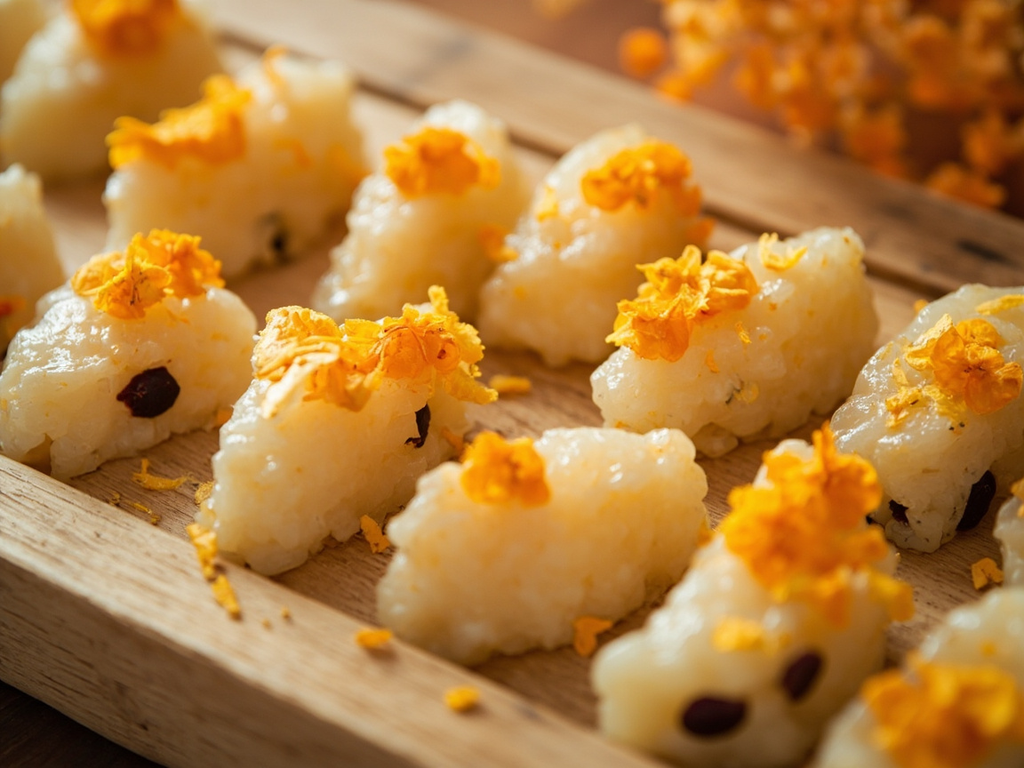
A small cake of glutinous rice flour steamed, sweetened with honey and perfumed with tiny yellow osmanthus flowers, studded with jujube dice. Soft, tenderly fragrant, the sweet comfort of a work break.
When autumn lays the sweet scent of osmanthus over the city, I cannot resist a little cake bought at the street corner, near the ink shop. I bring it back to the workshop to eat with my whisked tea, between two plates: honey sweetens the mouth, and those tiny flowers smell of all autumn. See how something so simple — rice, honey, flowers — gladdens the humble engraver that I am. Keep one for the one working beside you, friend; shared sweetness is twice as sweet.
- •Glutinous rice flour — two handfuls (base)
- •Honey — as desired (sweetener)
- •Osmanthus flowers (dried or in syrup) — a pinch (aroma)
- •Jujubes (Chinese dates) — a few (fruity garnish)
Glutinous Rice Cake with Honey and Osmanthus (桂花蜜糕, guì huā mì gāo)
A small cake of glutinous rice flour steamed, sweetened with honey and perfumed with tiny yellow osmanthus flowers, studded with jujube dice. Soft, tenderly fragrant, the sweet comfort of a work break.
Why this dish? The streets of Bianjing overflowed with sweet vendors at all hours, and Bi Sheng, on his way to fetch clay or pine-soot ink, could treat himself to a sweet bite perfumed with autumn osmanthus to accompany his tea.
When autumn lays the sweet scent of osmanthus over the city, I cannot resist a little cake bought at the street corner, near the ink shop. I bring it back to the workshop to eat with my whisked tea, between two plates: honey sweetens the mouth, and those tiny flowers smell of all autumn. See how something so simple — rice, honey, flowers — gladdens the humble engraver that I am. Keep one for the one working beside you, friend; shared sweetness is twice as sweet.
Ingredients (period version)
- Glutinous rice flour — two handfuls (base)
- Honey — as desired (sweetener)
- Osmanthus flowers (dried or in syrup) — a pinch (aroma)
- Jujubes (Chinese dates) — a few (fruity garnish)
Ingredients
- Glutinous rice flour — 200 g (base)
- Regular rice flour — 50 g (structure)
- Honey — 4 tbsp (sweetener)
- Warm water — 120–150 ml (binder)
- Dried osmanthus flowers (桂花) — 1 tsp (aroma)
- Dried pitted jujubes — 6, diced (garnish)
Method
- Mix the two flours, add 3 tbsp honey and warm water little by little until a soft, moist, non-sticky dough forms.
- Fold in half the osmanthus flowers and the diced jujubes.
- Press the dough into a lined mold (or small indentations), smooth the surface.
- Steam for 25–30 minutes until a skewer comes out clean.
- Remove, brush with remaining honey, and sprinkle with remaining osmanthus flowers. Let cool slightly, cut into diamonds.
How it was made : Steamed rice cakes (糕) were among the countless sweets sold in the lively streets of Bianjing, where a true street-food culture had developed under the Song. Osmanthus (桂花) had long perfumed pastries and drinks; refined cane sugar existed in China then, but honey remained the most common sweetener in households.
The contemporary twist : Cut the cake into small equal diamonds and arrange them in a neat grid on a wooden board — like a case of movable type ready for printing.
Sources : Meng Yuanlao, Dongjing Meng Hua Lu (东京梦华录), c. 1147 — sweet stalls and street food in Bianjing
Bi Sheng · Charactorium