 flip
flipBaursak — Yurt Fried Dough
Baursak — Yurt Fried Dough
Why this dish? Baursak are the ubiquitous small fried breads of the Turco-Mongol world, served at every meal and also distributed at festivals, births, and victories. When Tokhtamysh returned to Sarai after a victorious campaign, the women of the camp prepared mountains of golden baursak — a gesture of abundance and welcome. They are also eaten as a travel snack, easy to carry and keeping for several days.
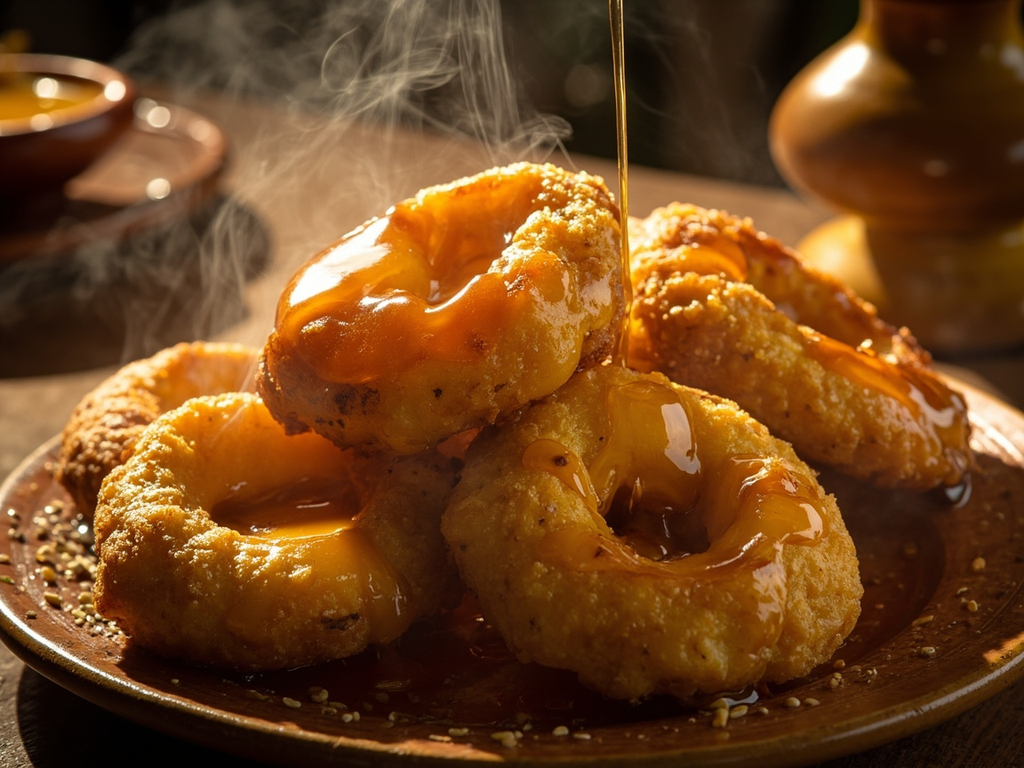
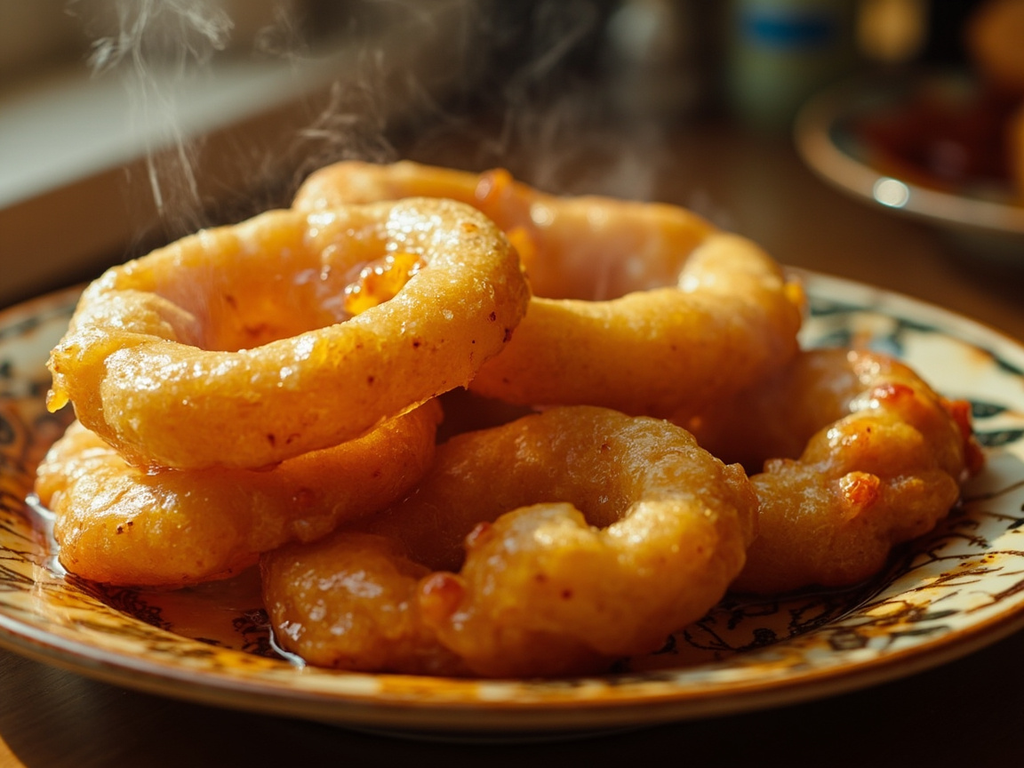
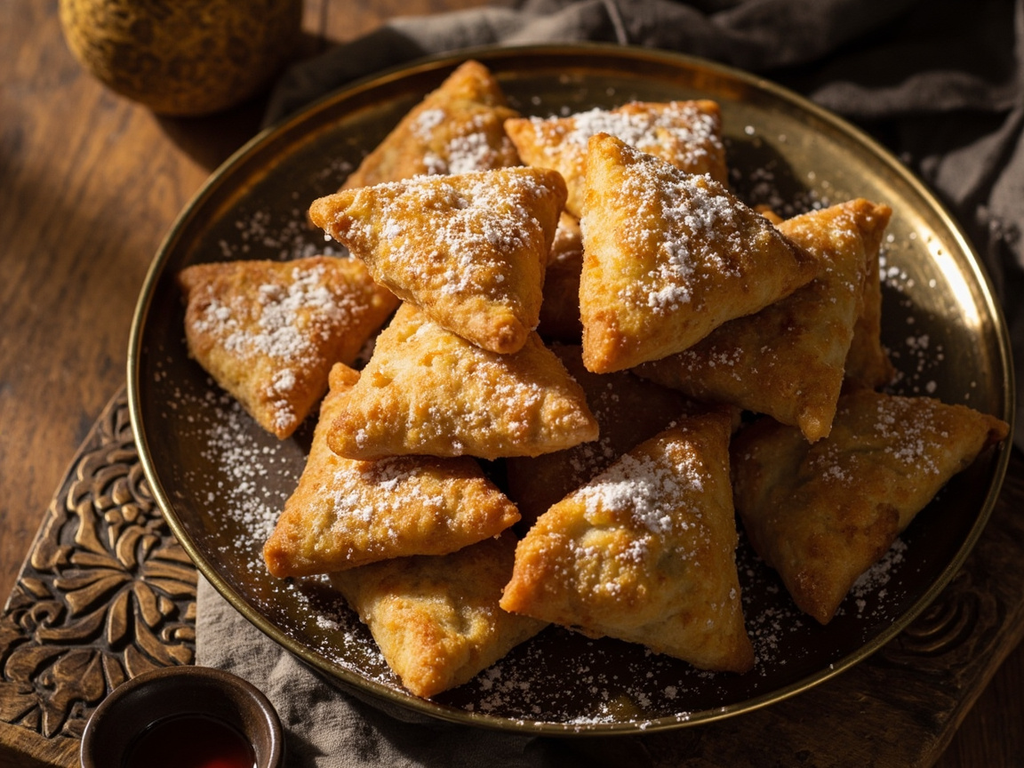
Small diamond-shaped leavened dough pieces fried in mutton fat, crispy on the outside, soft on the inside. They are eaten plain with tea or broth, or sprinkled with sugar for festivities. Their simple shape and frying scent perfumed the camps of the Horde.
Do you smell that rising from the cauldron? It is baursak browning in mutton fat. When I returned from Moscow with the Russian prince's tribute, my women had fried enough to feed a whole tümen. The children burned their fingers grabbing them while still hot. I love them when they puff up like little round bellies and the crust crackles under the tooth. Even Tamerlane, that fox of Samarkand, made no better baursak than ours — I say that before anyone.
- •Wheat flour — enough to fill a large bowl (Dough base)
- •Ewe's or mare's milk — one bowl (Liquid)
- •Melted fat-tail sheep fat — a little for dough, a lot for frying (Fat)
- •Rock salt — a pinch (Seasoning)
- •Natural sourdough starter — a piece from the previous batch (Leavening agent)
Baursak — Yurt Fried Dough
Small diamond-shaped leavened dough pieces fried in mutton fat, crispy on the outside, soft on the inside. They are eaten plain with tea or broth, or sprinkled with sugar for festivities. Their simple shape and frying scent perfumed the camps of the Horde.
Why this dish? Baursak are the ubiquitous small fried breads of the Turco-Mongol world, served at every meal and also distributed at festivals, births, and victories. When Tokhtamysh returned to Sarai after a victorious campaign, the women of the camp prepared mountains of golden baursak — a gesture of abundance and welcome. They are also eaten as a travel snack, easy to carry and keeping for several days.
Do you smell that rising from the cauldron? It is baursak browning in mutton fat. When I returned from Moscow with the Russian prince's tribute, my women had fried enough to feed a whole tümen. The children burned their fingers grabbing them while still hot. I love them when they puff up like little round bellies and the crust crackles under the tooth. Even Tamerlane, that fox of Samarkand, made no better baursak than ours — I say that before anyone.
Ingredients (period version)
- Wheat flour — enough to fill a large bowl (Dough base)
- Ewe's or mare's milk — one bowl (Liquid)
- Melted fat-tail sheep fat — a little for dough, a lot for frying (Fat)
- Rock salt — a pinch (Seasoning)
- Natural sourdough starter — a piece from the previous batch (Leavening agent)
Ingredients
- Wheat flour — 500 g (Base)
- Whole milk, lukewarm — 200 ml (Liquid)
- Active dry yeast — 7 g (1 packet) (Leavening agent)
- Melted butter — 40 g (Dough fat)
- Egg — 1 (Binder)
- Sugar — 1 tbsp (Yeast food and flavor)
- Salt — 1 tsp (Seasoning)
- Frying oil (sunflower or vegetable) — 1 liter (Frying)
Method
- Dissolve yeast and sugar in lukewarm milk. Let foam for 10 minutes.
- In a large bowl, mix flour and salt. Make a well, pour in the milk-yeast mixture, beaten egg, and melted butter.
- Knead for 8-10 minutes until smooth and elastic. Cover with a cloth and let rise for 1.5 hours in a warm place (dough should double in volume).
- Punch down the dough. Roll out on a floured surface to 1 cm thickness. Cut into diamonds about 4 × 3 cm.
- Heat oil to 170-175 °C in a deep pot or deep fryer.
- Fry baursak in small batches of 5-6, turning once, for 2-3 minutes total until golden brown and puffed.
- Drain on paper towels. Serve hot, piled in a pyramid.
How it was made : Fried breads in animal fat are attested throughout the Turco-Mongol world since at least the 12th century. The diamond shape is symbolic in Kazakh and Tatar culture — it evokes prosperity. In the Golden Horde, frying was done exclusively in fat-tail sheep fat (quyruq mai), which gave a flavor and texture impossible to replicate with vegetable oils. Baursak were also a ritual food: they were distributed to the poor during funerals and commemorations.
The contemporary twist : Dust with powdered sugar and serve with a small bowl of buckwheat honey for dipping — an irresistible snack that bridges doughnut and bread.
Sources : Nurlan Kenjeahmetuly, « Kazakh Cuisine », Almaty, 2003 · Starostin, « Food and Foodways in Medieval Eurasia » in « A Companion to the Mongol Empire », Brill, 2022
Tokhtamysh · Charactorium