 flip
flipKumis (Fermented Mare's Milk)
Kumis (Fermented Mare's Milk)
Why this dish? Kumis (qymyz) is the ritual drink of Turco-Mongol peoples. Tamerlane and his court consumed it abundantly at feasts, as Clavijo reports. Bibi Khanym, herself of Turco-Mongol nobility, would have grown up with this iconic steppe beverage, served in precious cups at court ceremonies.
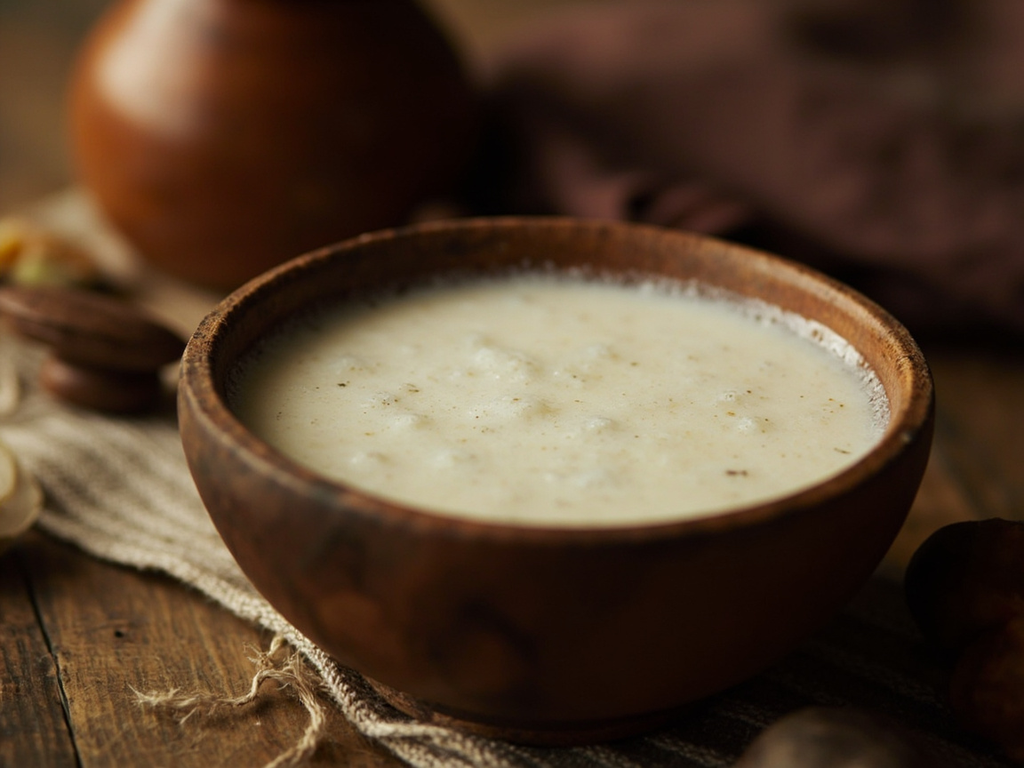
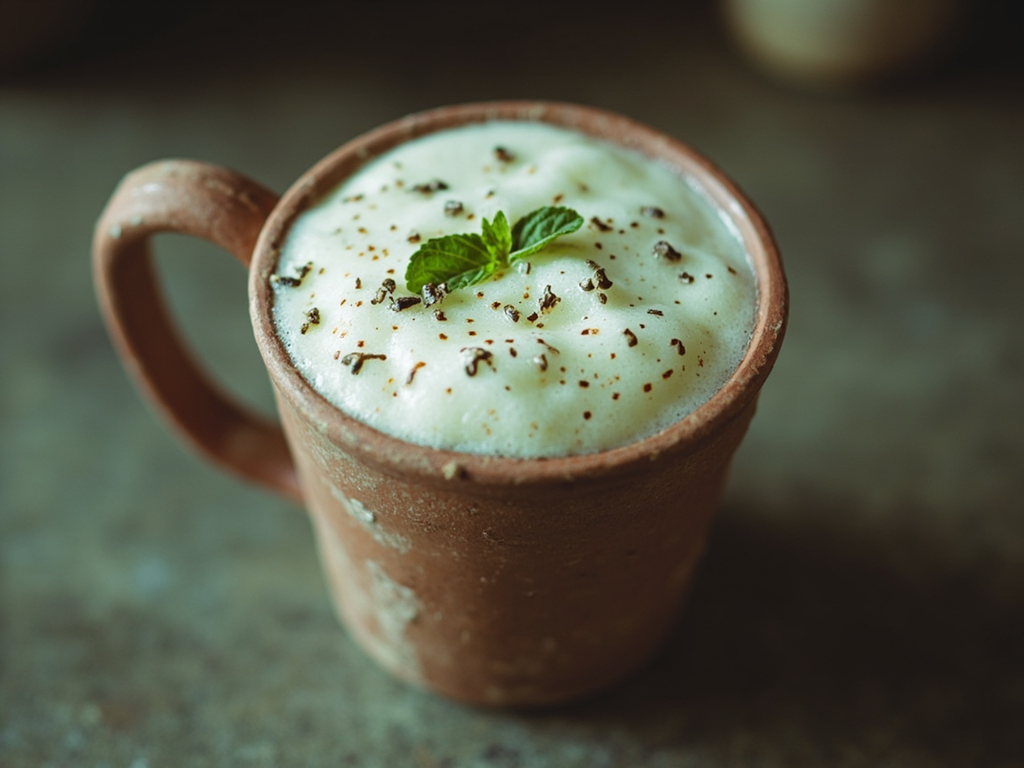
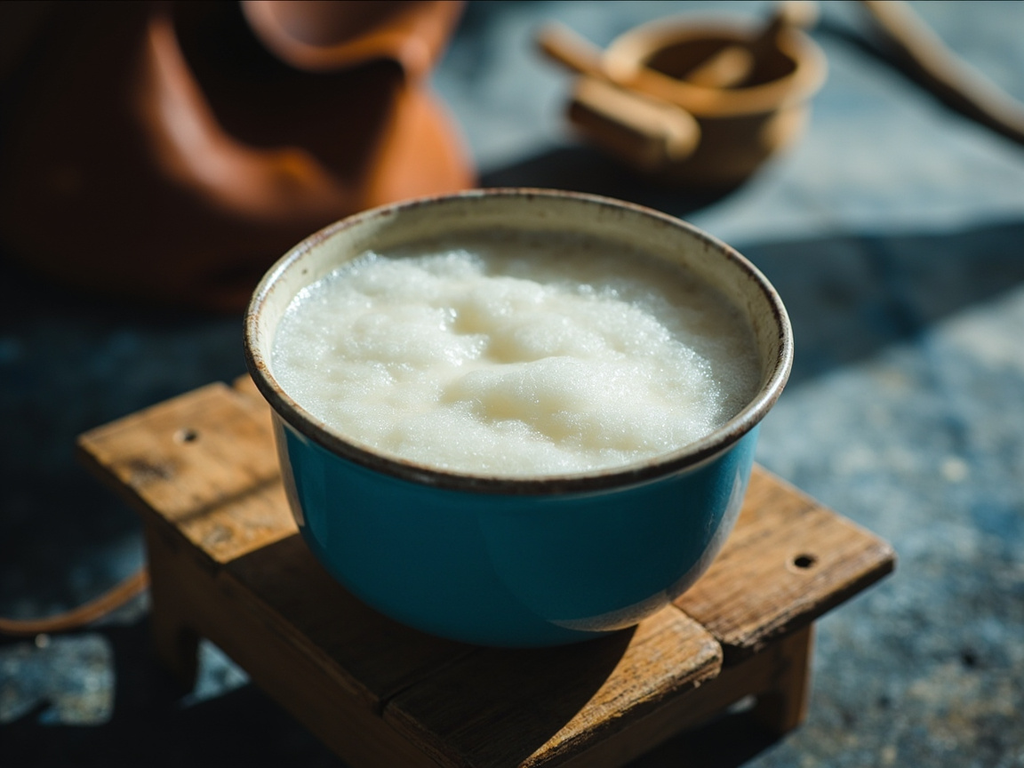
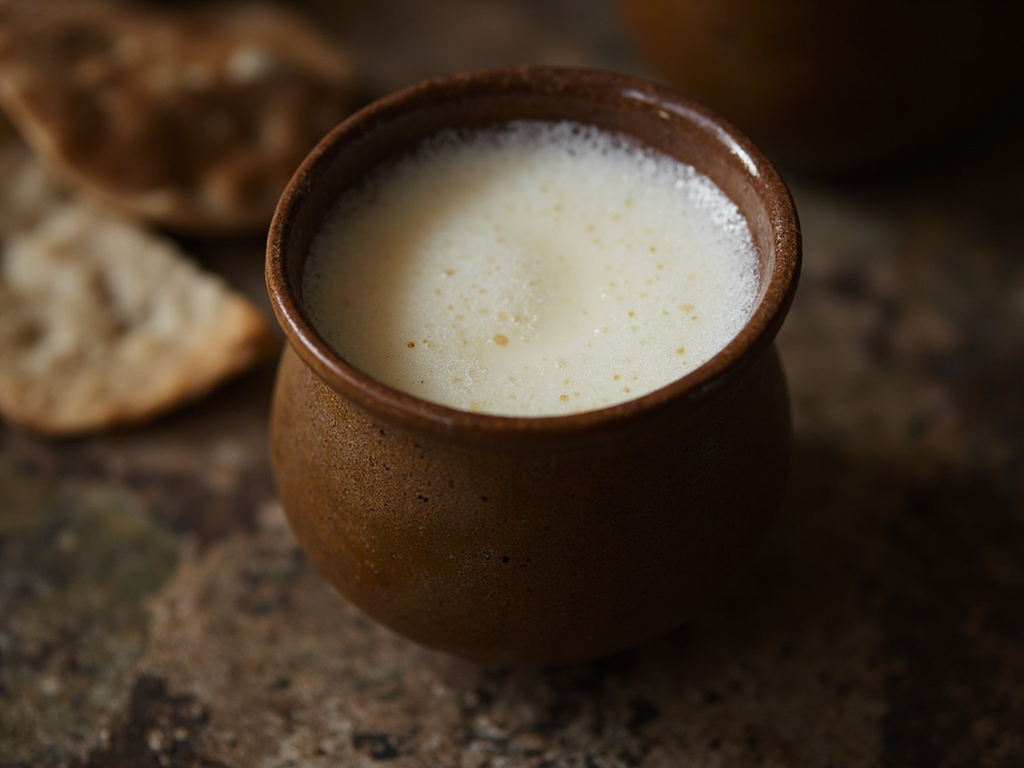
A lightly alcoholic drink obtained by fermenting mare's milk, effervescent and tangy. A sacred beverage of the steppe peoples, it has accompanied great occasions and hospitality rites for millennia.
Qymyz is the milk of our steppe ancestors. My lord Temür had it served in golden cups at his great feasts in the gardens of Samarkand — the Frankish ambassadors could not get over this drink that pricks the tongue and warms the blood. One churns mare's milk in a leather sack, a thousand strokes a day, until it foams and sings. It is the drink of conquerors, and I recommend it to you for strengthening both body and spirit.
- •Fresh mare's milk — a full leather sack (base for fermentation)
Kumis (Fermented Mare's Milk)
A lightly alcoholic drink obtained by fermenting mare's milk, effervescent and tangy. A sacred beverage of the steppe peoples, it has accompanied great occasions and hospitality rites for millennia.
Why this dish? Kumis (qymyz) is the ritual drink of Turco-Mongol peoples. Tamerlane and his court consumed it abundantly at feasts, as Clavijo reports. Bibi Khanym, herself of Turco-Mongol nobility, would have grown up with this iconic steppe beverage, served in precious cups at court ceremonies.
Qymyz is the milk of our steppe ancestors. My lord Temür had it served in golden cups at his great feasts in the gardens of Samarkand — the Frankish ambassadors could not get over this drink that pricks the tongue and warms the blood. One churns mare's milk in a leather sack, a thousand strokes a day, until it foams and sings. It is the drink of conquerors, and I recommend it to you for strengthening both body and spirit.
Ingredients (period version)
- Fresh mare's milk — a full leather sack (base for fermentation)
Ingredients
- Whole raw milk (cow or goat, failing mare's) — 1 L (base)
- Milk kefir (grains or liquid kefir) — 3 tbsp grains or 100 ml kefir (lactic ferment)
- Honey (optional) — 1 tsp (sweetness adjustment)
Method
- Warm the milk to about 30 °C (body temperature). Do not boil.
- Add the kefir grains (or liquid kefir) to the warm milk in a glass jar. Stir gently.
- Cover with a cloth and let ferment at room temperature (20-25 °C) for 24 to 48 hours, shaking the jar vigorously 2 to 3 times a day to imitate traditional churning.
- Taste: the kumis is ready when it is slightly fizzy, tangy, and a bit foamy. Strain out the kefir grains if used.
- Refrigerate and serve cold in bowls or cups. Add a touch of honey if desired.
How it was made : Kumis is attested among steppe peoples since at least the 5th century BC (Herodotus mentions Scythians churning mare's milk). William of Rubruck (1253) describes it in detail at the Mongol court. Clavijo confirms its presence at Tamerlane's banquets in Samarkand in 1404. The natural fermentation of mare's milk (richer in lactose than cow's milk) produces a lightly alcoholic drink (1-3 %).
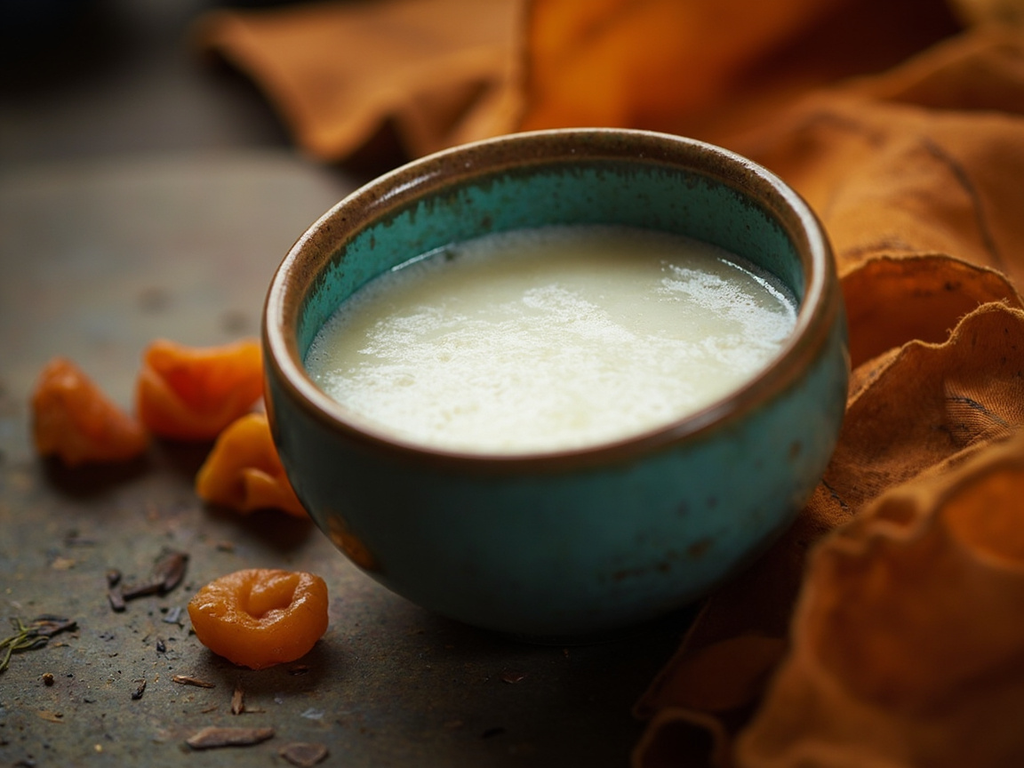
The contemporary twist : Serve in small turquoise ceramic bowls, accompanied by a few dried Samarkand apricots for nibbling — a steppe aperitif.
Sources : Clavijo, Ruy González de. Embajada a Tamorlán (1406) · Guillaume de Rubrouck. Voyage dans l'Empire mongol (1253) · Hérodote. Histoires, IV (5th c. BC)
Bibi Khanym · Charactorium