 flip
flipSummer Mead with Honey and Berries
Summer Mead with Honey and Berries
Why this dish? Erik was a clan chieftain, a *höfðingi*: he held his house and received guests. In the great hall, the feast (*veizla*) sealed alliances and authority, and there they drank from horns. Mead, the drink of lords and gods in the Norse imagination, was the cup of great days — the one you raise when you are about to convince entire families to follow you to a 'green land'.
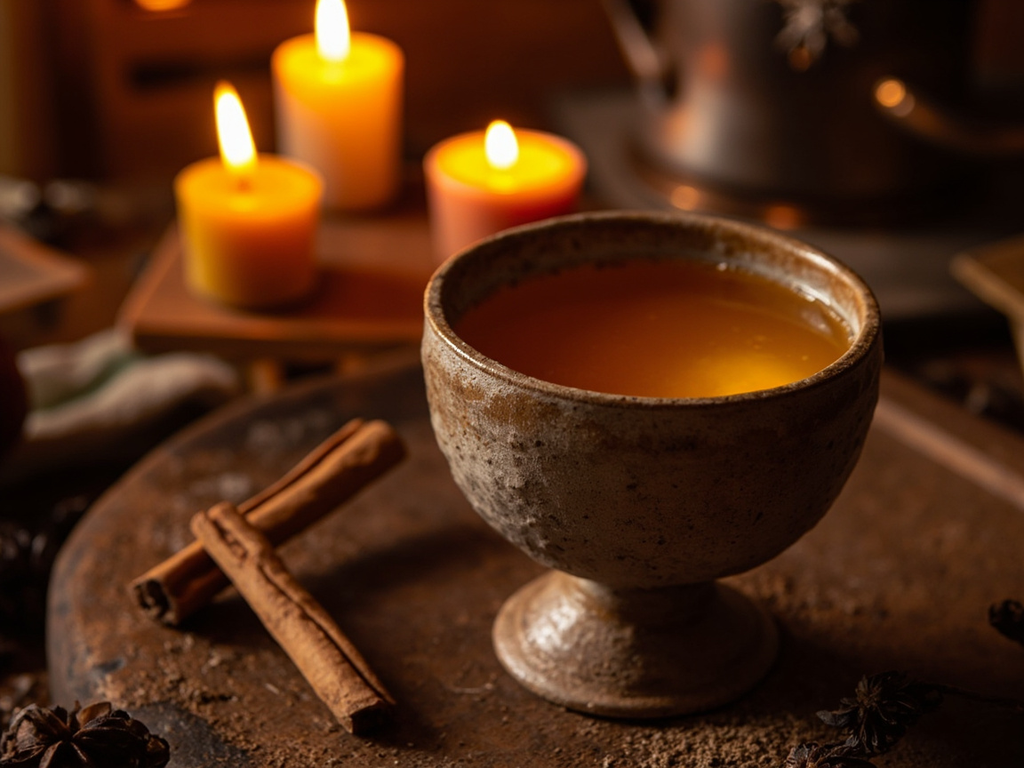
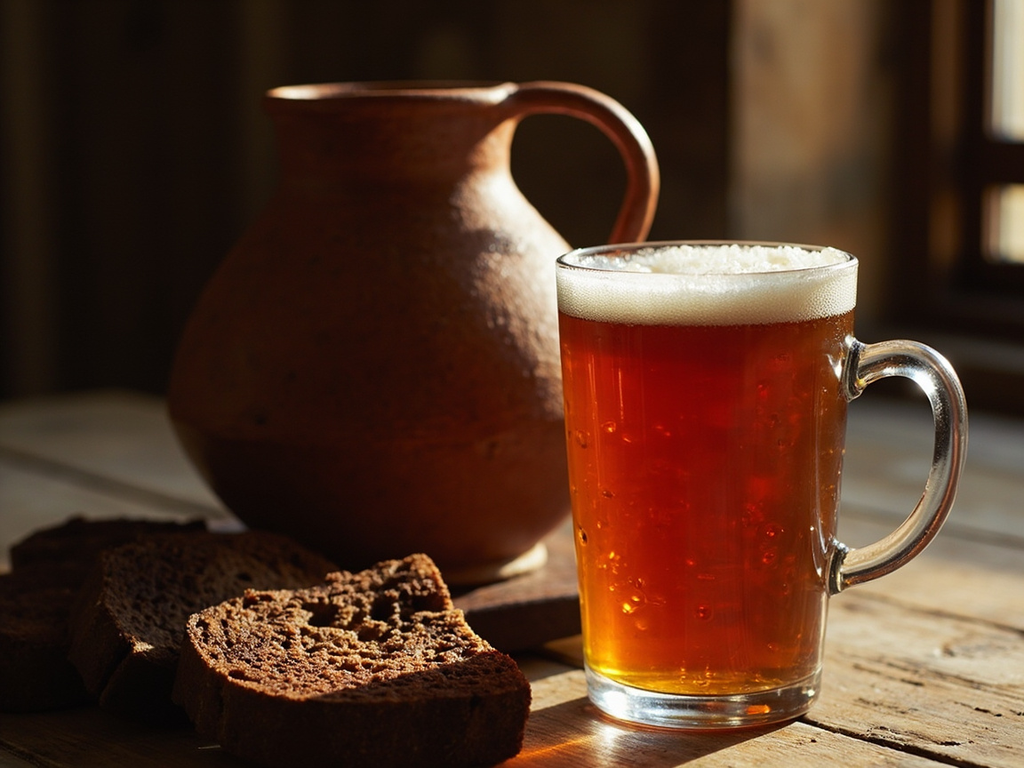
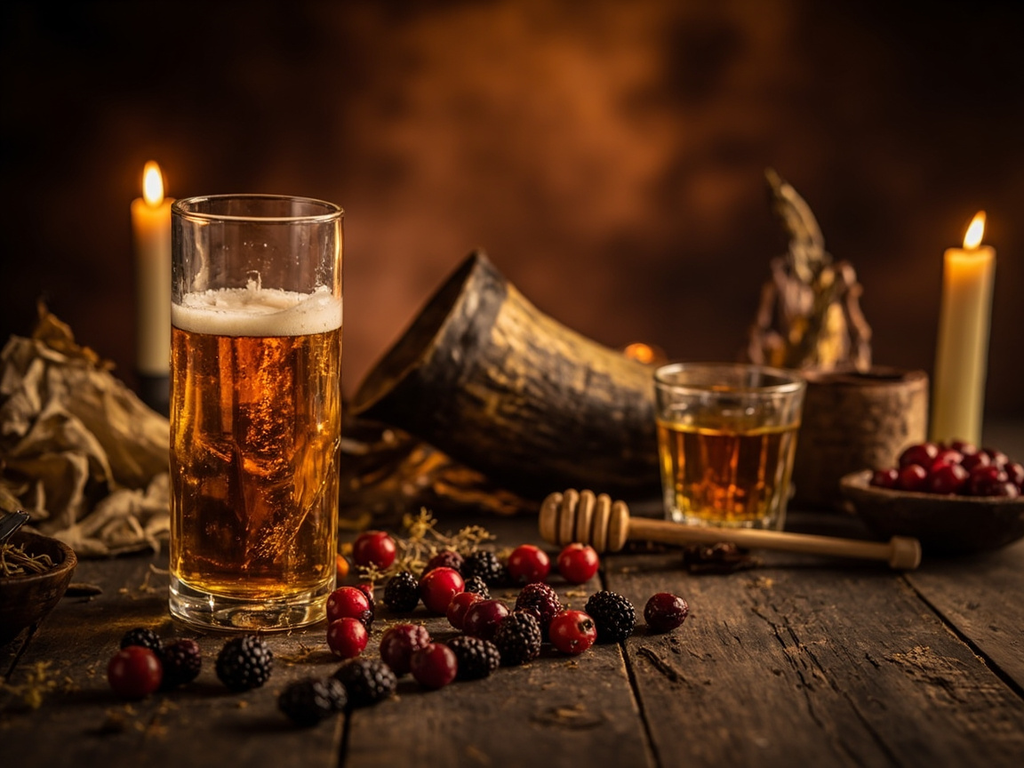
A fermented drink based on honey and water, flavored with wild berries, golden and sparkling, both sweet, tart, and slightly sour from fermentation. The honor cup of the feast, served in a horn, warming the evenings of the great hall.
When I wanted a man to follow me across the sea, I did not speak to him on an empty stomach. We fill the horn with mead — honey and water left to work until they bite the tongue — and mix in the summer's berries. We drink standing in the *skáli*, we swear loyalty, and oaths are better bound with the horn in hand. That is how I won whole families for my green land: by words, yes, but also by the cup.
- •Honey — as much as could be gathered (rare and precious in the North) (fermentable sugar)
- •Spring water — three to four times the volume of honey (base)
- •Wild berries — a handful (flavor and acidity)
- •Wild yeasts (from honey and air) — natural (fermentation)
Summer Mead with Honey and Berries
A fermented drink based on honey and water, flavored with wild berries, golden and sparkling, both sweet, tart, and slightly sour from fermentation. The honor cup of the feast, served in a horn, warming the evenings of the great hall.
Why this dish? Erik was a clan chieftain, a *höfðingi*: he held his house and received guests. In the great hall, the feast (*veizla*) sealed alliances and authority, and there they drank from horns. Mead, the drink of lords and gods in the Norse imagination, was the cup of great days — the one you raise when you are about to convince entire families to follow you to a 'green land'.
When I wanted a man to follow me across the sea, I did not speak to him on an empty stomach. We fill the horn with mead — honey and water left to work until they bite the tongue — and mix in the summer's berries. We drink standing in the *skáli*, we swear loyalty, and oaths are better bound with the horn in hand. That is how I won whole families for my green land: by words, yes, but also by the cup.
Ingredients (period version)
- Honey — as much as could be gathered (rare and precious in the North) (fermentable sugar)
- Spring water — three to four times the volume of honey (base)
- Wild berries — a handful (flavor and acidity)
- Wild yeasts (from honey and air) — natural (fermentation)
Ingredients
- Honey — 300 g (fermentable sugar)
- Water — 1 litre (base)
- Berries (bilberries, lingonberries) — 100 g (flavor and acidity)
- Yeast (baker's or mead yeast) — a pinch (fermentation)
Method
- Warm the water (do not boil) and dissolve the honey in it; let cool to room temperature.
- Pour into a clean jar, add the lightly crushed berries and the yeast.
- Cover with a cloth (to let gases escape) and let ferment for 1–2 weeks away from light, stirring daily for the first few days.
- When bubbling subsides, strain and bottle; keep cool and consume young.
- Note: for a family version, you can stop early for a sweet, very low-alcohol mead, suitable for older children.
How it was made : Mead (*mjöðr*) holds a central place in Norse culture and mythology (Odin's mead of poetry), and drinking from a horn is a marker of elite feasts. However, honey remained rare in the far North and was often imported: a Greenlandic mead would have been an exceptional luxury, hence the 'evocation' level. Barley beer was the more common drink.
The contemporary twist : Serve sparkling in an amber-tinted stem glass, with a berry at the bottom and a drizzle of coulis — a 'höfðingi's mead' to toast, in a non-alcoholic sweet version for the whole table.
Erik the Red · Charactorium