 flip
flipMastava (Rice and Mutton Soup)
Mastava (Rice and Mutton Soup)
Why this dish? Mastava is the everyday soup of Central Asia, served morning or noon. Bibi Khanym, even amidst the splendor of the court, would have consumed this nourishing soup during ordinary harem meals. The addition of yogurt (qatiq) is typical of Samarkand and reflects the Turco-Mongol pastoral culture of the Timurid court.
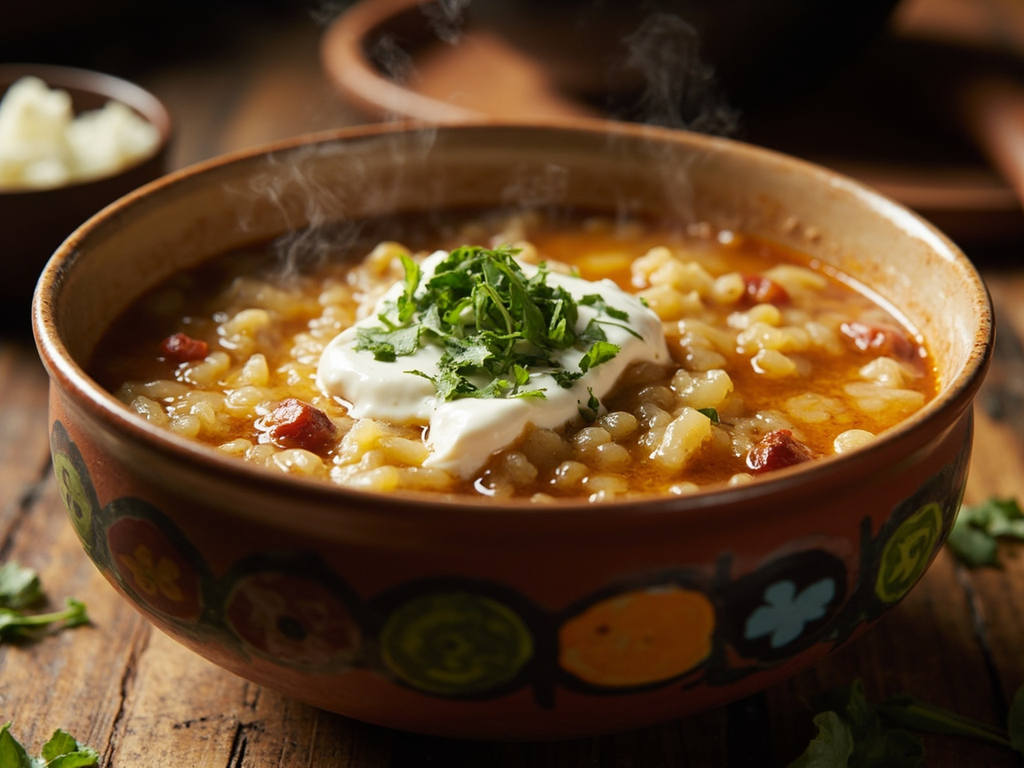
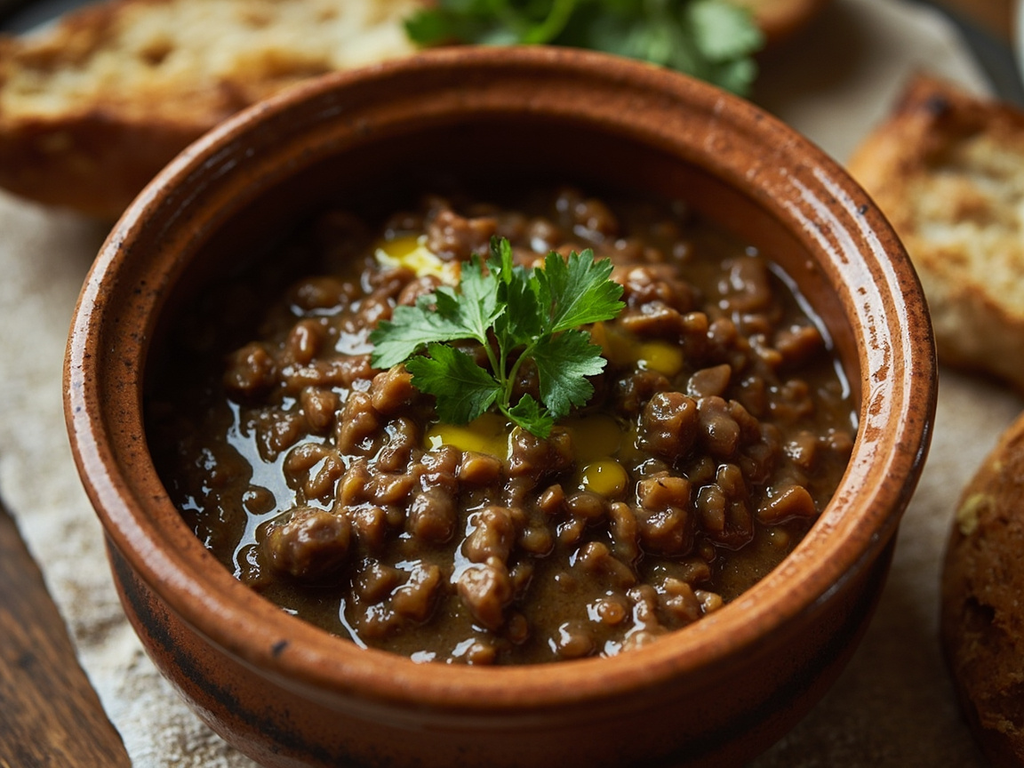
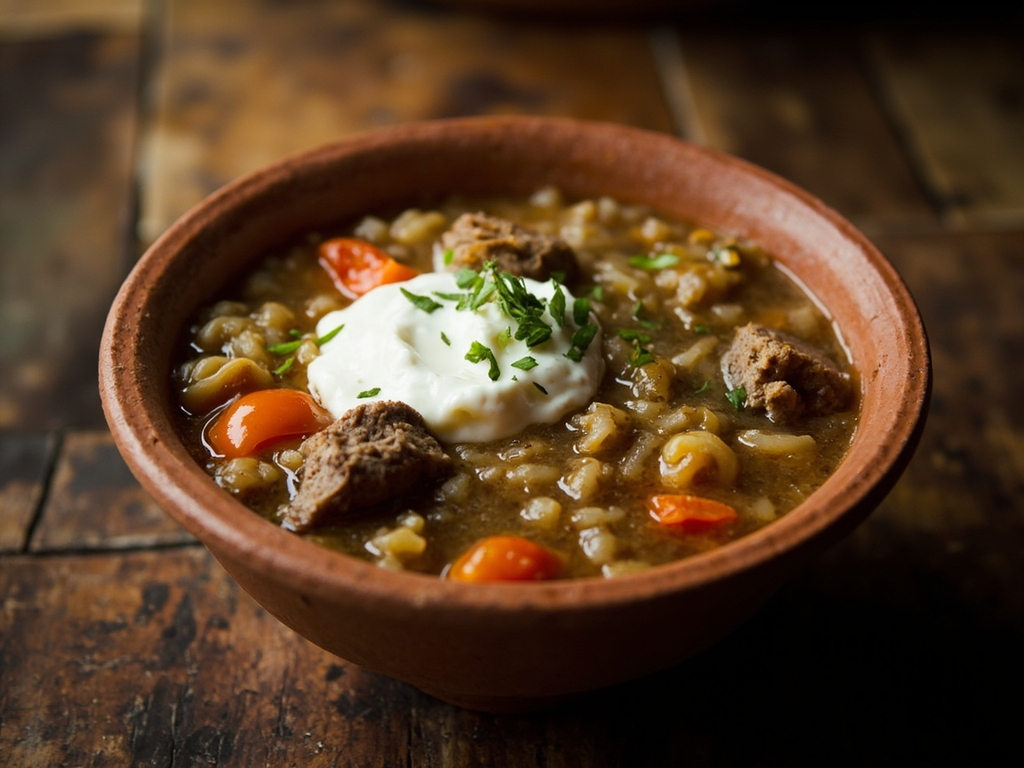
A thick soup of rice, mutton, and vegetables, enriched at the end of cooking with a splash of tangy yogurt (qatiq). Nourishing and comforting, it is the daily meal of Central Asia, from palace to yurt.
In the morning, before the sun climbs too high over the domes of Samarkand, I am served hot mastava. There is no need for noble meat — trimmings of mutton and a few bones suffice, with rice, turnips, and herbs from the garden. The secret, you see, is the qatiq poured at the end, that yogurt from our herds which gives the broth its sour freshness. It is a dish of wisdom, not of parade — it nourishes without exhausting the body.
- •Mutton (bone-in pieces) — a modest portion (protein base)
- •Rice — a handful (thickener)
- •Onion — one (aromatic)
- •Turnips or carrots — a few (vegetables)
- •Qatiq (thick fermented yogurt) — a bowl (sour finish)
- •Fresh herbs (cilantro, dill) — a bunch (freshness)
- •Sheep tail fat — a little (fat)
- •Salt, cumin — to taste (seasoning)
Mastava (Rice and Mutton Soup)
A thick soup of rice, mutton, and vegetables, enriched at the end of cooking with a splash of tangy yogurt (qatiq). Nourishing and comforting, it is the daily meal of Central Asia, from palace to yurt.
Why this dish? Mastava is the everyday soup of Central Asia, served morning or noon. Bibi Khanym, even amidst the splendor of the court, would have consumed this nourishing soup during ordinary harem meals. The addition of yogurt (qatiq) is typical of Samarkand and reflects the Turco-Mongol pastoral culture of the Timurid court.
In the morning, before the sun climbs too high over the domes of Samarkand, I am served hot mastava. There is no need for noble meat — trimmings of mutton and a few bones suffice, with rice, turnips, and herbs from the garden. The secret, you see, is the qatiq poured at the end, that yogurt from our herds which gives the broth its sour freshness. It is a dish of wisdom, not of parade — it nourishes without exhausting the body.
Ingredients (period version)
- Mutton (bone-in pieces) — a modest portion (protein base)
- Rice — a handful (thickener)
- Onion — one (aromatic)
- Turnips or carrots — a few (vegetables)
- Qatiq (thick fermented yogurt) — a bowl (sour finish)
- Fresh herbs (cilantro, dill) — a bunch (freshness)
- Sheep tail fat — a little (fat)
- Salt, cumin — to taste (seasoning)
Ingredients
- Lamb neck or shank — 400 g (protein base)
- Short or long-grain rice — 80 g (thickener)
- Yellow onion — 1 large (aromatic)
- Carrots — 2 (vegetable)
- Turnip — 1 small (vegetable)
- Full-fat plain yogurt — 150 g (sour finish)
- Vegetable oil or clarified butter — 2 tbsp (fat)
- Fresh cilantro and dill — 1 bunch each (freshness)
- Ground cumin, salt, black pepper — 1 tsp each (seasoning)
- Water — 1.5 L (broth)
Method
- Cut the meat into small pieces. Slice the onion. Dice the carrots and turnip into small cubes.
- In a pot, heat the oil and sauté the onion until translucent. Add the meat and sear for 5 minutes.
- Add the carrots and turnip, cook for 3 minutes. Pour in the water, bring to a boil, skim, then reduce heat and simmer for 30 minutes.
- Add the rinsed rice, cumin, salt, and pepper. Continue cooking for 20 minutes over low heat until the rice is tender and the soup thickens.
- Off the heat, temper the yogurt with a ladle of hot broth, then stir it into the soup. Serve immediately, sprinkled with chopped cilantro and dill.
How it was made : Rice and meat soups are a staple of Central Asian diet documented since the Mongol era. The Yinshan Zhengyao (dietary manual of the Yuan court, 1330) describes very similar mutton and grain soups. Qatiq (fermented yogurt) is a product of Turkic pastoralists attested for centuries in the region.
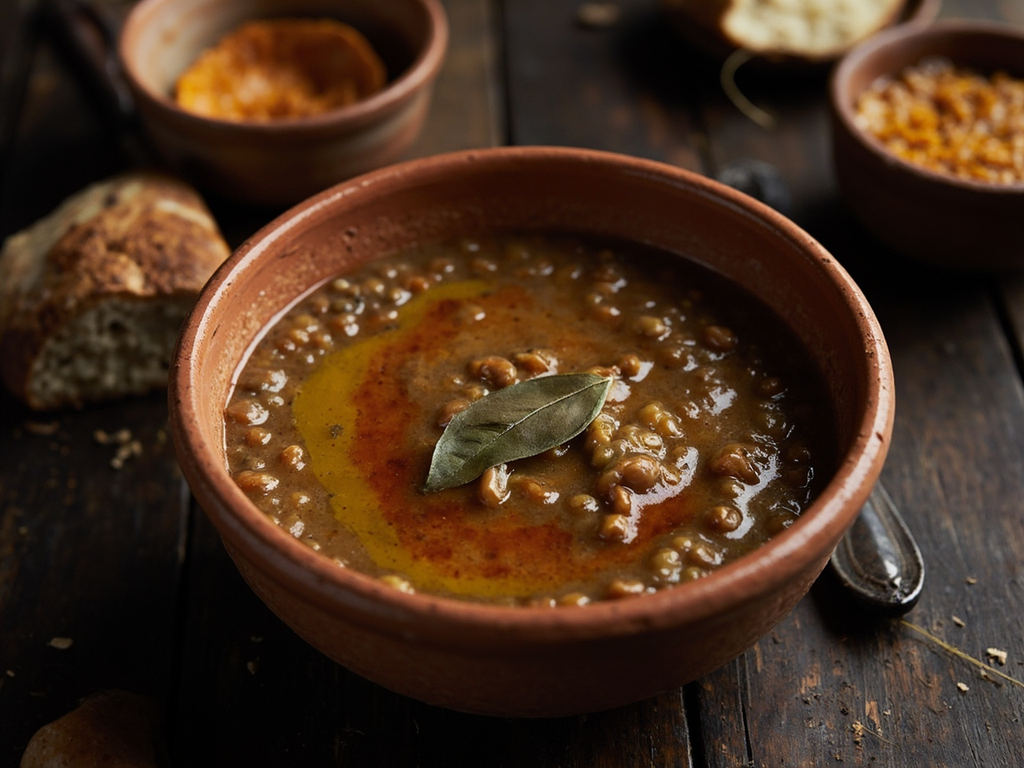
The contemporary twist : Serve in a terracotta bowl with a drizzle of olive oil infused with toasted cumin, and a few pomegranate seeds for color.
Sources : Buell, Paul D. & Anderson, Eugene N. A Soup for the Qan: Chinese Dietary Medicine of the Mongol Era (2010) · Zanca, Russell. Life in a Muslim Uzbek Village: Cotton Farming after Communism (2011)
Bibi Khanym · Charactorium