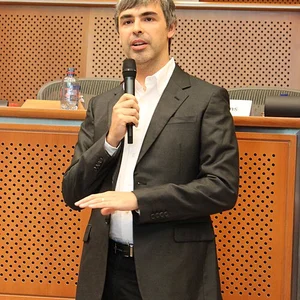

Co-creator of Mosaic (1993), the first mainstream web browser, and then co-founder of Netscape, Marc Andreessen revolutionized access to the Internet. He went on to become one of Silicon Valley's most influential investors, co-founding the venture capital firm Andreessen Horowitz.
Marc Andreessen(1971 — ?)
Marc Andreessen
États-Unis
9 min read
Frequently asked questions
Key Facts
- 1993: co-develops Mosaic, the first graphical web browser for general audiences, at the University of Illinois
- 1994: co-founds Netscape Communications Corporation
- 1995: Netscape's IPO, a defining symbol of the start of the dot-com boom
- 1998: Netscape is acquired by AOL for $4.2 billion
- 2009: co-founds the venture capital firm Andreessen Horowitz (a16z), which becomes one of the most powerful in Silicon Valley
Works & Achievements
The first mainstream graphical web browser, developed at NCSA. For the first time, it allowed images and text to be displayed on the same web page, making the Internet accessible to non-specialists and triggering worldwide adoption.
A commercial browser co-founded with Jim Clark and distributed free of charge to individuals. At its peak in 1995, it was used by more than 80% of internet users worldwide, before being overtaken by Internet Explorer.
A defining moment of the dot-com boom: Netscape went public without having turned a profit, yet saw its stock price double on the first day. The offering marked the entry of institutional investors into the digital economy.
A cloud computing company founded well ahead of its time, eventually sold to HP for $1.6 billion in 2007. This entrepreneurial adventure shaped the investment thesis that Andreessen and Horowitz would later bring to venture capital.
A venture capital firm co-founded with Ben Horowitz. With more than $35 billion under management in 2024, it is one of the most influential funds in the world, having backed Airbnb, GitHub, Slack, Lyft, and hundreds of other startups.
An essay published in the Wall Street Journal that became a landmark text in technology thinking. Andreessen predicted that software companies would come to dominate every sector of the economy — a prophecy that has since been largely borne out.
Anecdotes
When Marc Andreessen developed Mosaic at the University of Illinois in 1993, he was a simple student employed at NCSA for $6.85 an hour. Within a few months, his browser had been downloaded millions of times and radically transformed how people used the Internet — which until then had been the exclusive domain of researchers and the military. Nobody, not even his supervisors, had anticipated such widespread adoption.
In August 1995, Netscape went public without having turned a single dollar of profit. The stock price doubled on the first day, valuing the company at more than two billion dollars. Andreessen, aged 24, became a millionaire overnight — the IPO is considered the unofficial starting gun of the dot-com bubble.
The February 1996 cover of *Time* magazine showed Andreessen sitting barefoot on a golden throne. The image became an icon of the dot-com era, symbolizing both the triumph of a generation of young engineers and the hubris of a Silicon Valley that believed itself invincible.
In 1995, Bill Gates wrote an internal memo titled "The Internet Tidal Wave
in which he identified Netscape as the primary threat to Microsoft. He mobilized the entire company to develop Internet Explorer and bundle it free with Windows — a strategy that would lead to a landmark antitrust lawsuit against Microsoft.
In 2011, Andreessen published an essay in the *Wall Street Journal* titled "Why Software Is Eating the World
predicting that almost every sector of the economy would eventually be dominated by technology companies. The article has since been cited as one of the founding texts of contemporary entrepreneurial thinking.
Primary Sources
I want to get your thoughts on something I consider the most important development since the IBM PC in 1981. The Internet is becoming unavoidable [...]. Netscape has created a very popular browser and represents our greatest threat.
Netscape offers client and server software for browsing and publishing on the World Wide Web. The company has distributed more than six million copies of its Netscape Navigator software since December 1994.
Software companies are poised to take over large swaths of the economy. [...] In the next ten years, I expect many more industries to be disrupted by software, with new technology players dominating retail, healthcare, education, and financial services.
We created Mosaic because information existed on the network but nobody could access it easily. We wanted to make the Internet available to everyone, not just scientists.
Andreessen Horowitz is a $300 million venture capital fund dedicated to early-stage and growth-stage technology companies. We believe software will continue to fundamentally transform every sector of the global economy.
Key Places
Marc Andreessen's hometown, where he was born in 1971. This Midwestern city, far from any tech hub, illustrates the journey of an ordinary family's son who became a global figure in technology.
It was in the facilities of the National Center for Supercomputing Applications that Andreessen developed Mosaic in 1993. This university campus thus became the birthplace of the mainstream Web.
Silicon Valley. Netscape set up there in 1994; its offices became a symbol of the Internet frenzy of the 1990s, drawing engineers from around the world and investors ready to bet millions on companies with no profits.
Located on Sand Hill Road, the nerve center of global venture capital, the a16z office embodies Andreessen's new role: no longer a product builder, but a financier and mentor to the entrepreneurs reshaping the world.
The symbolic site of Netscape's IPO in August 1995, a founding moment of the dot-com bubble. The stock's dramatic surge on its first day of trading marked the beginning of an era of unprecedented speculation around technology stocks.
Typical Objects

Andreessen and his team developed Mosaic on high-end Unix workstations at NCSA. These machines, reserved for engineers and researchers, symbolize an era when powerful computing was still out of reach for the general public.

The graphical interface of Netscape Navigator, recognizable by its animated N and compass logo, became one of the first icons of the Internet age. For millions of users, opening this browser literally meant "going on the Internet."

In the 1990s, connecting to the Internet meant listening to the distinctive screech of a 56K modem and waiting several seconds for each page to load. Andreessen helped turn this ritual into a daily routine for millions of households.

A fixture in Silicon Valley startup offices, the whiteboard is the go-to tool for engineers and investors alike — used to sketch software architectures or evaluate business models. Andreessen uses it regularly during sessions with the founders he funds.

The rise of the laptop in the 1990s and 2000s went hand in hand with the growth of the Internet. Andreessen played a part in making the Web a usable environment on any personal device.

Andreessen Horowitz made heavy bets on mobile apps from 2010 onward, wagering that the smartphone would become the primary gateway to the Internet — a bet history has more than vindicated.
School Curriculum
Vocabulary & Tags
Key Vocabulary
Tags
Daily Life
Morning
During Netscape's glory years (1994–1998), Andreessen would arrive early at the Mountain View office, often before 8 a.m. He would first check the Navigator download statistics — several thousand per day — then move on to engineering meetings to drive new versions of the browser. The pressure was immense: Microsoft fired back every week with new features in Internet Explorer.
Afternoon
Afternoons were devoted to strategic meetings with business partners and journalists covering the "Internet revolution." Andreessen, recognizable by his imposing frame and casual t-shirts, was known for his ability to explain complex technical concepts to non-specialists. He also spent time responding to emails from developers building websites on Navigator.
Evening
In the evenings, Andreessen read compulsively — technical manuals, business journals, scientific publications. This habit, which he would maintain throughout his career, fed his reputation as an investor capable of anticipating major technological disruptions. He was also active late at night on online forums and, later, on Twitter, where he was known for his threads spanning dozens of posts.
Food
Like many Silicon Valley engineers of the 1990s, Andreessen paid little attention to his diet during intense development phases. Pizza and sodas were the go-to foods during late-night coding sessions at NCSA. Later, as a successful investor, he frequented the trendy restaurants of San Francisco and Menlo Park.
Clothing
Andreessen embodied the casual dress code of Silicon Valley culture: jeans, t-shirt or polo shirt, sneakers. He never wore a suit and tie, even at Netscape's IPO. This style was both a generational marker and a strong cultural signal: in 1990s tech, casual dress was synonymous with innovation and a rejection of established norms.
Housing
During the Netscape years, Andreessen lived in a functional, sparsely furnished Silicon Valley apartment. It was only much later, after the success of a16z, that he moved into a luxurious property. The contrast between his modest beginnings and subsequent opulence illustrates the meteoric trajectory of entrepreneurs of his generation.
Historical Timeline
Period Vocabulary
Liens externes & ressources
Références
Œuvres
Netscape Navigator
1994
Loudcloud / Opsware
1999-2007
Andreessen Horowitz (a16z)
2009
'Why Software Is Eating the World'
2011