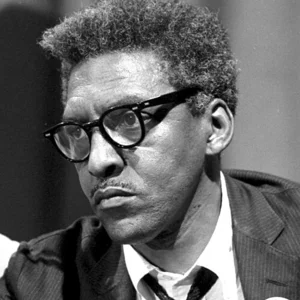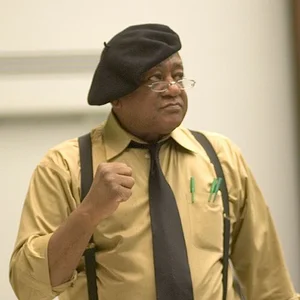

Bobby Seale is an African American activist who, in 1966, co-founded the Black Panther Party with Huey P. Newton. A leading figure in the civil rights movement and the Black Power movement, he championed a revolutionary program to defend Black communities in the United States.
Bobby Seale(1936 — ?)
Bobby Seale
États-Unis
6 min read
Frequently asked questions
Key Facts
- 1936: born in Dallas (Texas)
- 1966: co-founds the Black Panther Party with Huey P. Newton in Oakland
- 1968-1970: indicted in the “Chicago Eight” trial, then tried separately (gagged and chained during the hearings)
- 1973: runs for mayor of Oakland and finishes in second place
- Author of the autobiographical work “Seize the Time” (1970)
Works & Achievements
Co-founded, with Huey Newton, the most iconic revolutionary organization of the Black Power movement. It lastingly transformed African American struggles.
Co-authored the manifesto setting out the party's goals. It brings together economic, social, and racial-justice demands.
Launched a program feeding thousands of poor children before school. A model of community social action.
A foundational account of the history of the Black Panther Party written by Seale. A key reference work on the movement.
A candidacy that forced a runoff and mobilized Black voters in large numbers. A turning point toward institutional political action.
An autobiography in which Seale reflects on his life and his commitments. An intimate testimony from a leading figure of activism.
Anecdotes
In October 1966, Bobby Seale and Huey Newton wrote the “Ten-Point Program” of the Black Panther Party in a single evening, in a kitchen in Oakland. The text demanded jobs, decent housing and an end to police violence against Black people: it would become the party's manifesto.
During the trial of the “Chicago Eight” in 1969, Bobby Seale loudly demanded the right to defend himself. Judge Julius Hoffman then ordered him to be gagged and bound to his chair during the hearings. This image of a Black defendant chained up in an American courtroom caused a scandal around the world.
To address hunger in poor neighborhoods, Seale and the Panthers launched the “Free Breakfast for Children” program, a free breakfast served to children before school. The program fed thousands of children and would later inspire public programs across the United States.
In 1973, Bobby Seale ran for mayor of Oakland. Against all odds, he came in second and forced a runoff, mobilizing thousands of Black voters who until then had been kept away from the ballot box.
The Panthers patrolled the streets of Oakland armed, relying on the California law that at the time allowed the open carrying of weapons. In 1967, they walked armed into the State Capitol in Sacramento to protest a bill aimed at banning the practice — a resounding act of defiance.
Primary Sources
We want an immediate end to police brutality and murder of Black people.
Political power grows out of the barrel of a gun, but what we want is power for the people first.
I never sought to be a hero; I only wanted my people to live in dignity.
I have a constitutional right to defend myself, and you are denying it to me.
Key Places
Bobby Seale's hometown, in the segregated American South. His family would later migrate to California.
Birthplace of the Black Panther Party, founded in 1966. It was there that Seale organized patrols, social programs, and a city election campaign.
Site of the Panthers' armed protest in 1967 against a bill restricting the carrying of firearms. A heavily publicized action.
Setting of the Chicago Eight trial in 1969, where Seale was gagged and shackled before the court. A landmark episode in American judicial history.
Site of the Panthers' trial in 1970-1971, where Seale was charged and then released for lack of a verdict. The city became a hotspot of activist solidarity.
Typical Objects

The emblematic headgear of the Black Panthers' uniform, a sign of discipline and belonging to the movement. It symbolizes Black pride and the will to fight.
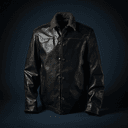
The jacket worn by Panther activists, which became a visual marker of Black Power. It embodied a stance of firmness in the face of the authorities.

The founding text written in 1966 listing the party's demands: work, housing, education, an end to police violence. A true political charter for the movement.

The party's weekly press organ, distributed in tens of thousands of copies. It served to inform, recruit, and fund the organization.

A weapon carried legally and openly during the self-defense patrols that monitored police interventions in Oakland. A tool of deterrence as much as a symbol of resistance.

The logo of the black big cat poised to pounce, designed as the party's emblem. It expressed the idea that the panther never strikes first but defends itself when cornered.
School Curriculum
Vocabulary & Tags
Key Vocabulary
Tags
Daily Life
Morning
During the Panther years, a day for an activist like Seale began early: organizing meetings and supervising the free breakfasts served to neighborhood children before school. Coffee and planning the day's actions set the pace of these intense mornings.
Afternoon
Afternoons were devoted to party tasks: writing and distributing the newspaper The Black Panther, training new recruits politically, and coordinating community programs. Seale also spent time talking with the residents of Oakland.
Evening
Evenings were for activist assemblies, strategic debates, and sometimes self-defense patrols monitoring police interventions. Under police and judicial pressure, vigilance remained constant.
Food
Food was modest, in keeping with Oakland's working-class Black neighborhoods: simple, inexpensive dishes. The party itself turned food into a political issue, handing out free meals to those most in need.
Clothing
Seale wore the recognizable Panther uniform: black beret, leather jacket, dark shirt. This outfit asserted discipline, pride, and belonging to the movement.
Housing
He lived in Oakland's working-class, Black neighborhoods, often in modest housing that also served as activist headquarters. These places blended private life with the party's political activity.
Historical Timeline
Period Vocabulary
Liens externes & ressources
Références
Œuvres
Fondation du Black Panther Party
1966
Programme en dix points
1966
Programme de petits-déjeuners gratuits
1968
Seize the Time
1970
Campagne pour la mairie d'Oakland
1973
A Lonely Rage
1978