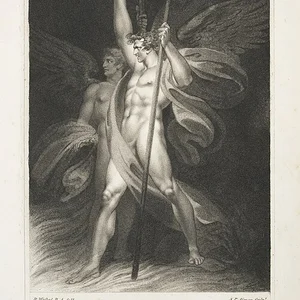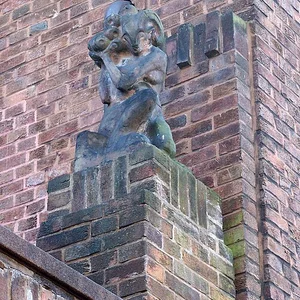

Bona Dea (“the Good Goddess”) is a Roman deity of fertility, healing and chastity, worshipped exclusively by women. Her secret cult excluded men, and the empress Livia had her temple on the Aventine restored and rededicated.
Bona Dea
Bona Dea
6 min read
Frequently asked questions
Key Facts
- Roman deity of fertility, healing and chastity, honored chiefly by women
- Had a temple on the Aventine Hill in Rome, the central site of her cult
- Her cult strictly excluded men; her nocturnal ceremonies were secret
- In 62 BC, the scandal of Publius Clodius Pulcher, who slipped in disguised as a woman during the rites held at Julius Caesar's house, sparked a sensational trial
- Under the reign of Augustus (1st century BC – 1st century AD), the empress Livia had her temple restored and rededicated
Works & Achievements
A sanctuary that became the centre of an exclusively female cult and a place for distributing remedies.
A secret rite held in the home of the supreme magistrate, presided over by matrons and Vestals, from which men were excluded.
An imperial refurbishment linking Bona Dea to the ideal of the virtuous matron promoted by the Augustan regime.
The goddess was invoked for health, fertility and healing; her temple served as a place of care for women.
Inscriptions and votive dedications attest to the veneration of Bona Dea well beyond Rome.
Ovid, Cicero, Plutarch and Macrobius transmitted the rites and legends of the goddess.
Anecdotes
The cult of Bona Dea was so secret that no man could attend it, and it is said that even the male statues at the site of the ceremony had to be veiled. The wine itself was called “milk” there and served in a vessel named the “honey jar,” to disguise its official prohibition to women.
In 62 BC, a scandal broke out: the young patrician Publius Clodius Pulcher disguised himself as a female musician to slip into the nighttime ceremony held at the house of Julius Caesar, where his wife officiated. Unmasked, he sparked a sensational trial for sacrilege, and Caesar divorced her at once, declaring that his wife “must be above all suspicion.”
Live snakes were kept in the temple of Bona Dea, symbols of fertility and healing. The sanctuary also housed medicinal plants that the priestesses distributed, making the place a kind of sacred dispensary reserved for women.
The empress Livia, wife of Augustus, had the temple of Bona Dea on the Aventine restored, thereby linking the goddess to the image of the virtuous wife and the ideal Roman matron that the imperial regime sought to promote.
The goddess's true name was kept secret: “Bona Dea” (the Good Goddess) is merely a respectful title. Some ancient authors identified her with Fauna, daughter or wife of the god Faunus, who is said to have refused to drink wine before her marriage.
Primary Sources
The Romans have a goddess whom they call Bona... No man may attend her sacred rites, nor even be in the house while they are being celebrated.
That sacrifice so ancient, the only one whose very name may not be heard by a man, which Clodius profaned.
Beneath the rock there is a place consecrated to the Good Goddess... from which the eyes of men are kept away.
This goddess is said to be Fauna, who in her lifetime was never seen by any man save her husband, and whose name no man ever heard.
Key Places
The goddess's principal sanctuary in Rome, located on the slope of the Aventine Hill, restored by the empress Livia.
One of the seven hills of Rome, associated with plebeian and female cults, where the goddess's temple stood.
Each year, the nocturnal December rite was held in the home of a consul or praetor, presided over by his wife and the Vestal Virgins.
The political and religious heart of Rome, where Clodius's trial for desecrating the cult was held in 61 BC.
Ovid places a site consecrated to the Good Goddess beneath a rock, away from the eyes of men, illustrating the hidden nature of the cult.
Typical Objects

Wine, normally forbidden to Roman women, was consumed during the rites but referred to euphemistically as “milk,” and its container as a “honey pot.”

Living snakes were kept in the temple as symbols of fertility, healing, and protection of the household.

The sanctuary kept healing herbs distributed by the priestesses, making Bona Dea a goddess of healing.

The site of the ceremony was decorated with all kinds of plants, but myrtle was banned from it, in memory of the goddess's punishment by Faunus.
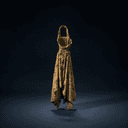
Any representation of a man or male animal present in the house where the rite was held had to be veiled during the ceremony.
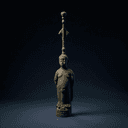
The goddess was depicted enthroned, holding a cornucopia and surrounded by serpents, signs of prosperity and fertility.
School Curriculum
Vocabulary & Tags
Key Vocabulary
Daily Life
Morning
As a deity, Bona Dea has no human morning, but her priestesses opened the sanctuary at dawn to tend the sacred serpents and water the medicinal plants. Married women came to leave their offerings and make their vows for fertility or healing.
Afternoon
In the afternoon, the temple on the Aventine functioned as a place of care reserved for women, where herbal remedies were distributed. The faithful consulted there about illnesses, pregnancies, and household matters.
Evening
It was at night, especially in December, that the great secret ceremony was held in the home of a high magistrate. By lamplight, the matrons and the Vestals carried out the rites, music and dancing included, sheltered from any male gaze.
Food
During the rites, a sacrificed sow was offered to the goddess, and wine renamed “milk” was consumed to circumvent the ban weighing on women. Honey and cakes completed these ritual offerings.
Clothing
The officiants wore the garments of Roman matrons, the long *stola* and the *palla*, sometimes adorned for the festival. The goddess herself was depicted draped in a tunic and a cloak, crowned and holding a cornucopia.
Housing
Bona Dea resided symbolically in her temple on the Aventine, but her nocturnal cult temporarily took over the home of the supreme magistrate. This space was purified and every male image within it was veiled to welcome the goddess.
Historical Timeline
Period Vocabulary
Liens externes & ressources
Références
Œuvres
Fondation du temple de l'Aventin
tradition : 272 av. J.-C.
Cérémonie nocturne de décembre
annuelle, République et Empire
Restauration du temple par Livie
vers 10 av. J.-C.
Fonction oraculaire et guérisseuse
période républicaine et impériale
Diffusion du culte dans les provinces
Ier-IIIe siècle ap. J.-C.
Mémoire littéraire
Ier siècle av. - Ve siècle ap. J.-C.