 flip
flipUral Pelmeni
Ural Pelmeni
Why this dish? Yeltsin is a child of the Urals, born in Butka near Sverdlovsk (Yekaterinburg). Pelmeni — small meat dumplings made by the hundreds and frozen outdoors in the Siberian cold — are THE emblematic dish of his native region, the food of large family tables and celebrations.
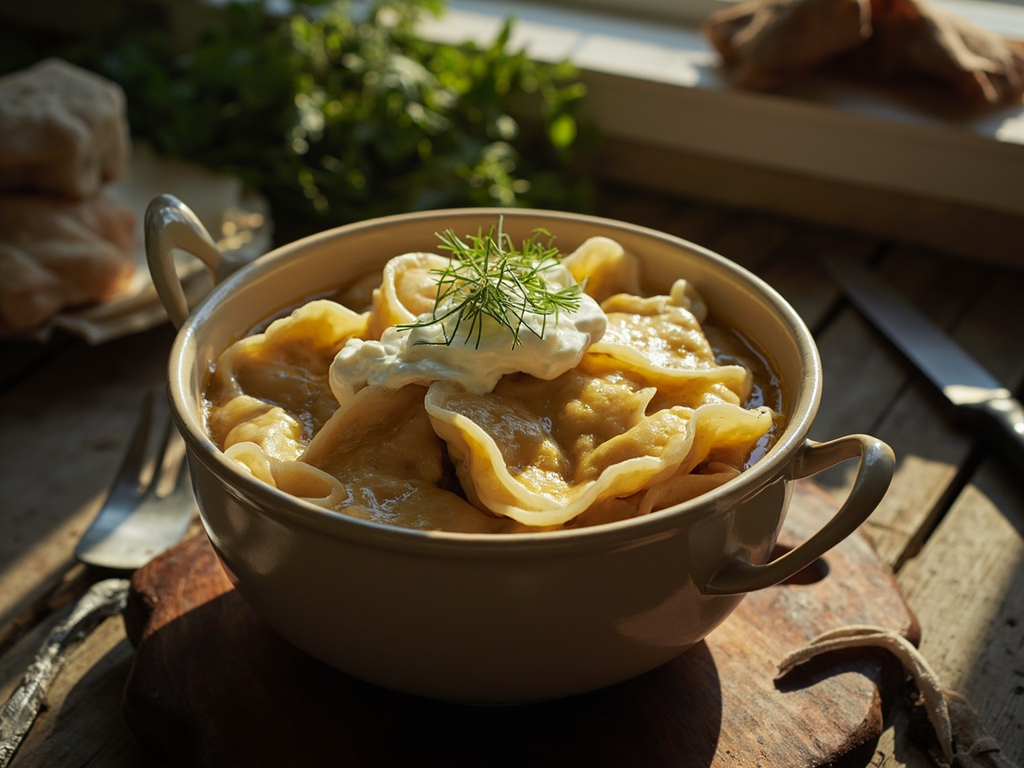
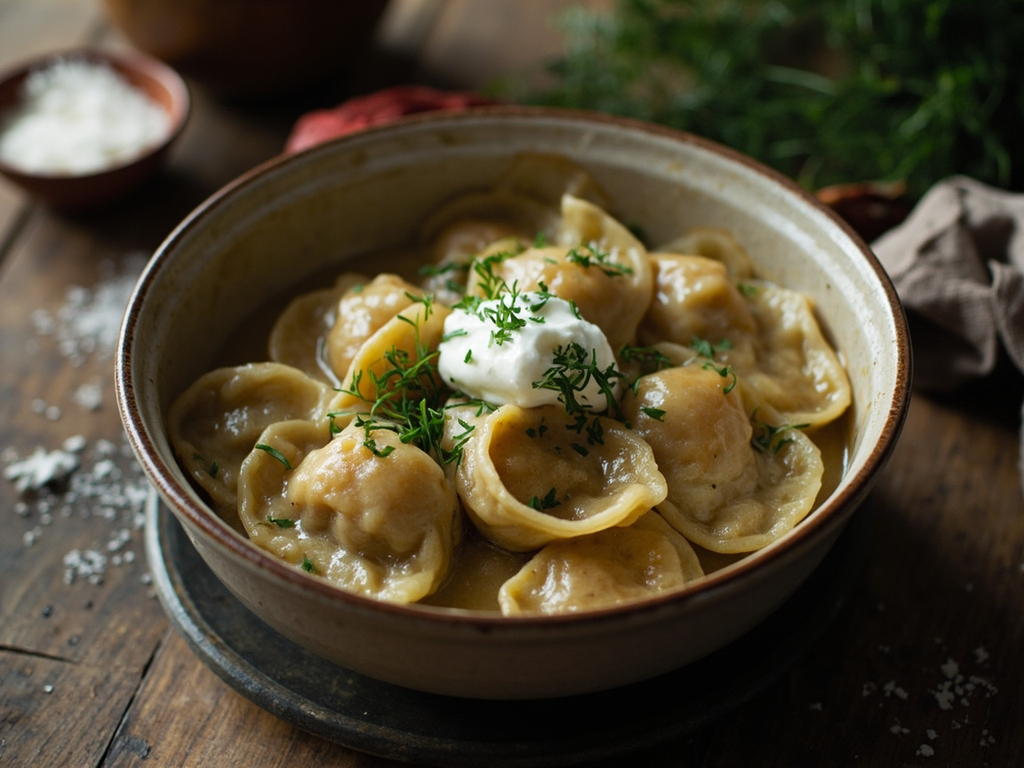
Small dumplings of thin dough filled with minced meat, boiled and served steaming with a dollop of sour cream. In the Urals and Siberia, they were made in mountains and kept frozen all winter: the natural freezer of the yard.
Listen to me, in the Urals we don't mess around with pelmeni. When I was a kid in Butka, the whole family would gather around the table, we'd roll the dough, pinch the edges, hundreds of them, and throw them outside in the snow to freeze hard as stone. In winter, you just grab a handful and drop them in boiling water: that's a real man's meal, solid, no fuss. A big spoonful of smetana on top, and you can stand firm at thirty below.
- •Wheat flour — a lot (dough)
- •Egg and cold water — as needed (bind dough)
- •Beef and pork minced together — equal parts (filling)
- •Onion — one large (filling aromat)
- •Salt, black pepper — generous (seasoning)
- •Sour cream (smetana) — a bowl (serving)
Ural Pelmeni
Small dumplings of thin dough filled with minced meat, boiled and served steaming with a dollop of sour cream. In the Urals and Siberia, they were made in mountains and kept frozen all winter: the natural freezer of the yard.
Why this dish? Yeltsin is a child of the Urals, born in Butka near Sverdlovsk (Yekaterinburg). Pelmeni — small meat dumplings made by the hundreds and frozen outdoors in the Siberian cold — are THE emblematic dish of his native region, the food of large family tables and celebrations.
Listen to me, in the Urals we don't mess around with pelmeni. When I was a kid in Butka, the whole family would gather around the table, we'd roll the dough, pinch the edges, hundreds of them, and throw them outside in the snow to freeze hard as stone. In winter, you just grab a handful and drop them in boiling water: that's a real man's meal, solid, no fuss. A big spoonful of smetana on top, and you can stand firm at thirty below.
Ingredients (period version)
- Wheat flour — a lot (dough)
- Egg and cold water — as needed (bind dough)
- Beef and pork minced together — equal parts (filling)
- Onion — one large (filling aromat)
- Salt, black pepper — generous (seasoning)
- Sour cream (smetana) — a bowl (serving)
Ingredients
- All-purpose flour (T55) — 300 g (dough)
- Egg — 1 (bind dough)
- Cold water — 120 ml (dough)
- Ground beef — 200 g (filling)
- Ground pork — 200 g (filling)
- Finely grated onion — 1 large (filling)
- Salt — 1 tsp (seasoning)
- Black pepper — ½ tsp (seasoning)
- Heavy cream (if smetana unavailable) — 150 g (serving)
- Chopped fresh dill — 1 handful (finishing)
Method
- Knead flour, egg, water, and a pinch of salt into a smooth, firm dough. Wrap in plastic wrap and let rest for 30 minutes.
- Mix the two meats with grated onion, salt, and pepper. Add a spoonful of cold water for a juicy filling.
- Roll out the dough very thinly. Cut into 6 cm disks. Place a small ball of filling in the center.
- Fold into a half-moon, seal the edges, then bring the two tips together and pinch to form the characteristic cap shape.
- Drop the pelmeni into a large pot of salted boiling water. They are done when they float to the surface, about 4 to 5 minutes.
- Drain, serve piping hot with a generous dollop of sour cream and chopped dill.
How it was made : In the Urals and Siberia, pelmeni were a preserved food: made in large quantities in autumn, they froze outdoors and lasted all winter in a bag hung outside. The name may come from Komi-Permyak "pelnyan," "bread ear," due to their shape.
The contemporary twist : Sauté the boiled pelmeni in a little butter until golden for crispy edges — the "grilled pelmeni" version of modern canteens.
Boris Yeltsin · Charactorium