 flip
flipBagún rósta — honey-roasted bacon joint for feast days
Bagún rósta — honey-roasted bacon joint for feast days
Why this dish? Tradition tells that Brigid, moved by charity, gave the bacon prepared for guests to a hungry dog — and that the portion, miraculously, was not missed at the meal. Salted pork was the hospitality dish par excellence: roasting it for a feast re-enacts this gesture of generosity that defines the saint.
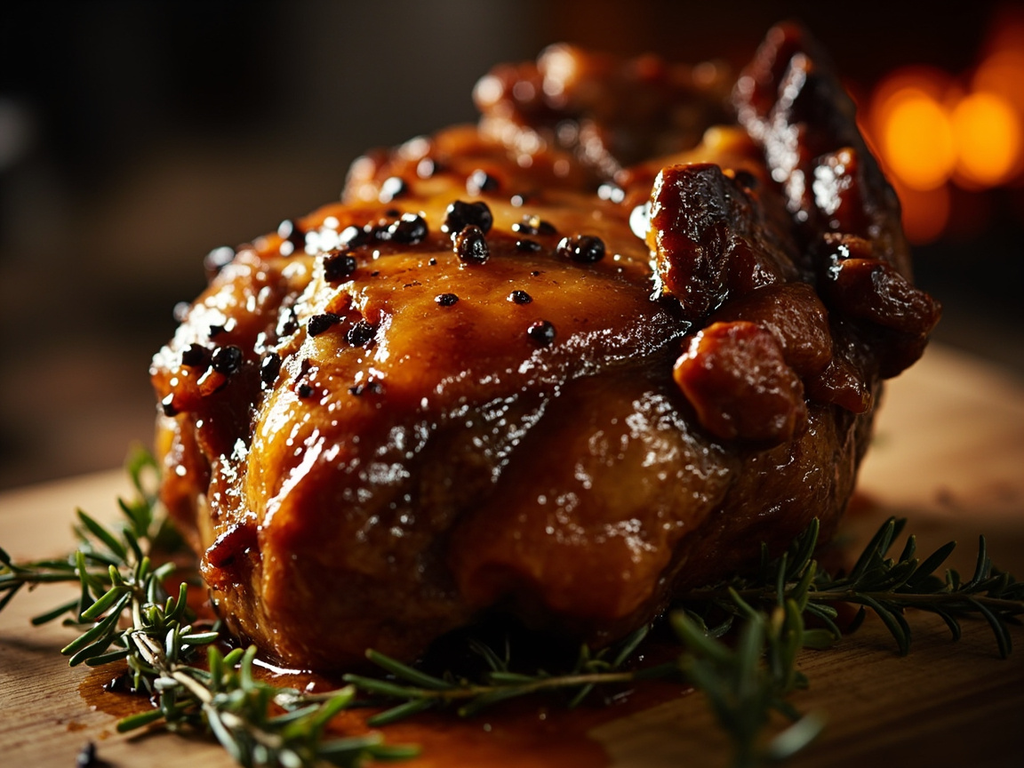
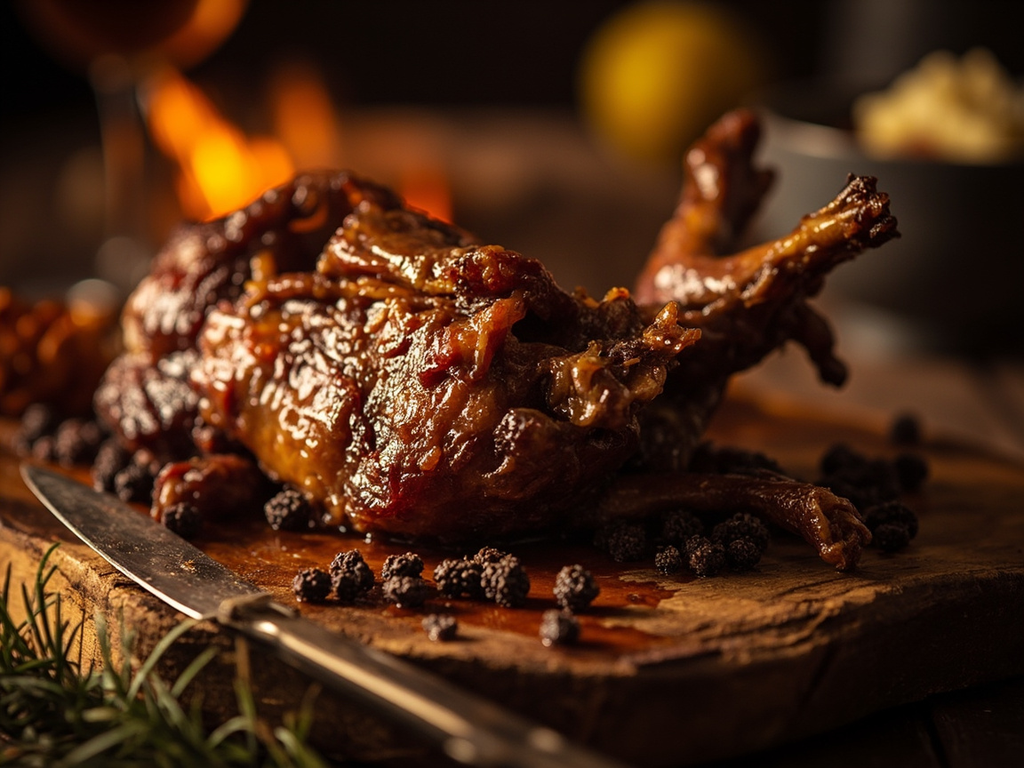
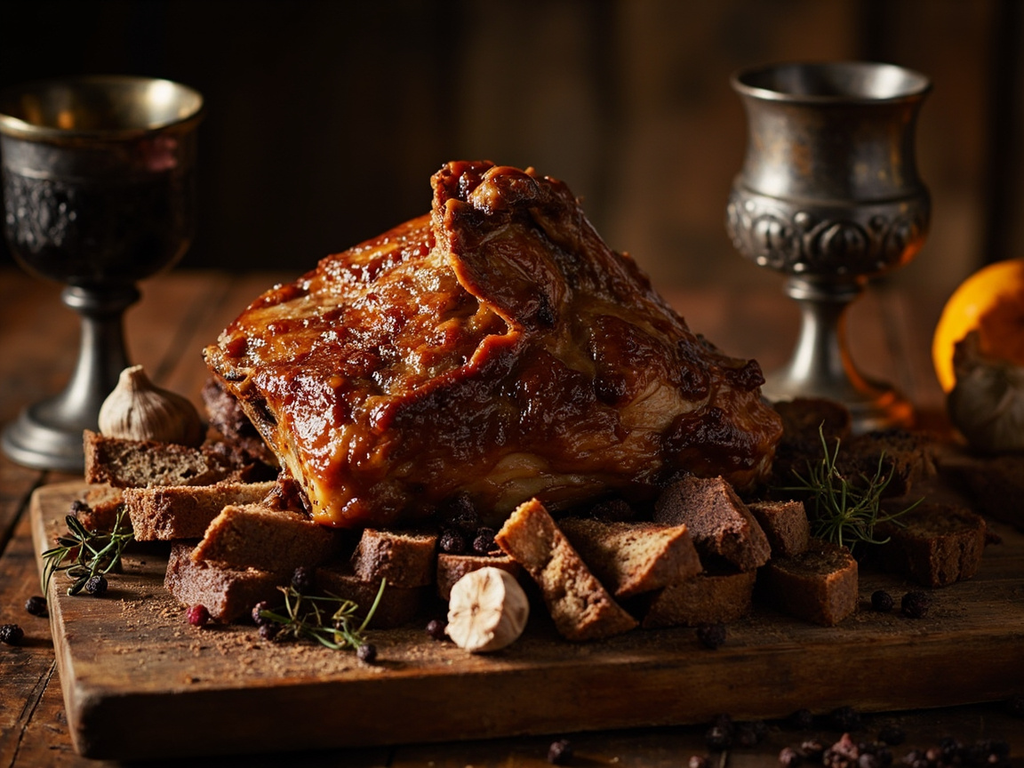
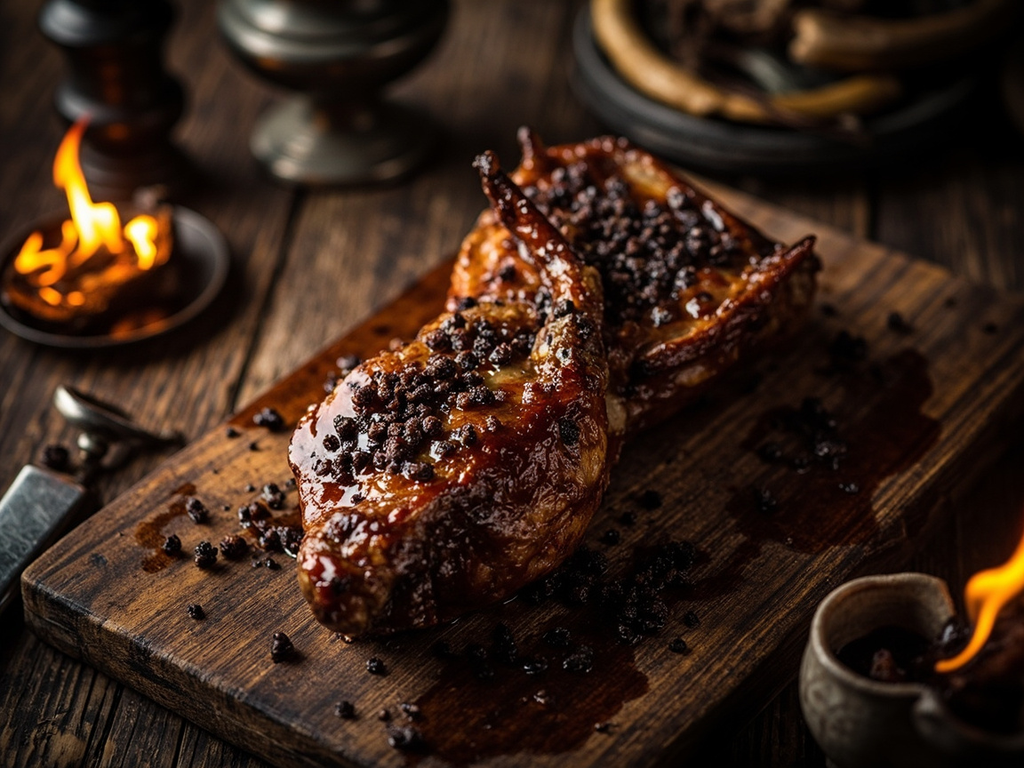
A piece of salt-cured bacon, long-cooked until tender then glazed with honey and roasted to caramelize the rind. Salty, melting, and golden: the dish for the great monastic tables.
Today is a feast day, so the table will be richer than usual — but remember what happened under my roof: the bacon joint reserved for guests, I gave to a starving beast, and the Lord saw that none of it was lacking. Take this piece, cook it gently in water until a needle pierces it, then rub it with the honey from our hives and let the fire brown it. Share it widely, my child: what is given never truly diminishes.
- •Salt-cured bacon joint (salted pork shoulder) — one piece for the table (base)
- •Honey — a good ladleful (glaze, sweet signature)
- •Light ale — enough to moisten (cooking liquid)
- •Wild apples or sloes — a handful (sweet-sour garnish)
Bagún rósta — honey-roasted bacon joint for feast days
A piece of salt-cured bacon, long-cooked until tender then glazed with honey and roasted to caramelize the rind. Salty, melting, and golden: the dish for the great monastic tables.
Why this dish? Tradition tells that Brigid, moved by charity, gave the bacon prepared for guests to a hungry dog — and that the portion, miraculously, was not missed at the meal. Salted pork was the hospitality dish par excellence: roasting it for a feast re-enacts this gesture of generosity that defines the saint.
Today is a feast day, so the table will be richer than usual — but remember what happened under my roof: the bacon joint reserved for guests, I gave to a starving beast, and the Lord saw that none of it was lacking. Take this piece, cook it gently in water until a needle pierces it, then rub it with the honey from our hives and let the fire brown it. Share it widely, my child: what is given never truly diminishes.
Ingredients (period version)
- Salt-cured bacon joint (salted pork shoulder) — one piece for the table (base)
- Honey — a good ladleful (glaze, sweet signature)
- Light ale — enough to moisten (cooking liquid)
- Wild apples or sloes — a handful (sweet-sour garnish)
Ingredients
- Salt-cured pork shoulder roast (or collar) — 1.2 kg (base)
- Liquid honey — 4 tbsp (glaze, sweet signature)
- Light lager beer — 330 ml (cooking liquid)
- Apples — 3 (sweet-sour garnish)
- Mustard seeds — 1 tsp (period seasoning)
Method
- If the meat is very salty, desalt it overnight in cold water.
- Place the pork in a pot, add the beer and water to halfway, add the mustard seeds, cover, and simmer for 2 hours over low heat until tender.
- Drain and pat dry the meat, place it in a roasting dish.
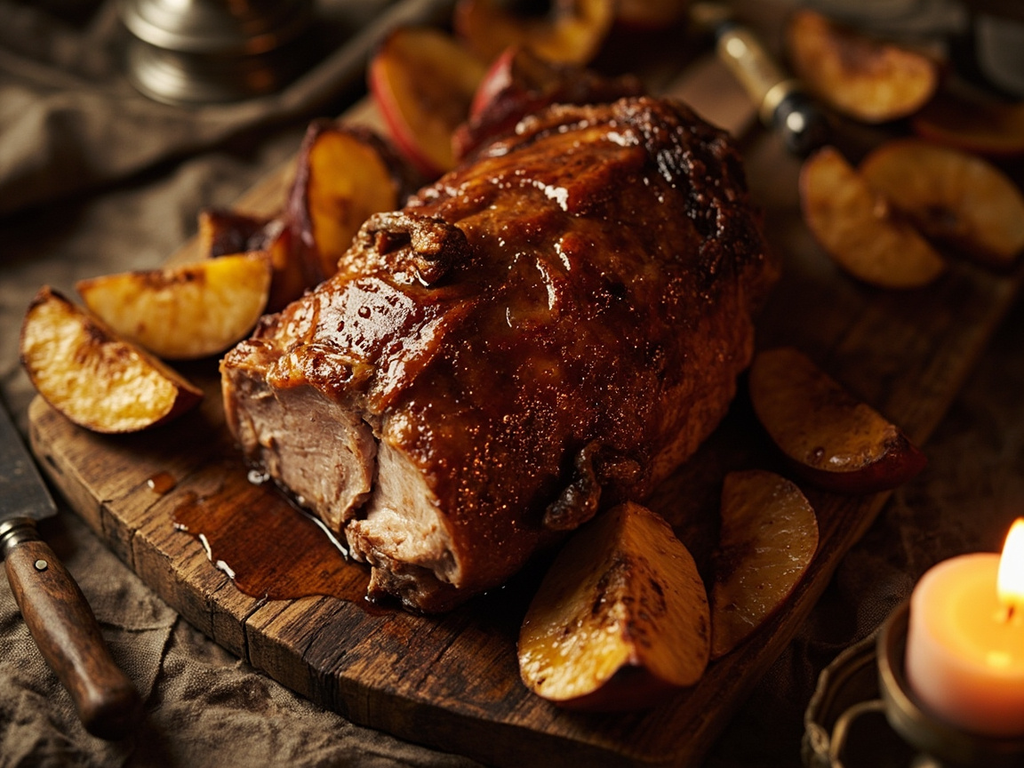
- Brush generously with honey and surround with apple quarters.
- Roast at 200°C for 25–30 minutes, basting two or three times with the juices, until the surface caramelizes.
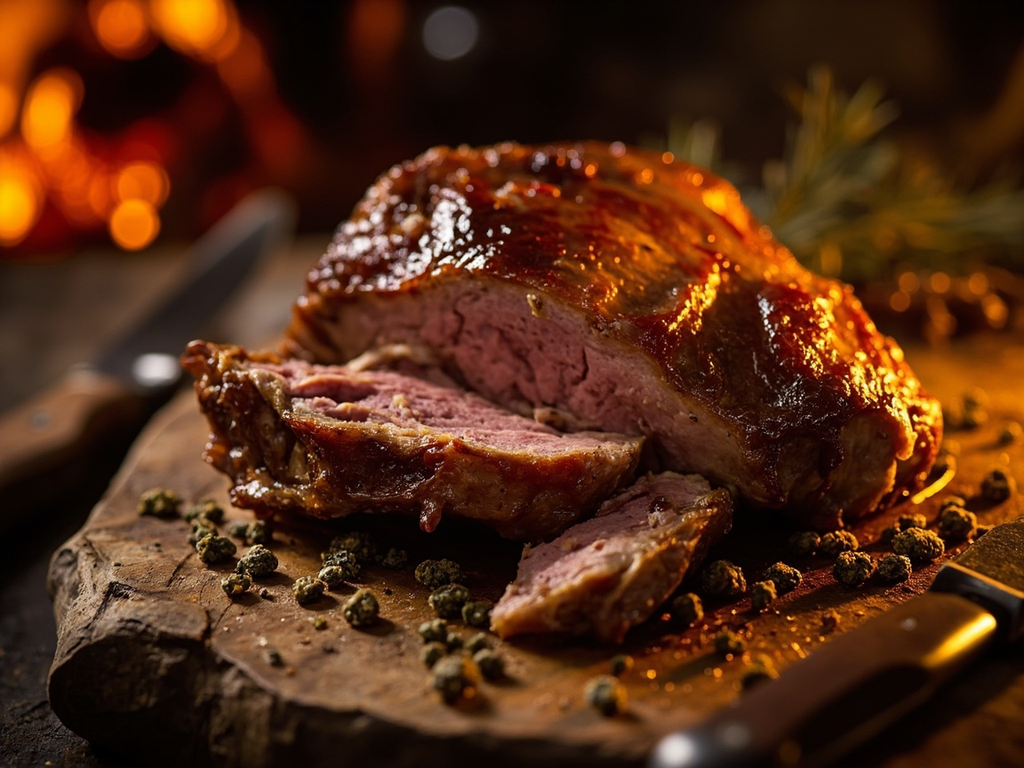
- Let rest for 10 minutes, then slice and serve with the soft apples.
How it was made : Pork was the festive meat of ancient Ireland: the laws (Bretha Crólige) even graded cuts according to the guest's rank. Without refrigeration, meat was preserved salted or smoked, and was first boiled long in a cauldron before any roasting. Local honey was the only sweetener — sugar was unknown.
The contemporary twist : Serve sliced on a rough wooden board, lacquered rind facing up, with a compote of tart apples and a few sloe berries to recall the wild fruits of Irish hedgerows.
Sources : Cogitosus, Vita Sanctae Brigidae, 7th century · Fergus Kelly, Early Irish Farming, 1997 · Bretha Crólige (Old Irish legal text), ed. D. A. Binchy
Brigid of Kildare · Charactorium