 flip
flipSpit-Roasted Wild Boar with Honey and Wild Mustard Glaze
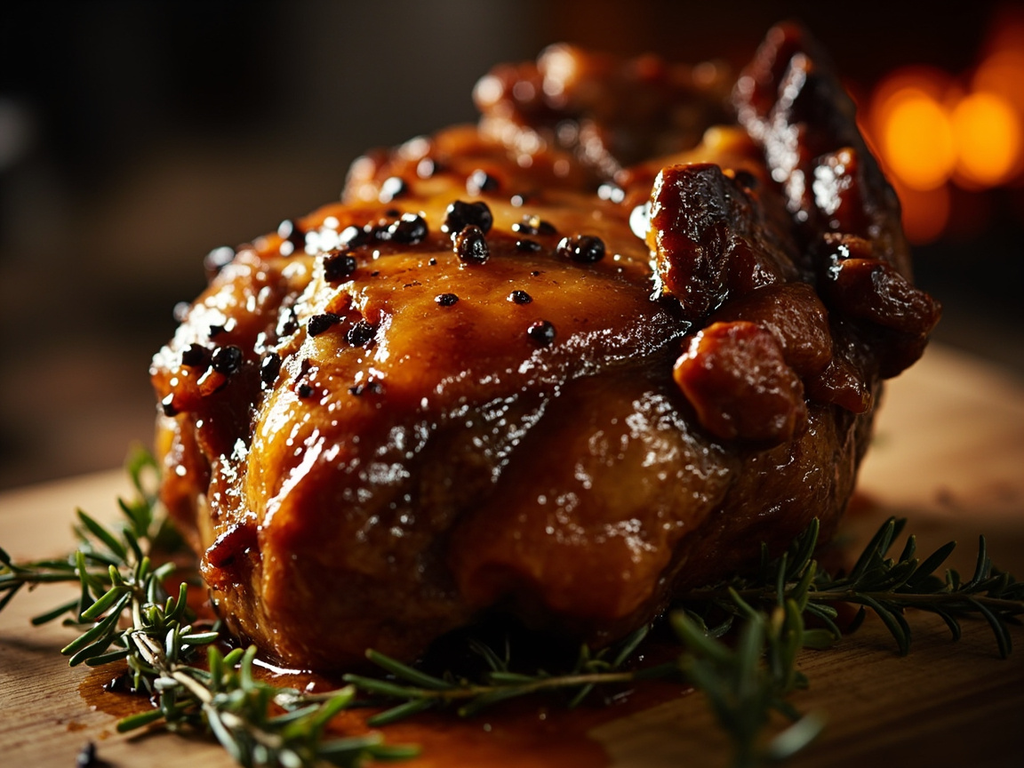
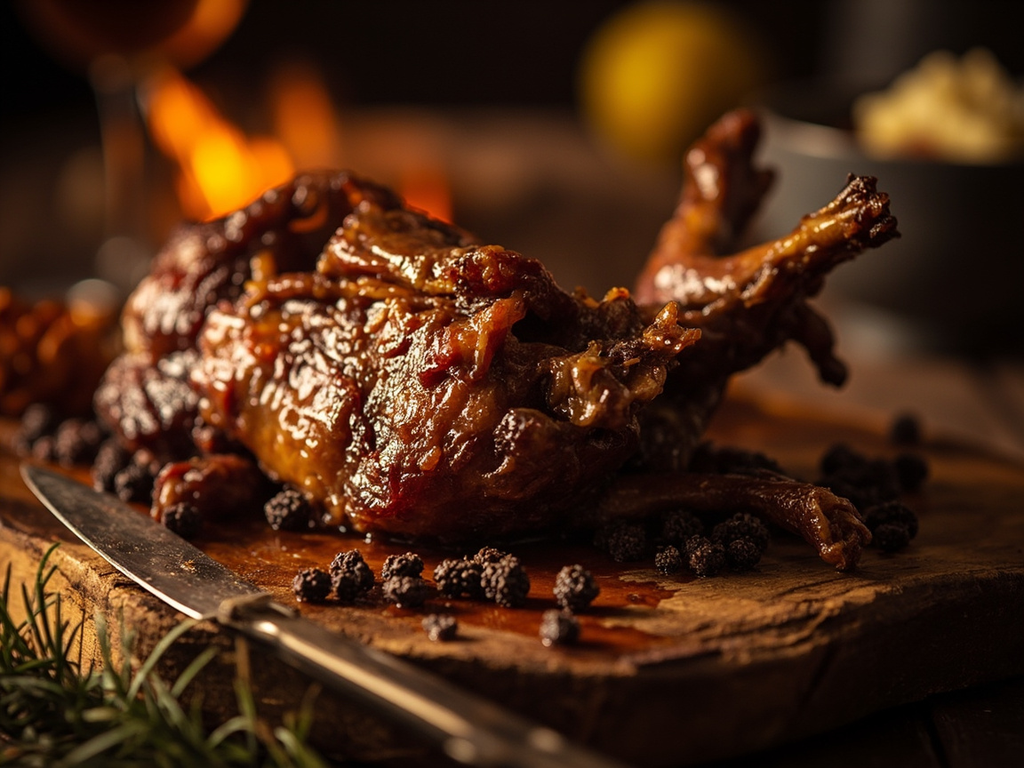
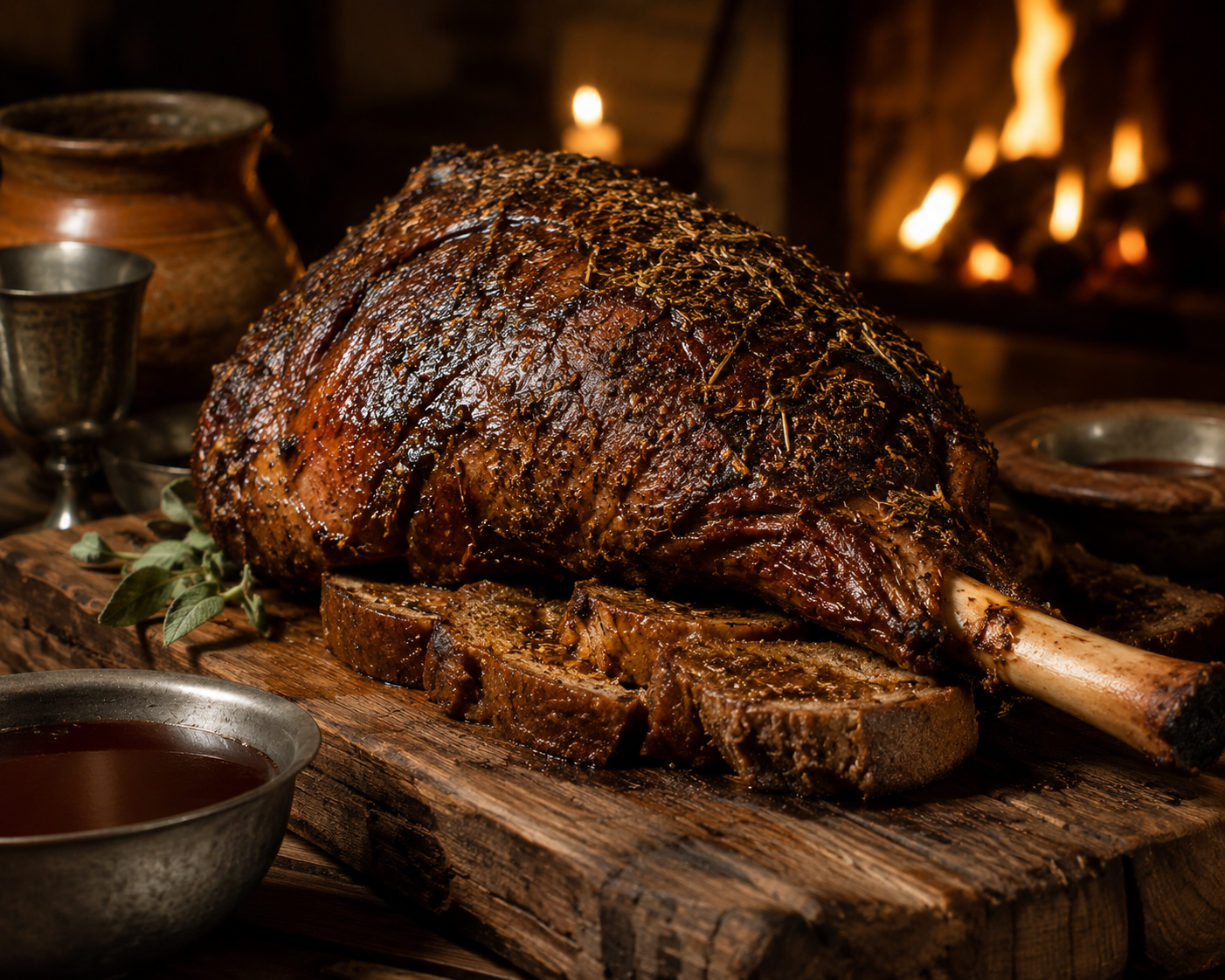
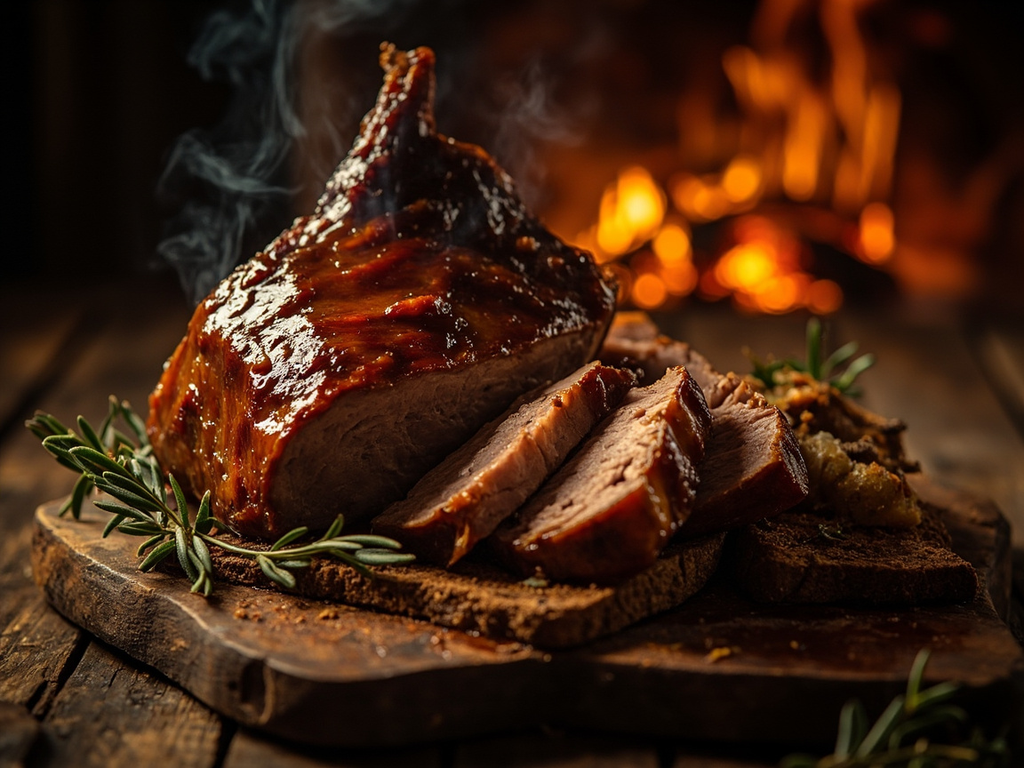
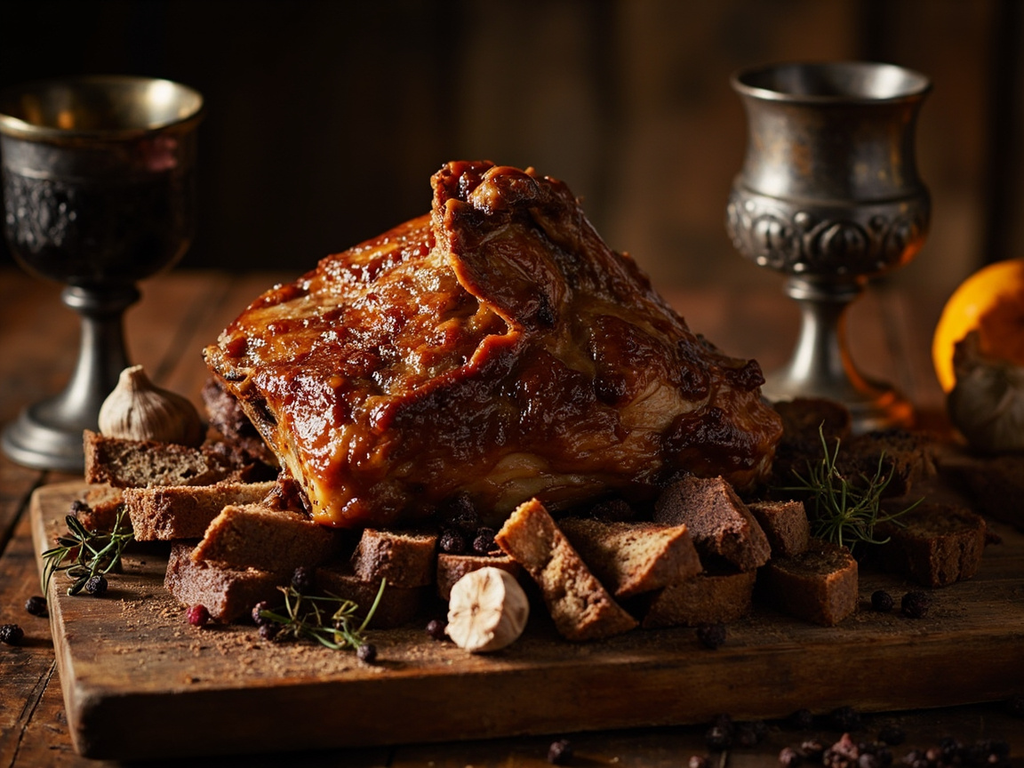
Spit-Roasted Wild Boar with Honey and Wild Mustard Glaze
Why this dish? After a victory — Soissons, Vouillé — a Frankish king celebrated with hunting and meat. The wild boar from the forests of the Frankish kingdom, roasted whole before the assembly of warriors, was the ultimate dish of glory; honey and mustard, inherited from the Gallo-Romans, ennobled the wild beast.
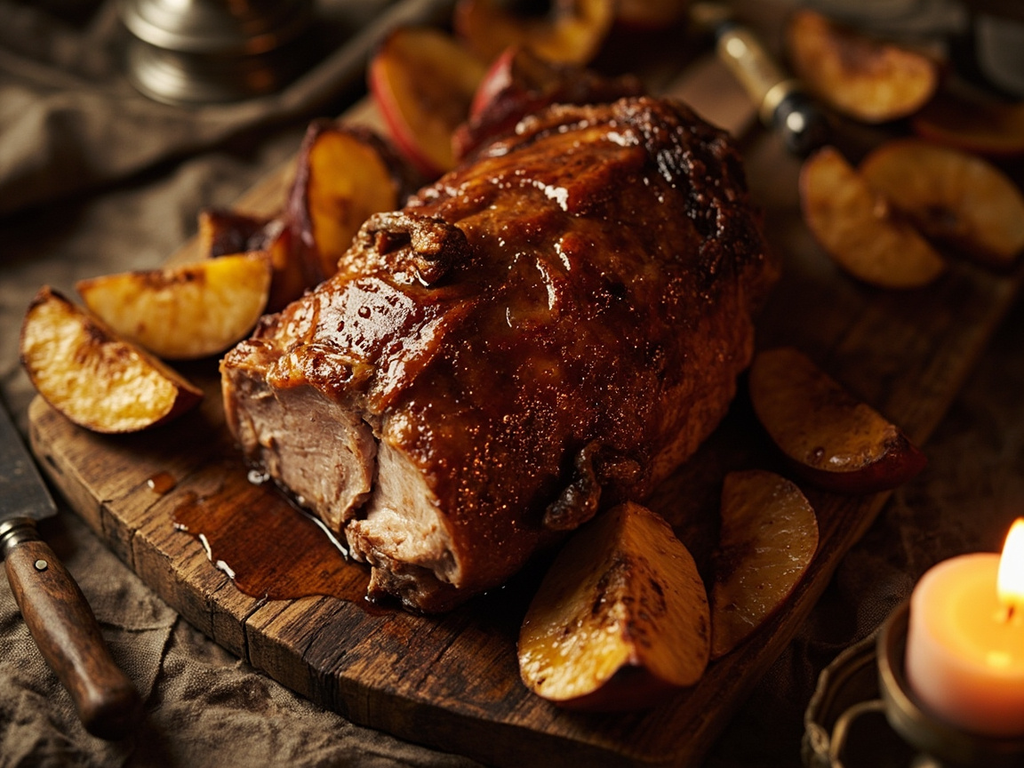
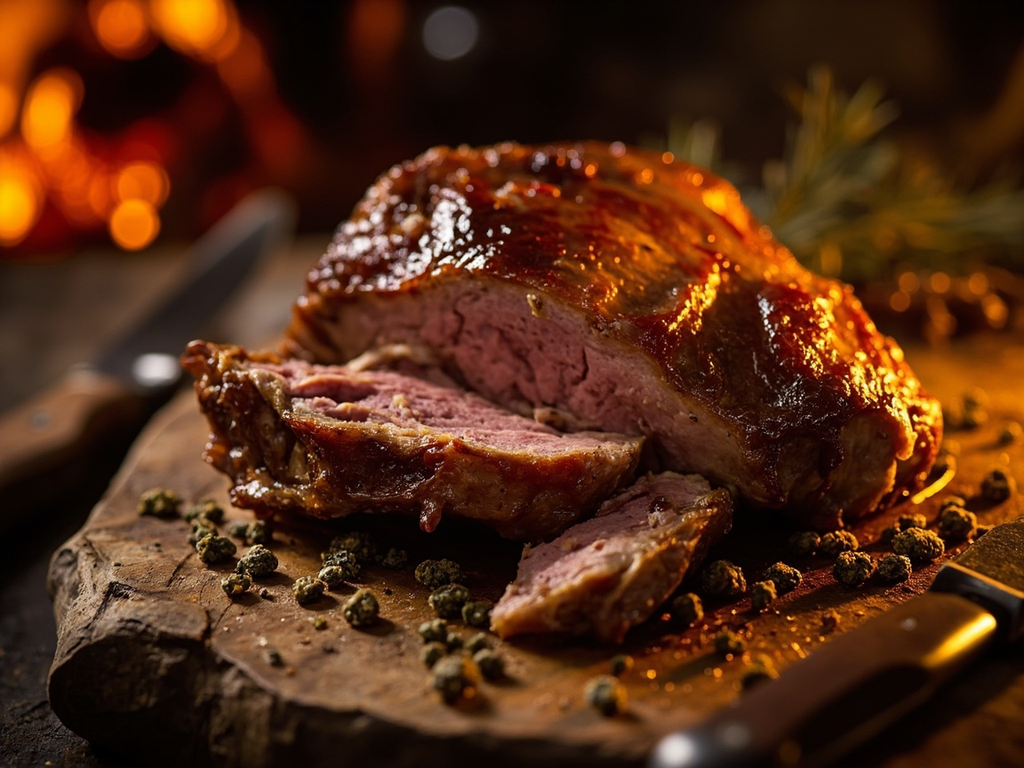
A cut of wild boar (or pork, its domestic cousin) long roasted, coated with a glaze of honey, crushed mustard, and reduced wine, forming an amber, shiny crust. A victory banquet dish, shared at knife point.
Approach, and fear not the beast! My warriors roused it at dawn in the woods, and I, Clovis, King of the Franks, have desired it at my table this evening. See how they turned it over the fire until its skin took on the color of Roman gold. We rub it with honey and that sharp mustard the elders of Reims know how to grind, and wine on top — for a baptized king honors both the forest and the bishop. Extend your trencher, eat heartily: at the king's table, no one rises with an empty belly.
- •Shoulder of wild boar (or whole young boar) — one large piece (festive meat)
- •Forest honey — by the ladleful (glaze, sweetness)
- •Crushed wild mustard seeds — a good handful (pungency)
- •Gallo-Roman wine — one goblet (reduction, binder)
- •Salt, juniper berries, wild garlic — to taste (forest seasoning)
Spit-Roasted Wild Boar with Honey and Wild Mustard Glaze
A cut of wild boar (or pork, its domestic cousin) long roasted, coated with a glaze of honey, crushed mustard, and reduced wine, forming an amber, shiny crust. A victory banquet dish, shared at knife point.
Why this dish? After a victory — Soissons, Vouillé — a Frankish king celebrated with hunting and meat. The wild boar from the forests of the Frankish kingdom, roasted whole before the assembly of warriors, was the ultimate dish of glory; honey and mustard, inherited from the Gallo-Romans, ennobled the wild beast.
Approach, and fear not the beast! My warriors roused it at dawn in the woods, and I, Clovis, King of the Franks, have desired it at my table this evening. See how they turned it over the fire until its skin took on the color of Roman gold. We rub it with honey and that sharp mustard the elders of Reims know how to grind, and wine on top — for a baptized king honors both the forest and the bishop. Extend your trencher, eat heartily: at the king's table, no one rises with an empty belly.
Ingredients (period version)
- Shoulder of wild boar (or whole young boar) — one large piece (festive meat)
- Forest honey — by the ladleful (glaze, sweetness)
- Crushed wild mustard seeds — a good handful (pungency)
- Gallo-Roman wine — one goblet (reduction, binder)
- Salt, juniper berries, wild garlic — to taste (forest seasoning)
Ingredients
- Wild boar shoulder or pork loin roast — 1.5 kg (festive meat)
- Liquid honey — 4 tbsp (glaze)
- Whole-grain mustard — 2 tbsp (pungency)
- Full-bodied red wine — 200 ml (reduction)
- Crushed juniper berries — 1 tsp (forest aroma)
- Garlic cloves — 3 (aromatic)
- Coarse salt — to taste (seasoning)
Method
- Rub the meat with salt, crushed garlic, and juniper berries; let rest 1 hour at room temperature.
- Reduce the wine by half with honey and mustard to obtain a syrupy glaze.
- Sear the meat on all sides, then roast at 160°C (or on a spit) for about 40 minutes per kilo.
- During the last third of cooking, brush generously with glaze every 10 minutes until an amber, shiny crust forms.
- Let rest 15 minutes, slice thickly, and serve on large slices of rustic bread as trenchers.
How it was made : The Franks roasted whole game on a spit over a wood fire. Meat dominated the aristocratic table, as confirmed by archaeology of Merovingian sites (bones of pig, wild boar, cattle). Honey served both as a preservative and festive glaze; mustard and wine came from the Gallo-Roman heritage absorbed by the Frankish kingdom.
The contemporary twist : Serve the roast on a large wooden board, with warm glaze on the side in a small earthenware pot, and let each person cut their own portion at the table: the Frankish banquet in a Sunday family-style version.
Sources : Massimo Montanari, La faim et l'abondance. Histoire de l'alimentation en Europe · Bruno Laurioux, Manger au Moyen Âge
Clovis · Charactorium