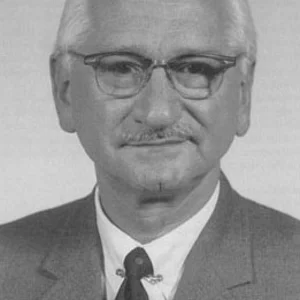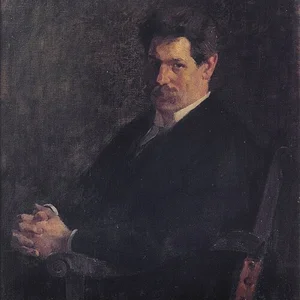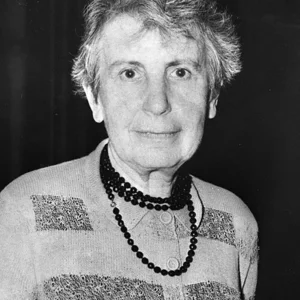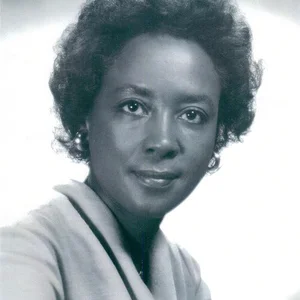

Bruno Bettelheim (1903-1990) was an American psychoanalyst and educator of Austrian origin, specializing in childhood. A survivor of the Dachau and Buchenwald camps, he ran a school for troubled children in Chicago and left his mark on thinking about education and child psychology.
Bruno Bettelheim(1903 — 1990)
Bruno Bettelheim
États-Unis, Autriche, Cisleithanie
5 min read
Frequently asked questions
Key Facts
- Born in 1903 in Vienna into an Austrian Jewish family
- Deported to Dachau and then Buchenwald in 1938-1939 before emigrating to the United States
- Directed the Sonia Shankman Orthogenic School at the University of Chicago from 1944 onward
- Published 'The Empty Fortress' (1967) on autism, a theory now widely contested
- Published 'The Uses of Enchantment' (1976), his most famous work; died in 1990
Works & Achievements
A founding article drawn from his experience in the camps, studied by psychologists and historians.
Presents his method for educating disturbed children at the Orthogenic School.
An influential work on autism whose theories have since been refuted by science.
Describes the project of an entirely therapeutic environment for children.
His most famous book, awarded the National Book Award, on the role of fairy tales in a child's development.
A guide for parents, advocating attentive rather than perfect parenting.
Anecdotes
In 1938, after the Anschluss that annexed Austria to Nazi Germany, Bruno Bettelheim was arrested and deported to Dachau and then Buchenwald. Freed after nearly a year, he emigrated to the United States in 1939.
From his experience of the camps, he drew a famous 1943 article, “Individual and Mass Behavior in Extreme Situations,” in which he analyzed the psychological reactions of prisoners. This text drew the attention of the American academic world to him.
Starting in 1944, he directed the Orthogenic School in Chicago, a residential institution for children with severe psychological difficulties. There he championed the idea of a “therapeutic milieu” in which every detail of daily life — meals, games, decoration — contributes to the healing.
His book “The Uses of Enchantment” (1976) was an immense success and won the National Book Award. In it, Bettelheim argued that fairy tales help children confront their fears and grow up.
After his death in 1990, several former students and researchers challenged his sometimes brutal methods and the accuracy of his credentials. His legacy remains debated today, between genuine contributions and controversies.
Primary Sources
In it, the author describes how, in the concentration camps, prisoners sought to preserve their identity and dignity in the face of a system designed to destroy them.
“If we hope to live not just from moment to moment, but in true consciousness of our existence, then our greatest need and most difficult achievement is to find meaning in our lives.”
Drawing on cases of children from the Orthogenic School, Bettelheim sets out his theory of infantile autism, now scientifically discredited.
Here he details the workings of the Orthogenic School and argues that the entire everyday environment must be designed to heal.
Key Places
Bettelheim's birthplace and the cradle of Freud's psychoanalysis. He grew up there in a cultured Jewish family.
The first Nazi concentration camp, where Bettelheim was deported in 1938. There he observed the behaviors of the prisoners.
The second camp where he was interned before his release in 1939. This experience fed his first famous works.
A boarding school for troubled children that he directed from 1944 to 1973. It is the heart of his work as an educator.
The town in the United States where Bruno Bettelheim died in 1990.
Typical Objects

Traditional tales (Grimm, Perrault) lie at the heart of his thinking about childhood. He sees them as tools to help children put their fears into words.

A symbol of psychoanalysis as inherited from Freud and Vienna. It evokes the practice of listening and exploring the unconscious.

Bettelheim published a great many books and articles. The typewriter was the everyday tool of the 20th-century intellectual.

The garment forced upon prisoners in the Nazi camps where Bettelheim was interned. It became a symbol of the dehumanization he analyzed.

At the Orthogenic School, games, drawings and everyday objects served as therapeutic aids. The entire environment was designed to reassure the child.
School Curriculum
Vocabulary & Tags
Key Vocabulary
Tags
Daily Life
Morning
Often living on-site at the Orthogenic School, Bettelheim begins his day with the children from the moment they wake up. He places great importance on morning rituals, meals, and grooming, which he sees as moments of care.
Afternoon
The afternoon is devoted to observations, conversations with the educators, and following up on each child. He moves through the institution, attentive to the smallest detail of daily life.
Evening
In the evening, he devotes himself to reading and to writing his books and articles. A sought-after lecturer, he also prepares his classes at the University of Chicago.
Food
Like any twentieth-century American academic, he eats ordinary food, often shared in common with the children of the school. There, meals are thought of as educational and soothing moments.
Clothing
Bettelheim wears the classic professor's attire of his time: jacket, shirt, and tie. This understated outfit embodies the kindly authority of the educator.
Housing
Part of his life unfolds within the very premises of the Orthogenic School, in Chicago. He also lives in a house in the United States, in the comfortable setting of the American intellectual class.
Historical Timeline
Period Vocabulary
Liens externes & ressources
Références
Œuvres
Le comportement individuel et de masse dans les situations extrêmes
1943
Love Is Not Enough (L'amour ne suffit pas)
1950
La Forteresse vide (The Empty Fortress)
1967
Un lieu où renaître (A Home for the Heart)
1974
Psychanalyse des contes de fées
1976
Pour être des parents acceptables (A Good Enough Parent)
1987