 flip
flipEarth Oven Feast — Wildfowl and Roots in Paperbark
Earth Oven Feast — Wildfowl and Roots in Paperbark
Why this dish? During large gatherings on the shores of Victoria's lakes (Modewarre, Condah), an earth oven was dug to feed entire families. The Bunyip is the feared guardian of these nurturing waters, where ducks and wild geese abound.
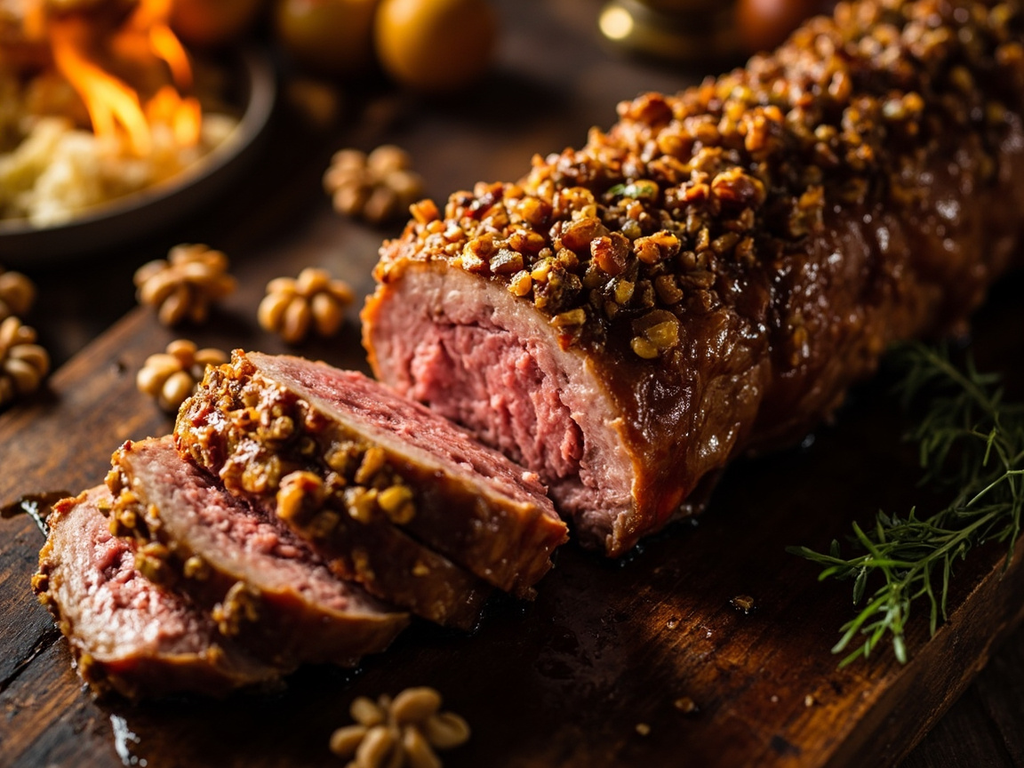
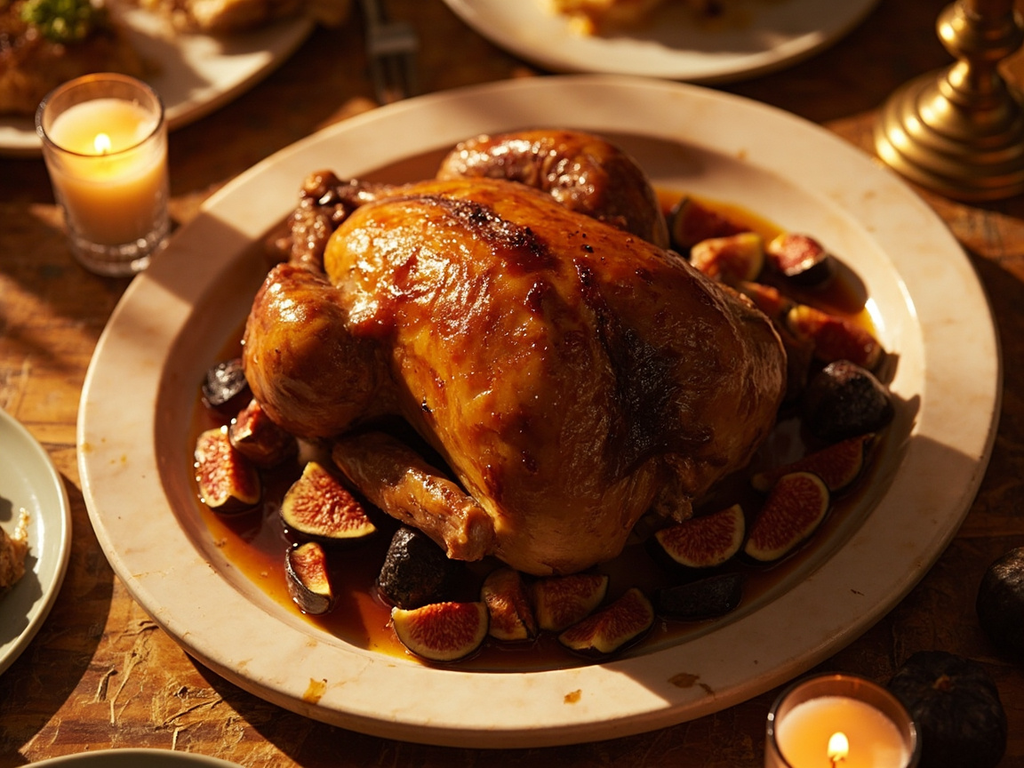
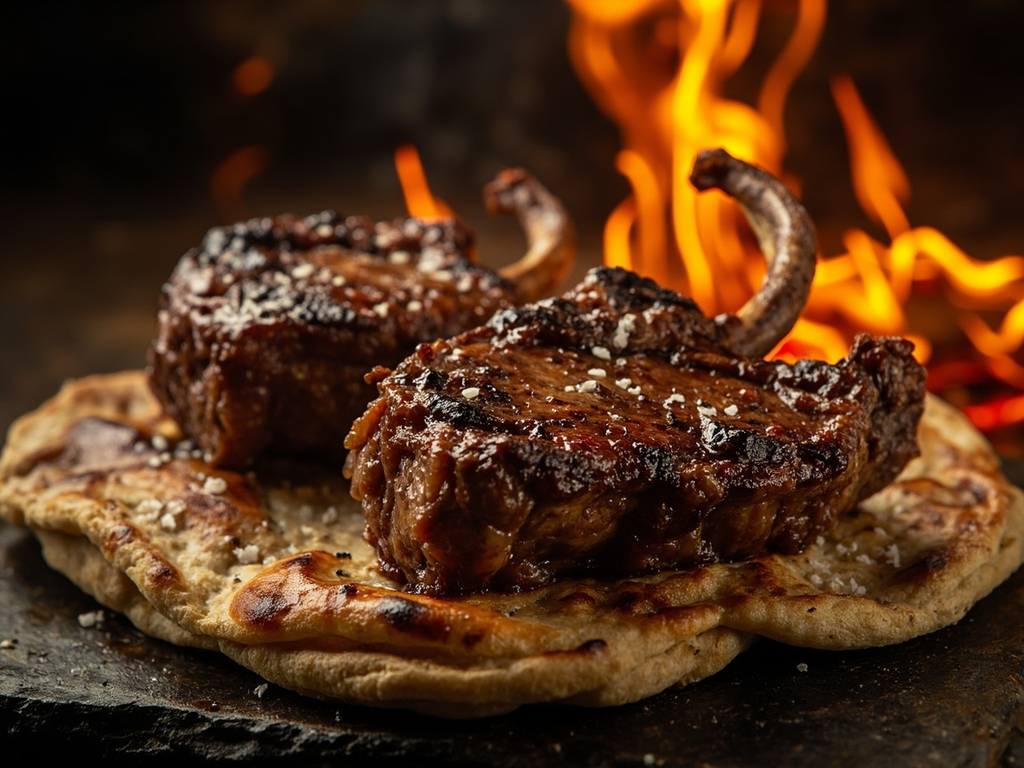
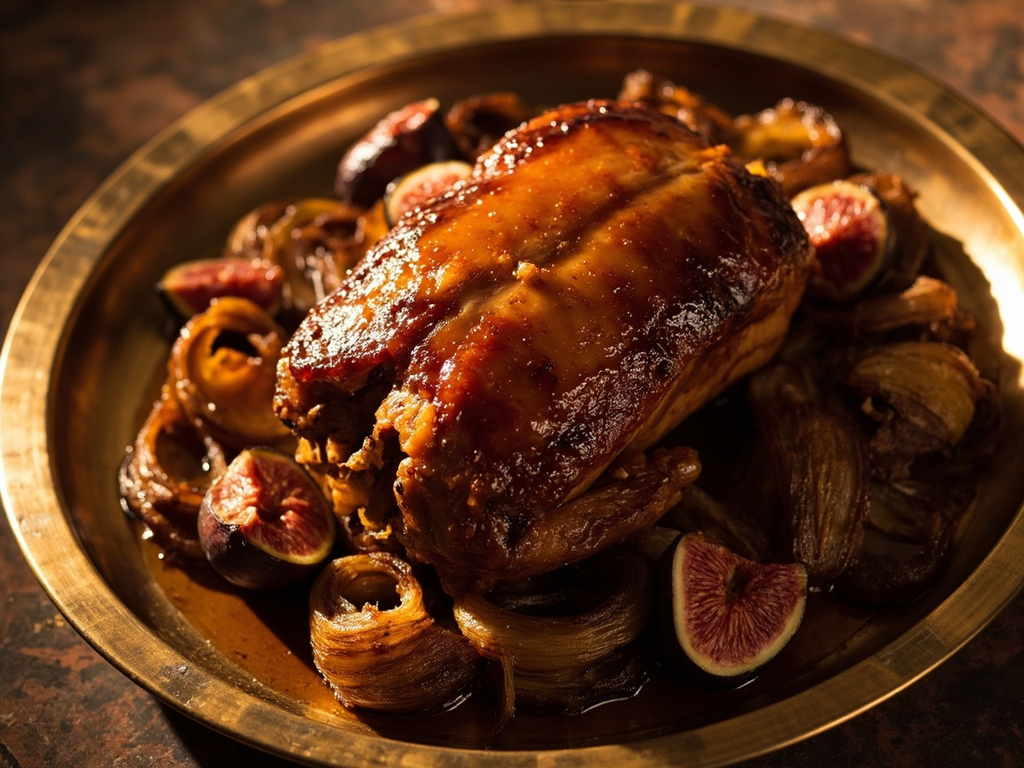
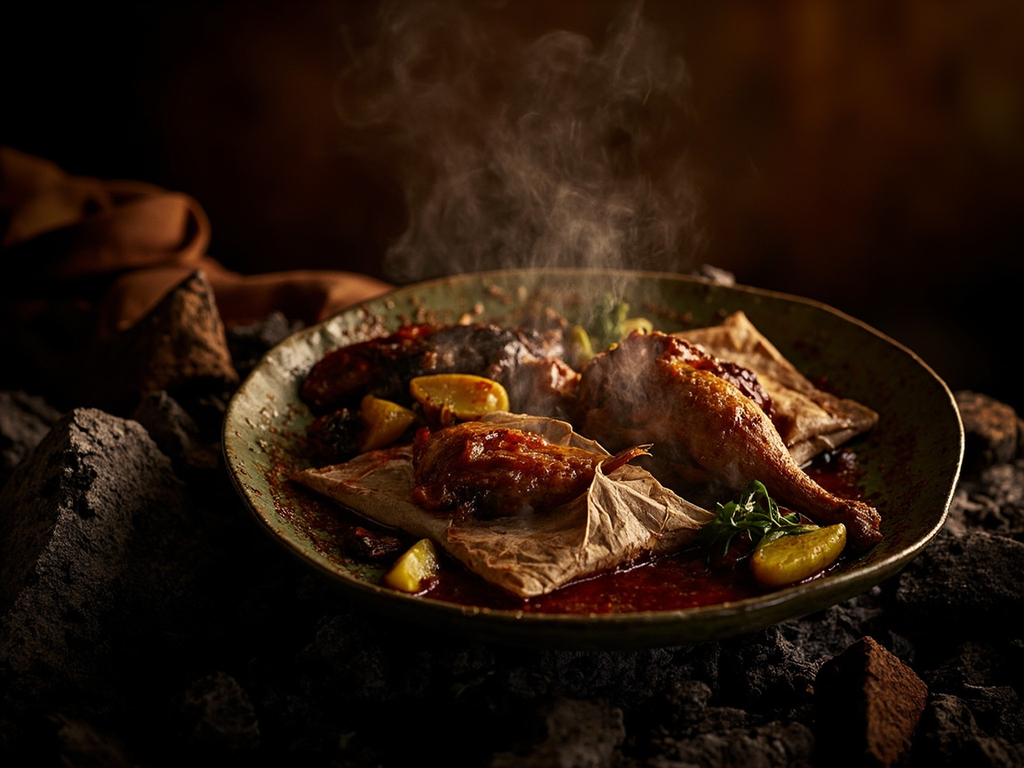
The great festive dish: a pit lined with hot stones where wildfowl, wrapped in fragrant paperbark, slowly cooks among roots. The steam confits the flesh and gives a deeply comforting smoky, earthy flavor.
When your fires gather at the edge of my lake and the earth smokes like the back of a sleeping beast, I rise to listen. You lay the wildfowl and roots in the pit, on hot stones, wrapped in paperbark, then cover with earth and wait. The steam rises straight, fragrant; be patient, do not lift too soon. Feast near the water if you dare—at night, I count those who linger.
- •Plucked and gutted wild duck or goose — 1–2 birds (centerpiece)
- •Murnong tubers and cumbungi (bulrush) roots — several handfuls (starchy garnish)
- •Paperbark (Melaleuca) — several sheets (fragrant wrapping)
- •River stones — a bed (heat retainers)
Earth Oven Feast — Wildfowl and Roots in Paperbark
The great festive dish: a pit lined with hot stones where wildfowl, wrapped in fragrant paperbark, slowly cooks among roots. The steam confits the flesh and gives a deeply comforting smoky, earthy flavor.
Why this dish? During large gatherings on the shores of Victoria's lakes (Modewarre, Condah), an earth oven was dug to feed entire families. The Bunyip is the feared guardian of these nurturing waters, where ducks and wild geese abound.
When your fires gather at the edge of my lake and the earth smokes like the back of a sleeping beast, I rise to listen. You lay the wildfowl and roots in the pit, on hot stones, wrapped in paperbark, then cover with earth and wait. The steam rises straight, fragrant; be patient, do not lift too soon. Feast near the water if you dare—at night, I count those who linger.
Ingredients (period version)
- Plucked and gutted wild duck or goose — 1–2 birds (centerpiece)
- Murnong tubers and cumbungi (bulrush) roots — several handfuls (starchy garnish)
- Paperbark (Melaleuca) — several sheets (fragrant wrapping)
- River stones — a bed (heat retainers)
Ingredients
- Duck legs and breasts — 4–6 pieces (centerpiece)
- Parsnips, salsify, and sweet potato (if native roots unavailable) — 600 g (garnish)
- Paperbark sheets (Australian grocery) or banana leaves — enough to wrap (fragrant wrapping)
- Water — 1 cup (steam)
- Tasmanian pepper berries, optional — 1 tsp (native spice)
Method
- Preheat oven to 150°C (at home, we simulate the earth oven).
- Soak paperbark or banana leaves for 10 minutes so they don't burn.
- Arrange roots at the bottom of a Dutch oven, place duck on top, add crushed pepper berries.
- Cover with damp leaves, pour water into the bottom, seal tightly (lid + foil).
- Cook for 2.5 to 3 hours, until the meat falls off the bone. Let rest 10 minutes before opening, as one would lift the earth from a buried oven.
How it was made : The earth oven (a pit lined with fire-heated stones, then sealed with food, damp leaves, and soil) was used across Australia for large communal meals. Paperbark, abundant near wetlands, served as cooking wrap and flavoring. The trapped steam kept the meat tender for hours.
The contemporary twist : Present each guest with a tied paperbark bundle: opened at the table, the fragrant steam escapes—a miniature, individual earth oven.
Sources : Bill Gammage, The Biggest Estate on Earth, Allen & Unwin, 2011 · Tim Low, Wild Food Plants of Australia, Angus & Robertson, 1991
Bunyip · Charactorium