 flip
flipFirstfruits of the Earth
Firstfruits of the Earth
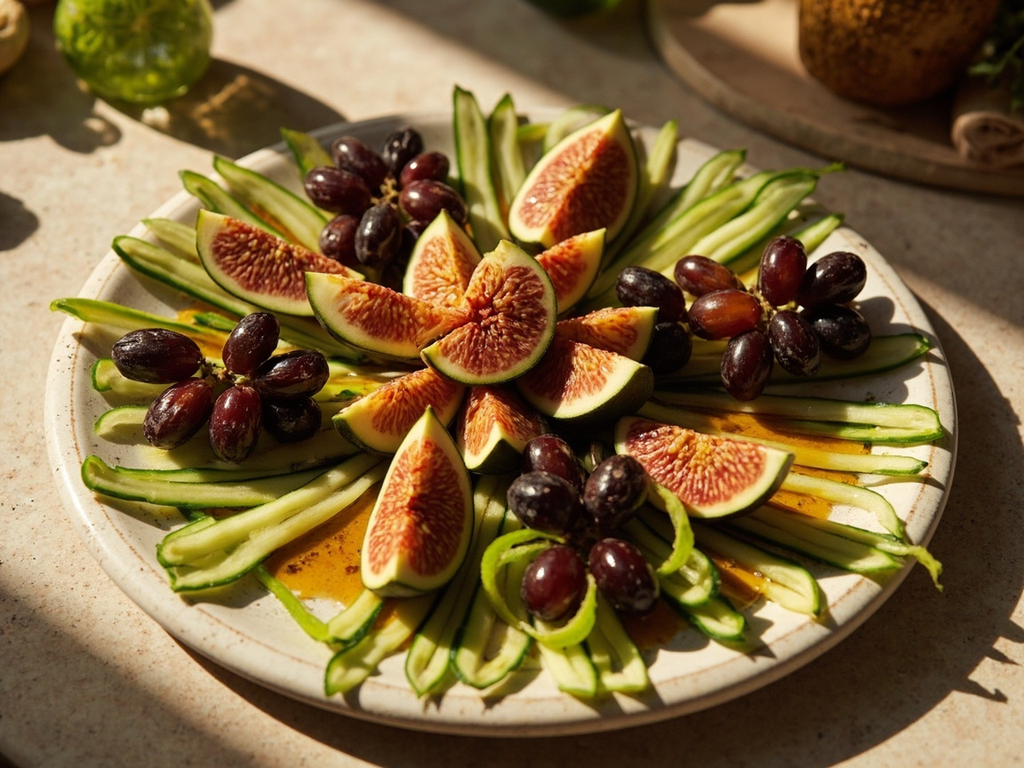
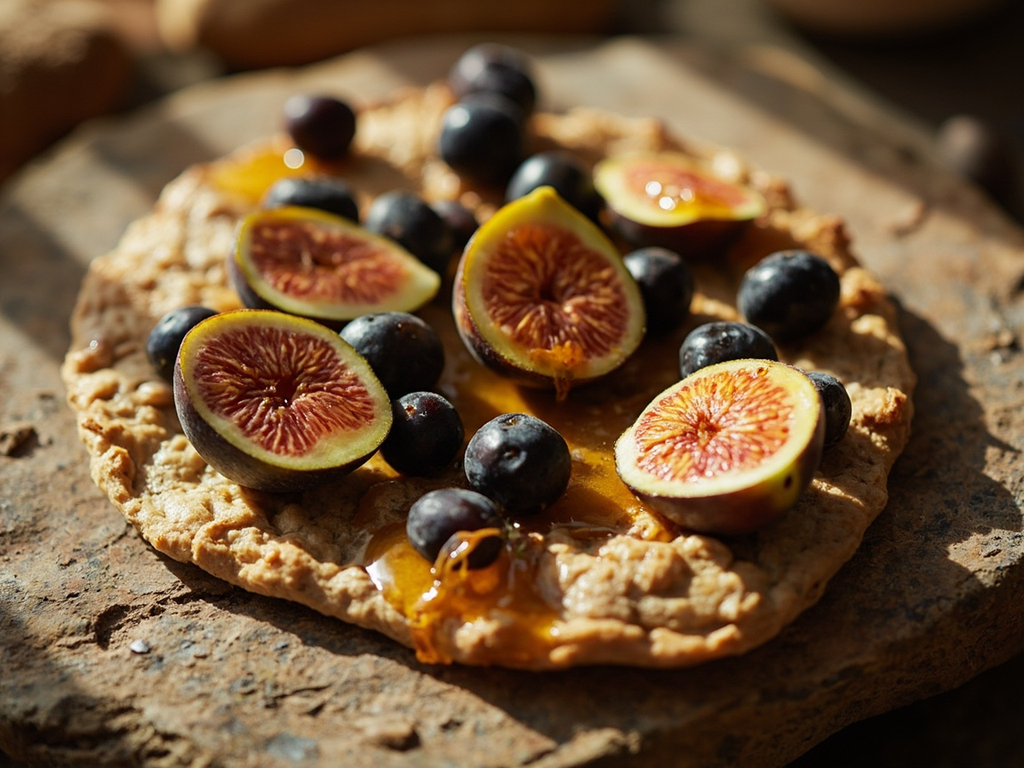
Why this dish? This is Cain's founding gesture: 'he brought some of the fruits of the soil as an offering.' This platter of firstfruits — new grain, figs, grapes and honey placed on a flatbread — evokes what the first farmer set down to give thanks, before jealousy changed everything.
A warm barley flatbread, topped with halved fresh figs, bunches of grapes and a drizzle of honey, presented as the finest part of the harvest. Sweet, fragrant, luminous: an offering of thanks, not a meal for the belly.
Approach, and see what I have drawn from the ground by the sweat of my brow. I chose the heaviest grain, the plumpest figs, the grape cluster without a single spoiled berry — for one does not offer the refuse, one offers the firstfruits. I laid it all on a flatbread still warm from the ashes, I poured wild honey, and I carried it to the high place, my hands open. I gave what the earth had given me best; what became of my offering is another story, and it has followed me ever since.
- •Coarse barley flour — two handfuls (base flatbread)
- •Spring water — as needed (to bind the dough)
- •Ripe fresh figs — a good handful (offering fruit)
- •Black grapes — one bunch (offering fruit)
- •Wild honey — a drizzle (binder and sweetness)
- •Pinch of sea salt — one pinch (seasoning)
Firstfruits of the Earth
A warm barley flatbread, topped with halved fresh figs, bunches of grapes and a drizzle of honey, presented as the finest part of the harvest. Sweet, fragrant, luminous: an offering of thanks, not a meal for the belly.
Why this dish? This is Cain's founding gesture: 'he brought some of the fruits of the soil as an offering.' This platter of firstfruits — new grain, figs, grapes and honey placed on a flatbread — evokes what the first farmer set down to give thanks, before jealousy changed everything.
Approach, and see what I have drawn from the ground by the sweat of my brow. I chose the heaviest grain, the plumpest figs, the grape cluster without a single spoiled berry — for one does not offer the refuse, one offers the firstfruits. I laid it all on a flatbread still warm from the ashes, I poured wild honey, and I carried it to the high place, my hands open. I gave what the earth had given me best; what became of my offering is another story, and it has followed me ever since.
Ingredients (period version)
- Coarse barley flour — two handfuls (base flatbread)
- Spring water — as needed (to bind the dough)
- Ripe fresh figs — a good handful (offering fruit)
- Black grapes — one bunch (offering fruit)
- Wild honey — a drizzle (binder and sweetness)
- Pinch of sea salt — one pinch (seasoning)
Ingredients
- Barley flour — 150 g (base flatbread)
- Warm water — about 100 ml (to bind the dough)
- Salt — 1 pinch (seasoning)
- Fresh figs — 4 (offering fruit)
- Black grapes — 1 small bunch (150 g) (offering fruit)
- Honey — 2 tbsp (binder and sweetness)
- Olive oil — 1 tsp (for cooking the flatbread)
Method
- Mix the barley flour, salt and warm water until you get a soft, non-sticky dough; let it rest for 15 minutes.
- Roll out the dough into a thin flatbread half a centimetre thick.
- Cook it in an oiled dry frying pan over medium heat, 3 to 4 minutes per side, until it turns golden and slightly blistered.
- Cut the figs in half, pick the grape berries from the bunch.
- Place the warm flatbread on a platter, arrange the open figs and grapes, then drizzle with honey just before serving.
How it was made : At the dawn of Near Eastern agriculture, barley was ground on stone querns and baked into flatbreads on hot stones or under the ashes, for lack of ovens. Offerings of firstfruits — the first sheaf, the first fruits — are attested throughout the Fertile Crescent long before their codification in texts: one gave the divinity the first share of the harvest to secure favour.
The contemporary twist : Served on a raw slate board with figs briefly grilled and a pinch of fleur de sel on the honey, the firstfruits flatbread becomes a minimalist, photogenic autumn dessert.
Cain · Charactorium