 flip
flipHoney and Date Roasted Mutton from the Royal Feast
Honey and Date Roasted Mutton from the Royal Feast
Why this dish? Cambyses, son of Cyrus and King of Kings, kept an open table in the Achaemenid splendor described by Herodotus and the Persepolis tablets: whole roasted sheep, basted with honey, to celebrate his conquests — notably that of Egypt in 525 BC.
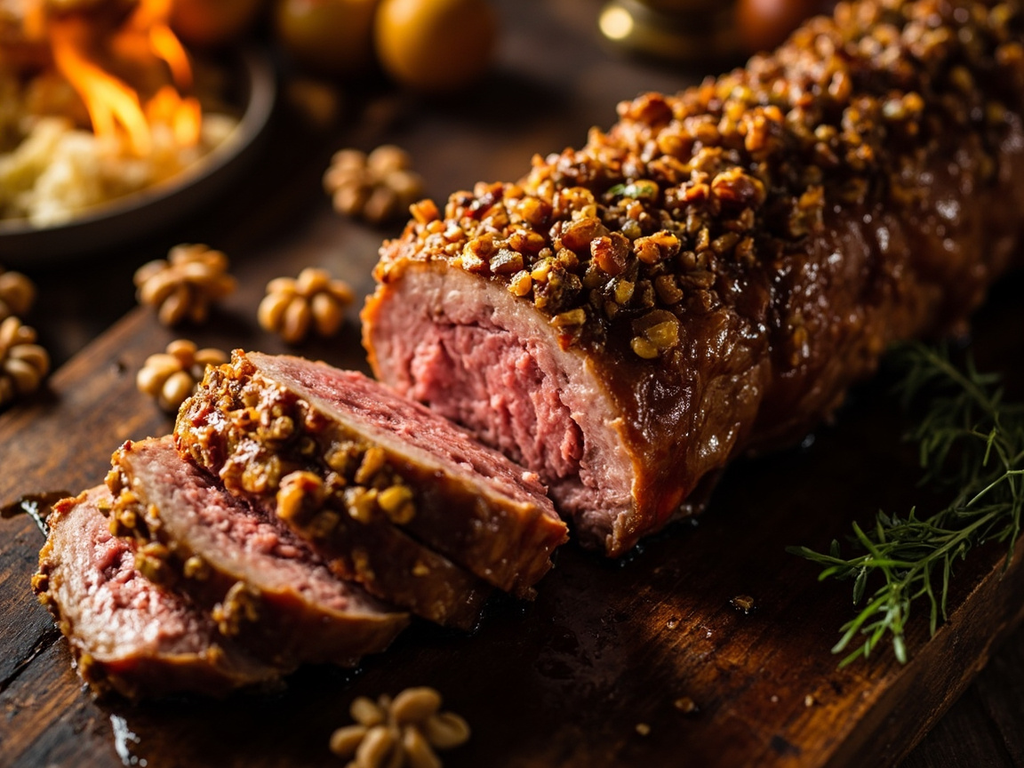
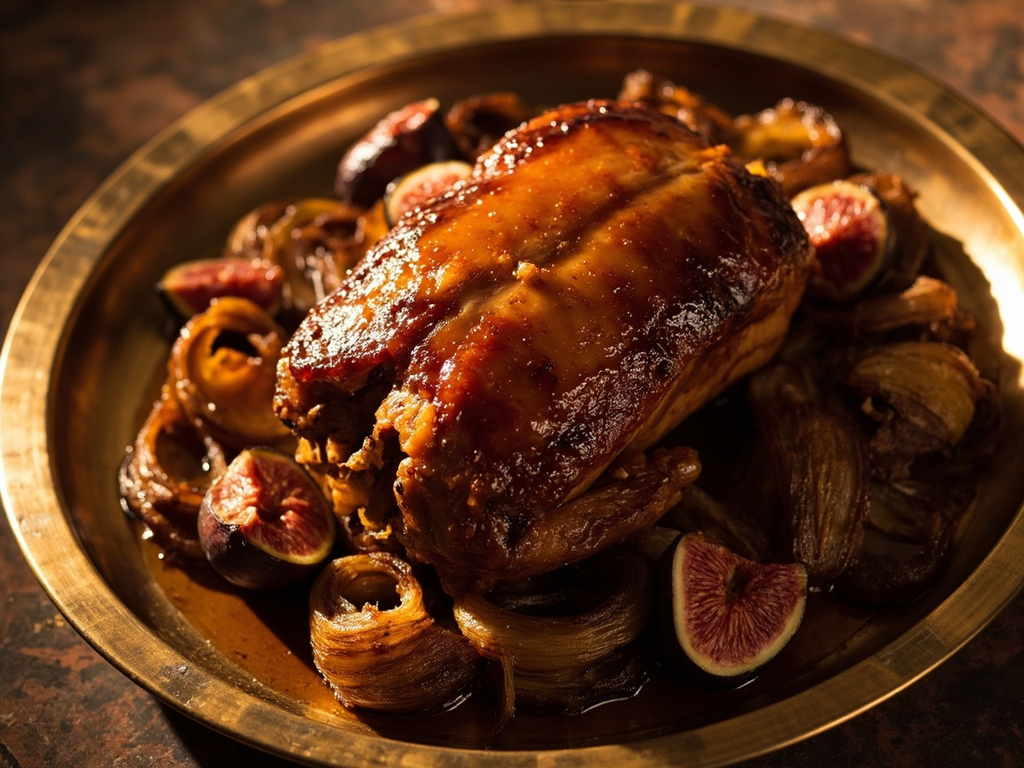
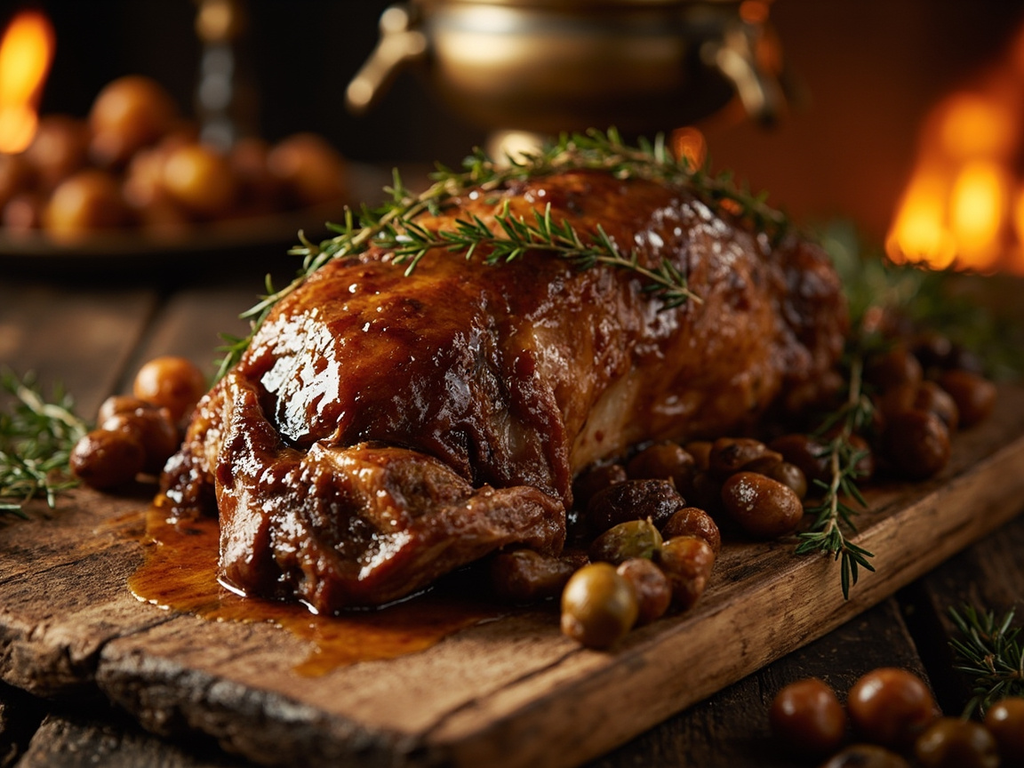
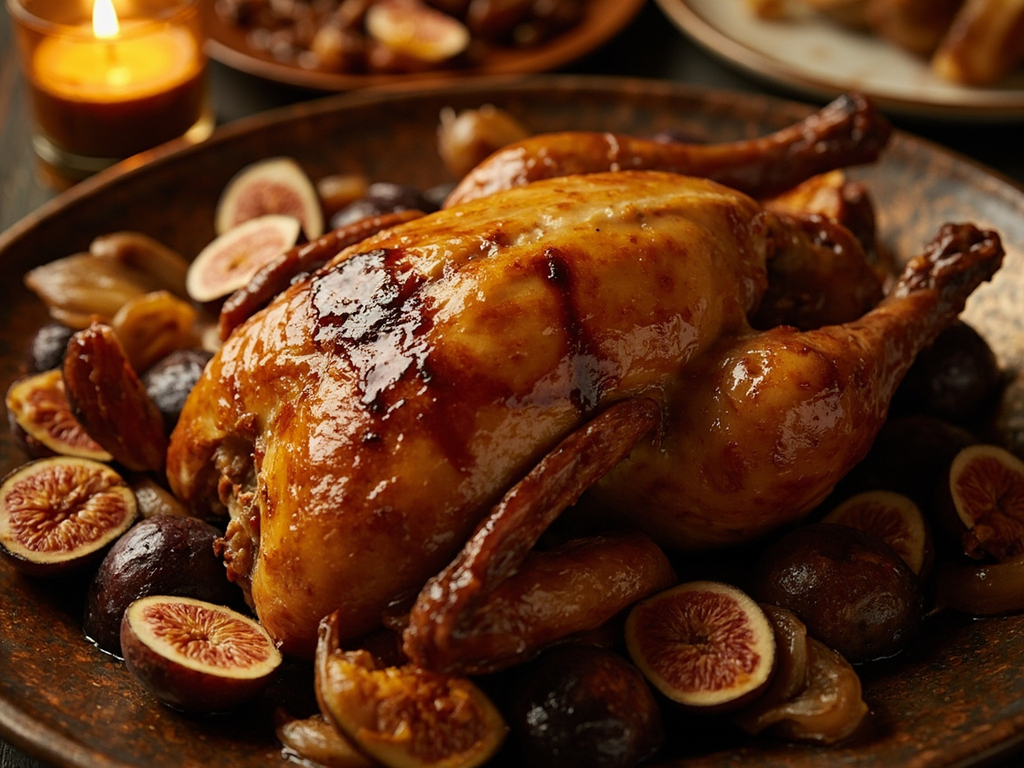
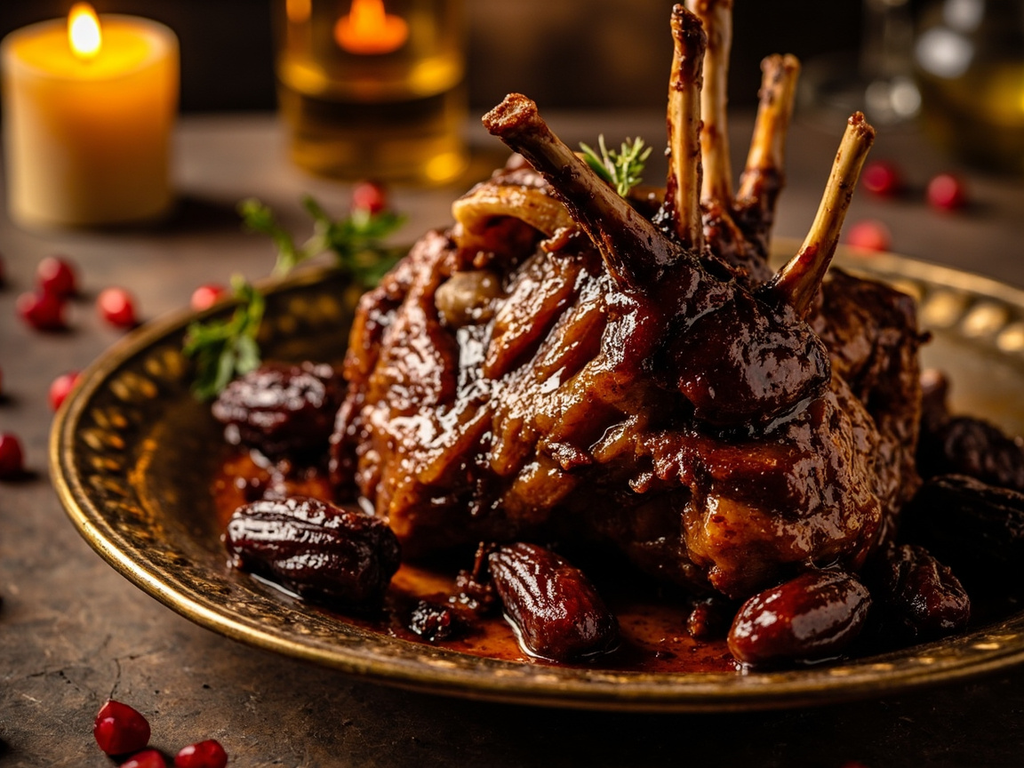
Lamb shoulder slow-roasted, glazed with honey and studded with melting dates, perfumed with cumin and coriander. The sugar caramelizes on the meat for a shiny crust, exactly the kind of dish the Persian court served at its banquets.
Approach, stranger, and behold the table of the King of Kings. By my order, fat sheep are slaughtered by the hundreds, and my cooks baste them with the purest honey from the Median mountains until the flesh gleams like gold from my darics. My father Cyrus taught me that a king is known by the abundance he spreads; thus no one leaves my feast with a bitter mouth. Taste, and let the date melt on your tongue as the resistance of peoples melts before my armies.
- •Shoulder or leg of mutton — a fine piece (festive meat)
- •Honey — as much as you like (sweet glaze, royal signature)
- •Dates — a generous handful (sweet melting fruit)
- •Cumin and coriander seeds — to taste (spices of the Persian table)
- •Wine vinegar — a dash (acid balance)
Honey and Date Roasted Mutton from the Royal Feast
Lamb shoulder slow-roasted, glazed with honey and studded with melting dates, perfumed with cumin and coriander. The sugar caramelizes on the meat for a shiny crust, exactly the kind of dish the Persian court served at its banquets.
Why this dish? Cambyses, son of Cyrus and King of Kings, kept an open table in the Achaemenid splendor described by Herodotus and the Persepolis tablets: whole roasted sheep, basted with honey, to celebrate his conquests — notably that of Egypt in 525 BC.
Approach, stranger, and behold the table of the King of Kings. By my order, fat sheep are slaughtered by the hundreds, and my cooks baste them with the purest honey from the Median mountains until the flesh gleams like gold from my darics. My father Cyrus taught me that a king is known by the abundance he spreads; thus no one leaves my feast with a bitter mouth. Taste, and let the date melt on your tongue as the resistance of peoples melts before my armies.
Ingredients (period version)
- Shoulder or leg of mutton — a fine piece (festive meat)
- Honey — as much as you like (sweet glaze, royal signature)
- Dates — a generous handful (sweet melting fruit)
- Cumin and coriander seeds — to taste (spices of the Persian table)
- Wine vinegar — a dash (acid balance)
Ingredients
- Shoulder of mutton or lamb — 1.5 kg (meat)
- Liquid honey — 4 tbsp (glaze)
- Pitted dates — 12 (sweet garnish)
- Ground cumin — 1 tsp (spice)
- Ground coriander — 1 tsp (spice)
- Red wine vinegar — 2 tbsp (acidity)
- Salt — 1 tsp (seasoning)
Method
- Rub the mutton with salt, cumin, and coriander, then let rest for 30 minutes.
- Sear the meat in a hot oven (220 °C) for 20 minutes to brown.
- Mix honey and vinegar, brush over the meat, lower to 160 °C and cook for 2 hours, basting regularly.
- Add the dates 20 minutes before the end so they melt into the juices.
- Let rest for 10 minutes, drizzle with caramelized juices, and serve with flatbread.
How it was made : The Persepolis Fortification Tablets attest to royal rations of mutton, wine, and fruit. Herodotus (Histories, I) describes Persians roasting whole beasts on great occasions and their marked taste for sweetness. Honey, harvested in the mountains, was the noble sweetener before cane sugar.
The contemporary twist : Scatter fresh pomegranate seeds and pistachio slivers on top before serving for an edible "pharaonic crown," a nod to Cambyses' Egyptian coronation.
Sources : Herodotus, Histories, Book I · Persepolis Fortification Archive
Cambyses II · Charactorium