 flip
flipHoneyed Quince and Raisin Compote
Honeyed Quince and Raisin Compote
Why this dish? Herodotus recounts that the Persians mocked the Greeks for lacking desserts. At Cambyses' table as in daily life, fruits cooked in honey concluded the meal. Quince and grape, fruits of the Iranian plateau, were at its heart.
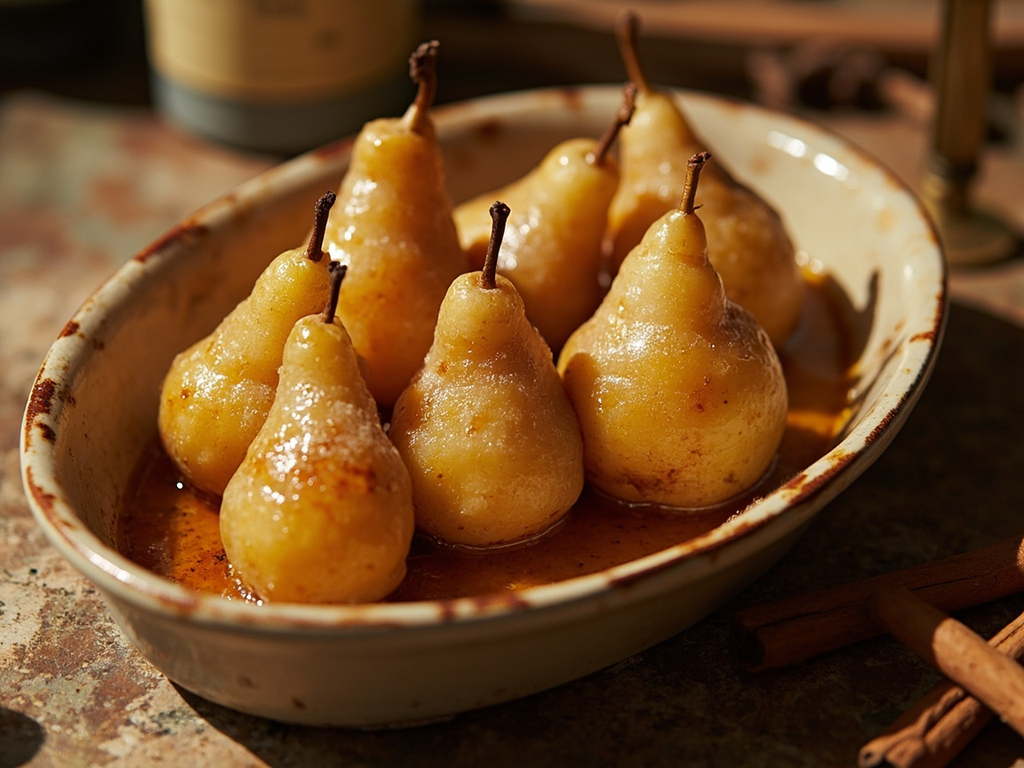
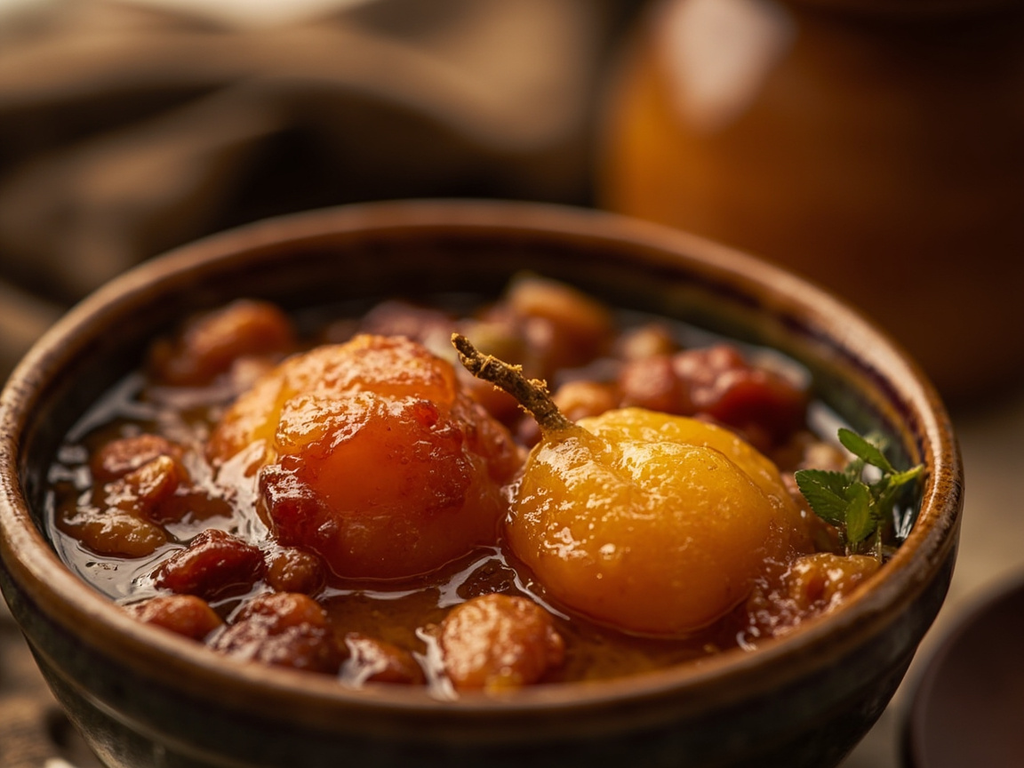
Tender quinces simmered in honey with raisins and a hint of vinegar, perfumed with cardamom. Sweet, slightly tart, this simple dessert reflects the Persian love of sweetness.
The Greeks, those stingy people, rise from table with empty bellies for lack of sweets — I, King of Kings, hold that a meal without a sweet course is a reign without an heir. Take this quince, hard and bitter raw, and watch honey tame it over a low fire until it becomes tender and red like the sunset over Persepolis. A drop of vinegar to wake the tongue, raisins for the memory of the sun. This is how one leaves my table: satisfied.
- •Quinces — a few (astringent fruit to be softened)
- •Honey — generously (noble sweetener)
- •Raisins — a handful (fruity sweetness)
- •Wine vinegar — a dash (balancing acidity)
- •Cardamom — a few grains (fragrance)
Honeyed Quince and Raisin Compote
Tender quinces simmered in honey with raisins and a hint of vinegar, perfumed with cardamom. Sweet, slightly tart, this simple dessert reflects the Persian love of sweetness.
Why this dish? Herodotus recounts that the Persians mocked the Greeks for lacking desserts. At Cambyses' table as in daily life, fruits cooked in honey concluded the meal. Quince and grape, fruits of the Iranian plateau, were at its heart.
The Greeks, those stingy people, rise from table with empty bellies for lack of sweets — I, King of Kings, hold that a meal without a sweet course is a reign without an heir. Take this quince, hard and bitter raw, and watch honey tame it over a low fire until it becomes tender and red like the sunset over Persepolis. A drop of vinegar to wake the tongue, raisins for the memory of the sun. This is how one leaves my table: satisfied.
Ingredients (period version)
- Quinces — a few (astringent fruit to be softened)
- Honey — generously (noble sweetener)
- Raisins — a handful (fruity sweetness)
- Wine vinegar — a dash (balancing acidity)
- Cardamom — a few grains (fragrance)
Ingredients
- Quinces — 3 (main fruit)
- Honey — 5 tbsp (sweetener)
- Raisins — 60 g (sweetness)
- Wine vinegar — 1 tbsp (acidity)
- Ground cardamom — 1/2 tsp (aromatic)
- Water — 300 ml (cooking liquid)
Method
- Peel and quarter the quinces, remove the core.
- In a saucepan, combine water, honey, vinegar, and cardamom; bring to a simmer.
- Add the quinces and raisins, cover, and simmer for 40 to 50 minutes over low heat.
- The quinces are ready when tender and rosy; reduce the syrup if necessary.
- Serve warm or cold, drizzled with syrup.
How it was made : The quince (native to the Caspian region) and grape were key fruits of the Persian world. Without cane sugar, fruits were preserved and sweetened with honey and reduced wine. The slow sweet-sour cooking prefigures Persian khoresh.
The contemporary twist : Serve over fresh cheese (like labneh) with a few crushed pistachios, as a dessert or breakfast.
Sources : Herodotus, Histories, Book I, 133
Cambyses II · Charactorium