 flip
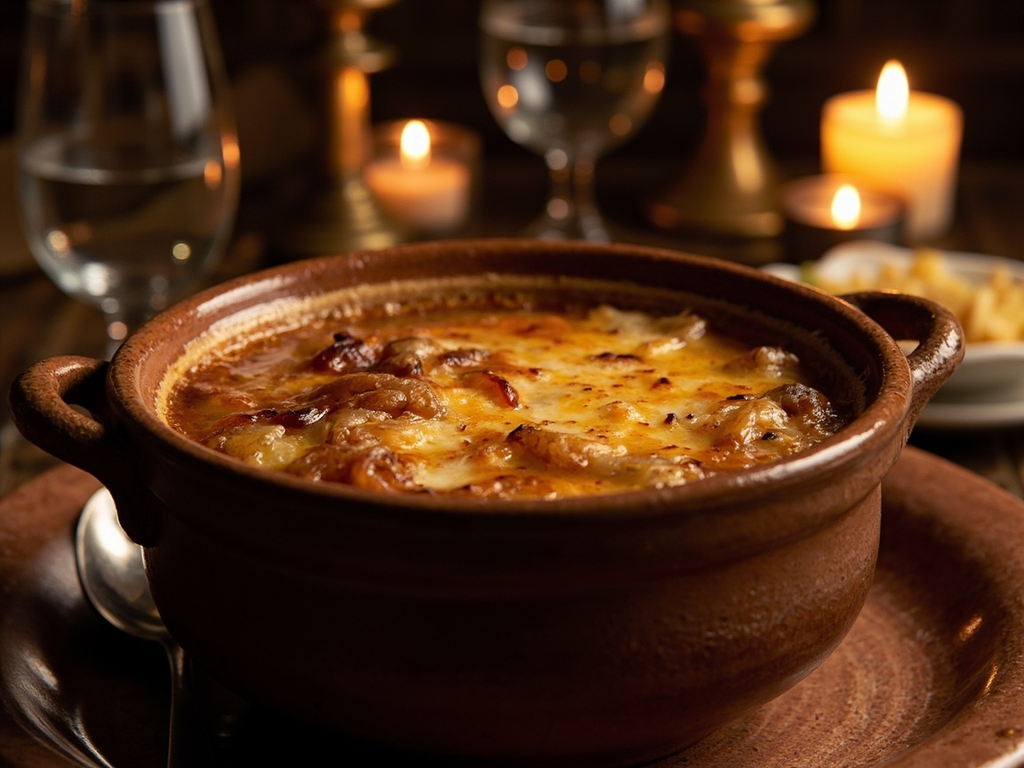
flipAtelier Panade with Bread and Cheese
Atelier Panade with Bread and Cheese
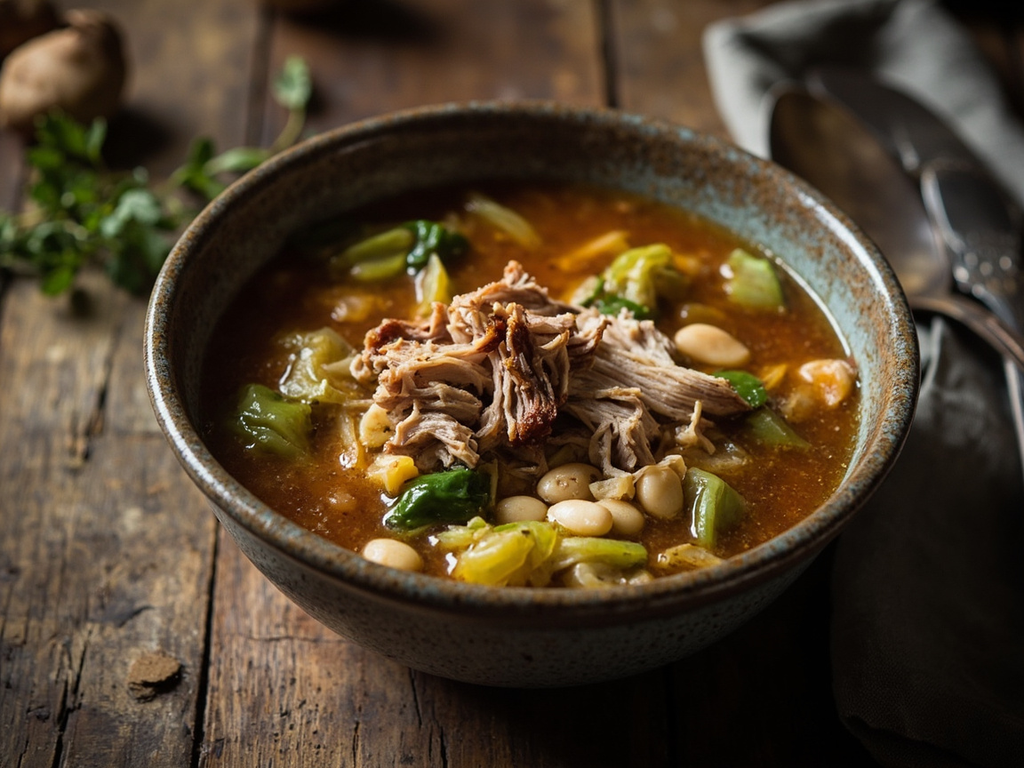
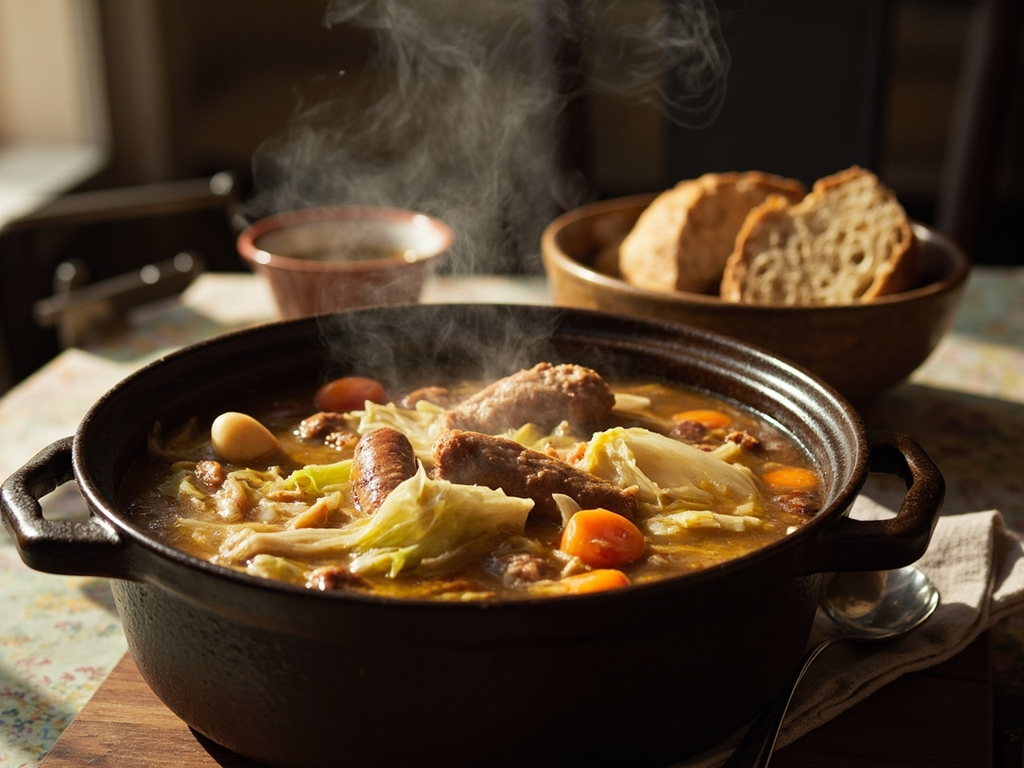
Why this dish? Camille, absorbed in clay, neglected her meals and lived on bread, soups, and cheese. Panade — stale bread melted into broth — was the dish on empty-purse evenings on the Quai de Bourbon: slow to simmer but cheap, left on the corner of the stove while she modeled.
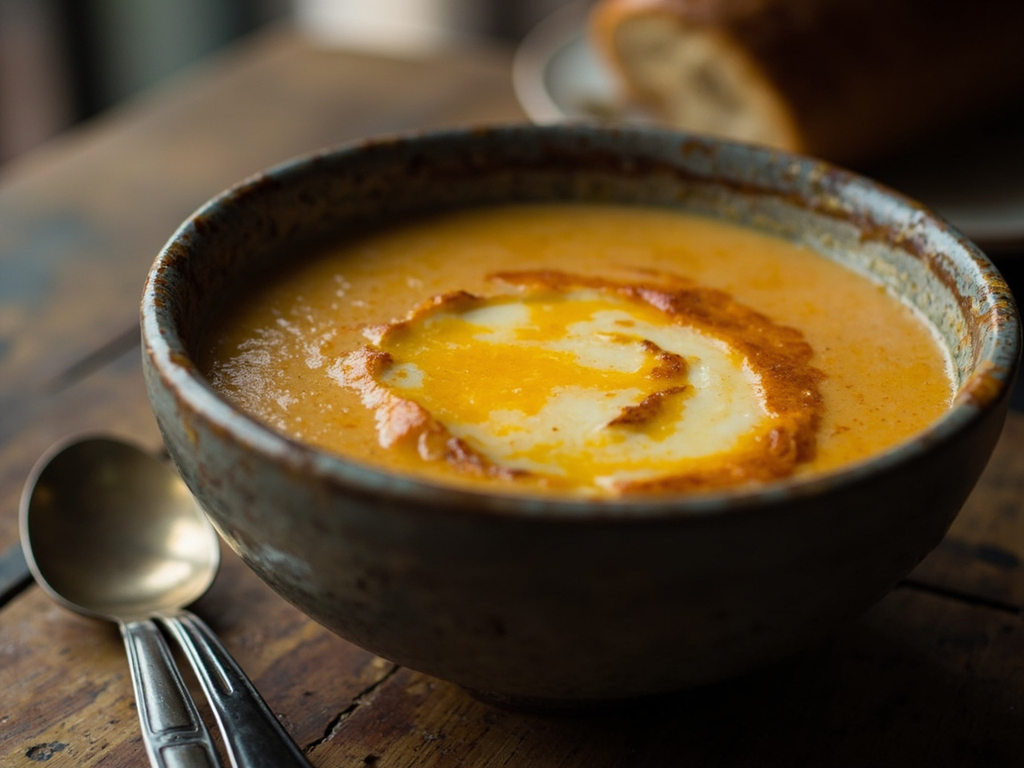
A thick, comforting soup where hard bread disintegrates in broth, bound with grated cheese and an egg yolk. The dish of dignified destitution, which holds body and soul together on a winter evening in a poorly heated workshop.
Don't think you need to be rich to eat warm. My yesterday's crust is hard as the onyx I carve? I break it, drown it in vegetable broth, let it melt for an hour on the stove while my fingers are in the clay. At the last moment, a beaten egg yolk and a handful of grated cheese, and there's a soup that sets you right. I dined on that many an evening, alone with my plaster casts, and I never complained.
- •Stale bread — a good crust (base, binder)
- •Vegetable or pot-au-feu broth — a large ladle per bowl (base)
- •Grated hard cheese (Gruyère) — a handful (umami, binder)
- •Egg yolk — one (binder)
- •Butter — a knob (richness)
- •Salt, pepper — to taste (seasoning)
Atelier Panade with Bread and Cheese
A thick, comforting soup where hard bread disintegrates in broth, bound with grated cheese and an egg yolk. The dish of dignified destitution, which holds body and soul together on a winter evening in a poorly heated workshop.
Why this dish? Camille, absorbed in clay, neglected her meals and lived on bread, soups, and cheese. Panade — stale bread melted into broth — was the dish on empty-purse evenings on the Quai de Bourbon: slow to simmer but cheap, left on the corner of the stove while she modeled.
Don't think you need to be rich to eat warm. My yesterday's crust is hard as the onyx I carve? I break it, drown it in vegetable broth, let it melt for an hour on the stove while my fingers are in the clay. At the last moment, a beaten egg yolk and a handful of grated cheese, and there's a soup that sets you right. I dined on that many an evening, alone with my plaster casts, and I never complained.
Ingredients (period version)
- Stale bread — a good crust (base, binder)
- Vegetable or pot-au-feu broth — a large ladle per bowl (base)
- Grated hard cheese (Gruyère) — a handful (umami, binder)
- Egg yolk — one (binder)
- Butter — a knob (richness)
- Salt, pepper — to taste (seasoning)
Ingredients
- Stale country bread — 200 g (base, binder)
- Vegetable broth — 1 liter (base)
- Grated Gruyère — 60 g (umami, binder)
- Egg yolk — 1 (binder)
- Butter — 20 g (richness)
- Salt, pepper — to taste (seasoning)
Method
- Cut the stale bread into pieces and place in a saucepan with hot broth.
- Simmer over low heat for 30-40 minutes, stirring: the bread should completely break down into a thick porridge.
- Add the butter, salt, and pepper. Off the heat, stir in the grated Gruyère.
- Beat the egg yolk, temper it with a ladle of warm soup, then pour back into the saucepan without letting it boil.
- Serve piping hot, optionally with a drizzle of grated cheese on top.
How it was made : Panade is one of the oldest soups in French peasant cuisine. Before gas stoves, it was left for hours at the corner of the hearth or on the coal stove. It was the ultimate anti-waste dish in modest Parisian households: stale bread was never thrown away.
The contemporary twist : A grating of nutmeg and a few croutons pan-fried in butter for texture — or, a nod to the workshop, a rough stoneware bowl set on a grey board like a sculpture plinth.
Camille Claudel · Charactorium