 flip
flipPane cotto calabrese (cooked bread of the war paths)
Pane cotto calabrese (cooked bread of the war paths)
Why this dish? While marching on Naples in 1799 at the head of his Calabrian peasants, Ruffo shared the ordinary fare of the troops. Pane cotto — stale bread revived in a broth of herbs and oil — was the meal that stuck to the ribs of men without wasting anything: exactly the field cooking of an army raised among shepherds and ploughmen of Calabria.
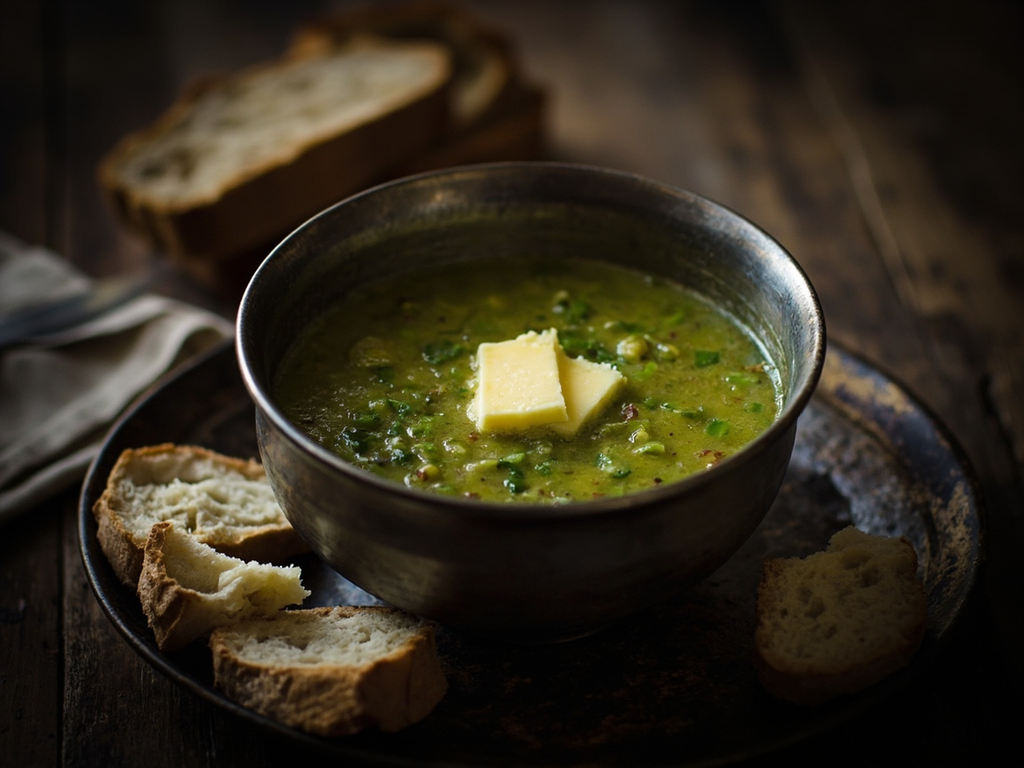
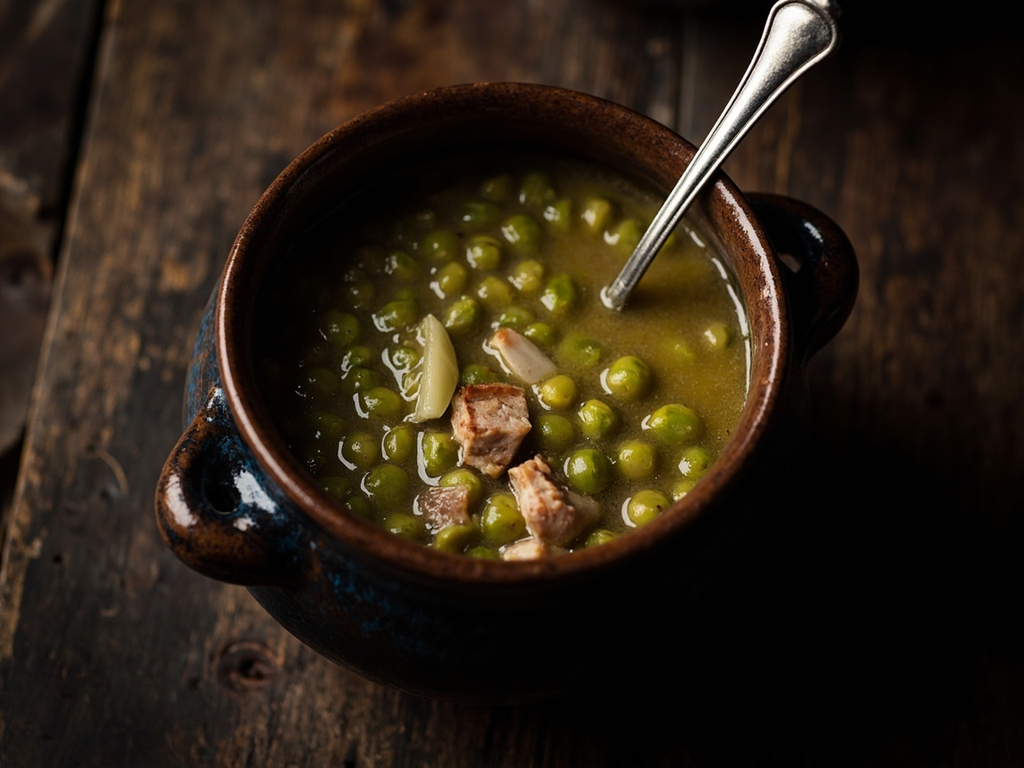
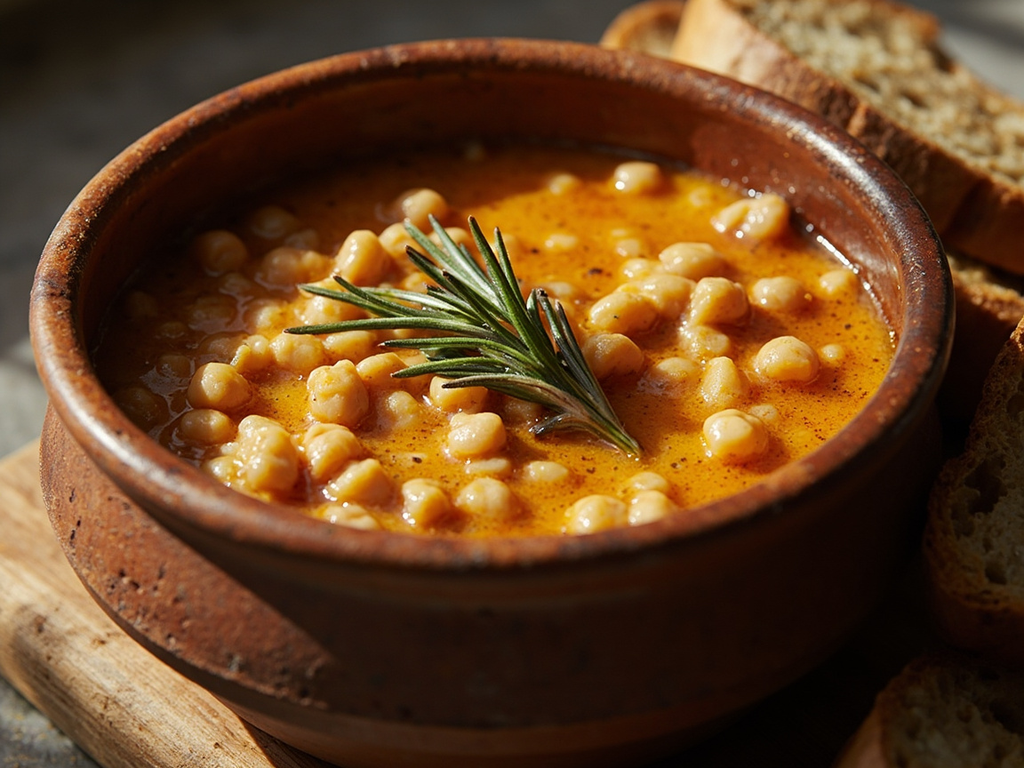
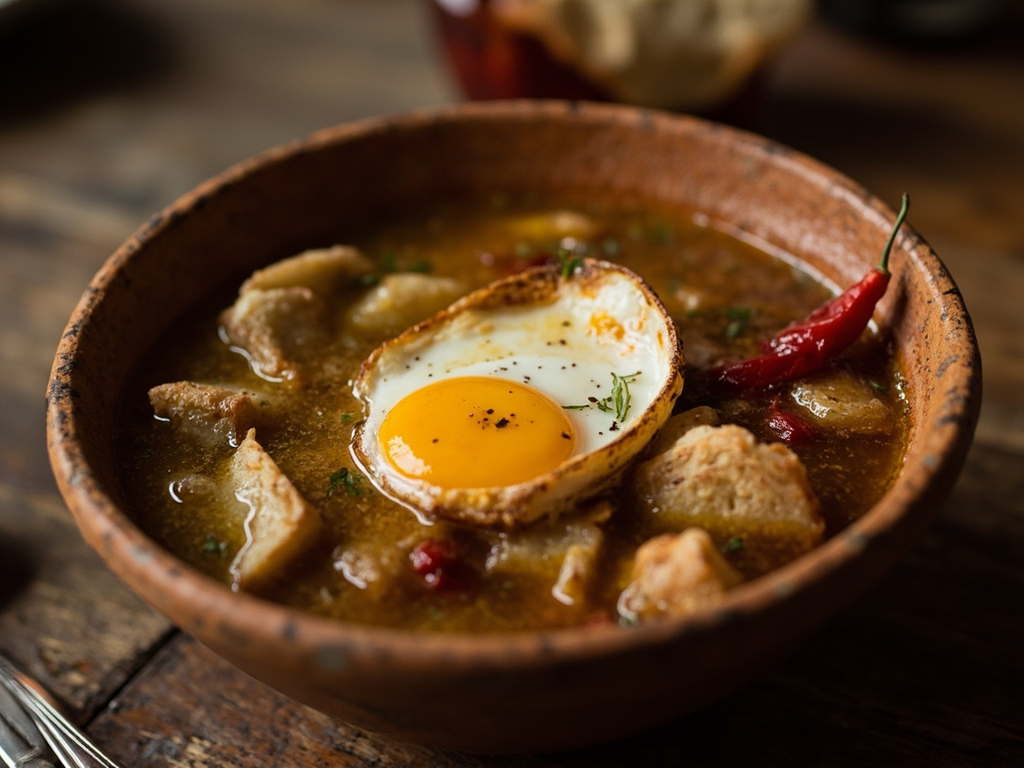
A thick soup where stale bread softens in water flavored with garlic, bay leaf, and olive oil, often enriched with an egg and a dusting of chili. A recovery dish born of necessity, turned into comfort.
On the paths of Calabria, my brave men had only a wooden bowl for a table, and I chose to sit among them. We would melt yesterday's bread in hot water, with what the land offered — a bay leaf, a clove of garlic, a drizzle of our oil, and that little red chili that warms the soul as much as the belly. Trust my experience: a man who has eaten hot marches farther and fights better. The Lord feeds the humble with little, and it is in that little that I saw the true strength of my army.
- •Stale country bread — a few thick slices per man (nourishing base)
- •Spring water — to cover (broth)
- •Olive oil — a good drizzle (fat, binder)
- •Garlic — a few cloves (aromatic)
- •Bay leaf — one or two leaves (flavor)
- •Dried red Calabrian chili — according to courage (heat, signature)
- •Egg — one, if the henhouse is generous (enrichment)
Pane cotto calabrese (cooked bread of the war paths)
A thick soup where stale bread softens in water flavored with garlic, bay leaf, and olive oil, often enriched with an egg and a dusting of chili. A recovery dish born of necessity, turned into comfort.
Why this dish? While marching on Naples in 1799 at the head of his Calabrian peasants, Ruffo shared the ordinary fare of the troops. Pane cotto — stale bread revived in a broth of herbs and oil — was the meal that stuck to the ribs of men without wasting anything: exactly the field cooking of an army raised among shepherds and ploughmen of Calabria.
On the paths of Calabria, my brave men had only a wooden bowl for a table, and I chose to sit among them. We would melt yesterday's bread in hot water, with what the land offered — a bay leaf, a clove of garlic, a drizzle of our oil, and that little red chili that warms the soul as much as the belly. Trust my experience: a man who has eaten hot marches farther and fights better. The Lord feeds the humble with little, and it is in that little that I saw the true strength of my army.
Ingredients (period version)
- Stale country bread — a few thick slices per man (nourishing base)
- Spring water — to cover (broth)
- Olive oil — a good drizzle (fat, binder)
- Garlic — a few cloves (aromatic)
- Bay leaf — one or two leaves (flavor)
- Dried red Calabrian chili — according to courage (heat, signature)
- Egg — one, if the henhouse is generous (enrichment)
Ingredients
- Stale country bread — 200 g (nourishing base)
- Water or vegetable broth — 700 ml (broth)
- Extra virgin olive oil — 4 tbsp (fat, binder)
- Garlic — 2 cloves (aromatic)
- Bay leaf — 2 leaves (flavor)
- Dried or fresh Calabrian chili — 1/2 to 1, minced (heat, signature)
- Eggs — 2 (enrichment)
- Salt — to taste (seasoning)
Method
- Heat the water (or broth) with crushed garlic, bay leaf, and chili; season with salt.
- Let simmer 10 minutes to infuse, then remove the bay leaf.
- Cut the stale bread into large chunks and plunge into the hot liquid; let soak until it breaks down.
- Pour in a generous drizzle of olive oil and stir to obtain a creamy porridge.
- Crack the eggs directly into the hot soup and let them set a few minutes without stirring too much.
- Serve piping hot, finished with a last drizzle of raw oil.
How it was made : Pane cotto (or pancotto) is attested throughout the Mezzogiorno as a poverty dish: not a crumb of bread was wasted. Depending on the season and budget, wild herbs (cicoria, rapi), an egg, or a little cheese were added. It was the food of shepherds, day laborers, and by extension, irregular troops.
The contemporary twist : Served in an individual cocotte with a poached egg in the center and a few pecorino shavings, the 'bread of the paths' becomes a bistro comfort food.
Cardinal Ruffo · Charactorium