 flip
flipBarramundi Cooked in Paperbark
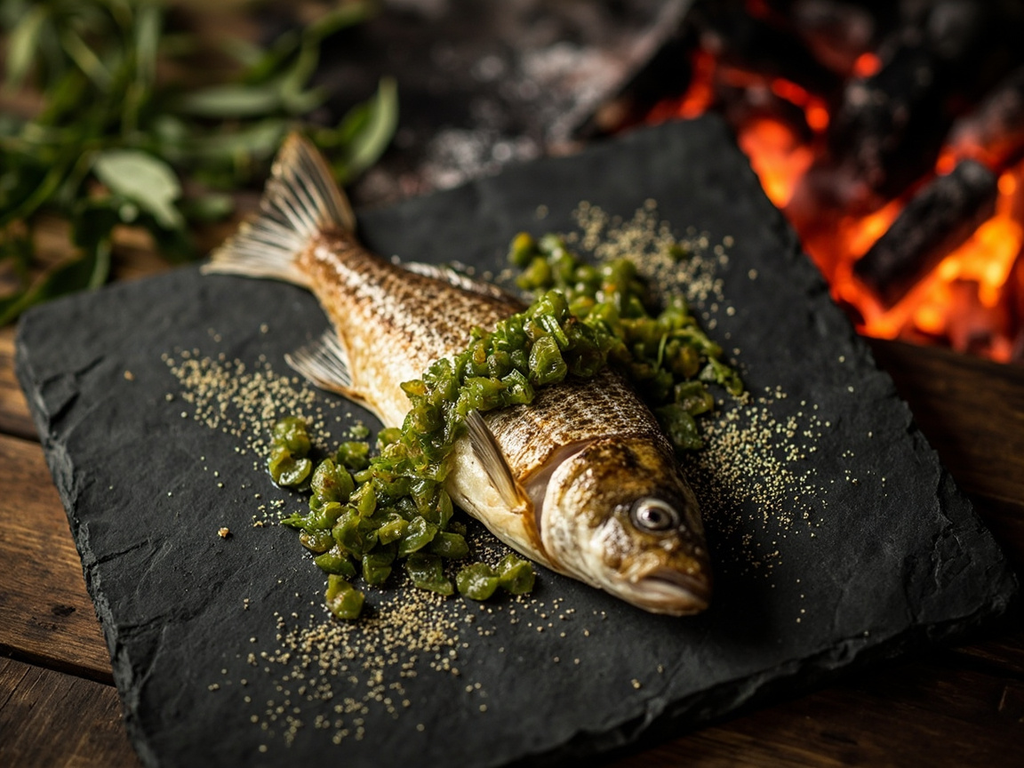
Barramundi Cooked in Paperbark
Why this dish? Cathy Freeman was born in Mackay, tropical Queensland, land of rivers and estuaries where barramundi is king. Wrapping fish in the flexible bark of the paperbark (melaleuca) before placing it on the coals is a technique attested for millennia among the northern peoples: it is the dish of great family gatherings, those that reunite clans around the fire.
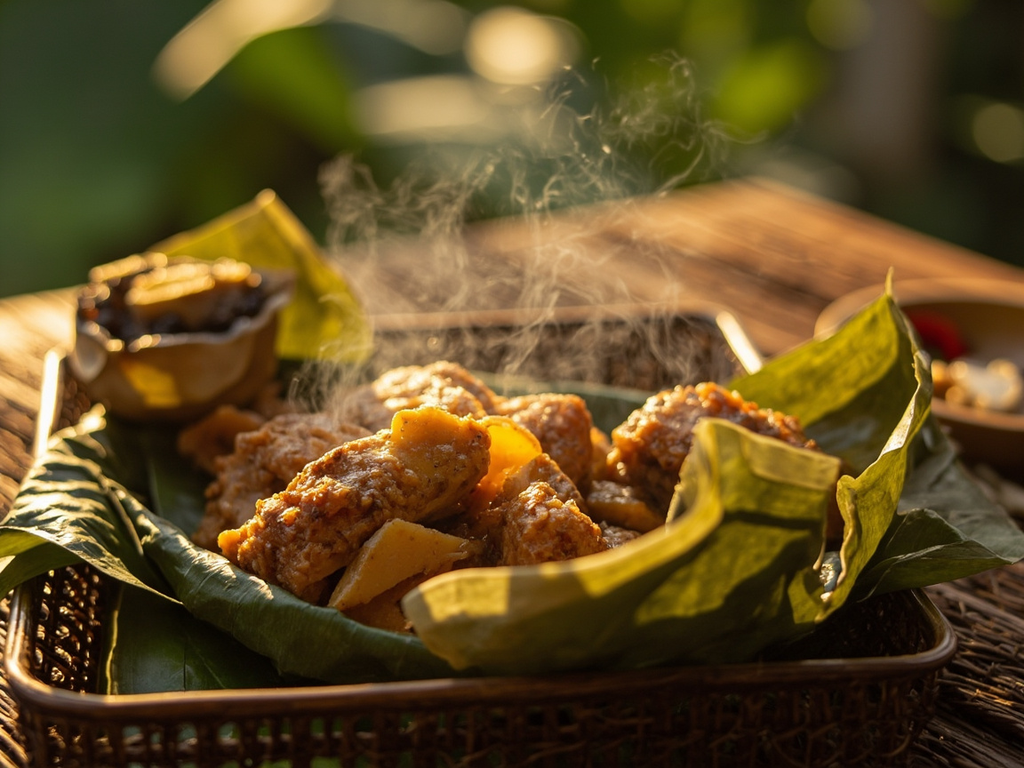
A whole barramundi, perfumed with lemon myrtle and finger lime, wrapped in damp paperbark that steams it on the coals. The flesh remains pearly, melting, and just smoky enough.
Where I come from, in Queensland, you don't cook fish in a pan: you wrap it in the bark of the paper tree, wet it in the river, and lay it on the coals. My family did that when everyone got together — the uncles, the cousins, the little ones running everywhere. You crush a lemon myrtle leaf in your hand, slip it against the flesh, and the smell rises straight into your chest. When I carried the Aboriginal flag in Sydney, it was that table I thought of, that smoke that smells of home.
- •Whole barramundi — one good-sized fish (heart of the dish, estuary fish)
- •Paperbark (melaleuca) bark — a few large moistened sheets (steaming wrap)
- •Lemon myrtle leaves — a handful, crushed (tangy perfume)
- •Finger lime — a few fruits (tangy pearls)
- •River water — to dampen the bark (cooking steam)
Barramundi Cooked in Paperbark
A whole barramundi, perfumed with lemon myrtle and finger lime, wrapped in damp paperbark that steams it on the coals. The flesh remains pearly, melting, and just smoky enough.
Why this dish? Cathy Freeman was born in Mackay, tropical Queensland, land of rivers and estuaries where barramundi is king. Wrapping fish in the flexible bark of the paperbark (melaleuca) before placing it on the coals is a technique attested for millennia among the northern peoples: it is the dish of great family gatherings, those that reunite clans around the fire.
Where I come from, in Queensland, you don't cook fish in a pan: you wrap it in the bark of the paper tree, wet it in the river, and lay it on the coals. My family did that when everyone got together — the uncles, the cousins, the little ones running everywhere. You crush a lemon myrtle leaf in your hand, slip it against the flesh, and the smell rises straight into your chest. When I carried the Aboriginal flag in Sydney, it was that table I thought of, that smoke that smells of home.
Ingredients (period version)
- Whole barramundi — one good-sized fish (heart of the dish, estuary fish)
- Paperbark (melaleuca) bark — a few large moistened sheets (steaming wrap)
- Lemon myrtle leaves — a handful, crushed (tangy perfume)
- Finger lime — a few fruits (tangy pearls)
- River water — to dampen the bark (cooking steam)
Ingredients
- Barramundi fillets or steaks (or sea bass/sea bream as substitute) — 4 steaks of 150 g (heart of the dish)
- Parchment paper + aluminum foil — enough for 4 parcels (replaces paperbark)
- Dried lemon myrtle leaves (or lemon zest + verbena) — 1 tsp crumbled (signature flavor)
- Finger lime (or half a lime) — 2 fruits or 1/2 lime (fresh acidity)
- Olive oil — 2 tbsp (tenderness)
- Sea salt — a pinch per steak (seasoning)
Method
- Light a barbecue or preheat the oven to 200°C; you want a lively, enveloping heat.
- Place each steak on a sheet of parchment paper, drizzle with oil, and salt.
- Crumble the lemon myrtle over the flesh, squeeze a little lime or scatter finger lime pearls.
- Seal tightly into a parcel (parchment then foil) to mimic the paperbark steaming.
- Cook for 12 to 15 minutes on the coals or in the oven, until the flesh flakes into pearly pieces.
- Open the parcel at the table, in a circle, so the fragrant steam escapes in front of everyone.
How it was made : The Aboriginal peoples of the north have wrapped fish and game in paperbark (Melaleuca) for millennia: the damp bark protects the flesh, steams it on the coals, and lightly perfumes it. Finger lime and lemon myrtle, meanwhile, are gathered wild in the Queensland rainforest.
The contemporary twist : Serve opened on the plate with finger lime pearls bursting like green and gold vegetable caviar — a nod to the colors of Cathy's Olympic outfit.
Sources : Bruce Pascoe, Dark Emu, Magabala Books, 2014 · Vic Cherikoff, The Bushfood Handbook, 1989
Cathy Freeman · Charactorium