 flip
flipTurtle feast kup mauri (inspired)
Turtle feast kup mauri (inspired)
Why this dish? The kup mauri (earth oven) was at the heart of large island gatherings — tombstone openings, dances, family reunions. Mabo, deeply rooted in Mer culture, participated in these feasts that celebrated the community's bond to the land. This recipe is inspired by the cooking method, adapted with accessible ingredients, out of respect for the sacred dimension of some traditional preparations.
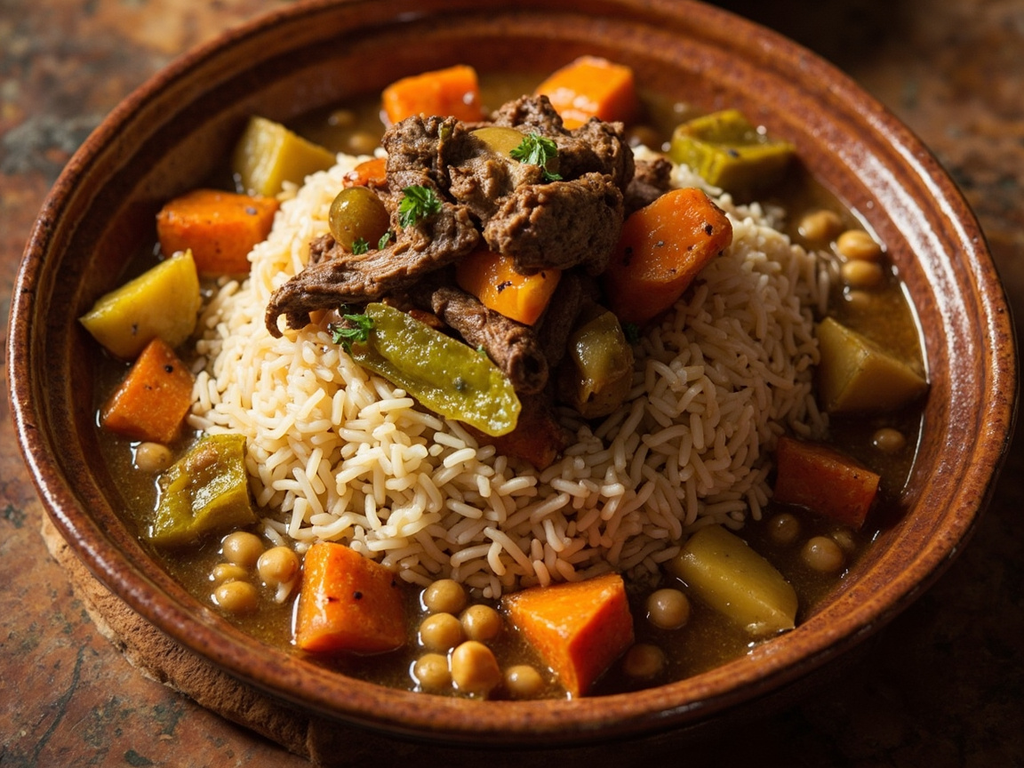
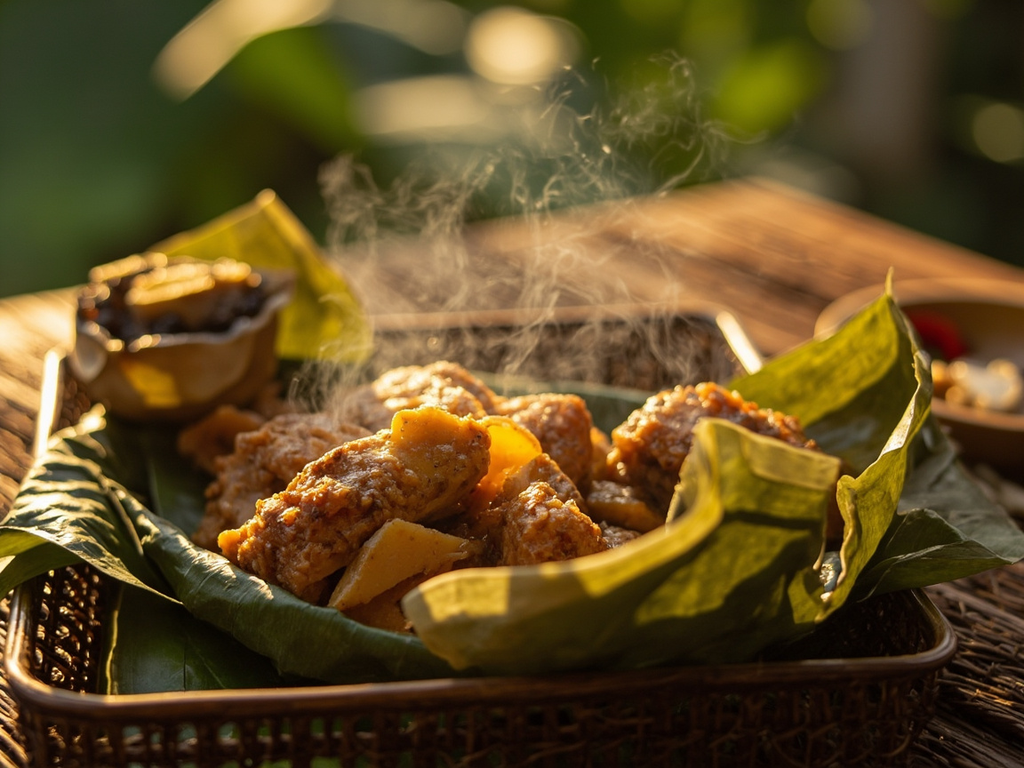
Meat and tubers slow-cooked in banana leaf parcels, in the manner of the Torres Strait earth oven. An adapted version using free-range chicken instead of turtle meat (protected), with yam, sweet potato, and ginger-spiced coconut milk.
When there's a tombstone opening or a big dance on Mer, everyone gathers and we prepare the kup mauri. The men dig the hole, they heat the stones, and we wrap everything in banana leaves — the meat, the taro, the yam, with coconut on top. The earth does the work, you let it cook for hours. When you open it, the whole island smells like celebration. It's not just food, it's all of us together, on our land. That's what I was fighting for.
- •Turtle meat or large fish — a generous piece (festive protein)
- •Taro and yam — several tubers (starches)
- •Fresh coconut (pressed milk) — 3 to 4 nuts (sauce)
- •Banana leaves — several large leaves (cooking wrap)
- •Wild ginger — a piece (aromatic)
- •Heated stones — for the earth oven (heat source)
Turtle feast kup mauri (inspired)
Meat and tubers slow-cooked in banana leaf parcels, in the manner of the Torres Strait earth oven. An adapted version using free-range chicken instead of turtle meat (protected), with yam, sweet potato, and ginger-spiced coconut milk.
Why this dish? The kup mauri (earth oven) was at the heart of large island gatherings — tombstone openings, dances, family reunions. Mabo, deeply rooted in Mer culture, participated in these feasts that celebrated the community's bond to the land. This recipe is inspired by the cooking method, adapted with accessible ingredients, out of respect for the sacred dimension of some traditional preparations.
When there's a tombstone opening or a big dance on Mer, everyone gathers and we prepare the kup mauri. The men dig the hole, they heat the stones, and we wrap everything in banana leaves — the meat, the taro, the yam, with coconut on top. The earth does the work, you let it cook for hours. When you open it, the whole island smells like celebration. It's not just food, it's all of us together, on our land. That's what I was fighting for.
Ingredients (period version)
- Turtle meat or large fish — a generous piece (festive protein)
- Taro and yam — several tubers (starches)
- Fresh coconut (pressed milk) — 3 to 4 nuts (sauce)
- Banana leaves — several large leaves (cooking wrap)
- Wild ginger — a piece (aromatic)
- Heated stones — for the earth oven (heat source)
Ingredients
- Free-range chicken thighs (bone-in) — 1 kg (protein (respectful substitute))
- Sweet potato — 400 g, in large chunks (starch)
- Yam or taro — 300 g, in chunks (traditional starch)
- Coconut milk — 400 ml (sauce)
- Fresh ginger — 30 g, grated (aromatic)
- Onion — 1 large, in wedges (aromatic)
- Garlic — 3 cloves (aromatic)
- Salt — 1 tsp (seasoning)
- Banana leaves (or aluminum foil) — 4 large leaves (cooking wrap)
- Lime — 1 (finish)
Method
- Preheat the oven to 160°C. If using banana leaves, quickly pass them over a gas flame to soften.
- Salt the chicken thighs and rub with grated ginger and crushed garlic.
- Spread the banana leaves in a large baking dish (or Dutch oven), letting them overhang generously.
- Arrange the sweet potato, yam, and onion pieces at the bottom. Place the chicken thighs on top.
- Pour the coconut milk over everything.
- Fold the banana leaves to completely enclose the ingredients. Cover tightly with a lid or aluminum foil.
- Bake for 2.5 to 3 hours, until the meat falls off the bone and the tubers are tender.
- Open at the table, squeeze the lime over. Serve directly from the leaves.
How it was made : The kup mauri (literally 'earth cooking') is the Melanesian earth oven of the Torres Strait. A hole is dug, lined with volcanic stones heated red-hot, then layered with banana leaves, meat (traditionally green turtle for major occasions), tubers, and coconut. The whole is covered with earth and cooked for hours. This community cooking technique is reserved for important events: commemorative funerals (tombstone openings), initiations, clan gatherings.
The contemporary twist : Replace the baking dish with a covered barbecue and lava stones to replicate the indirect cooking of kup mauri — ideal for an Australian garden meal honoring Mabo's gardens.
Sources : Loos, Noel & Mabo, Koiki, 'Edward Koiki Mabo: His Life and Struggle for Land Rights', University of Queensland Press, 1996 · Beckett, Jeremy, 'Torres Strait Islanders: Custom and Colonialism', Cambridge University Press, 1987 · Singe, John, 'The Torres Strait: People and History', University of Queensland Press, 1989
Eddie Mabo · Charactorium