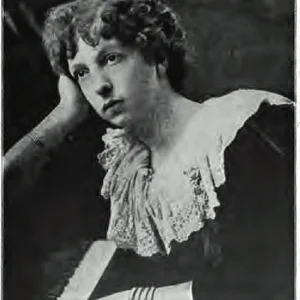

French composer and pianist (1857–1944), Cécile Chaminade was one of the first women to establish herself in the classical music world. Celebrated for her Concertstück for piano and orchestra and her Concertino for flute, she enjoyed tremendous international success during her lifetime.
Cécile Chaminade(1857 — 1944)
Cécile Chaminade
France
8 min read
Frequently asked questions
Key Facts
- 1857: born in Paris on August 15
- 1875: acclaimed public debut as pianist and composer
- 1888: composition of the Concertstück for piano and orchestra, op. 40
- 1896: composition of the Concertino for flute and orchestra, op. 107, her most performed piece
- 1913: first female composer to be awarded the Légion d'honneur
Works & Achievements
Premiered at the Crystal Palace in London, this ambitious piece for piano and orchestra earned her international recognition beyond the salon circuit. It demonstrates her abilities as a composer in a large-scale format and remains one of her most representative works.
Her most frequently performed composition today, it has become a required competition piece at the Paris Conservatoire. This elegant and lyrical concertino remains a staple of flute education in conservatories around the world.
A solo piano piece that became enormously popular in European and American salons. Its lightness and dance-like character made it one of the most widely performed works in her catalog, often arranged for various instruments.
An evocative piano piece showcasing the poetic and picturesque quality characteristic of her salon style. Highly popular with amateur musicians, it helped spread her name across Europe and North America.
One of her most celebrated character pieces, charming and accessible, widely performed by amateur audiences. It contributed to her international popularity, particularly in England and the United States.
A substantial solo piano work reflecting her ambitions beyond the salon repertoire. This more serious type of composition reveals the depth of her musical training and her desire to make her mark in the more prestigious genres.
Anecdotes
At the age of 8, Cécile Chaminade played her first compositions for Georges Bizet, who was a close family friend. The composer of *Carmen* was so impressed that he told her father: “You have a little Mozart on your hands.” This anecdote, passed down by those close to her and by her biographers, profoundly shaped the young musician's vocation.
Despite her exceptional talent, Chaminade was unable to enroll in the composition classes at the Paris Conservatoire, which refused to admit women. She therefore trained privately, notably with Benjamin Godard for composition. This exclusion did not prevent her from becoming one of the most performed composers of her era.
In the United States, the Chaminade phenomenon took on remarkable proportions: hundreds of “Chaminade Clubs” formed across the country, bringing together enthusiasts who gathered regularly to play her pieces. During her American tour in 1908, she was welcomed like a true star, with sold-out halls and enthusiastic crowds at every stop.
In 1913, Cécile Chaminade became the first female composer to receive the Légion d’honneur for her musical work. This distinction, exceedingly rare for a woman at the time, recognized her exceptional talent, her international career, and her role as a pioneer for French women musicians.
Her Concertino for flute, op. 107, composed in 1902, was quickly adopted as a required piece for examinations at the Paris Conservatoire. One of history’s great ironies: the woman who had been refused admission as a composition student saw her work become an indispensable pedagogical reference at the very institution that had excluded her.
Primary Sources
Mlle Chaminade plays her own compositions with remarkable delicacy and precision. Her style combines French clarity with profound sensitivity, and the London public gave her an extraordinarily enthusiastic reception.
Mme Chaminade occupies a singular place in the Parisian musical world. Her compositions, elegant in craftsmanship and rich in melodic inspiration, have earned her a renown that extends far beyond the borders of France.
Chaminade (Marie-Cécile-Louise), composer and pianist, in recognition of eminent services rendered to the musical arts in France and abroad.
I am sending you the final manuscript of the Concertino for flute. I believe this piece may suit advanced students at the Conservatoire, and I hope it will be well received by flutists.
Key Places
Cécile Chaminade was born on August 8, 1857 in Paris and spent most of her active life there. She gave her first concerts in the city, frequented musical salons, and built her reputation as a composer and pianist.
The Chaminade family owned a villa in Le Vésinet, a comfortable residential suburb west of Paris, where Cécile composed a large part of her output. This peaceful, leafy setting gave her ideal conditions for creative work.
It was at London's Crystal Palace that Chaminade premiered her *Concertstück* for piano and orchestra in 1888, conducted by August Manns. The enthusiastic reception from British audiences launched a long series of English tours.
From 1888 onward, Chaminade made numerous tours of England, meeting with considerable success. British audiences adored her elegant compositions, and she performed in the country's most prestigious concert halls.
Her 1908 American tour was a triumph: she performed in numerous cities, welcomed by hundreds of "Chaminade Clubs." Her music was among the most widely played by amateur pianists across the United States.
Chaminade settled in Monte Carlo in her final years. She died there on April 13, 1944, in relative isolation, far from Paris under German occupation.
Typical Objects

Chaminade gave her recitals and composed on a grand piano from the Érard workshop, the benchmark instrument for French pianists in the nineteenth century. Its double-escapement action enabled the great virtuosity she displayed throughout her works.

Her handwritten composition notebooks, filled with annotations and corrections, bear witness to her meticulous working method. She published more than 350 opus numbers during her lifetime, spanning every genre of salon and concert music.

For her recitals, Chaminade wore long, elegant gowns — often in silk or velvet — in keeping with the etiquette of salon recitals and concert halls. Her polished appearance contributed to the serious, respectable image she projected as a woman artist.

Her letters exchanged with the publishing houses Enoch & Cie (Paris) and Ashdown (London) are a valuable source on her working conditions. She personally negotiated her rights and the international distribution of her works.

The programmes handed out to audiences at her recitals list her compositions and record the venues and dates of her tours. These documents attest to the exceptional scope of her international career across Europe and America.

Although a pianist, Chaminade composed her Concertino op. 107 specifically for the flute. The piece has become a staple of the instrument's teaching repertoire, demonstrating her mastery of writing for instruments other than the piano.
School Curriculum
Vocabulary & Tags
Key Vocabulary
Daily Life
Morning
Chaminade rose early to dedicate the first hours of the day to composition, when her concentration was at its peak. She worked at her desk or at the piano, jotting down her musical ideas in handwritten notebooks. This daily discipline allowed her to produce a catalog of exceptional abundance, exceeding 350 published opus numbers.
Afternoon
Afternoons were often devoted to rehearsals, lessons given to private pupils, and visits to Parisian salons. A woman of her time, she maintained an active social network, mixing with other musicians, writers, and artists of the Belle Époque — essential for sustaining her career.
Evening
Evenings were marked by concerts in salons or the great concert halls of Paris, where she performed her own works to consistent acclaim. Society dinners and musical receptions allowed her to maintain her reputation and meet potential patrons and publishers.
Food
Like the Parisian bourgeoisie of her era, Chaminade enjoyed a varied and refined diet: meats, seasonal vegetables, French breads and cheeses, accompanied by wines. Meals with family or fellow artists were occasions for intellectual exchange as much as for the gastronomic pleasures typical of the Belle Époque.
Clothing
Chaminade dressed with elegance and restraint, in keeping with the codes of the cultured bourgeoisie: long dresses with fitted bodices, high collars, and long sleeves for everyday wear, and more ornate silk or velvet outfits for concerts. Her polished appearance contributed to the serious and respectable image she sought to project as a woman composer in a male-dominated field.
Housing
The Chaminade family lived in Paris and had a villa in Le Vésinet, a residential bourgeois suburb to the west of the capital. These comfortable spaces, equipped with grand pianos, provided an ideal setting for composition and rehearsals. In her later years, she lived in Monte-Carlo, in an apartment in more modest circumstances.