 flip
flipSage and Lovage Tea from the Imperial Garden
Sage and Lovage Tea from the Imperial Garden
Why this dish? Einhard recounts that Charles, growing old, could not bear the diets and fasts imposed by his physicians. But he loved his garden: the Capitulary de Villis lists sage and lovage among the medicinal plants he ordered to be cultivated. This tea is the compromise between the king resistant to doctors and the herbalism he himself funded.
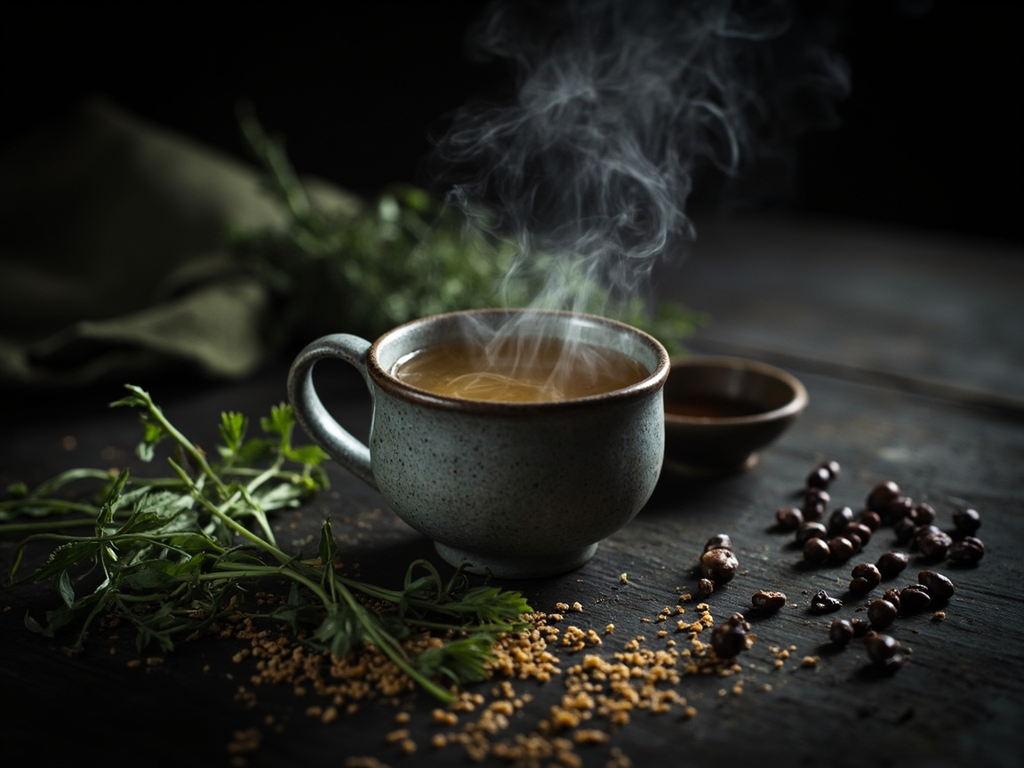
A warm decoction of sage and lovage, medicinal herbs from the imperial garden, sweetened with a little honey—the gentle remedy favored by an emperor wary of his physicians.
My physicians would deprive me of meat and fast me like a monk; I listen to them little, for forced fasting irritates my humor. But the garden, I love it. I have ordered that sage, which heals, and lovage, which warms the belly, be planted everywhere. They are boiled in water, sweetened with a finger of honey, and drunk hot in the evening. That is my medicine: the one that grows under my window and deprives me of nothing.
- •Sage — a few leaves (medicinal herb (salvia, meaning 'to save'))
- •Lovage — a small sprig (digestive herb from the Capitulary)
- •Spring water — a bowl (base of the decoction)
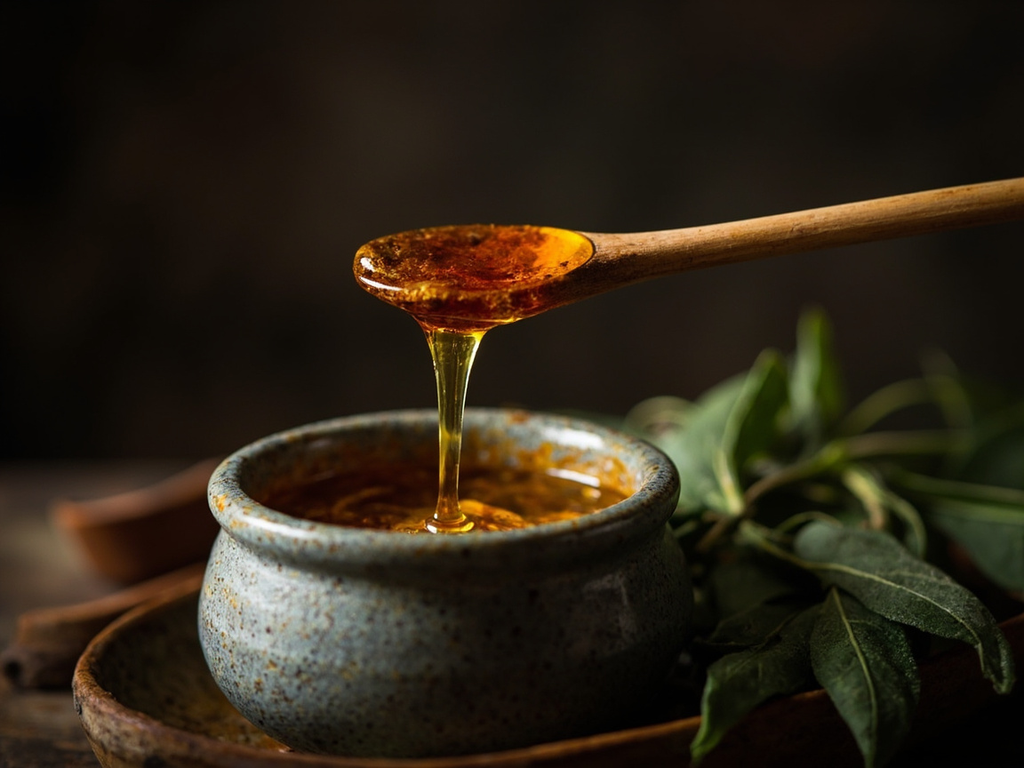
- •Honey — a finger (to sweeten bitterness)
Sage and Lovage Tea from the Imperial Garden
A warm decoction of sage and lovage, medicinal herbs from the imperial garden, sweetened with a little honey—the gentle remedy favored by an emperor wary of his physicians.
Why this dish? Einhard recounts that Charles, growing old, could not bear the diets and fasts imposed by his physicians. But he loved his garden: the Capitulary de Villis lists sage and lovage among the medicinal plants he ordered to be cultivated. This tea is the compromise between the king resistant to doctors and the herbalism he himself funded.
My physicians would deprive me of meat and fast me like a monk; I listen to them little, for forced fasting irritates my humor. But the garden, I love it. I have ordered that sage, which heals, and lovage, which warms the belly, be planted everywhere. They are boiled in water, sweetened with a finger of honey, and drunk hot in the evening. That is my medicine: the one that grows under my window and deprives me of nothing.
Ingredients (period version)
- Sage — a few leaves (medicinal herb (salvia, meaning 'to save'))
- Lovage — a small sprig (digestive herb from the Capitulary)
- Spring water — a bowl (base of the decoction)
- Honey — a finger (to sweeten bitterness)
Ingredients
- Fresh sage — 6 leaves (main aromatic plant)
- Lovage (leaves or stem) — 1 small sprig (or 1 tsp dried) (digestive note)
- Water — 300 ml (infusion)
- Honey — 1 tsp (sweetener)
- Lemon zest — 1 thin strip (optional) (freshness)
Method
- Bring the water to a simmer and add the sage and lovage.
- Cover and let infuse off the heat for 5-7 minutes (longer = more bitter).
- Strain into a bowl.
- Add the honey off the boil and, if desired, a strip of zest.
- Drink hot, preferably in the evening.
How it was made : In the Middle Ages, the boundary between cuisine and medicine did not exist: the same garden herbs seasoned dishes and treated ailments. Sage and lovage appear in the Capitulary de Villis and in the plan of the Abbey of St. Gall, evidence of a monastic medicine based on the kitchen garden rather than rare drugs.
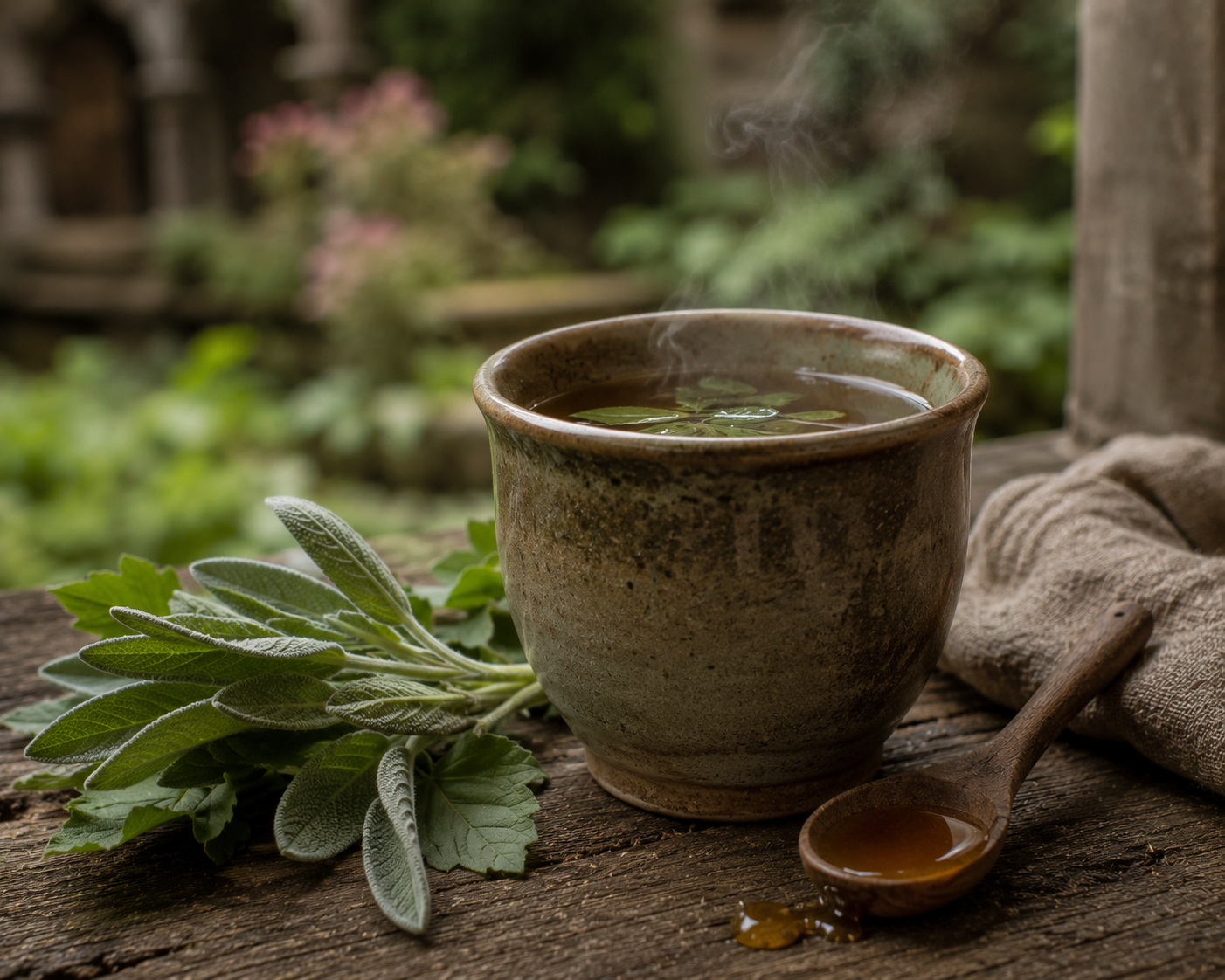
The contemporary twist : Serve it in a steaming stoneware cup with a sage leaf floating on top, like a 'wellness infusion'—except it's 1200 years old.
Sources : Capitulare de villis (c. 795), sage and lovage among the ordered plants · Einhard, Vita Karoli Magni, chap. 22 (Charles and his physicians, aversion to fasts) · Plan of the Abbey of St. Gall (c. 820), medicinal garden
Charlemagne · Charactorium