 flip
flipHerb pottage with garden greens and stale bread
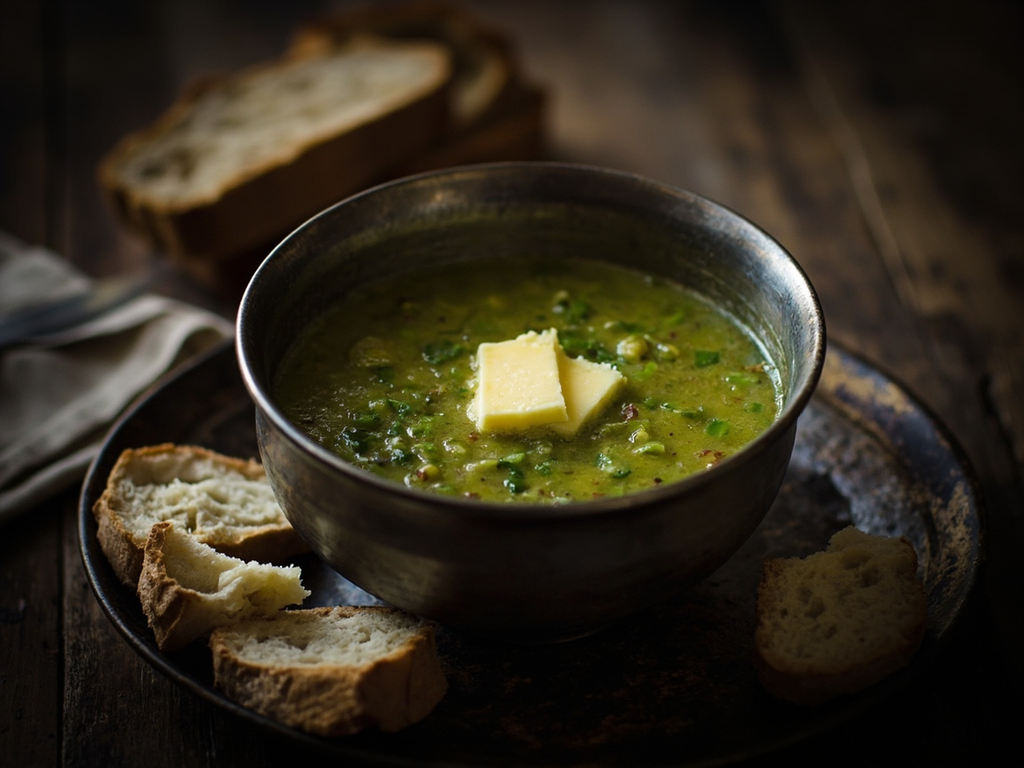
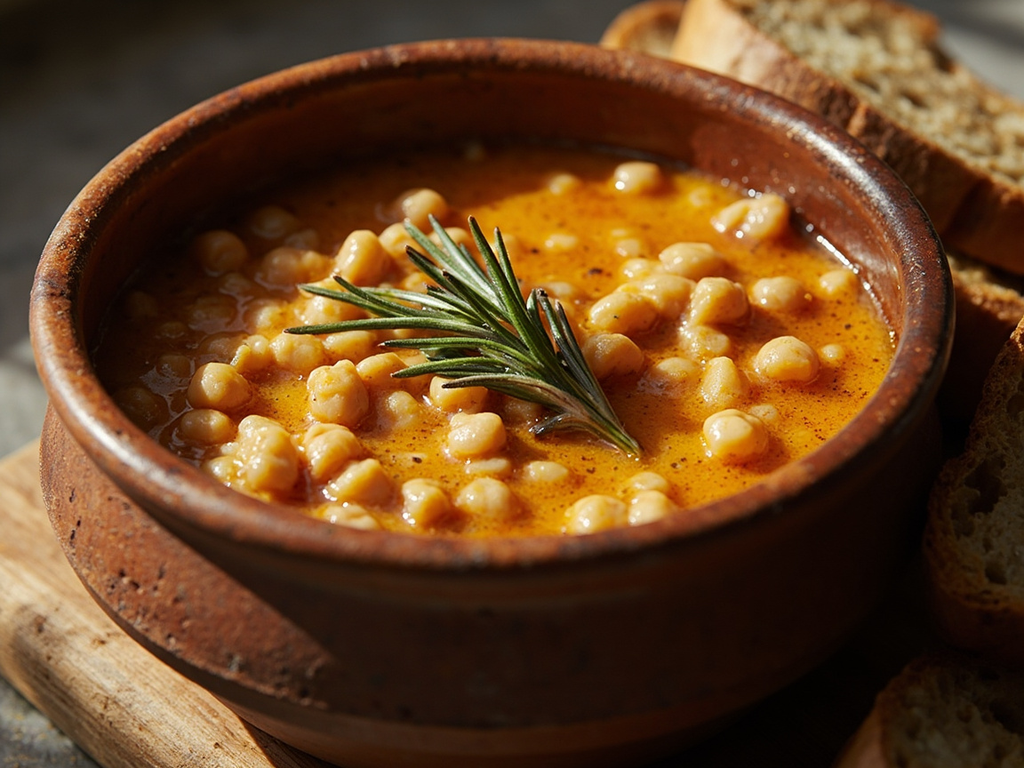
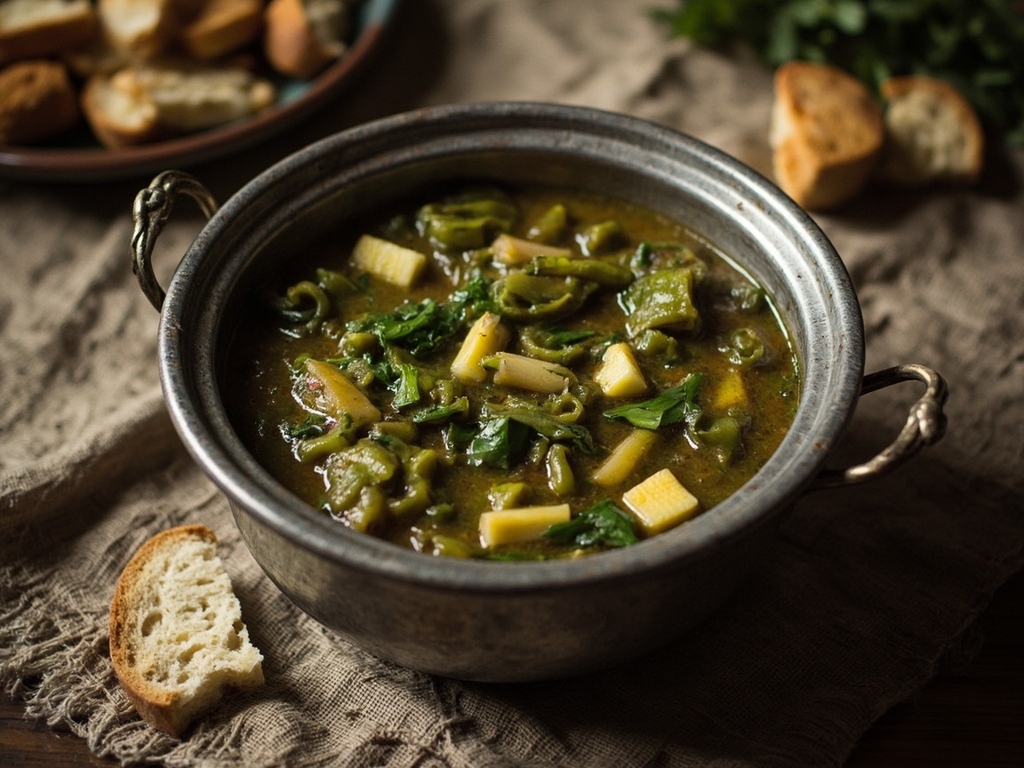
Herb pottage with garden greens and stale bread
Why this dish? Between embassies and hours of prayer, Mornay led the sober life Geneva recommended. This everyday pottage, made with leeks and garden herbs and thickened with yesterday's bread, was the measured food of a Reformed gentleman wary of gluttony.
A peasant soup ennobled by a good chicken broth: melted leeks, green herbs, and stale breadcrumbs that thicken it. Comforting, green, melting — the base of almost all meals of the time.
Or çà, Monsieur, asseyez-vous et laissez-moi vous servir de ce potage, car il n'est rien de plus sain pour le corps. À ma table on ne jette point le pain rassis : on le rompt dans le bouillon, où il se fond et donne corps à la chose. J'y mets les poireaux et les bonnes herbes de mon clos, et nulle épice superflue, car le Seigneur nous veut sobres et non point goinfres. Mangez chaudement, et vous vous en trouverez bien.
- •Leeks — a good handful (base vegetable)
- •Garden herbs (parsley, chervil, chard) — a large bunch (greens)
- •Capon broth — a full pot (liquid)
- •Stale white bread — a few slices (thickener)
- •Fresh butter or bacon — as needed (fat)
- •Salt — to taste (seasoning)
Herb pottage with garden greens and stale bread
A peasant soup ennobled by a good chicken broth: melted leeks, green herbs, and stale breadcrumbs that thicken it. Comforting, green, melting — the base of almost all meals of the time.
Why this dish? Between embassies and hours of prayer, Mornay led the sober life Geneva recommended. This everyday pottage, made with leeks and garden herbs and thickened with yesterday's bread, was the measured food of a Reformed gentleman wary of gluttony.
Or çà, Monsieur, asseyez-vous et laissez-moi vous servir de ce potage, car il n'est rien de plus sain pour le corps. À ma table on ne jette point le pain rassis : on le rompt dans le bouillon, où il se fond et donne corps à la chose. J'y mets les poireaux et les bonnes herbes de mon clos, et nulle épice superflue, car le Seigneur nous veut sobres et non point goinfres. Mangez chaudement, et vous vous en trouverez bien.
Ingredients (period version)
- Leeks — a good handful (base vegetable)
- Garden herbs (parsley, chervil, chard) — a large bunch (greens)
- Capon broth — a full pot (liquid)
- Stale white bread — a few slices (thickener)
- Fresh butter or bacon — as needed (fat)
- Salt — to taste (seasoning)
Ingredients
- Leeks — 3 (white + tender green) (base vegetable)
- Parsley + chervil + chard leaves mix — 100 g (greens)
- Chicken broth — 1.2 L (liquid)
- Stale country bread — 120 g (thickener)
- Butter — 30 g (fat)
- Salt — 1 tsp (seasoning)
Method
- Finely slice the leeks and sweat them gently in butter without browning, 8–10 minutes.
- Add hot broth, season lightly with salt, and simmer for 15 minutes.
- Add washed and roughly chopped herbs; cook 5 more minutes to keep their green color.
- Crumble the stale bread into the soup and let swell 5 minutes, then whisk to a rustic velouté.
- Adjust salt and serve very hot, with a drizzle of melted butter on top.
How it was made : Pottage was the foundation of meals at all hours and in all social classes. Among the humble it was made with water; among nobles, with meat broth. Thickening with stale bread was ordinary kitchen economy: nothing was wasted. Herbs came from the walled kitchen garden attached to the house.
The contemporary twist : A turn of the pepper mill and a few croutons fried in butter turn this Lenten pottage into a thoroughly modern bistro-style velouté.
Charles de Mornay · Charactorium