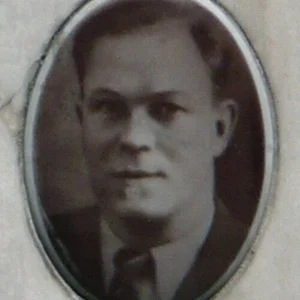

A trade unionist and Communist member of parliament for Paris, Charles Michels was one of the 27 hostages shot by the Germans at Châteaubriant on 22 October 1941. His sacrifice made him a symbol of the Resistance and of working-class commitment against Nazism.
Charles Michels(1903 — 1941)
Charles Michels
France
7 min read
Frequently asked questions
Key Facts
- Born in 1903 in Paris, he became politically active at a young age within the French Communist Party and the CGT
- Elected as a Communist deputy for the 15th constituency of Paris in 1936 (Popular Front)
- Arrested after the German invasion of 1940 because of his political commitments
- Shot on 22 October 1941 at the Sablière quarry in Châteaubriant alongside 26 other hostages
- A station on Paris Métro Line 10 (15th arrondissement) bears his name in tribute
Works & Achievements
As deputy for the 15th arrondissement, Michels took the floor at the Palais-Bourbon to champion the major reforms of the Popular Front — paid holidays, the 40-hour work week — landmark gains for the working class he represented.
As secretary of his tailors' union, Michels organised garment workers, negotiated collective agreements, and defended the rights of the most precarious workers in the sector.
After the banning of the PCF and the establishment of the Vichy regime, Michels continued his fight against the Nazi occupier underground, until his arrest and internment at the Choisel camp.
Anecdotes
A trained tailor by trade, Charles Michels became involved in Paris garment workers' unions at a very young age. His commitment earned him election as his union's secretary before he had even turned thirty, proof that his comrades recognized in him a combative speaker and an exceptional organizer.
In the legislative elections of May 1936, carried by the wave of the Popular Front, Charles Michels was elected Communist deputy for the 15th arrondissement of Paris. At 33, this working-class tailor entered the Palais-Bourbon and spoke from the rostrum in defense of workers' rights and the paid holidays just introduced by the Blum government.
After the French Communist Party was dissolved by decree in September 1939, and following the German entry into Paris in June 1940, Charles Michels continued to act clandestinely. Arrested by the authorities in 1940, he was interned at the Choisel camp, near Châteaubriant, in Loire-Inférieure, alongside other political militants.
On October 20, 1941, German Feldkommandant Karl Hotz was shot dead in Nantes by resistance fighters. In reprisal, the Germans ordered the execution of 48 hostages. On October 22, 1941, Charles Michels was among the 27 men shot on the heathland of la Sablière: before dying, the hostages of Châteaubriant sang La Marseillaise and L'Internationale, bearing witness to their dignity in the face of their executioners.
Among the 27 executed at Châteaubriant was Guy Moquet, a young 17-year-old Communist militant whose farewell letter to his family would become one of the most moving testaments of the Occupation. Charles Michels, one of the eldest in the group at 38, embodies the figure of the working-class resister — a synthesis of trade union struggle and the fight against Nazism.
Primary Sources
Before his execution, Michels writes to his wife to bid her farewell, urge her to stay strong, and affirm that he dies faithful to his ideals and to his working class.
Charles Michels, tailor and worker, is declared elected in the 15th constituency of Paris in the ballot of May 3, 1936 under the banner of the French Communist Party.
In expiation of this crime, I have ordered 50 Communist hostages to be shot. If new criminals dare to repeat such acts, even more severe repressive measures will be taken.
The designated hostages were informed on the morning itself. Some wrote letters, others sang. They left with extraordinary courage, heads held high, without faltering.
Key Places
Charles Michels worked here as a tailor's apprentice and was elected as a deputy in 1936. This working-class neighborhood was the heart of his union and political activism throughout the interwar period.
Interned in this camp from 1940, Michels was held alongside other Communist and trade union political prisoners. It was from here that he was taken on October 22, 1941, to be led to the site of his execution.
The site where 27 hostages were executed on October 22, 1941. Today a national memorial site, it hosts a commemorative ceremony each year in tribute to those who were shot.
The seat of the National Assembly, where Charles Michels served as Communist deputy for the 15th arrondissement from 1936 until he was stripped of his mandate in 1939, speaking out in defense of workers' rights.
Typical Objects

Charles Michels worked as a tailor before dedicating himself to activism. These tools symbolize the working-class world of the Parisian garment industry where he forged his trade union commitment.

Like tens of thousands of working-class militants in the 1930s, the PCF membership card represented for Michels his political commitment against capitalism and the rising tide of fascism in Europe.

The official press organ of the French Communist Party, *L'Humanité* was the daily newspaper that militants like Michels read and distributed; banned by Vichy in 1939, it continued to circulate clandestinely under the Occupation.

Elected in 1936, Michels sat in the National Assembly and defended workers' rights from the floor; his mandate was revoked after the PCF was dissolved by decree in September 1939.

Like several other hostages at Châteaubriant, Michels wrote a letter to his family on the morning of 22 October 1941 — a testament to dignity and courage in the face of imminent execution.

Erected after the war in the Sablière moorlands, the stele bears the names of the 27 martyrs shot on 22 October 1941; this site of memory is visited and commemorated every year.
School Curriculum
Vocabulary & Tags
Key Vocabulary
Daily Life
Morning
In the 1930s, Charles Michels rises early in his modest apartment in the 15th arrondissement. A tailor by trade, he begins his day in a Parisian garment workshop, where the clatter of sewing machines and the smell of fabric mark the passing hours. He reads *L'Humanité* before heading to work.
Afternoon
In the afternoon, after his shift at the workshop, Michels often attends union meetings. He organizes his fellow workers, discusses strategy with labor delegates, and prepares speeches or leaflets. Politics and the union are at the very center of his daily life.
Evening
In the evenings, Michels returns to his family in their working-class home. Nights are spent on political reading and conversations with fellow activists. During election campaigns or strikes, meetings stretch late into the night.
Food
Like most Parisian workers in the 1930s, Michels eats simply: bread, vegetables, charcuterie, and occasionally meat on Sundays. Lunch is often eaten quickly at the zinc counter of a neighborhood café. At the Choisel internment camp, food is scarce and poor in quality, and the detainees go hungry.
Clothing
As a skilled tailor, Michels takes care of his appearance with craftsman's pride: a well-cut jacket and trousers, a clean shirt. On Sundays or at political rallies, he wears his best suit. At the Choisel camp, detainees wear their own worn and patched clothing.
Housing
Michels lives in a modest apartment in the 15th arrondissement of Paris, a working-class neighborhood. Like many working-class families of the era, the flat is small, heated by coal, and without running hot water. At the Choisel camp, prisoners sleep in overcrowded, poorly insulated barracks.
Historical Timeline
Period Vocabulary
Liens externes & ressources
Références
Œuvres
Interventions à la tribune de l'Assemblée nationale en faveur des lois sociales
1936-1939
Direction syndicale dans l'industrie du vêtement parisien
Années 1920-1940
Action politique clandestine sous l'Occupation
1940-1941