 flip
flipHealth potage with fine herbs
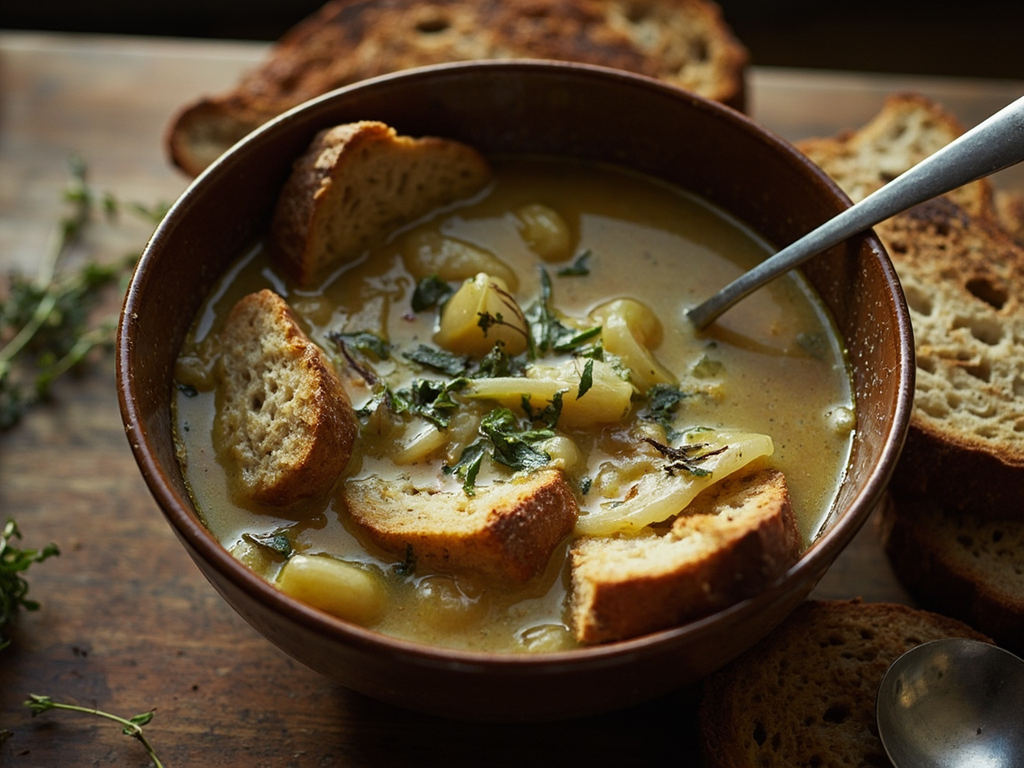
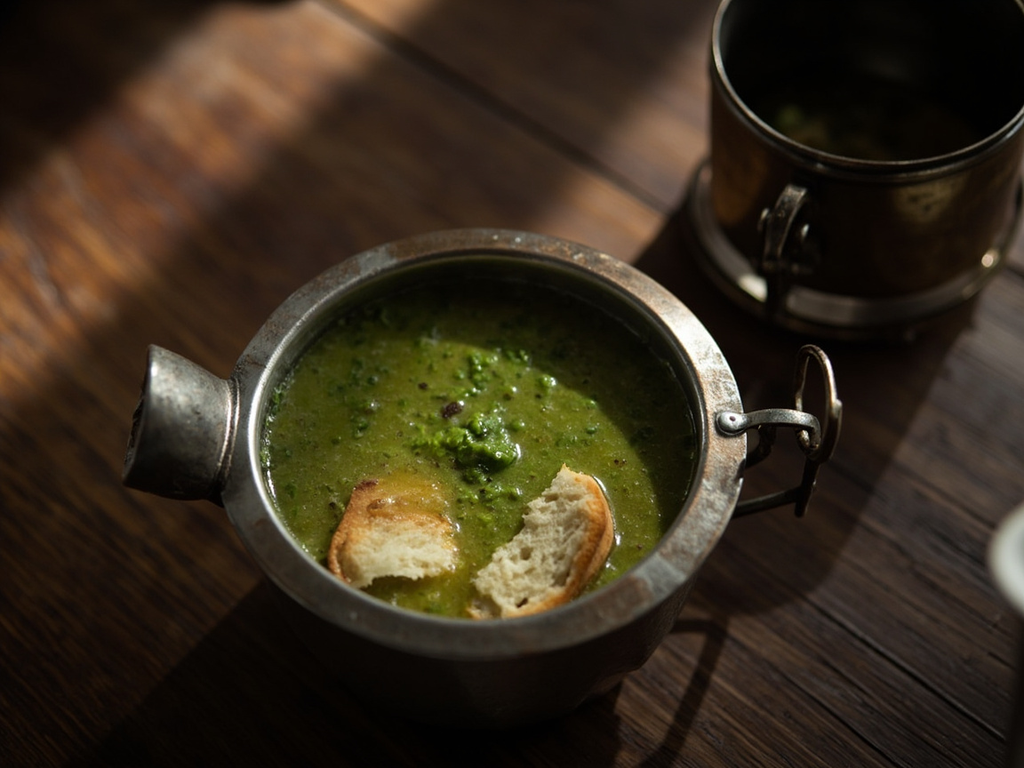
Health potage with fine herbs
Why this dish? This is the everyday potage of a cabinet man like Perrault, who spent his days on Rue de l'Arbre-Sec and in Colbert's offices: light, quick, comforting, exactly the kind of dish La Varenne made fashionable for the Parisian bourgeois table.
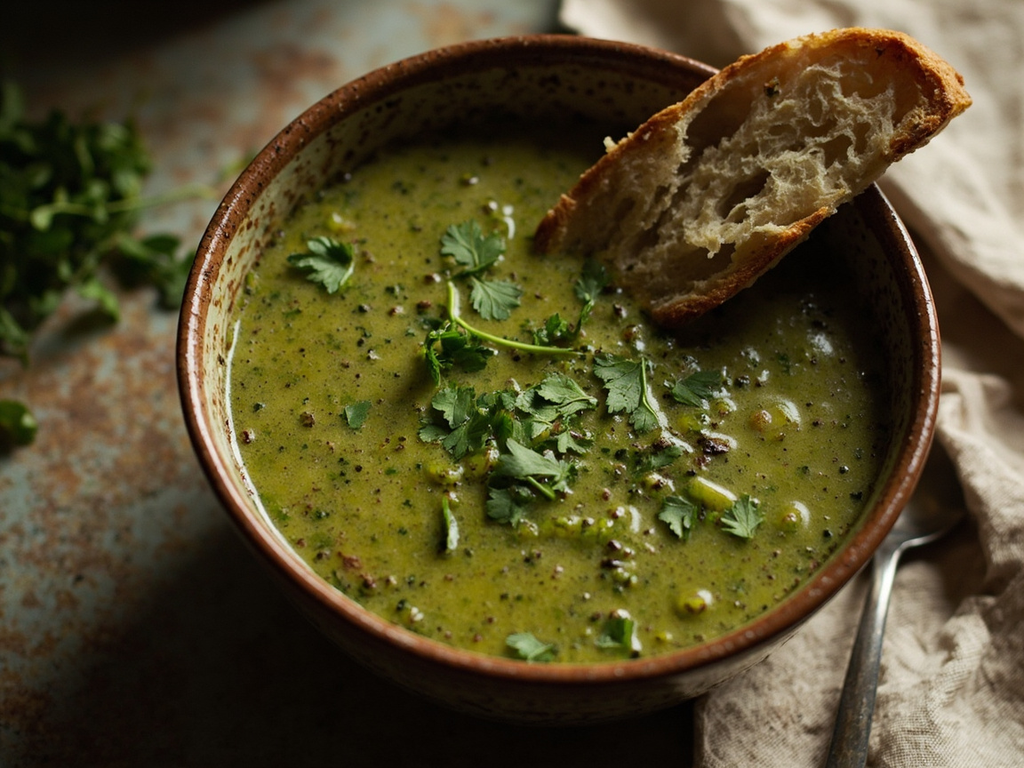
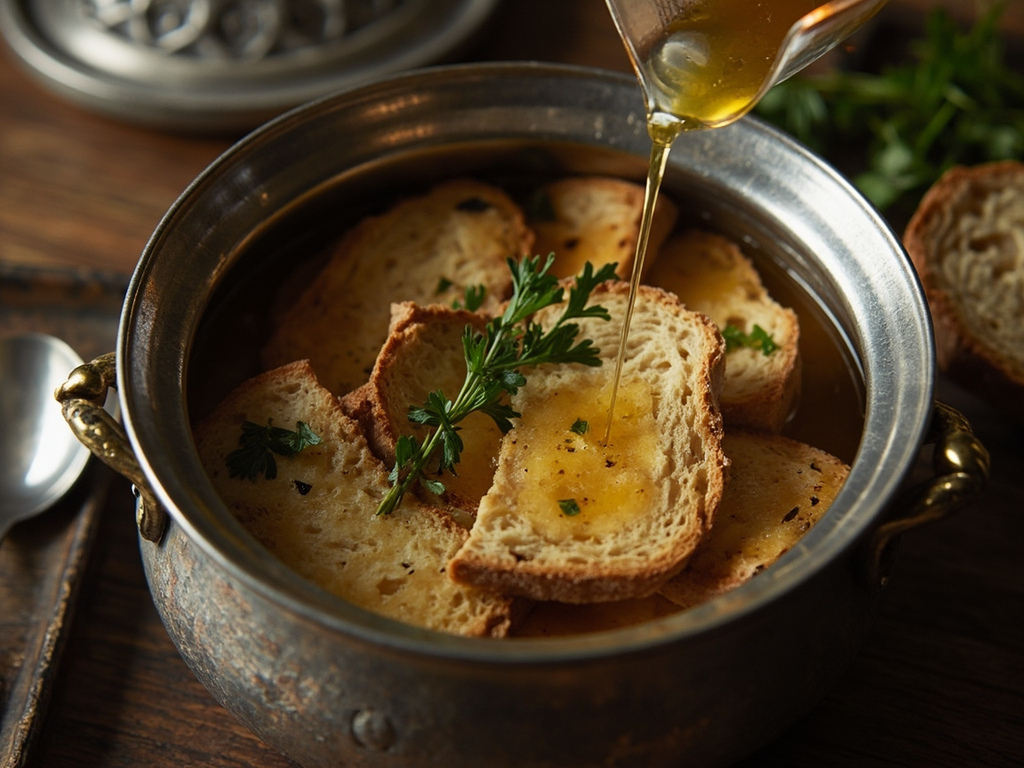
A clear chicken broth in which chervil, sorrel, and lettuce are melted, poured over thin slices of bread. The new cuisine of the 17th century, freed from the overwhelming spices of the Middle Ages, finally letting the green taste of herbs speak.
Sir, speak to me no more of those potages all black with pepper and ginger that our ancestors made so much of. At my table, we love a broth clear as spring water, in which sorrel and chervil gathered that very morning swim. Let it simmer gently, without boiling hard, and pour it over the bread at the last moment, so that it still keeps a little firmness under the tooth. Here is a potage that nourishes the mind as much as the body, and does not burden the brain of a man who must write in the afternoon.
- •Capon broth — a good pint (base)
- •Sorrel — a handful (green acidity)
- •Chervil and purslane — a few sprigs (aromatic)
- •Lettuce heart — one (sweetness)
- •Fresh butter — a good piece (binding)
- •Stale bread — a few thin slices (support)
Health potage with fine herbs
A clear chicken broth in which chervil, sorrel, and lettuce are melted, poured over thin slices of bread. The new cuisine of the 17th century, freed from the overwhelming spices of the Middle Ages, finally letting the green taste of herbs speak.
Why this dish? This is the everyday potage of a cabinet man like Perrault, who spent his days on Rue de l'Arbre-Sec and in Colbert's offices: light, quick, comforting, exactly the kind of dish La Varenne made fashionable for the Parisian bourgeois table.
Sir, speak to me no more of those potages all black with pepper and ginger that our ancestors made so much of. At my table, we love a broth clear as spring water, in which sorrel and chervil gathered that very morning swim. Let it simmer gently, without boiling hard, and pour it over the bread at the last moment, so that it still keeps a little firmness under the tooth. Here is a potage that nourishes the mind as much as the body, and does not burden the brain of a man who must write in the afternoon.
Ingredients (period version)
- Capon broth — a good pint (base)
- Sorrel — a handful (green acidity)
- Chervil and purslane — a few sprigs (aromatic)
- Lettuce heart — one (sweetness)
- Fresh butter — a good piece (binding)
- Stale bread — a few thin slices (support)
Ingredients
- Chicken broth — 1 liter (base)
- Fresh sorrel — 60 g (green acidity)
- Chervil — 1 small bunch (aromatic)
- Lettuce — 1 heart (sweetness)
- Butter — 40 g (binding)
- Stale country bread — 4 thin slices (support)
- Salt — to taste (seasoning)
Method
- Wash and finely chop the sorrel, chervil, and lettuce.
- Melt the butter in a saucepan and wilt the herbs for 2 to 3 minutes over low heat, without browning.
- Pour in the hot broth, salt, and let simmer for 10 minutes without a strong boil to preserve the green color of the herbs.
- Arrange the bread slices at the bottom of deep soup plates.
- Ladle the boiling potage over the bread and serve immediately, before the bread disintegrates.
How it was made : La Varenne, in *Le Cuisinier françois* (1651), multiplies these light 'health potages' that break with the spice-laden medieval cuisine. The bread at the bottom of the plate (the *trempe*) was the norm: one ate the potage with a spoon and the soaked bread followed.
The contemporary twist : Blend half of the cooked herbs for a velvety light green potage, and keep the other half in strips for freshness. A drizzle of chervil oil on top for panache.
Sources : La Varenne, Le Cuisinier françois, 1651 · Nicolas de Bonnefons, Les Délices de la campagne, 1654
Charles Perrault · Charactorium