 flip
flipPotage aux herbes de Port-Royal
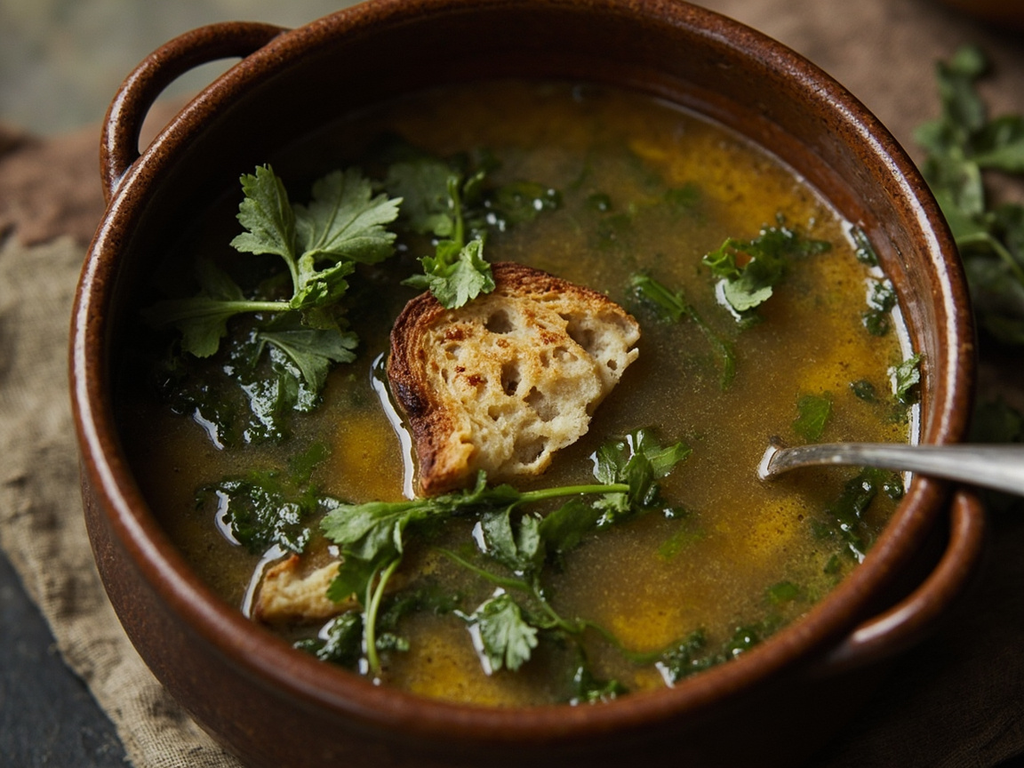
Potage aux herbes de Port-Royal
Why this dish? Racine was raised as a child among the "Solitaires" of Port-Royal-des-Champs, in Jansenist austerity where the table was simple and meat was rare. This lean soup, where stale bread soaks up a good broth perfumed with garden herbs, is the dish of studious mornings: nourishing, sober, and entirely focused on the essential.
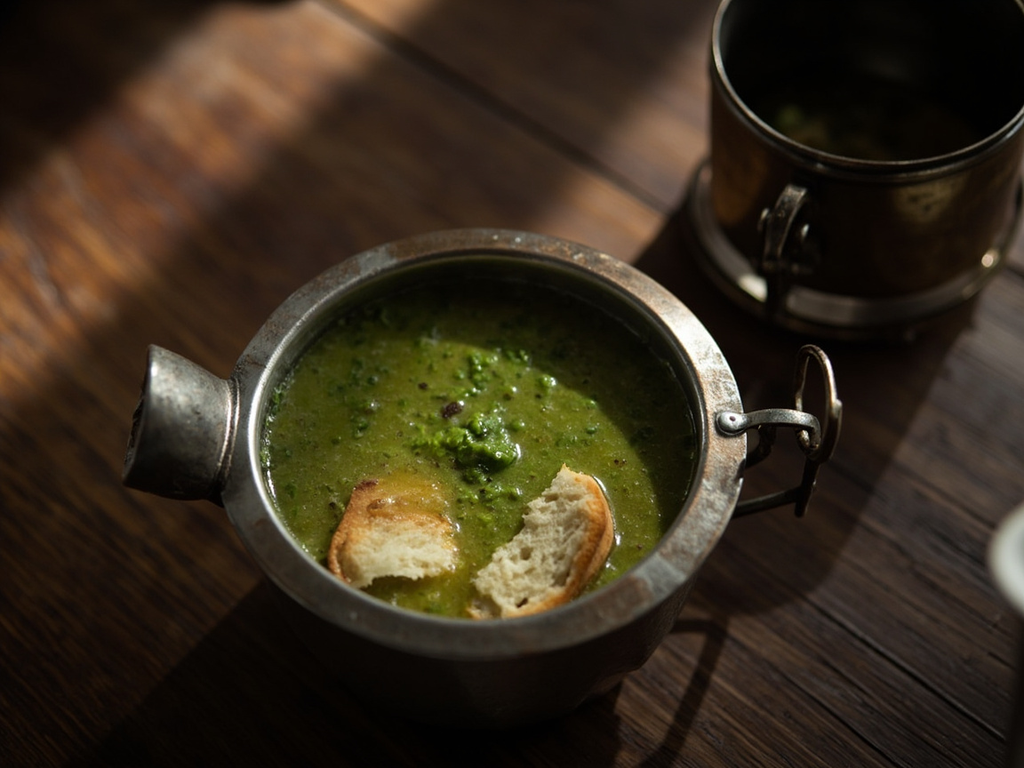
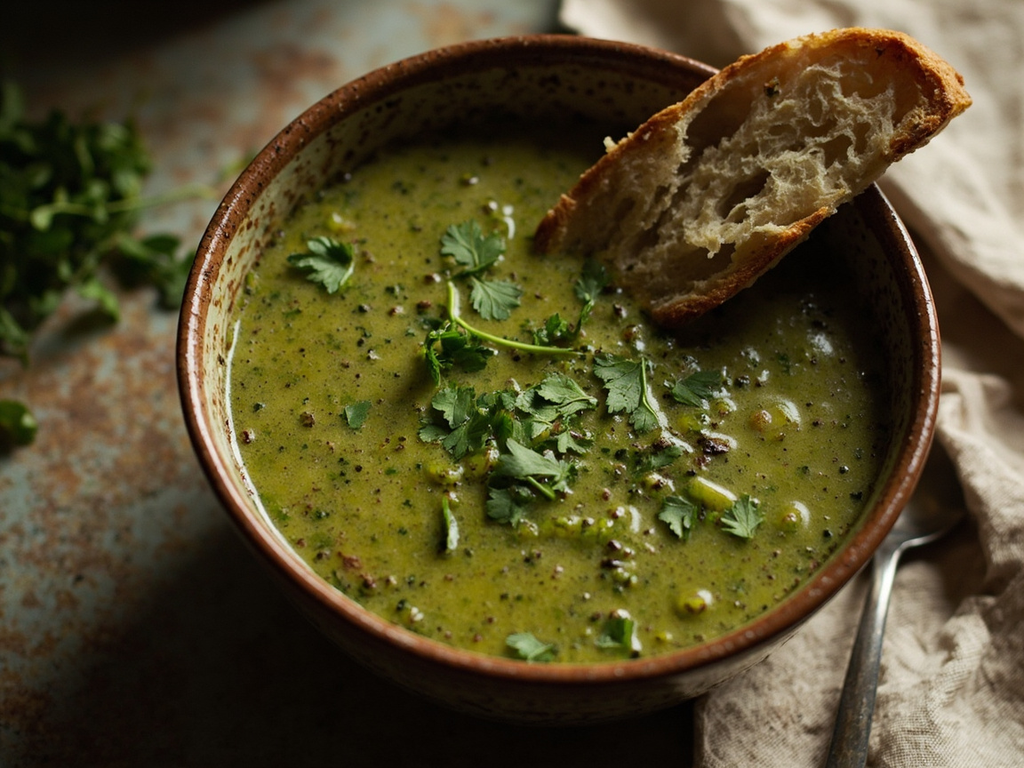
A humble and comforting soup: crusts of stale bread left to swell in a clear broth, brightened with sorrel, chervil, and a little butter. It is the ordinary lunch of a serious Parisian household, halfway between monastic rigor and bourgeois comfort.
Know, my host, that childhood taught me to value what is sober. At my masters' of Port-Royal, no mountains of meat nor learned sauces: a good broth, some bread crusts left to melt in it, and those herbs that the brother gardener cut in the morning. We put sorrel for the sharpness, chervil for grace, and a knob of fresh butter to soften it all. Believe me, the mind works better on a stomach thus contented than on the excesses of a laden table.
- •Bouillon de chair (volaille ou bœuf) — une bonne potée (base savoureuse du potage)
- •Pain rassis en croûtes — quelques tranches (donne le corps, boit le bouillon)
- •Oseille — une poignée (pointe d'acidité fraîche)
- •Cerfeuil — quelques brins (parfum herbacé délicat)
- •Beurre frais — une noix (liaison et douceur)
- •Sel — à discrétion (assaisonnement)
Potage aux herbes de Port-Royal
A humble and comforting soup: crusts of stale bread left to swell in a clear broth, brightened with sorrel, chervil, and a little butter. It is the ordinary lunch of a serious Parisian household, halfway between monastic rigor and bourgeois comfort.
Why this dish? Racine was raised as a child among the "Solitaires" of Port-Royal-des-Champs, in Jansenist austerity where the table was simple and meat was rare. This lean soup, where stale bread soaks up a good broth perfumed with garden herbs, is the dish of studious mornings: nourishing, sober, and entirely focused on the essential.
Know, my host, that childhood taught me to value what is sober. At my masters' of Port-Royal, no mountains of meat nor learned sauces: a good broth, some bread crusts left to melt in it, and those herbs that the brother gardener cut in the morning. We put sorrel for the sharpness, chervil for grace, and a knob of fresh butter to soften it all. Believe me, the mind works better on a stomach thus contented than on the excesses of a laden table.
Ingredients (period version)
- Bouillon de chair (volaille ou bœuf) — une bonne potée (base savoureuse du potage)
- Pain rassis en croûtes — quelques tranches (donne le corps, boit le bouillon)
- Oseille — une poignée (pointe d'acidité fraîche)
- Cerfeuil — quelques brins (parfum herbacé délicat)
- Beurre frais — une noix (liaison et douceur)
- Sel — à discrétion (assaisonnement)
Ingredients
- Chicken broth — 1 litre (soup base)
- Stale country bread — 4 slices (thickener)
- Fresh sorrel — 1 large handful (≈50 g) (acidity)
- Fresh chervil — 1/2 bunch (flavor)
- Butter — 30 g (emulsifier)
- Salt — to taste (seasoning)
Method
- Bring the broth to a simmer in a large pot.
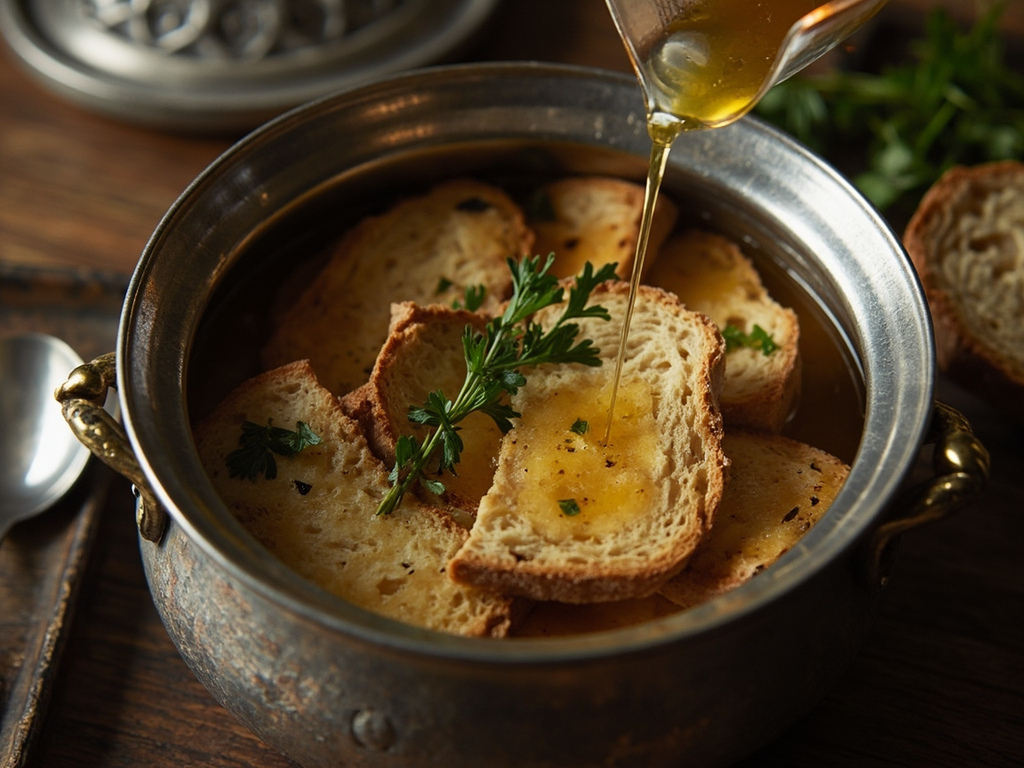
- Place the stale bread slices in the bottom of individual soup bowls or a large tureen.
- Roughly chop the sorrel and chervil; add the sorrel to the hot broth and let it wilt for 2 minutes (it breaks down and imparts its acidity).
- Stir in the butter off the heat, adjust salt.
- Pour the boiling broth over the bread, sprinkle with fresh chervil, and serve immediately, once the bread has just had time to swell.
How it was made : In the 17th century, soup was the pillar of every meal—so much so that "souper" first meant "to take soup." Modest households and Jansenist convents made it their daily fare, with stale bread serving both as a thickener and to avoid waste. Sorrel, a tart garden herb, was one of the favorite ingredients of the emerging new French cuisine.
The contemporary twist : Serve it in a thick bowl with a poached egg on top of the bread: the runny yolk transforms this austere soup into a comforting treat.
Sources : François Pierre de La Varenne, Le Cuisinier françois, 1651 · Jean-Louis Flandrin, Chronique de Platine. Pour une gastronomie historique, 1992
Jean Racine · Charactorium