 flip
flipHerb and Bread Health Soup
Herb and Bread Health Soup
Why this dish? In the famished early days of the Illustre-Théâtre, burdened with debts to the point of imprisonment for an unpaid loaf of bread, Molière knew a meager table. Thick soup, the staple of both common and bourgeois meals, was his daily fare: nourishing, economical, made from whatever was on hand.
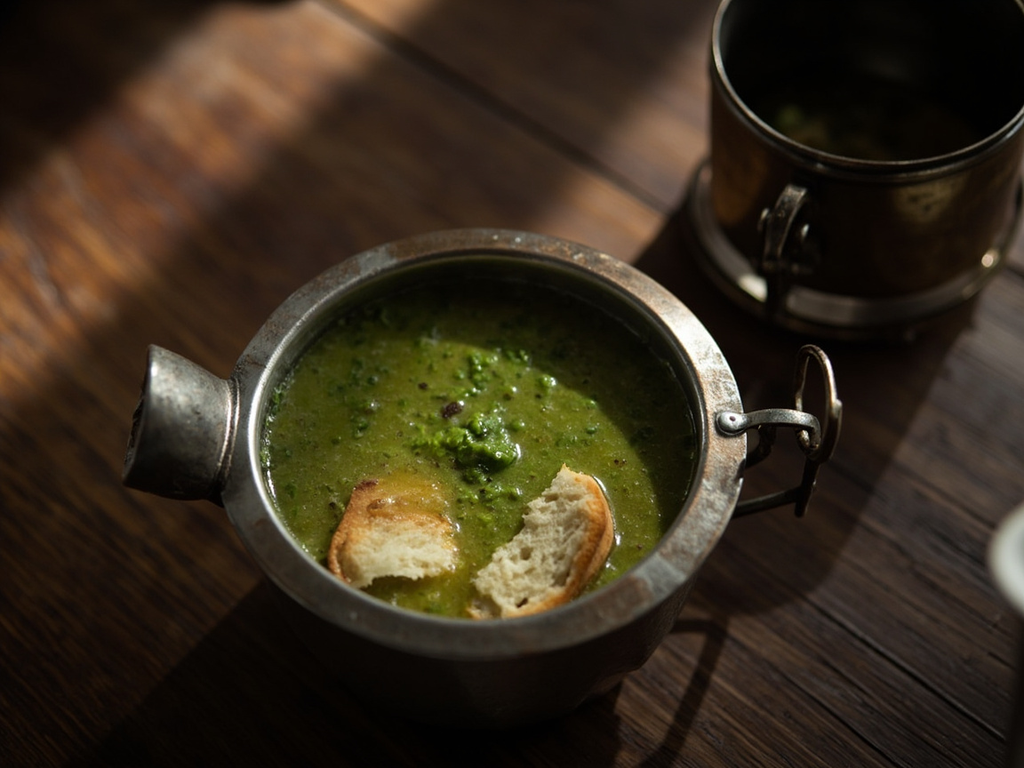
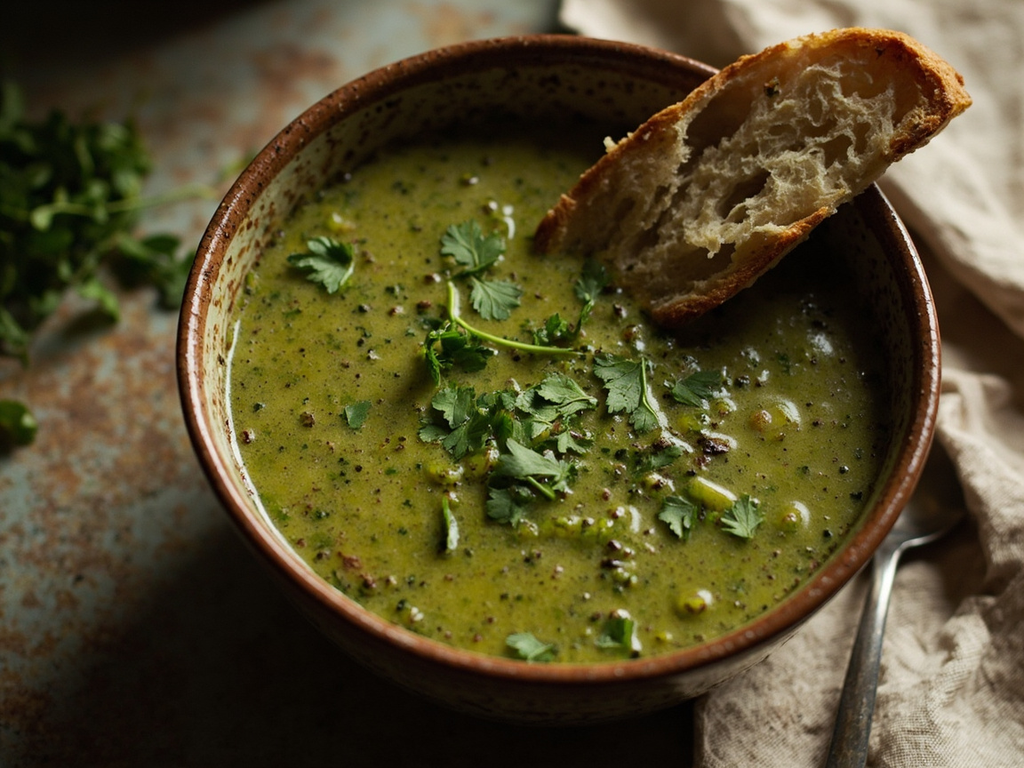
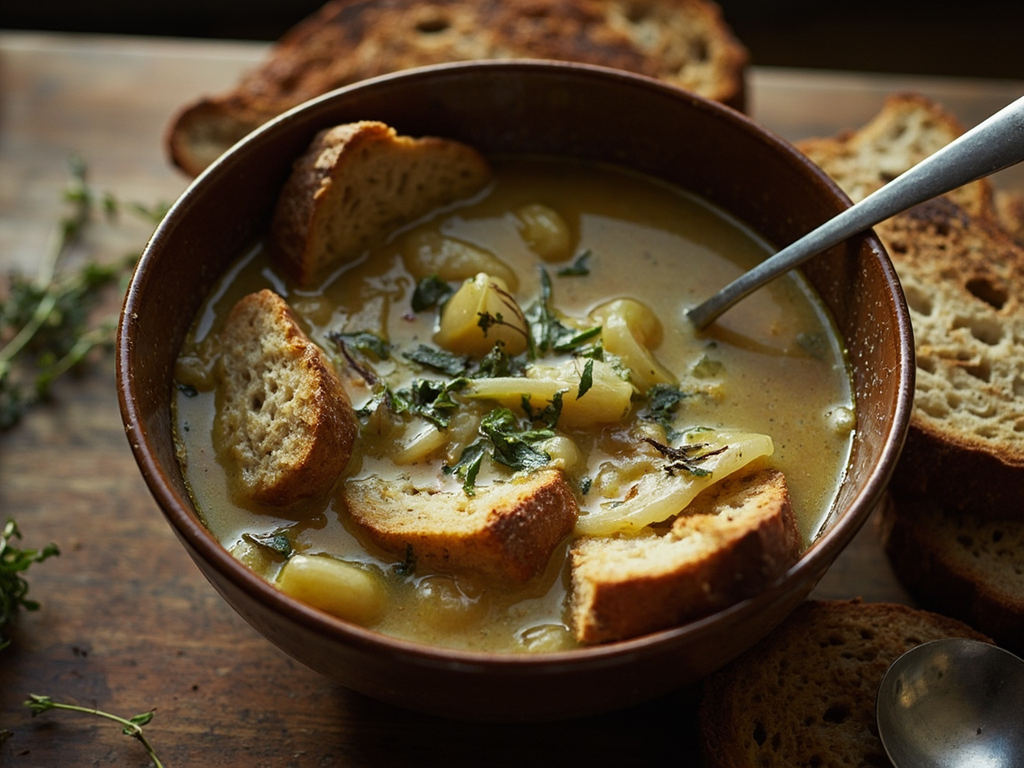
A broth of vegetables and herbs poured boiling over stale bread slices that thicken it. The most everyday dish of the century, from beggar to bourgeois, the one that began every dinner.
Come now, my friend, do not mock a simple soup: I have tasted it many a time when my creditors were hot on my heels! Cut the stale bread into the bottom of the bowl, pour over it the broth in which leeks and good herbs have simmered, and cover for a moment so the bread swells and melts. This warms a shivering actor and ruins no one — which, believe me, was worth its weight in gold in those days.
- •Stale bread (maslin bread) — a few slices (thickener and base)
- •Leeks — one bunch (aromatic base)
- •Green cabbage — a few leaves (soup vegetable)
- •Herbs (parsley, chervil, sorrel) — a handful (freshness, signature)
- •Butter — a knob (binding à la La Varenne)
- •Salt — to taste (seasoning)
Herb and Bread Health Soup
A broth of vegetables and herbs poured boiling over stale bread slices that thicken it. The most everyday dish of the century, from beggar to bourgeois, the one that began every dinner.
Why this dish? In the famished early days of the Illustre-Théâtre, burdened with debts to the point of imprisonment for an unpaid loaf of bread, Molière knew a meager table. Thick soup, the staple of both common and bourgeois meals, was his daily fare: nourishing, economical, made from whatever was on hand.
Come now, my friend, do not mock a simple soup: I have tasted it many a time when my creditors were hot on my heels! Cut the stale bread into the bottom of the bowl, pour over it the broth in which leeks and good herbs have simmered, and cover for a moment so the bread swells and melts. This warms a shivering actor and ruins no one — which, believe me, was worth its weight in gold in those days.
Ingredients (period version)
- Stale bread (maslin bread) — a few slices (thickener and base)
- Leeks — one bunch (aromatic base)
- Green cabbage — a few leaves (soup vegetable)
- Herbs (parsley, chervil, sorrel) — a handful (freshness, signature)
- Butter — a knob (binding à la La Varenne)
- Salt — to taste (seasoning)
Ingredients
- Stale country bread — 4 thick slices (thickener and base)
- Leeks — 3 (aromatic base)
- Green cabbage — 1/4 head (soup vegetable)
- Parsley, chervil, sorrel — 1 handful (freshness)
- Butter — 30 g (binding)
- Chicken broth or water — 1.2 L (liquid)
- Salt, pepper — to taste (seasoning)
Method
- Slice leeks and cabbage, sweat them gently in butter without browning.
- Add broth, salt, and simmer on low heat for 30 minutes.
- Chop fresh herbs and add at the end of cooking.
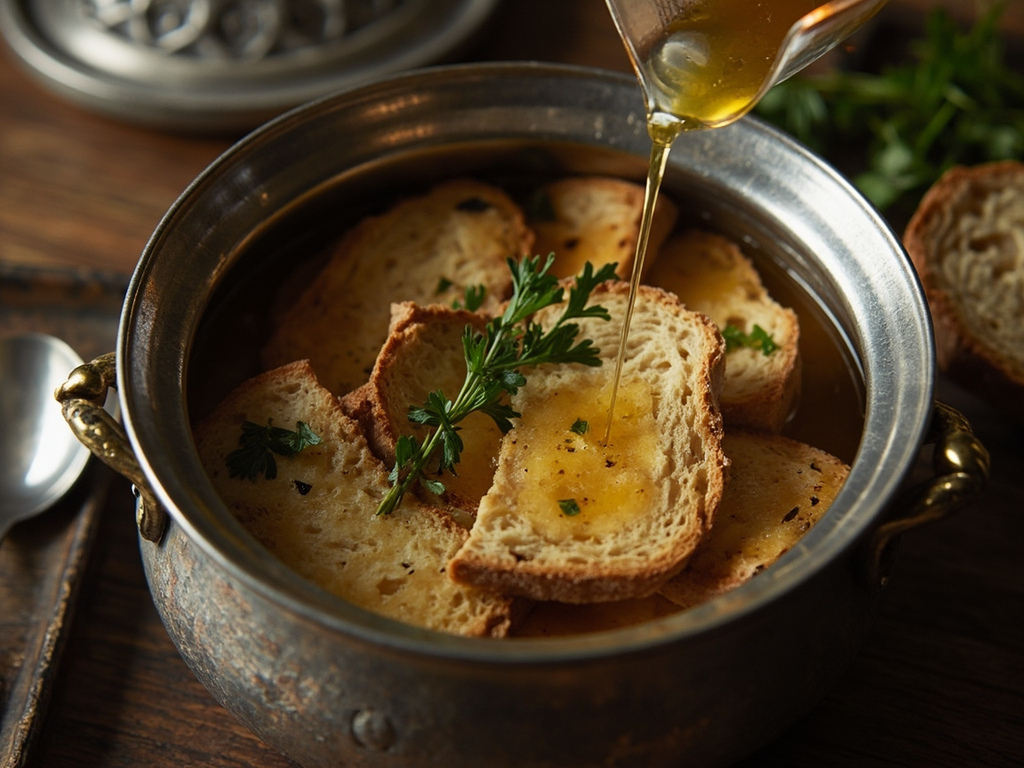
- Place bread slices in the bottom of deep bowls and pour the boiling soup over them.
- Cover for 2 minutes to let the bread soak and swell, then serve.
How it was made : In the 17th century, 'potage' referred to what was put in the pot: a broth served over bread (hence the word). It was eaten morning and evening. La Varenne gives dozens of variations in *Le Cuisinier françois* (1651), from health soup with herbs to the richer potage à la reine.
The contemporary twist : Serve it 'troupe style' in a large communal bowl placed in the center of the table, each person helping themselves with a ladle — a nod to the shared stage of the actors.
Sources : François Pierre de La Varenne, Le Cuisinier françois, 1651
Molière · Charactorium