 flip
flipHerb and bread soup
Herb and bread soup
Why this dish? Before becoming the celebrated director of the Encyclopédie, Diderot knew Parisian bohemia and poverty on Rue Taranne, where dinner often consisted of a simple soup. Even after becoming famous, the man from Langres kept a taste for honest broths that opened every 18th-century meal.
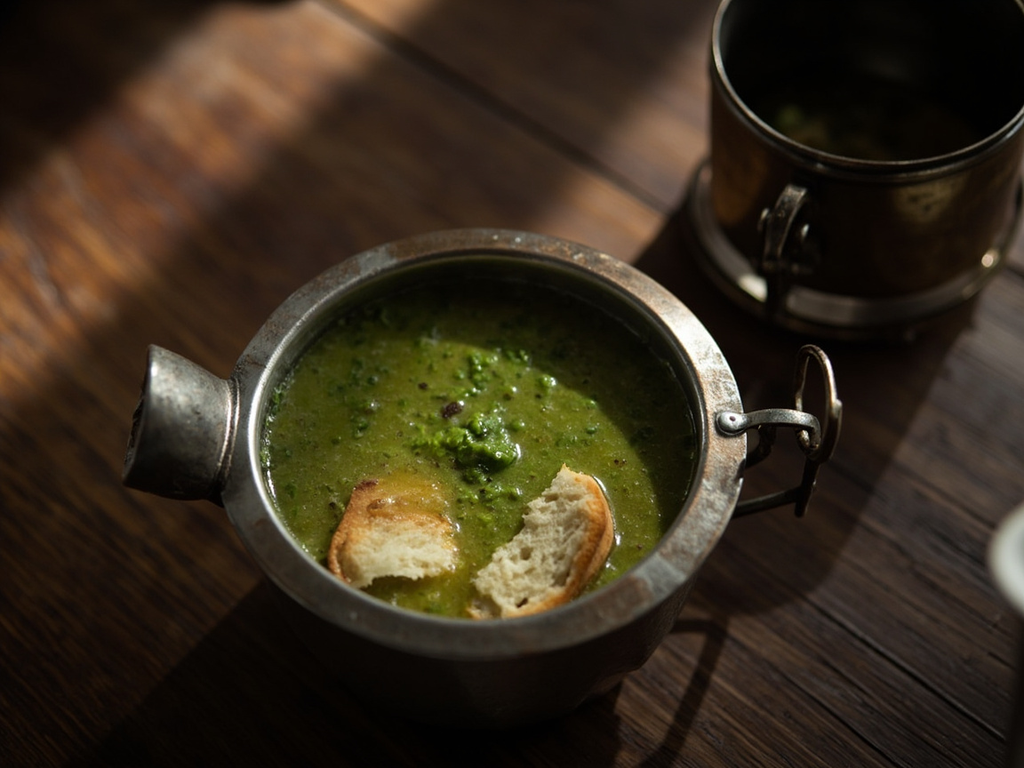
A broth of green vegetables and garden herbs, thickened with stale bread, that opens the table as custom demands. Fortifying and simple, it is the staple dish of every household, from the garret of a young writer to the study of a philosopher.
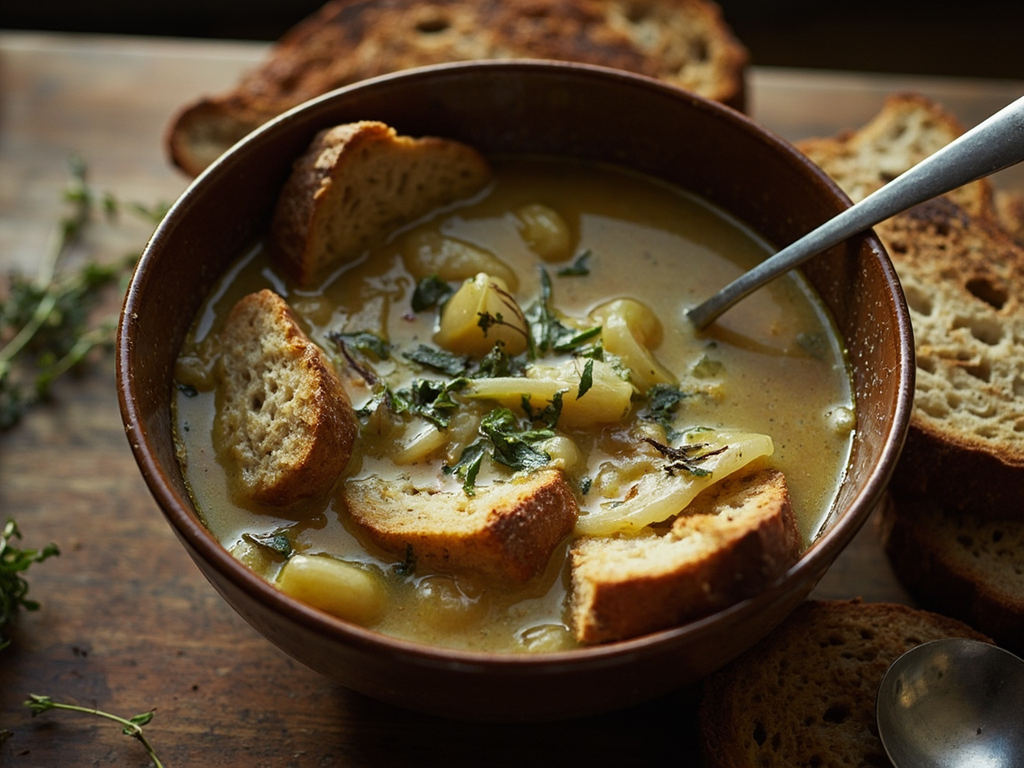
Come, draw near my table: before any discourse, we warm our bellies with a good soup. In the days when I shivered on Rue Taranne, this was often my entire dinner — a bit of greenery, a crust of bread, and the mind regained its rights. Put in some sorrel and chervil picked that morning, let them melt gently in the broth, then pour it all over the stale bread at the bottom of the bowl. Believe me, a man who has supped well thinks better than one who fasts.
- •Pot broth (cooking water from boiled beef) — a full pot (umami base)
- •Sorrel, chervil, leek, onion — a good handful (herbs and vegetables)
- •Stale bread — several slices (nourishing thickener)
- •Fresh butter — a generous piece (fat)
- •Salt — to taste (seasoning)
Herb and bread soup
A broth of green vegetables and garden herbs, thickened with stale bread, that opens the table as custom demands. Fortifying and simple, it is the staple dish of every household, from the garret of a young writer to the study of a philosopher.
Why this dish? Before becoming the celebrated director of the Encyclopédie, Diderot knew Parisian bohemia and poverty on Rue Taranne, where dinner often consisted of a simple soup. Even after becoming famous, the man from Langres kept a taste for honest broths that opened every 18th-century meal.
Come, draw near my table: before any discourse, we warm our bellies with a good soup. In the days when I shivered on Rue Taranne, this was often my entire dinner — a bit of greenery, a crust of bread, and the mind regained its rights. Put in some sorrel and chervil picked that morning, let them melt gently in the broth, then pour it all over the stale bread at the bottom of the bowl. Believe me, a man who has supped well thinks better than one who fasts.
Ingredients (period version)
- Pot broth (cooking water from boiled beef) — a full pot (umami base)
- Sorrel, chervil, leek, onion — a good handful (herbs and vegetables)
- Stale bread — several slices (nourishing thickener)
- Fresh butter — a generous piece (fat)
- Salt — to taste (seasoning)
Ingredients
- Beef or chicken broth — 1.2 L (umami base)
- Fresh sorrel (or spinach + squeeze of lemon juice) — 100 g (tart greens)
- Chervil or flat-leaf parsley — 1 small bunch (aromatic herb)
- Leek — 1 (sweetness)
- Onion — 1 small (aromatic base)
- Stale country bread — 4 slices (thickener)
- Butter — 30 g (fat)
- Salt, pepper — to taste (seasoning)
Method
- Finely chop the onion and leek, sweat them gently in butter without browning.
- Add the hot broth, let simmer for 15 minutes.
- Add the chopped sorrel and chervil, cook 3 to 4 minutes to keep freshness.
- Place the slices of stale bread at the bottom of bowls.
- Pour the boiling soup over the bread, adjust salt, and serve immediately.
How it was made : In the 18th century, 'potage' referred to the bread (or vegetables) soaked in broth — hence the phrase 'to soak the soup'. The pot broth, recovered from cooking boiled beef, was the daily foundation of all kitchens, from the humblest to the wealthiest.
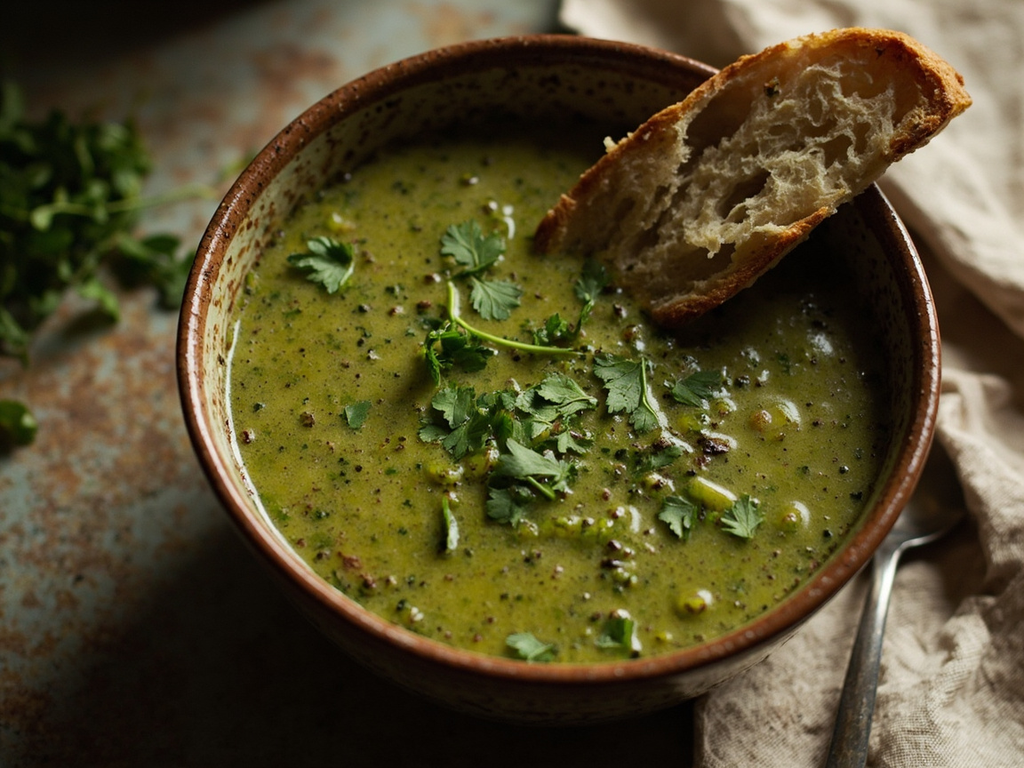
The contemporary twist : Blend half the soup for a smooth velouté and keep the other half chunky: an 'encyclopedic soup' that bridges both ends, the rustic and the refined.
Sources : Menon, La Cuisinière bourgeoise (1746)
Denis Diderot · Charactorium