 flip
flipKnäckebröd — hard rye bread
Knäckebröd — hard rye bread
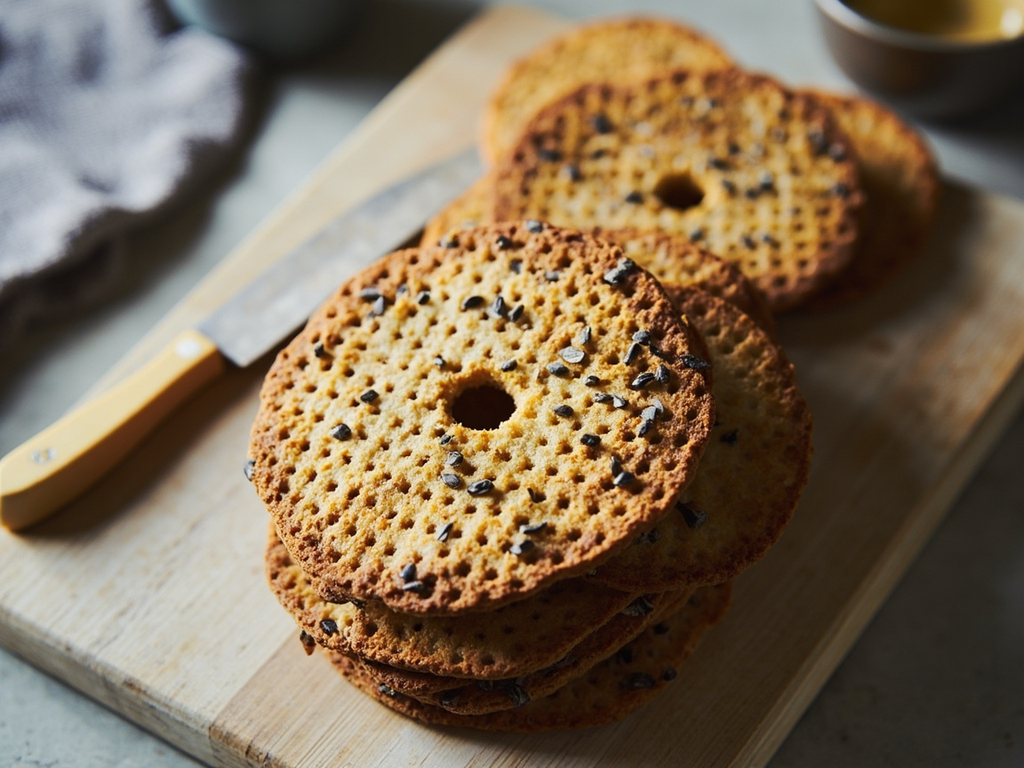
Why this dish? Knäckebröd, a flat, hard bread with a hole in the middle to be threaded onto poles in the ceiling, kept for months without molding. It was the bread of Charles XII's long campaigns across Poland, Ukraine, and Moldavia — a bread that traveled in the army's wagons and never really went stale.
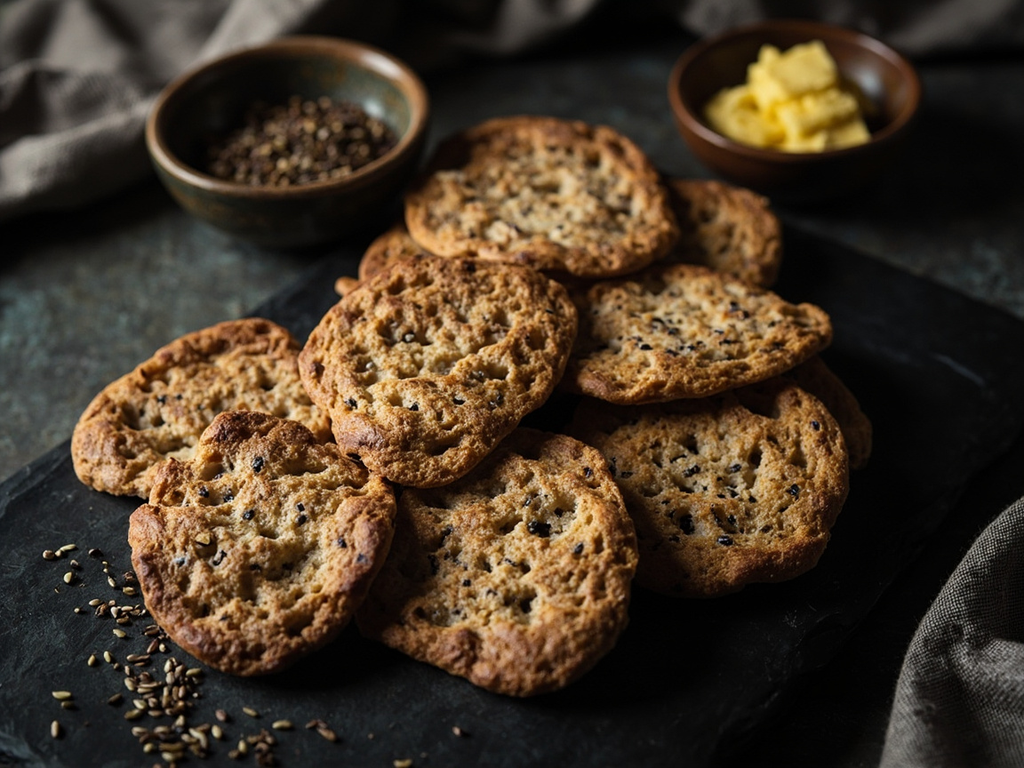
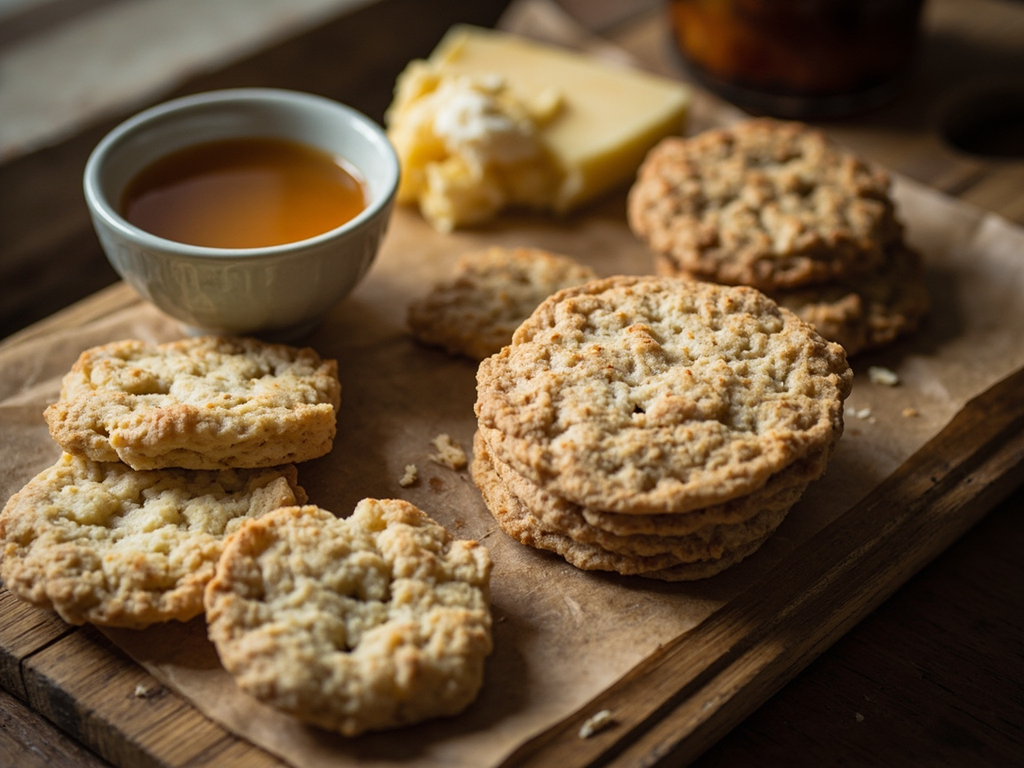
A very thin, crispy, dry rye bread, often with a central hole, baked until it loses almost all its water to defy time and long marches.
A bread that molds in three days is only good for soft cities. Ours, we want it hard as a shield: rye, water, salt, no frills. Roll it thin, poke the hole in the middle to thread it on the pole, and bake it until it rings dry under the nail. Hanging under the roof, it waits for winter and war. On the road to Poltava, this is the bread that marched with us when all else failed.
- •Rye flour — the bulk of the dough (base)
- •Water — enough to form a firm dough (binder)
- •Salt — a pinch (seasoning and preservation)
- •Caraway or fennel seeds — to taste (flavor (optional))
Knäckebröd — hard rye bread
A very thin, crispy, dry rye bread, often with a central hole, baked until it loses almost all its water to defy time and long marches.
Why this dish? Knäckebröd, a flat, hard bread with a hole in the middle to be threaded onto poles in the ceiling, kept for months without molding. It was the bread of Charles XII's long campaigns across Poland, Ukraine, and Moldavia — a bread that traveled in the army's wagons and never really went stale.
A bread that molds in three days is only good for soft cities. Ours, we want it hard as a shield: rye, water, salt, no frills. Roll it thin, poke the hole in the middle to thread it on the pole, and bake it until it rings dry under the nail. Hanging under the roof, it waits for winter and war. On the road to Poltava, this is the bread that marched with us when all else failed.
Ingredients (period version)
- Rye flour — the bulk of the dough (base)
- Water — enough to form a firm dough (binder)
- Salt — a pinch (seasoning and preservation)
- Caraway or fennel seeds — to taste (flavor (optional))
Ingredients
- Rye flour — 300 g (base)
- Wheat flour — 100 g (easier rolling)
- Warm water — 250 ml (binder)
- Fresh yeast — 10 g (or 1 packet dry) (light rise)
- Salt — 1 tsp (seasoning and preservation)
- Caraway seeds — 1 tsp (traditional flavor)
Method
- Dissolve the yeast in warm water. Mix the flours, salt, and caraway seeds, add the water, and knead into a firm dough.
- Let rest for 30 minutes under a cloth.
- Divide into balls, roll each very thin (2-3 mm) into large disks.
- Prick the entire surface with a fork (and make a central hole, as in the old days) to prevent puffing.
- Bake in a hot oven (230°C) for 8-12 minutes until dry and crispy.
- Cool on a rack: it hardens as it dries and keeps for weeks in a dry place.
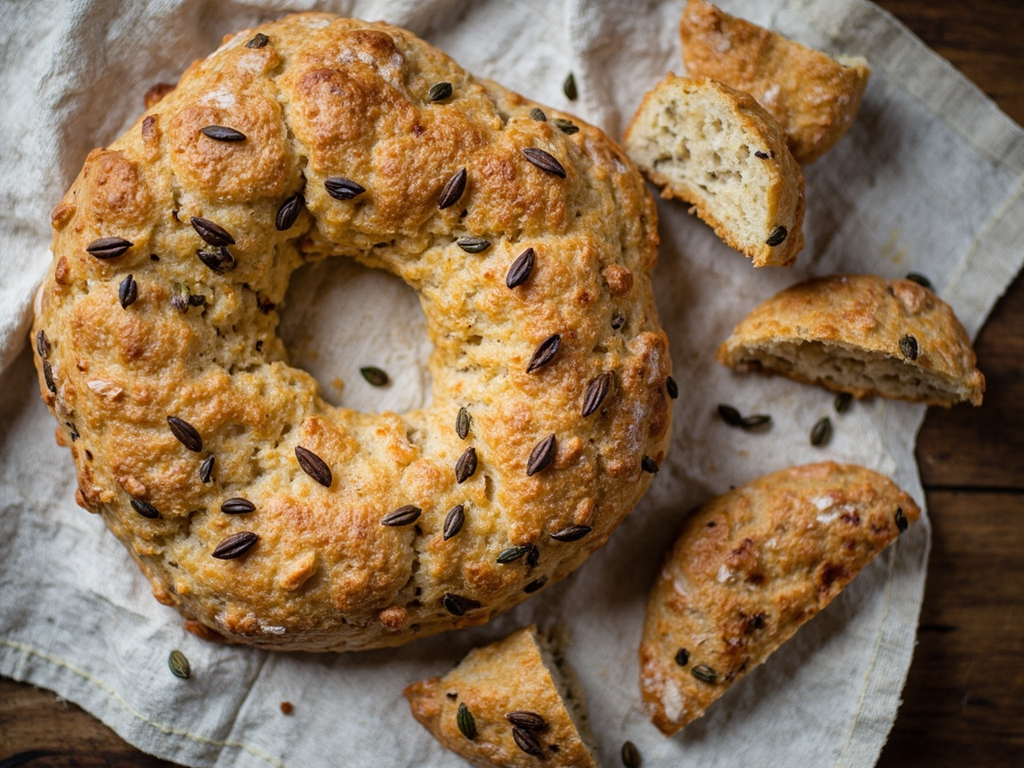
How it was made : Rye, hardy in the Nordic climate, dominated Swedish bread-making. Knäckebröd was baked twice a year in large batches and hung from the ceiling on poles passed through the central hole — hence its perforated shape still seen today.
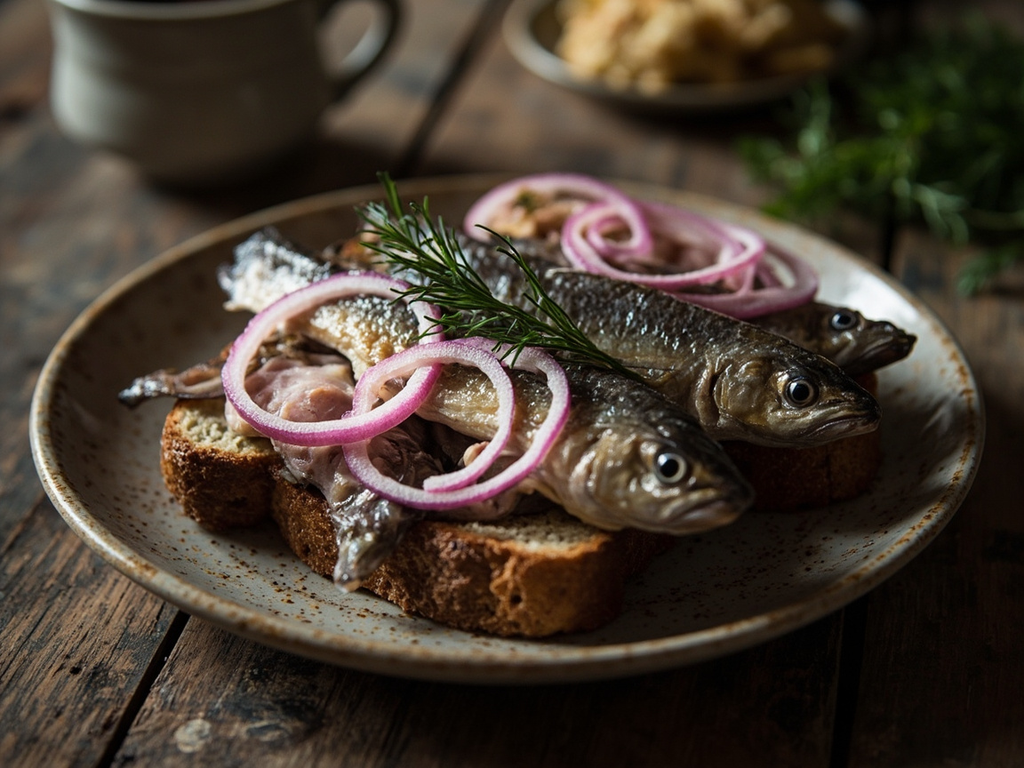
The contemporary twist : Broken into irregular shards and served with lightly salted butter and a slice of pickled herring: the simplest Scandinavian appetizer.
Sources : Cajsa Warg, Hjelpreda i Hushållningen för Unga Fruentimber (1755) · History of Swedish knäckebröd (keeping rye bread)
Charles XII of Sweden · Charactorium