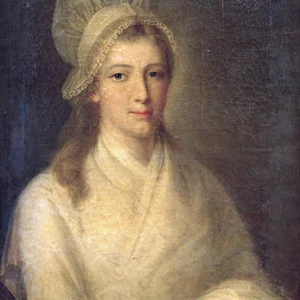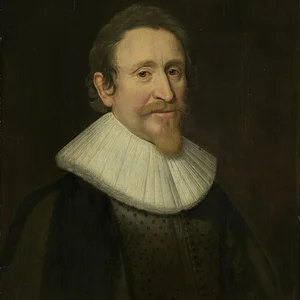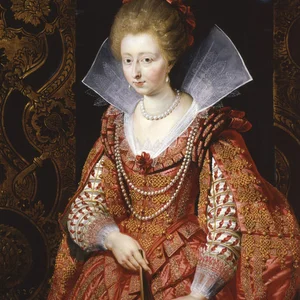

Charlotte-Marguerite de Montmorency (1594-1650), Princess of Condé, was one of the most celebrated beauties of the French court. Coveted by the aging King Henry IV, her marriage to Henry II of Bourbon-Condé sparked a diplomatic crisis when the couple fled to the Spanish Netherlands.
Charlotte-Marguerite de Montmorency(1594 — 1650)
Charlotte Marguerite de Montmorency
France
6 min read
Frequently asked questions
Key Facts
- Born in 1594 into the powerful Montmorency family.
- 1609: marriage to Henry II of Bourbon, Prince of Condé, arranged by Henry IV, who was infatuated with the young woman.
- 1609-1610: the couple's flight to the Spanish Netherlands to escape the king's advances, causing major diplomatic tension.
- Mother of the Grand Condé (Louis II of Bourbon), the famous general, born in 1621.
- Died in 1650.
Works & Achievements
A union that made her Princess of Condé and placed her in the front rank of the royal blood, the Condé couple being heirs presumptive to the throne.
A striking episode that triggered a diplomatic crisis between France and Spain and revealed the grip of Henri IV's passion.
A famous act of conjugal loyalty: she voluntarily followed the imprisoned prince to the keep of Vincennes.
She gave birth to one of the greatest French generals, the victor of Rocroi, carrying on the illustrious line of the Condé.
Her second son founded the junior branch of the princes of Conti, an important family among the high nobility of the 17th century.
After the ardour of her youth, she upheld her rank as princess and watched over the education and future of her children.
Anecdotes
At just 14, Charlotte-Marguerite was so beautiful that the aging King **Henri IV**, then 56, fell madly in love with her during a court ballet in which she danced dressed as a nymph. The king was so smitten that he altered his marriage plans for her in order to keep her close.
Henri IV arranged her marriage to his cousin the Prince de Condé, **Henri II de Bourbon**, believing he could thereby keep her at court as his mistress. But the young husband, jealous and wary, foiled the scheme by fleeing the kingdom with his wife.
In **1609**, the runaway couple took refuge in Brussels, in the Spanish Netherlands, sparking a serious diplomatic crisis. Henri IV came close to threatening war on Spain to recover the young woman, right up until his death at the hands of the assassin **Ravaillac** in **1610**.
When her husband the Prince de Condé was imprisoned in the keep of Vincennes in **1616** for plotting, Charlotte-Marguerite chose of her own free will to share his captivity, remaining by his side throughout his three years of confinement.
Setting aside her daughter, the Grande Mademoiselle, her descendants were illustrious: her son **Louis II de Bourbon-Condé** became the famous “Grand Condé,” one of the greatest military commanders of the reign of Louis XIV.
Primary Sources
The king, having seen Mademoiselle de Montmorency dance in the queen's ballet, fell so passionately in love with her that he lost all rest and sleep.
This princess was one of the most beautiful people of her time; King Henri was madly in love with her, and this was the cause of the flight of the Prince of Condé.
The flight of the Prince and his wife to the Netherlands threw the kingdom into great turmoil and nearly ignited war with Spain.
Key Places
Estate of the Montmorency family and later the Condé family, one of the great noble fiefs of the Île-de-France. It remained tied to their descendants, notably the Grand Condé.
Royal residence where the ballets and festivities of Henri IV's court took place. It was here that the young Charlotte-Marguerite dazzled the king.
City where the Condé couple took refuge in 1609 to escape Henri IV's designs. Their flight there triggered a major diplomatic crisis.
Royal fortress to the east of Paris that served as a state prison. The Prince of Condé was held there from 1616 to 1619, voluntarily joined by his wife.
Cradle of the powerful Montmorency family north of Paris, a testament to the fortune of the lineage from which she came.
Typical Objects
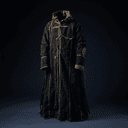
A vast silk gown with a rigid frame that widened the hips, worn by great ladies at court festivities. It displayed the rank and wealth of the woman who wore it.
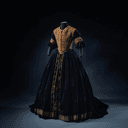
An ornate, brightly coloured costume, often inspired by nymphs or ancient deities, worn during the ballets of the royal court. It was dressed in this way that Charlotte-Marguerite charmed Henri IV.
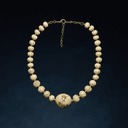
A necklace of fine pearls highly prized by 17th-century princesses, a symbol of purity and fortune. Portraits of the period depict her richly adorned with jewels.

A painting commissioned from court painters to capture and spread the image of the princess's beauty. These portraits circulated as testimonies of family prestige.

An enclosed horse-drawn vehicle in which the great figures of the court travelled. It was by carriage that the Condé couple fled to the Spanish Netherlands in 1609.
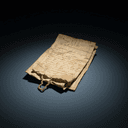
A missive sealed with wax stamped with an armorial seal, a means of communication between princes, kings and ambassadors. Diplomatic dispatches set the rhythm of the crisis of 1609-1610.
School Curriculum
Vocabulary & Tags
Key Vocabulary
Daily Life
Morning
The princess would awaken in a canopied bed, assisted by her ladies-in-waiting for washing and dressing — a lengthy ceremony in which gowns and corsets were laced up. The morning might be devoted to prayer and to Mass in the private chapel.
Afternoon
The afternoon was spent paying visits, reading, doing needlework, or strolling through the castle gardens. At court, one attended audiences, games, and the conversations of the aristocratic salons.
Evening
Evenings brought the nobility together around banquets, music, dancing, and sometimes court ballets. These celebrations were an opportunity to be seen, to forge alliances, and to shine through one's beauty and wit.
Food
The tables of the great offered roasted meats, game, poultry, pâtés, and fish, accompanied by wine and the white bread reserved for the wealthy. Spices, sugar, and candied fruits, all costly, signaled the luxury befitting a princely rank.
Clothing
She wore gowns of silk and velvet over a farthingale, adorned with lace, embroidery, and pearls, with large ruffs or lace collars. Jewels and carefully arranged hairstyles completed this ostentatious finery.
Housing
She lived in vast castles and town mansions richly furnished with tapestries, hangings, and carved furniture. Princely residences such as Chantilly employed numerous servants and boasted great ceremonial halls.
Historical Timeline
Period Vocabulary
Liens externes & ressources
Références
Œuvres
Mariage avec Henri II de Bourbon-Condé
1609
Fuite aux Pays-Bas espagnols
1609-1610
Partage de la captivité de son époux
1616-1619
Naissance de Louis II de Bourbon (le Grand Condé)
1621
Naissance d'Armand de Bourbon, prince de Conti
1627
Rôle de matriarche de la maison de Condé
1610-1650