 flip
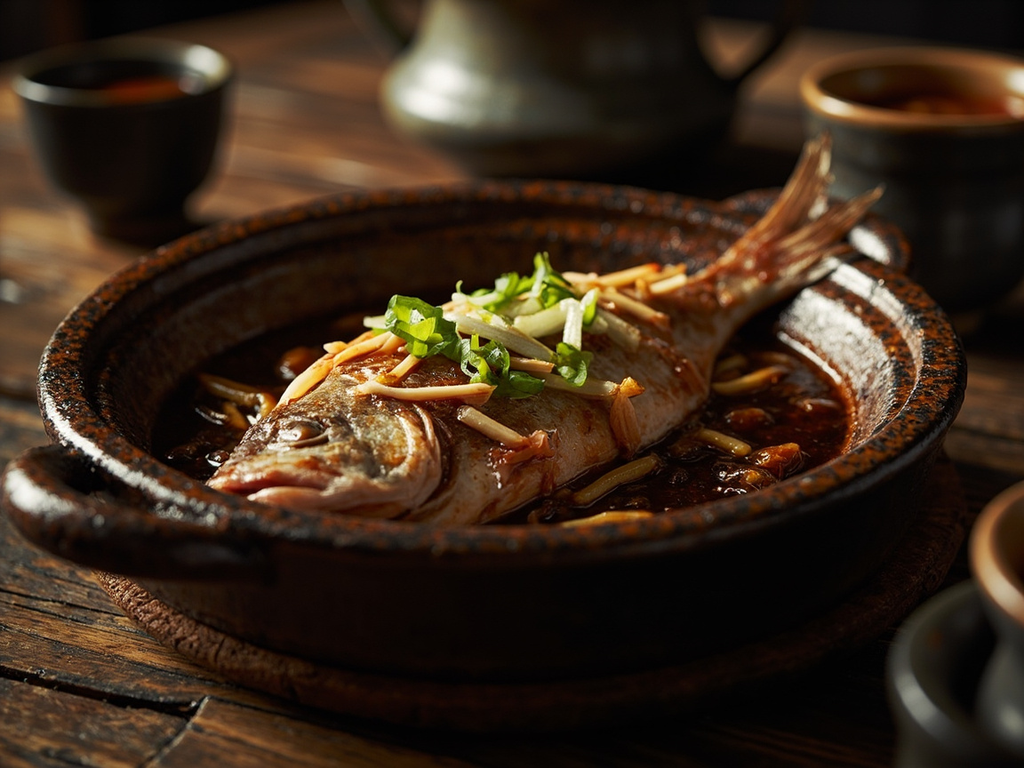
flipAnhui Lightly Fermented Mandarin Fish (臭鳜鱼, chòu guìyú)
Anhui Lightly Fermented Mandarin Fish (臭鳜鱼, chòu guìyú)
Why this dish? Iconic specialty of Anhui, Yang's home province (Hefei). This lightly fermented river fish is THE dish of grand Huizhou family gatherings — a taste of home served when generations come together.
Firm-fleshed freshwater fish, salted and left to ferment for a few days to develop a powerful aroma and an almost flaky texture, then slowly braised with pork, ginger, and soy sauce. Disconcerting to the nose, deep on the palate.
I was born in Hefei, in the heart of Anhui, and nowhere else is this fish understood as it is among us. Do not be misled by its disconcerting smell: the lightly fermented guìyú reveals a firm, almost flaky flesh, with an aroma that only time can give. It was served at large tables when the whole family gathered, braised slowly with a little pork and ginger. It is a taste that demands patience — and, like any beautiful theory, it first disconcerts before convincing.
- •Mandarin river fish (guìyú) — one whole fish (centerpiece)
- •Salt — generously (salting and fermentation)
- •Fatty pork — a few slices (richness, umami)
- •Ginger, garlic, scallion — to season (aromatics)
- •Soy sauce, rice wine — a splash (braising)
- •Bamboo shoots — a few (crunchy garnish)
Anhui Lightly Fermented Mandarin Fish (臭鳜鱼, chòu guìyú)
Firm-fleshed freshwater fish, salted and left to ferment for a few days to develop a powerful aroma and an almost flaky texture, then slowly braised with pork, ginger, and soy sauce. Disconcerting to the nose, deep on the palate.
Why this dish? Iconic specialty of Anhui, Yang's home province (Hefei). This lightly fermented river fish is THE dish of grand Huizhou family gatherings — a taste of home served when generations come together.
I was born in Hefei, in the heart of Anhui, and nowhere else is this fish understood as it is among us. Do not be misled by its disconcerting smell: the lightly fermented guìyú reveals a firm, almost flaky flesh, with an aroma that only time can give. It was served at large tables when the whole family gathered, braised slowly with a little pork and ginger. It is a taste that demands patience — and, like any beautiful theory, it first disconcerts before convincing.
Ingredients (period version)
- Mandarin river fish (guìyú) — one whole fish (centerpiece)
- Salt — generously (salting and fermentation)
- Fatty pork — a few slices (richness, umami)
- Ginger, garlic, scallion — to season (aromatics)
- Soy sauce, rice wine — a splash (braising)
- Bamboo shoots — a few (crunchy garnish)
Ingredients
- Sea bass or grouper fillets/steaks (if guìyú unavailable) — 600 g (main ingredient)
- Coarse salt — 2 tbsp (salting (optional short fermentation 2-3 days refrigerated))
- Pork belly, thinly sliced — 80 g (umami)
- Fresh ginger — 1 piece (aromatic)
- Garlic — 3 cloves (aromatic)
- Scallion — 2 stalks (aromatic)
- Light and dark soy sauce — 2 + 1 tbsp (seasoning, color)
- Shaoxing wine — 2 tbsp (deglaze, aroma)
- Sliced bamboo shoots — 1 handful (texture)
- Oil — 3 tbsp (searing)
Method
- Express version (without fermentation): pat fish dry, rub lightly with salt, refrigerate 30 min, then rinse and dry.
- Traditional version (optional): generously salt the fish, leave 2-3 days in the refrigerator under a weight, until strong aroma and firm flesh; rinse.
- Sear fish 2 min each side in hot oil, set aside.
- Stir-fry pork, ginger, garlic and bamboo shoots; deglaze with Shaoxing wine.
- Add both soy sauces and a little water, return fish, cover and braise 12-15 min over low heat, basting.
- Reduce sauce, sprinkle with scallion, and serve the whole fish at the center of the table.
How it was made : According to Huizhou (Anhui) tradition, merchants once transported salted river fish over long distances; the salting initiated a natural fermentation that, far from spoiling the fish, became the sought-after signature of the dish. It was braised in earthenware pots over the fire, with mountain pork.
The contemporary twist : Announced at the table by its full name 'the fish that smells strong but delights' — the lid is lifted at the last moment for the theatrical release of aroma, like an experiment with a hidden variable.
Sources : Fuchsia Dunlop, Land of Fish and Rice: Recipes from the Culinary Heart of China, Bloomsbury, 2016
Chen-Ning Yang · Charactorium