 flip
flipBagna càuda — the "hot sauce" with anchovy and garlic
Bagna càuda — the "hot sauce" with anchovy and garlic
Why this dish? Bagna càuda is the great Piedmontese winter ritual: around a single steaming pot, the family dips vegetables while chatting. For Rita, attached to her "Piedmontese flavors" and her returns to Turin, it is the dish of family conviviality par excellence.
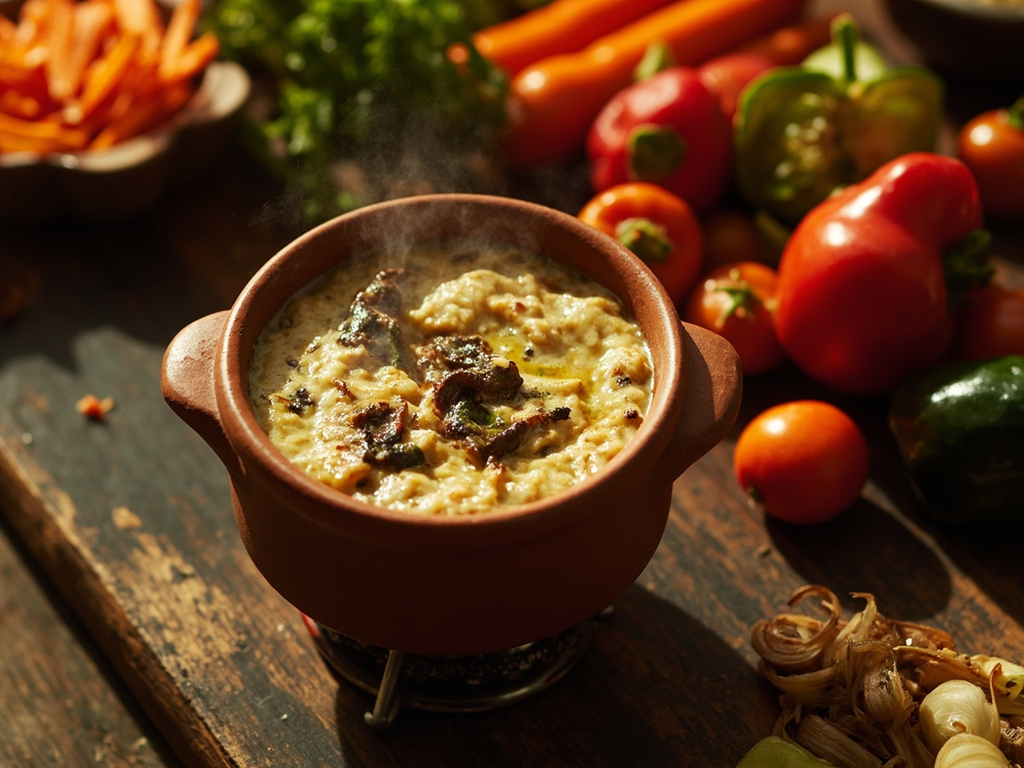
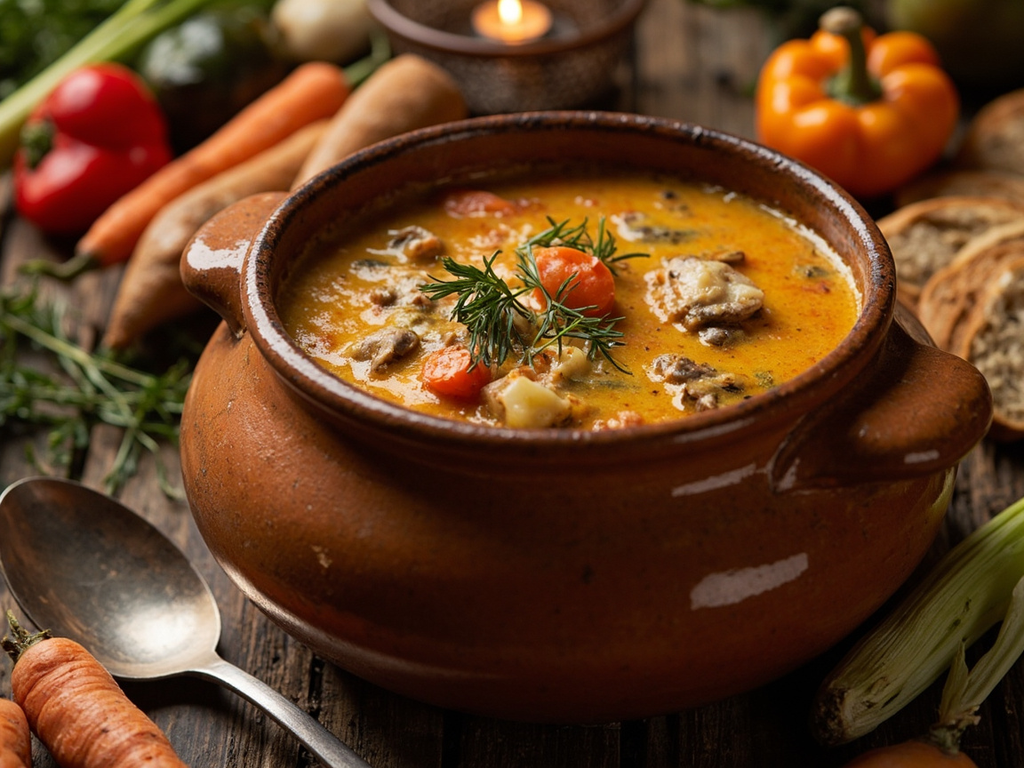
A warm, creamy sauce of melted anchovies, confit garlic, and olive oil, kept warm at the center of the table, into which everyone dips raw and cooked vegetables. Powerful, communal, warming.
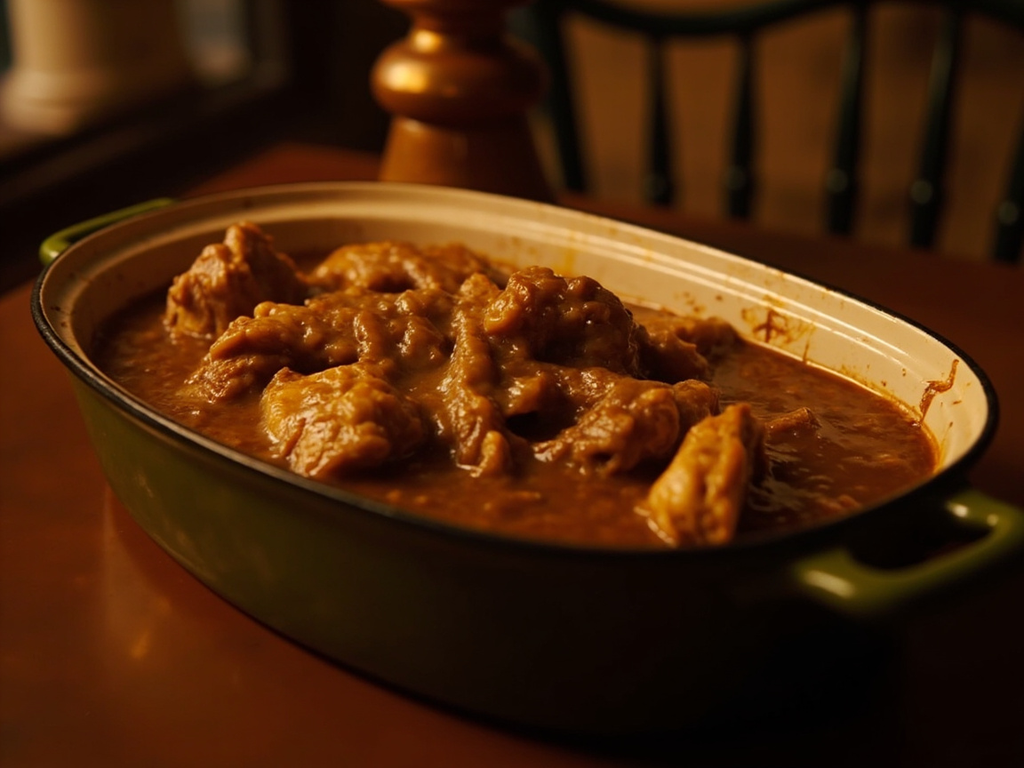
At home, when the fog rose from the Po, my mother would bring out the terracotta fojòt and we would all sit down together — that was Piedmont: warming belly and heart around a single burner. Do not fear the garlic or the anchovy, let them melt very gently, never letting them fry, until a cream that perfumes the whole house. You dip a cardoon, a pepper, a wedge of cabbage — it matters not — as long as you do it in company. I have dined in many countries, but this smell always brings me back, intact, to the Turin table.
- •Salt-cured anchovies (desalted) — a large handful (salty umami, base)
- •Garlic cloves — as many as there are diners, or more (confit sweetness)
- •Olive oil — to cover generously (body of the sauce)
- •Seasonal vegetables (cardoon, cabbage, Jerusalem artichoke, pepper) — a large platter (for dipping)
Bagna càuda — the "hot sauce" with anchovy and garlic
A warm, creamy sauce of melted anchovies, confit garlic, and olive oil, kept warm at the center of the table, into which everyone dips raw and cooked vegetables. Powerful, communal, warming.
Why this dish? Bagna càuda is the great Piedmontese winter ritual: around a single steaming pot, the family dips vegetables while chatting. For Rita, attached to her "Piedmontese flavors" and her returns to Turin, it is the dish of family conviviality par excellence.
At home, when the fog rose from the Po, my mother would bring out the terracotta fojòt and we would all sit down together — that was Piedmont: warming belly and heart around a single burner. Do not fear the garlic or the anchovy, let them melt very gently, never letting them fry, until a cream that perfumes the whole house. You dip a cardoon, a pepper, a wedge of cabbage — it matters not — as long as you do it in company. I have dined in many countries, but this smell always brings me back, intact, to the Turin table.
Ingredients (period version)
- Salt-cured anchovies (desalted) — a large handful (salty umami, base)
- Garlic cloves — as many as there are diners, or more (confit sweetness)
- Olive oil — to cover generously (body of the sauce)
- Seasonal vegetables (cardoon, cabbage, Jerusalem artichoke, pepper) — a large platter (for dipping)
Ingredients
- Anchovy fillets in oil (or desalted) — 120 g (salty umami, base)
- Garlic cloves — 1 whole head (confit sweetness)
- Extra virgin olive oil — 200 ml (body of the sauce)
- Butter — 30 g (optional, to soften) (binder)
- Assorted vegetables (peppers, cardoons, fennel, cauliflower, carrots) — 1 kg (for dipping)
- Country bread — 1 loaf (accompaniment)
Method
- Peel the garlic, gently poach it in a little milk or water for 10 minutes to soften (optional modern step).
- In a heavy-bottomed saucepan, heat the oil over very low heat, add the garlic and mash it with a spoon.
- Add the anchovies and stir patiently until they completely melt into a cream, never frying (15-20 minutes).
- Off the heat, stir in the butter to smooth, pour into a pot kept warm (warmer, candle).
- Arrange the raw and cooked vegetables around; each person dips as they go, bread underneath to catch drips.
How it was made : Salt and anchovies reached landlocked Piedmont via the "salt road" from Liguria; the acciugai hid anchovies under a layer of salt to pass customs. Bagna càuda was eaten at the end of the grape harvest and all winter, on a terracotta fojòt heated with embers.
The contemporary twist : Serve the sauce in small individual warm verrines with a bouquet of multicolored crudités standing up — a "graphic aperitif" version that respects the spirit of sharing.
Rita Levi-Montalcini · Charactorium