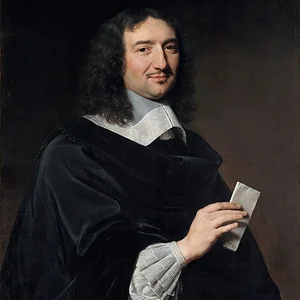

Jean-Baptiste Colbert (1619-1683) was the principal minister of Louis XIV, serving as Controller-General of Finances from 1665. The architect of an interventionist economic policy, he reorganized the royal finances and developed French industry and trade.
Colbert(1619 — 1683)
Jean-Baptiste Colbert
France
6 min read
Frequently asked questions
Famous Quotes
« The art of taxation consists in so plucking the goose as to obtain the largest possible amount of feathers with the smallest possible amount of hissing.»
Key Facts
- Appointed Controller-General of Finances in 1665 by Louis XIV
- Implemented a mercantilist policy (“colbertism”) favoring exports and limiting imports
- Created the royal manufactories (the Gobelins, the Saint-Gobain mirror works) and built up the navy
- Founded several trading companies (the East and West India Companies, 1664)
- Took part in the downfall of Nicolas Fouquet in 1661 and reorganized the finances of the state
Works & Achievements
Trading company created to compete with the Dutch and the English in commerce with Asia. It illustrates his mercantilist policy.
Network of state-run workshops producing tapestries, mirrors, and luxury fabrics. They were meant to enrich France and limit imports.
Learned institution founded to encourage scientific research in France. It attracted great European scholars through stipends.
Major reform protecting and regulating the exploitation of the royal forests. It aimed to guarantee the timber needed for the navy.
Body of rules organizing the navy and maritime law. It made France a great naval power.
Canal linking the Atlantic to the Mediterranean, designed by Pierre-Paul Riquet and financially backed by Colbert's state. A technical feat of the century.
Increase in customs duties on foreign goods to protect French industry. It is the heart of the system known as “Colbertism.”
Anecdotes
Colbert's emblem was a snake: the grass snake (in Latin *coluber*), a pun on his name. It can be found carved on his coat of arms and on certain monuments he commissioned, like a nod to his surname.
Renowned for his relentless work ethic, Colbert slept little and arrived at his office at dawn. His contemporaries nicknamed him “the North” because of his icy, taciturn face, and Madame de Sévigné ironically called him “Monsieur le Nord.”
It was Colbert who, in 1661, exposed and brought down the superintendent of finances Nicolas Fouquet. During a lavish party at the château of Vaux-le-Vicomte, Fouquet tried to dazzle Louis XIV; three weeks later, he was arrested, and Colbert gradually took over his power.
In 1666, Colbert founded the Academy of Sciences and brought great foreign scholars to Paris, such as the Italian astronomer Cassini, by offering them royal pensions. He wanted France to shine through its knowledge as well.
To develop the navy, Colbert created the “maritime registration” (*inscription maritime*), a system that required men from the coastal regions to serve on the king's ships in rotation. He also had oak forests planted to provide timber for future vessels, already thinking of the generations to come.
Primary Sources
We must, as far as possible, increase the money that enters the kingdom and decrease that which leaves it.
Colbert was a man of mediocre intellect, but of tireless diligence and recognized integrity in the handling of finances.
Monsieur le Nord, as they call him, never cracks a smile.
His Majesty, desiring to restore the commerce of his subjects in the East Indies, has resolved to establish a Company.
Key Places
City in Champagne where Jean-Baptiste Colbert was born in 1619 into a family of cloth merchants. His middle-class origins shaped his taste for trade and hard work.
Royal residence whose construction and financing Colbert oversaw for Louis XIV. He kept a close watch on spending while organizing the king's prestige.
Royal manufactory of furniture and tapestries that Colbert reorganized in 1662 to produce furnishings for the Crown. A symbol of his industrial policy.
Naval port founded on Colbert's initiative in 1666 to build and arm the ships of the royal navy on the Atlantic coast.
Capital where Colbert carried out his duties as Controller-General and where he died in 1683. There he founded several academies and embellished the city.
Typical Objects

A ledger in which Colbert recorded the State's revenues and expenditures with meticulous rigor. He established a genuine annual budget for the kingdom.

A luxury work woven in the royal manufactory that Colbert reorganized in 1662. These tapestries glorified the king and showcased French craftsmanship.

A ship of the line built in the arsenals that Colbert developed (Toulon, Rochefort, Brest). He provided France with a powerful war navy.

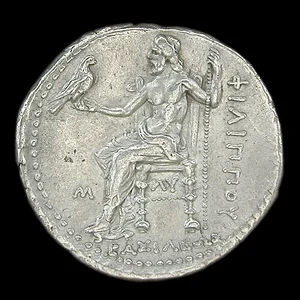
Currency struck under Louis XIV, whose quality Colbert monitored to stabilize its value and combat the outflow of precious metals.

Fine wool fabric produced by the manufactories that Colbert encouraged, such as the one in Abbeville. The goal was to stop buying these cloths from abroad.

An official document bearing the king's seal through which Colbert imposed his economic and administrative reforms. The wax seal guaranteed the text's authority.
School Curriculum
Vocabulary & Tags
Key Vocabulary
Daily Life
Morning
Colbert rose very early, often before daybreak, and began by reading and signing dozens of letters and reports. Renowned as tireless, he devoted his first hours to financial affairs before going to attend the king.
Afternoon
His afternoons were taken up with councils, audiences, and overseeing his many areas of responsibility: the navy, manufactures, the king's buildings, and commerce. He received merchants, engineers, and scholars to advance his projects.
Evening
In the evening, Colbert carried on working by candlelight, poring over the accounts of the State. An austere man, he gave little time to the entertainments of the court, preferring his files.
Food
Like the great servants of the State, he ate hearty meals of meats, game, white bread, and wine. A minister's table had to be worthy of his rank, even if he remained sober by temperament.
Clothing
Colbert wore the plain black dress of the senior official, with a heavy wig and a lace collar, the fashion of the reign of Louis XIV. His severe attire contrasted with the gaudy costumes of the courtiers.
Housing
A powerful minister, he lived in vast private mansions in Paris and owned lands and châteaux, such as Sceaux. His residences were decorated with works from the royal manufactures he directed.
Historical Timeline
Period Vocabulary
Liens externes & ressources
Références
Œuvres
Compagnie des Indes orientales
1664
Manufactures royales (Gobelins, Saint-Gobain, Beauvais)
1662-1667
Académie royale des sciences
1666
Ordonnance sur les Eaux et Forêts
1669
Code de la Marine (Ordonnance de la Marine)
1681
Canal du Midi (soutien et financement)
1666-1681
Tarif douanier protectionniste
1667