 flip
flipSinigang na isda (sour fish soup)
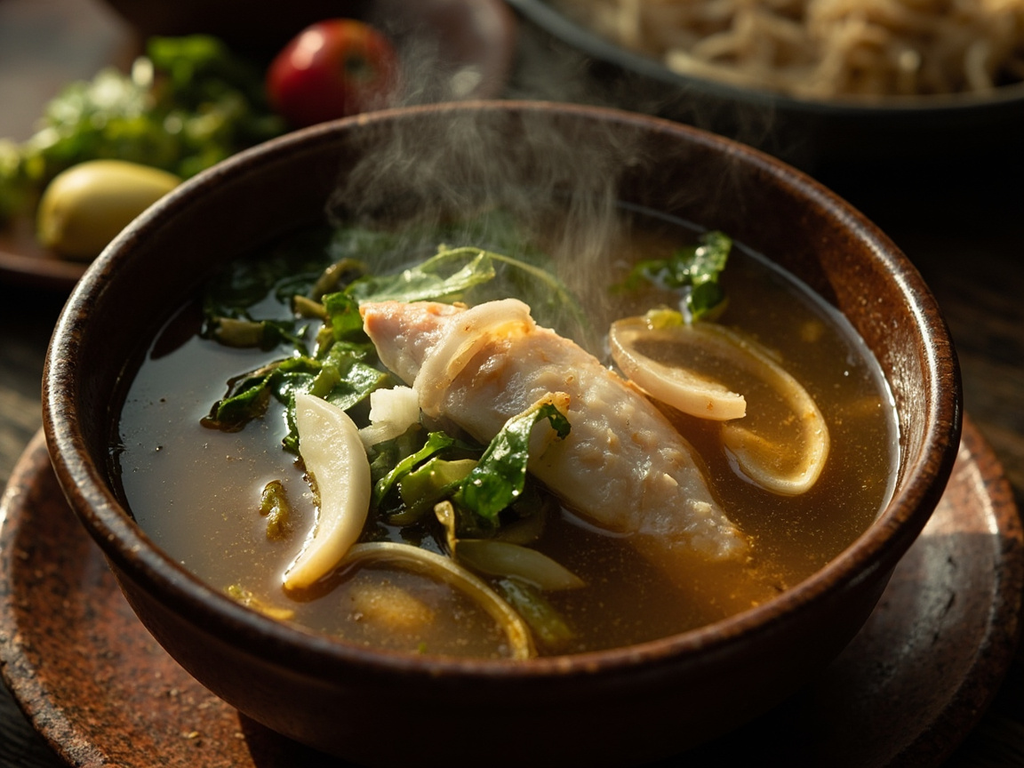
Sinigang na isda (sour fish soup)
Why this dish? Sinigang, a sour soup, is explicitly listed among Corazón Aquino's dishes. It is the ultimate Filipino comfort food: a tangy broth full of vegetables and fresh fish, meant to be shared with family.
A sour broth, made from tamarind, in which fresh fish and local vegetables (white radish, long beans, kangkong leaves) simmer. Bright acidity, freshness, and plenty of comfort.
When the heart is heavy, nothing comforts like a good sour sinigang. You boil the tamarind until the water becomes sharp and tangy, then slip in the day's catch and garden vegetables. I served it piping hot, and we drank the broth by the spoonful, heads bent over the bowl. It is a soup that brings people together: around it, for a moment, we forget the world's clamor.
- •Fresh fish (bangus, tilapia) — one whole fish, sliced (protein)
- •Tamarind (sampalok) — a handful of pods (souring agent)
- •White radish (labanos) — one, sliced (vegetable)
- •Long beans (sitaw) — one bunch (vegetable)
- •Tomatoes — a few (acidity, base)
- •Onion — one (aromat)
- •Kangkong leaves (water spinach) — one bunch (final greens)
Sinigang na isda (sour fish soup)
A sour broth, made from tamarind, in which fresh fish and local vegetables (white radish, long beans, kangkong leaves) simmer. Bright acidity, freshness, and plenty of comfort.
Why this dish? Sinigang, a sour soup, is explicitly listed among Corazón Aquino's dishes. It is the ultimate Filipino comfort food: a tangy broth full of vegetables and fresh fish, meant to be shared with family.
When the heart is heavy, nothing comforts like a good sour sinigang. You boil the tamarind until the water becomes sharp and tangy, then slip in the day's catch and garden vegetables. I served it piping hot, and we drank the broth by the spoonful, heads bent over the bowl. It is a soup that brings people together: around it, for a moment, we forget the world's clamor.
Ingredients (period version)
- Fresh fish (bangus, tilapia) — one whole fish, sliced (protein)
- Tamarind (sampalok) — a handful of pods (souring agent)
- White radish (labanos) — one, sliced (vegetable)
- Long beans (sitaw) — one bunch (vegetable)
- Tomatoes — a few (acidity, base)
- Onion — one (aromat)
- Kangkong leaves (water spinach) — one bunch (final greens)
Ingredients
- Tilapia or sea bass fillets — 600 g (protein)
- Tamarind paste or pulp — 3 tbsp (or 1 packet sinigang mix) (souring agent)
- White radish (daikon) — 1, sliced (vegetable)
- Long green beans — 150 g (vegetable)
- Tomatoes — 2, quartered (acidity, base)
- Onion — 1, quartered (aromat)
- Spinach or water spinach — 1 handful (final greens)
- Water — 1.5 L (broth)
- Fish sauce (patis) — 2 tbsp (umami seasoning)
Method
- Boil water with onion and tomatoes until softened.
- Add tamarind (or paste) and let the broth become very sour; season with patis.
- Add radish and beans, cook a few minutes.
- Gently slide in the fish and poach for 5 to 7 minutes without stirring too much.
- Finish with the green leaves, turn off the heat, and let the greens wilt.
- Serve steaming, with white rice on the side.
How it was made : The sourness of sinigang comes from local fruits and plants depending on the season: tamarind (most common), guava, kalamansi, or even green mango. Before industrial packets, every household pressed its own fresh tamarind.
The contemporary twist : Serve bowl-style: broth in a small teapot on the side, to be poured over the fish and vegetables in front of the guest.
Corazón Aquino · Charactorium