 flip
flipWatia de cobaye et papas sous la cendre
Watia de cobaye et papas sous la cendre
Why this dish? Roasted guinea pig (cuy) was a festive and honorific meat in the Inca empire, reserved for special days and high-ranking guests. At a coya's table, it was prepared with the best ají and herbs, cooked in the watia, the earth oven of the harvest.
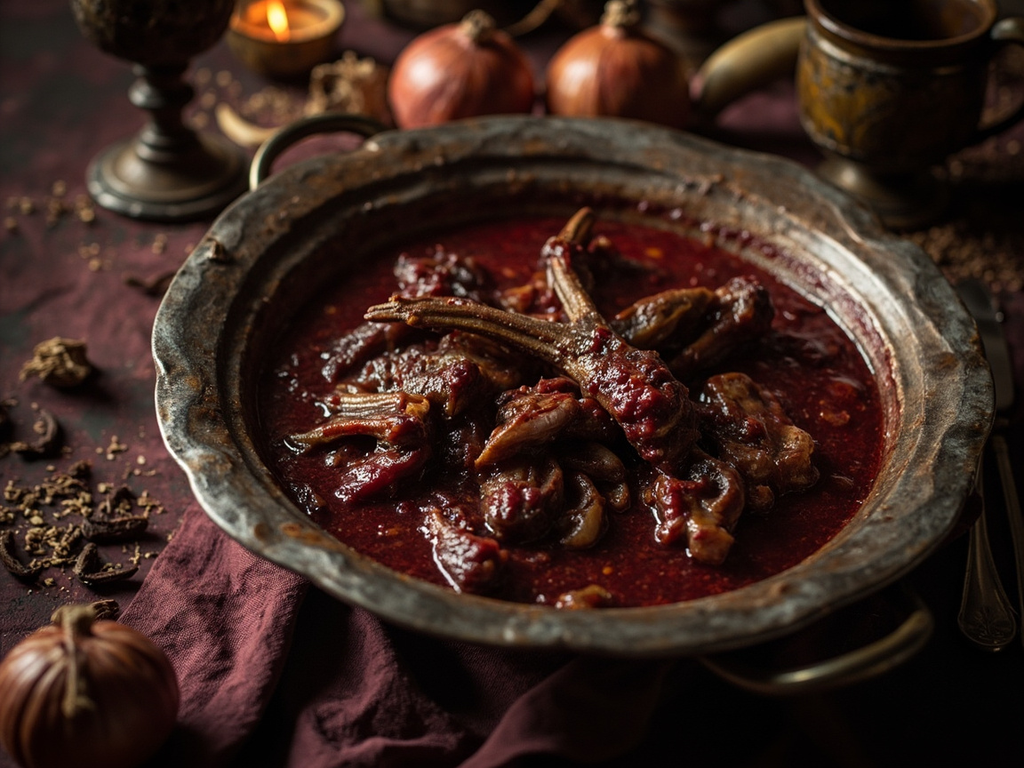
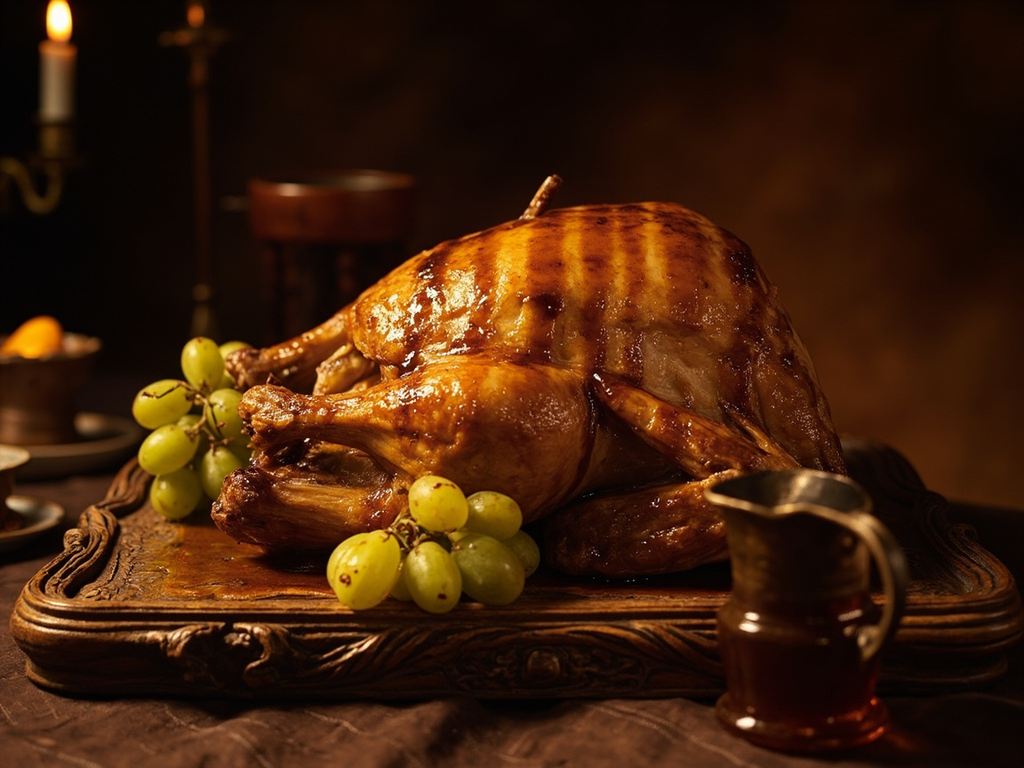
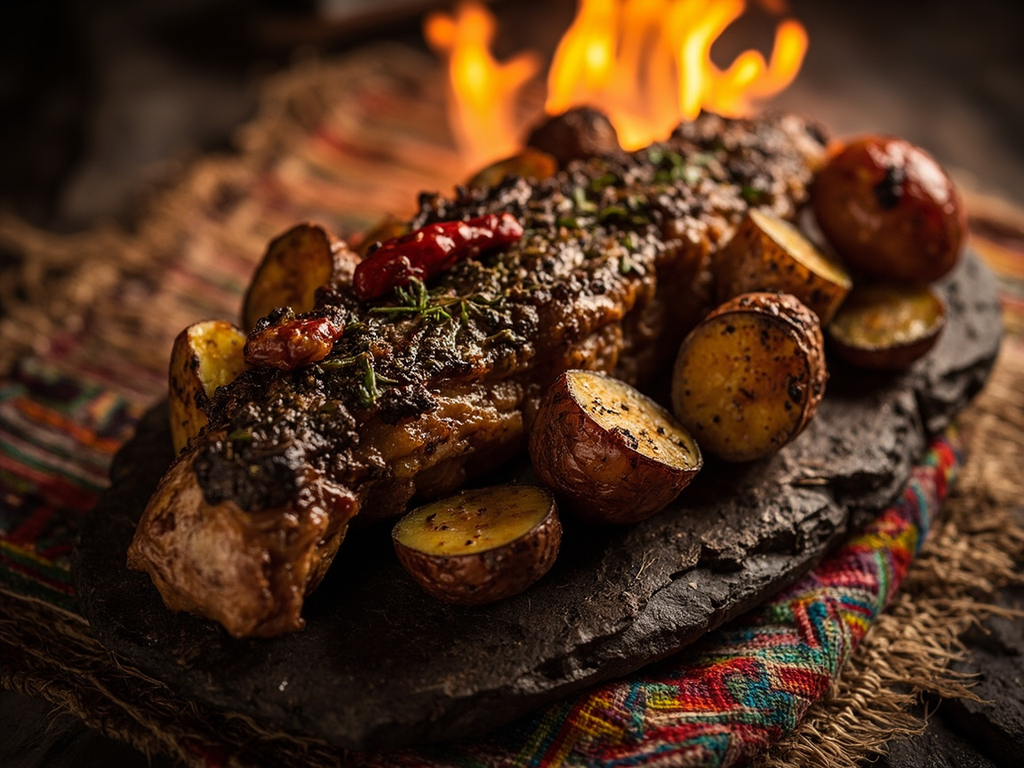
Guinea pig rubbed with ají and herbs, roasted with potatoes in an oven dug into the ground and heated with incandescent clods of earth. Crispy, smoky, deeply flavorful — the dish of great days.
When my lord Huayna Cápac returned from Tomebamba, we dug the watia and heated the clods until they glowed red like the sunset. I ordered the cuy to be rubbed with uchu and mountain herbs, then buried with the papas in the burning earth — for Pachamama herself becomes our oven. When the crust sings under the tooth and the smoke perfumes, know that it is a feast day in the Tawantinsuyu.
- •Whole guinea pig (cuy), dressed — one per honored guest (festive meat)
- •Fresh or dried ají (uchu), ground — generously (spicy marinade)
- •Andean herbs (huacatay, muña) — one bunch (flavoring)
- •Potatoes (papa) of several varieties — as desired (side)
- •Mountain salt — to taste (seasoning)
Watia de cobaye et papas sous la cendre
Guinea pig rubbed with ají and herbs, roasted with potatoes in an oven dug into the ground and heated with incandescent clods of earth. Crispy, smoky, deeply flavorful — the dish of great days.
Why this dish? Roasted guinea pig (cuy) was a festive and honorific meat in the Inca empire, reserved for special days and high-ranking guests. At a coya's table, it was prepared with the best ají and herbs, cooked in the watia, the earth oven of the harvest.
When my lord Huayna Cápac returned from Tomebamba, we dug the watia and heated the clods until they glowed red like the sunset. I ordered the cuy to be rubbed with uchu and mountain herbs, then buried with the papas in the burning earth — for Pachamama herself becomes our oven. When the crust sings under the tooth and the smoke perfumes, know that it is a feast day in the Tawantinsuyu.
Ingredients (period version)
- Whole guinea pig (cuy), dressed — one per honored guest (festive meat)
- Fresh or dried ají (uchu), ground — generously (spicy marinade)
- Andean herbs (huacatay, muña) — one bunch (flavoring)
- Potatoes (papa) of several varieties — as desired (side)
- Mountain salt — to taste (seasoning)
Ingredients
- Rabbit legs (accessible substitute for cuy) — 4 pieces (festive meat)
- Ají amarillo paste — 2 Tbsp (spicy marinade)
- Huacatay (or cilantro + mint) — 1 small bunch (flavoring)
- Assorted potatoes (rattes, vitelotte, charlotte) — 800 g (side)
- Salt and a drizzle of oil — to taste (seasoning)
Method
- Blend the ají, herbs, salt, and oil into a paste; rub generously over the meat; marinate at least 1 hour.
- Preheat the oven to 220 °C (if lacking a traditional earth oven).
- Arrange the washed potatoes and meat in a dish, cover with parchment paper then aluminum foil to trap the steaming smoke.
- Cook covered for 35 minutes, then uncover and continue for 15 to 20 minutes to brown and crisp the skin.
- Serve the meat on the potatoes, with extra ají paste on the side for those who like heat.
How it was made : The watia (or huatia) is an ephemeral oven: dry clods of earth are stacked into a small vault, heated over a fire until incandescent, then food is buried in the residual heat and covered with earth. The cuy, raised in Andean households, was a prestigious meat offered during ceremonies and banquets.
The contemporary twist : Presented on a bed of crushed purple potatoes, with a hint of wood smoke at serving to recall the earth oven.
Sources : Felipe Guamán Poma de Ayala, Nueva Corónica y Buen Gobierno (ca. 1615) · Bernabé Cobo, Historia del Nuevo Mundo (1653)
Coya Pacsa · Charactorium