 flip
flipRoast capon with verjuice and ginger sauce
Roast capon with verjuice and ginger sauce
Why this dish? As ordinary surgeon to four kings of France, Paré frequented the court tables where roast capon and its sweet-and-sour sauce were centerpieces of grand suppers. This dish evokes the royal feasts at the Louvre to which his rank as a wealthy Renaissance man gave him access.
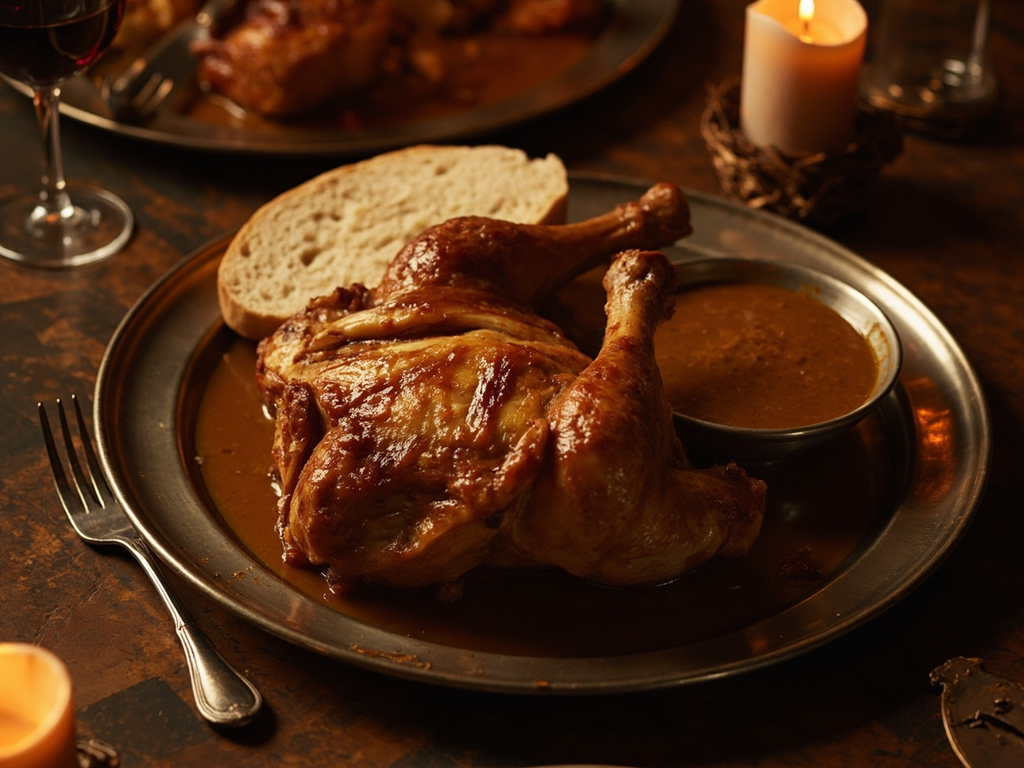
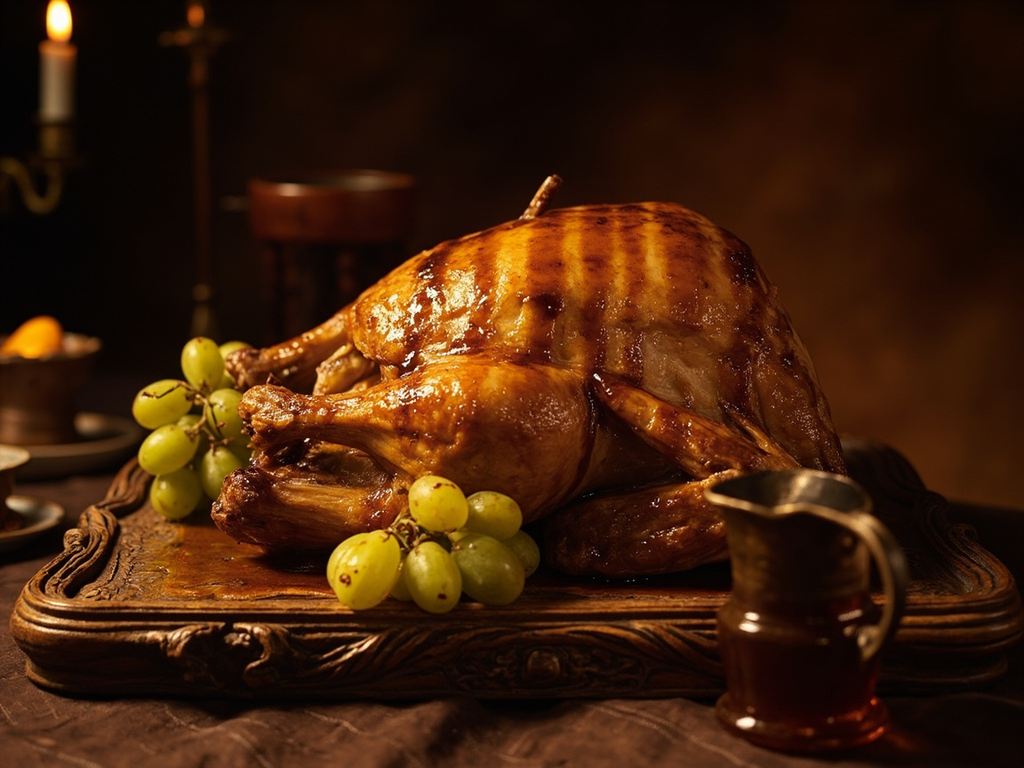
A golden spit-roasted capon, glazed with a lively sauce of verjuice, ginger, and cinnamon—the jewel of Renaissance banquets.
Shall I tell you, Sir, how the capon is prepared at the King's table? It is spitted whole and turned before a great clear fire, basted often with its own fat so that the skin becomes golden like fine gold. For the sauce, I grind ginger and cinnamon, then moisten them with sharp verjuice—for sourness awakens the mouth and, they say, helps digest fatty meats. Upon my faith, when this steaming capon is brought to table, everyone's mouth waters, gentlemen and physicians alike!
- •Capon — one fine bird (centerpiece)
- •Lard or lard — for basting (fat)
- •Verjuice — a good glass (souring agent for sauce)
- •Ginger — a little (spice)
- •Cinnamon — a little (sweet spice)
- •Grains of paradise (melegueta pepper) — a pinch (hot spice)
- •Sugar — a spoonful (sweet-sour balance)
- •Salt — to taste (seasoning)
Roast capon with verjuice and ginger sauce
A golden spit-roasted capon, glazed with a lively sauce of verjuice, ginger, and cinnamon—the jewel of Renaissance banquets.
Why this dish? As ordinary surgeon to four kings of France, Paré frequented the court tables where roast capon and its sweet-and-sour sauce were centerpieces of grand suppers. This dish evokes the royal feasts at the Louvre to which his rank as a wealthy Renaissance man gave him access.
Shall I tell you, Sir, how the capon is prepared at the King's table? It is spitted whole and turned before a great clear fire, basted often with its own fat so that the skin becomes golden like fine gold. For the sauce, I grind ginger and cinnamon, then moisten them with sharp verjuice—for sourness awakens the mouth and, they say, helps digest fatty meats. Upon my faith, when this steaming capon is brought to table, everyone's mouth waters, gentlemen and physicians alike!
Ingredients (period version)
- Capon — one fine bird (centerpiece)
- Lard or lard — for basting (fat)
- Verjuice — a good glass (souring agent for sauce)
- Ginger — a little (spice)
- Cinnamon — a little (sweet spice)
- Grains of paradise (melegueta pepper) — a pinch (hot spice)
- Sugar — a spoonful (sweet-sour balance)
- Salt — to taste (seasoning)
Ingredients
- Capon (or large free-range chicken) — 1 (about 2.5 kg) (centerpiece)
- Melted butter — 60 g (basting)
- Verjuice (or green grape juice + splash of vinegar) — 150 ml (souring agent for sauce)
- Fresh grated ginger — 1 teaspoon (spice)
- Cinnamon — 1/2 teaspoon (sweet spice)
- Pepper (in lieu of grains of paradise) — 1 pinch (hot spice)
- Sugar — 1 teaspoon (sweet-sour balance)
- Salt — to taste (seasoning)
Method
- Season the capon inside and out with salt, brush with melted butter.
- Roast at 180°C for about 1.5 to 2 hours, basting regularly with pan juices until beautifully golden.
- Meanwhile, gently heat the verjuice with ginger, cinnamon, pepper, and sugar; reduce by half.
- Deglaze the capon's roasting juices and stir them into the spiced sauce; adjust salt and sweet-sour balance.
- Carve the capon, spoon the hot sauce over, and serve immediately.
How it was made : Roasted on a spit before the fire, roasts were the privilege of wealthy tables. Renaissance sauces relied on acidity (verjuice, vinegar) and spices, without the mounted butter of later classic sauces. Sugar sat comfortably alongside salt.
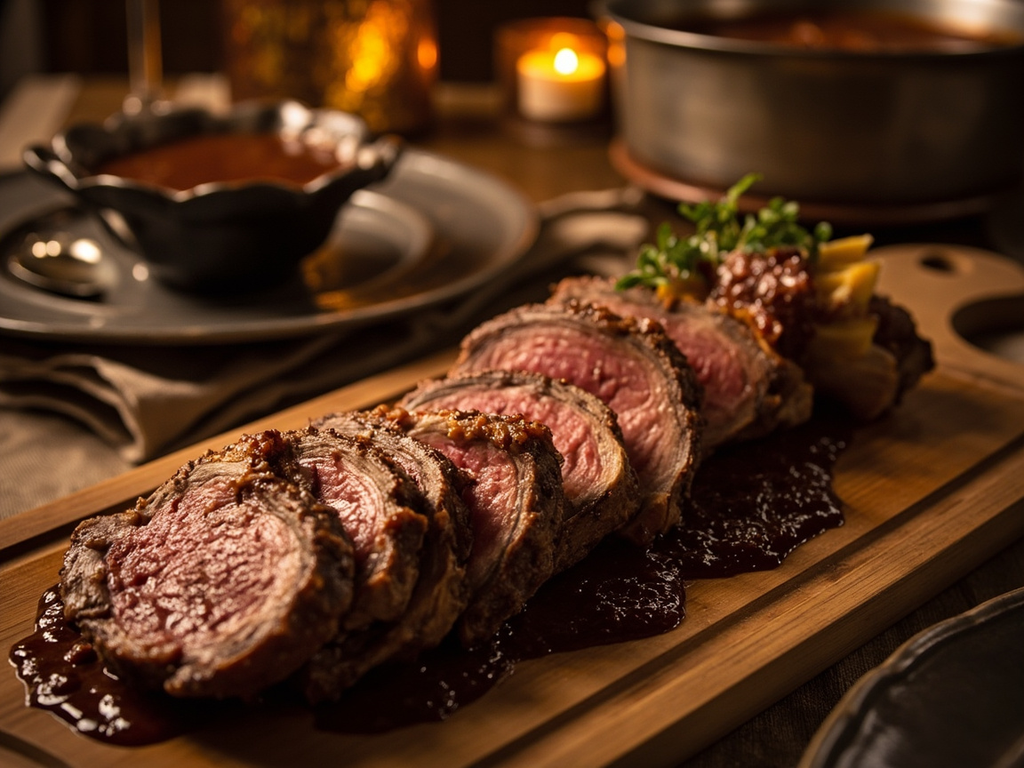
The contemporary twist : Present the whole capon on a wooden board with roasted green grape clusters, and serve the verjuice sauce in a small pewter pitcher.
Sources : Le Viandier de Taillevent · La Fleur de toute cuisine (Pierre Pidoux, 1543)
Ambroise Paré · Charactorium