 flip
flipBalangu — victory-day roasted mutton
Balangu — victory-day roasted mutton
Why this dish? Mutton and beef, says the Zazzau anchor, were reserved for feasts and offerings. Balangu — mutton roasted over embers, rubbed with spices and néré — is the meat of triumph: shared upon the return from one of Amina's conquests, the tambari (royal drum) beating the rhythm.
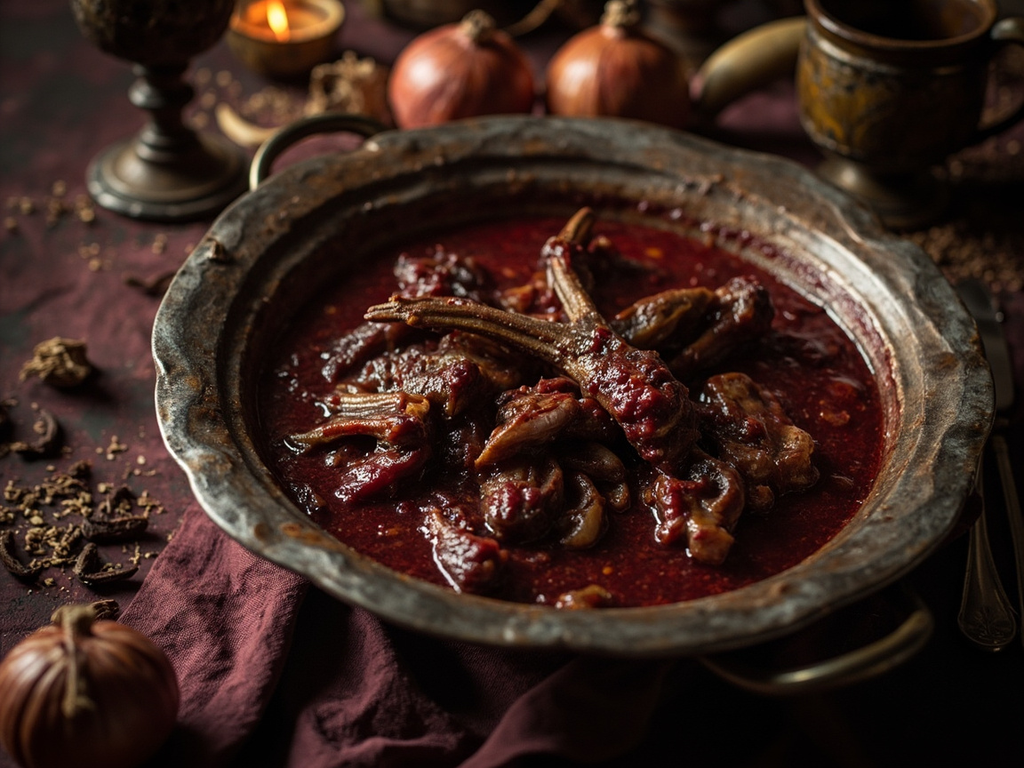
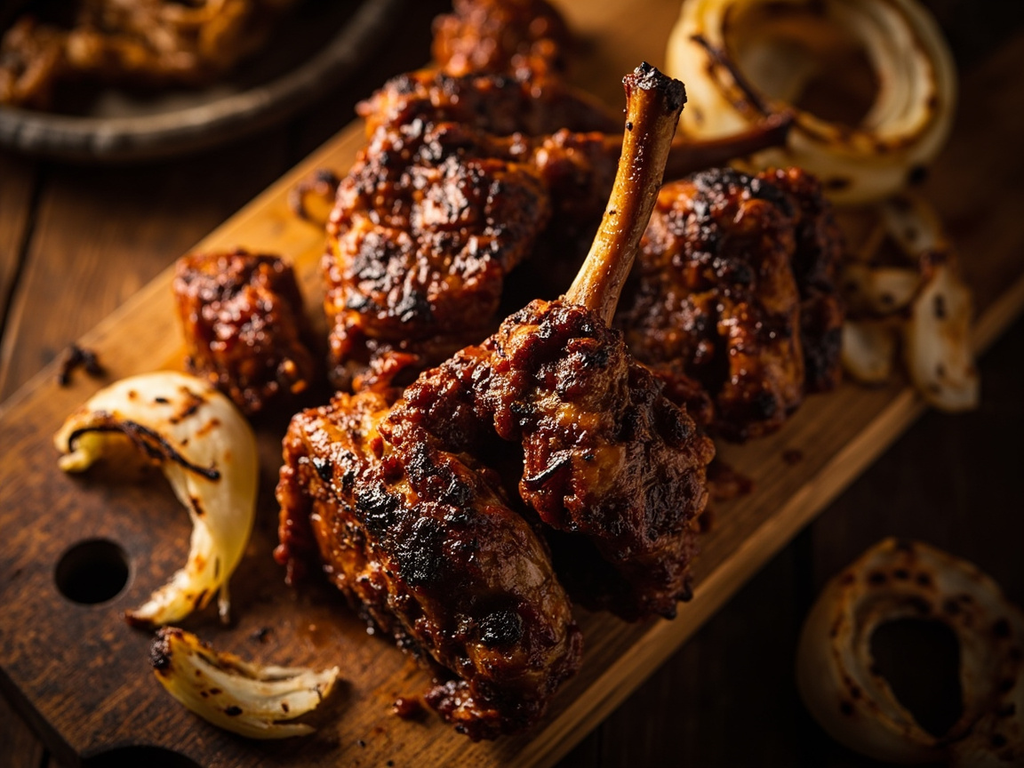
Pieces of mutton slowly roasted over embers, basted with a mixture of onion, ginger, grains of paradise, and fermented locust bean, until a fragrant crust and melting flesh. The meat of court banquets.
The day the territory grows, we spare no sheep. Open it, rub it with crushed néré, ginger, and grains of paradise, and let it take color on the embers while the tambari resounds in the court of Zazzau. The fat drips into the fire, the smoke rises — and each receives his share according to his rank. Eat the meat of my victories, and remember that a queen is also judged by the table she sets.
- •Mutton (shoulder, ribs) — according to diners (centerpiece)
- •Dawadawa (fermented locust bean) — one crushed cake (umami marinade, signature)
- •Onion — several (aromatic)
- •Ginger (citta) — a piece (aromatic)
- •Grains of paradise — a good pinch (heat)
- •Rock salt — to taste (seasoning)
Balangu — victory-day roasted mutton
Pieces of mutton slowly roasted over embers, basted with a mixture of onion, ginger, grains of paradise, and fermented locust bean, until a fragrant crust and melting flesh. The meat of court banquets.
Why this dish? Mutton and beef, says the Zazzau anchor, were reserved for feasts and offerings. Balangu — mutton roasted over embers, rubbed with spices and néré — is the meat of triumph: shared upon the return from one of Amina's conquests, the tambari (royal drum) beating the rhythm.
The day the territory grows, we spare no sheep. Open it, rub it with crushed néré, ginger, and grains of paradise, and let it take color on the embers while the tambari resounds in the court of Zazzau. The fat drips into the fire, the smoke rises — and each receives his share according to his rank. Eat the meat of my victories, and remember that a queen is also judged by the table she sets.
Ingredients (period version)
- Mutton (shoulder, ribs) — according to diners (centerpiece)
- Dawadawa (fermented locust bean) — one crushed cake (umami marinade, signature)
- Onion — several (aromatic)
- Ginger (citta) — a piece (aromatic)
- Grains of paradise — a good pinch (heat)
- Rock salt — to taste (seasoning)
Ingredients
- Lamb/mutton shoulder or chops — 1.2 kg (main piece)
- Dawadawa / soumbala crumbled — 2 tbsp (signature marinade)
- Onion — 2 (marinade)
- Fresh ginger — 1 piece 3 cm (marinade)
- Ground grains of paradise (maniguette) — 1 tsp (heat)
- Salt — to taste (seasoning)
- A little water — for the marinade paste (binder)
Method
- Blend onion, ginger, dawadawa, grains of paradise, and salt with a splash of water to form a thick paste.
- Generously rub the meat with this paste, marinate for 1-2 hours.
- Cook over embers (barbecue) at low heat, or in an oven at 180°C, turning and basting regularly.
- Allow 45 min to 1 hour depending on thickness, until a golden crust and tender meat that pulls apart.
- Cut into pieces, sprinkle with a little grains of paradise, and serve hot, shared at the center of the table.
How it was made : The whole beast or quarters were roasted over a bed of embers, with no complicated utensils: mastery of fire and the spice rub did everything. Fermented locust bean served both as a flavor enhancer and a surface preservative. The sharing of meat followed a strict etiquette that made court hierarchy visible.
The contemporary twist : Warrior's board presentation: sliced meat on an olive wood board, grilled onion wedges, a small bowl of grains-of-paradise salt for dipping — convivial and spectacular.
Sources : Heidi J. Nast, Concubines and Power: Five Hundred Years in a Northern Nigerian Palace, University of Minnesota Press, 2005
Amina of Zazzau · Charactorium