 flip
flipPaximadion, the Missionaries' Travel Biscuit
Paximadion, the Missionaries' Travel Biscuit
Why this dish? Cyril and Methodius traveled immense routes, from Constantinople to Great Moravia and then to Rome. Paximadion, a twice-baked bread that keeps for months, was the ration for travelers, soldiers, and Byzantine monks on the road.
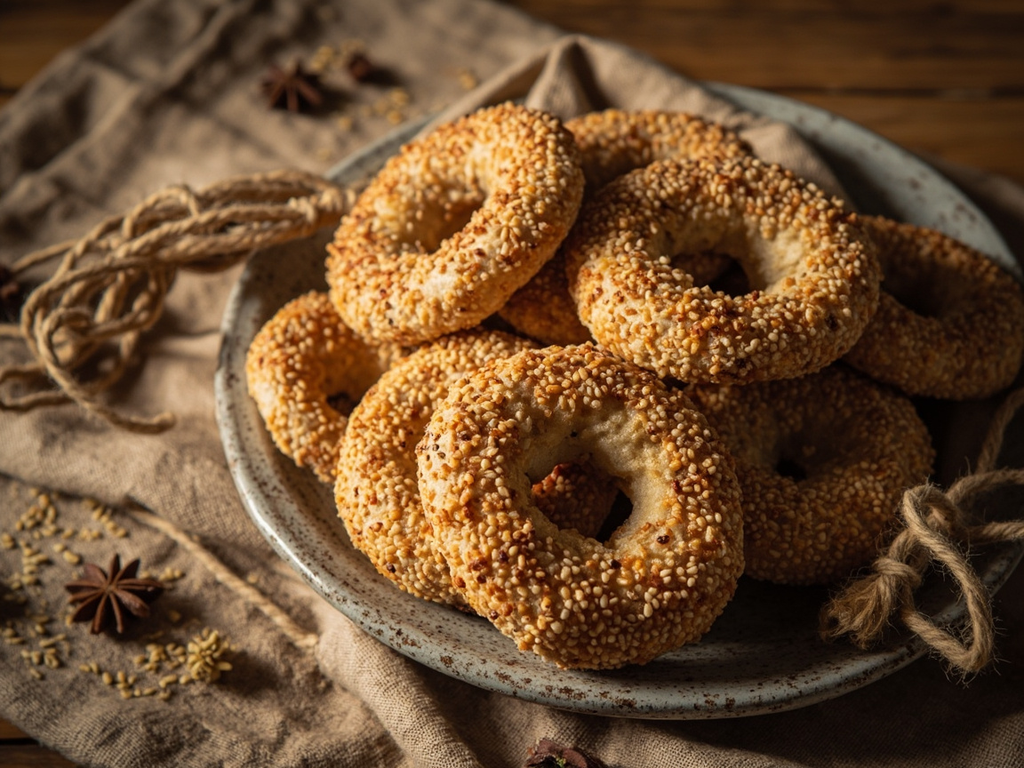
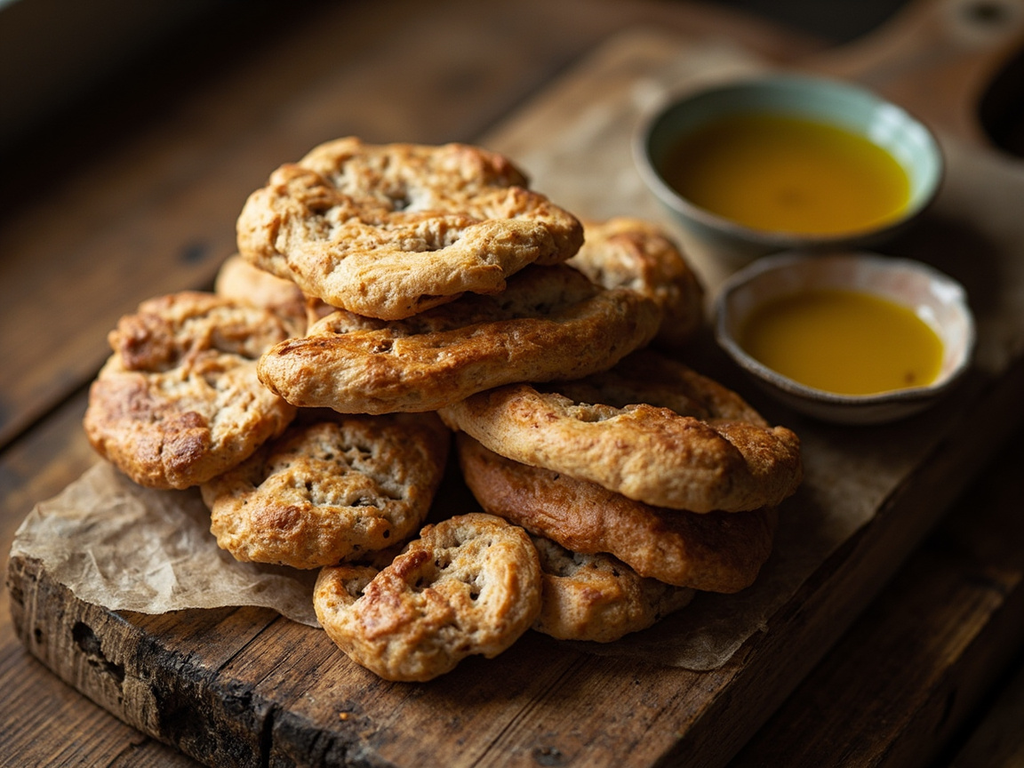
A flatbread of barley and wheat, baked and then long dried in the oven until hard as stone. It is softened in water or wine before eating. The indestructible bread of long missions.
The road to Moravia is long, child, and one does not always find a hearth on the way. So take the paximadion: we bake it once, then slice it and dry it again until it is hard as a pebble. Thus it does not mold, even after many weeks. When hunger strikes on the path, dip it in a little water or watered wine, and it becomes tender as on the first day. This is the bread of God's pilgrims.
- •Barley flour — two parts (rustic grain)
- •Wheat flour — one part (binder)
- •Sourdough starter — a piece (fermentation)
- •Salt — a pinch (preservation and taste)
- •Water — as needed (hydration)
Paximadion, the Missionaries' Travel Biscuit
A flatbread of barley and wheat, baked and then long dried in the oven until hard as stone. It is softened in water or wine before eating. The indestructible bread of long missions.
Why this dish? Cyril and Methodius traveled immense routes, from Constantinople to Great Moravia and then to Rome. Paximadion, a twice-baked bread that keeps for months, was the ration for travelers, soldiers, and Byzantine monks on the road.
The road to Moravia is long, child, and one does not always find a hearth on the way. So take the paximadion: we bake it once, then slice it and dry it again until it is hard as a pebble. Thus it does not mold, even after many weeks. When hunger strikes on the path, dip it in a little water or watered wine, and it becomes tender as on the first day. This is the bread of God's pilgrims.
Ingredients (period version)
- Barley flour — two parts (rustic grain)
- Wheat flour — one part (binder)
- Sourdough starter — a piece (fermentation)
- Salt — a pinch (preservation and taste)
- Water — as needed (hydration)
Ingredients
- Barley flour — 200 g (rustic grain)
- Wheat flour (T80) — 100 g (structure)
- Active sourdough (or 4 g dry yeast) — 1 tbsp (fermentation)
- Salt — 1 tsp (flavor and preservation)
- Warm water — about 180 ml (hydration)
Method
- Knead the flours, starter, salt, and water into a firm dough; let rise 2–3 hours.
- Shape into flat discs and bake at 220°C for 20 minutes.
- Remove, split the discs horizontally through the thickness.
- Return the slices to a very low oven (100–120°C) for 1 to 1.5 hours, until completely dry and hard.
- Store dry; to eat, briefly dip in water, diluted wine, or broth.
How it was made : Paximadion (which gave modern Greek paximadi and Italian pan biscotto) was the staple of Byzantine travel diet. Its double baking removed all moisture, ensuring preservation for months — essential for armies, sailors, and missionaries.
The contemporary twist : Rubbed with garlic and olive oil, topped with tomatoes in summer (an anachronistic wink!), it becomes modern Cretan dakos, a direct descendant of paximadion.
Cyril and Methodius · Charactorium