 flip
flipShip's Biscuit (Twice-Baked Bread)
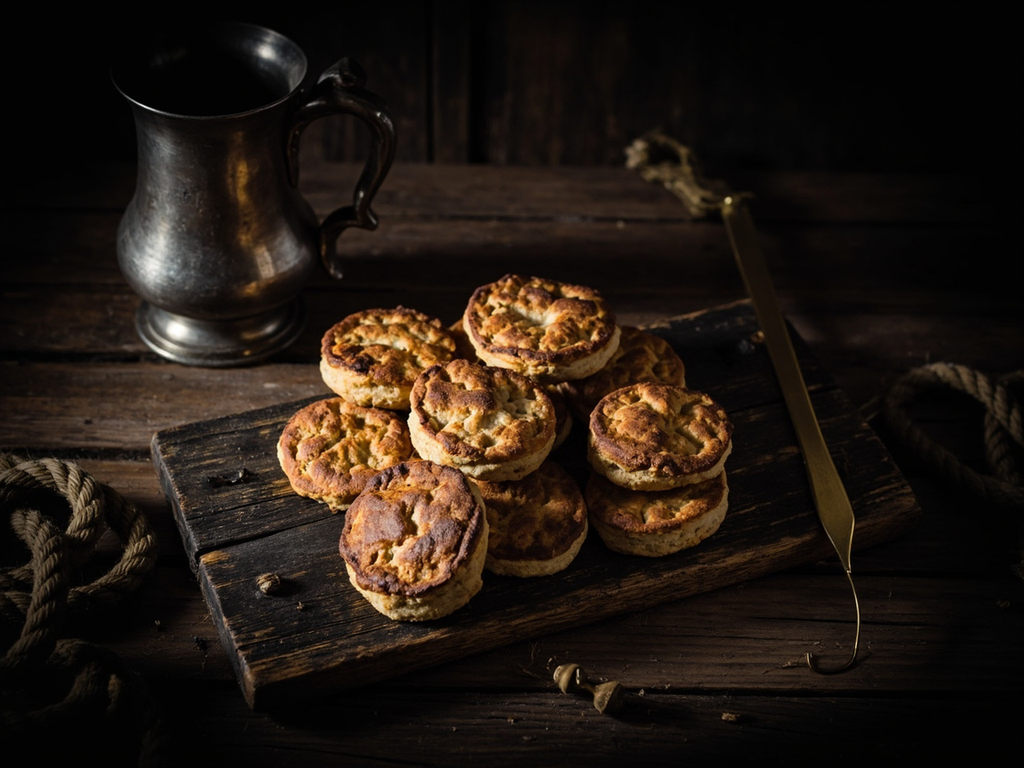
Ship's Biscuit (Twice-Baked Bread)
Why this dish? With no oven on board for fresh bread, the expedition embarked tons of biscuit baked in Brest before the 1791 departure: it was the daily bread for two years of navigation, from Tasmania to New Caledonia.
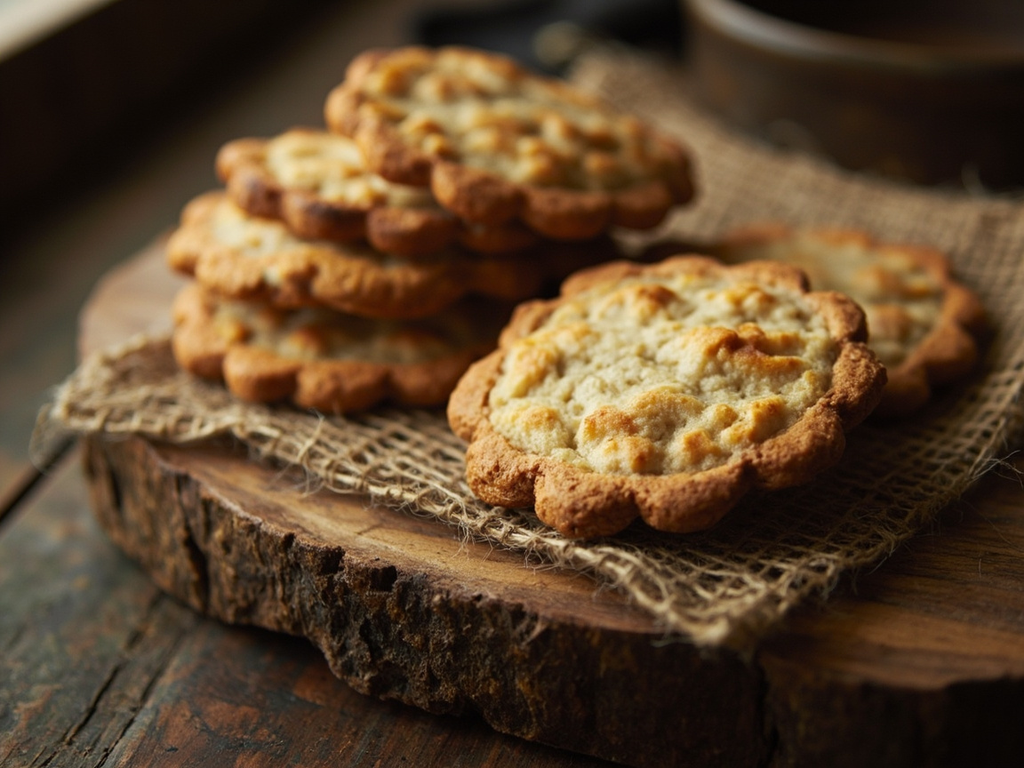
A flatbread of flour and water, barely salted, baked twice to dry it completely. Hard as wood, it keeps for years — provided it survives the weevils, which were driven off by banging the biscuit on the table.
Do not laugh at its hardness, my friend: this biscuit is our bread for two whole years. It is baked, then baked again, so that not a drop of moisture remains for mold to lodge. On board, we tap it on the table edge to drive out the creatures, then dip it in soup or wine to soften it. I have broken more than one while searching for La Pérouse in seas where no friendly land awaited us.
- •Wheat flour (sometimes mixed with rye) — as needed (base)
- •Water — just enough to bind (form the dough)
- •Salt — a pinch (preservation and taste)
Ship's Biscuit (Twice-Baked Bread)
A flatbread of flour and water, barely salted, baked twice to dry it completely. Hard as wood, it keeps for years — provided it survives the weevils, which were driven off by banging the biscuit on the table.
Why this dish? With no oven on board for fresh bread, the expedition embarked tons of biscuit baked in Brest before the 1791 departure: it was the daily bread for two years of navigation, from Tasmania to New Caledonia.
Do not laugh at its hardness, my friend: this biscuit is our bread for two whole years. It is baked, then baked again, so that not a drop of moisture remains for mold to lodge. On board, we tap it on the table edge to drive out the creatures, then dip it in soup or wine to soften it. I have broken more than one while searching for La Pérouse in seas where no friendly land awaited us.
Ingredients (period version)
- Wheat flour (sometimes mixed with rye) — as needed (base)
- Water — just enough to bind (form the dough)
- Salt — a pinch (preservation and taste)
Ingredients
- Wheat flour (T65 or T80) — 500 g (base)
- Water — 200 to 220 ml (minimal hydration)
- Salt — 1 teaspoon (flavor and preservation)
Method
- Mix flour and salt, add water gradually to obtain a very firm, dry dough (adjust barely).
- Knead firmly, then roll out to about 1 cm thickness.
- Cut into round or square galettes, prick them abundantly with a fork.
- First baking: hot oven (220°C) for about 25 min until golden.
- Lower oven to 120°C and let the biscuits dry for another 1 h to 1 h 30, turning them, until hard and dry.
- Let cool completely and store away from moisture. Dip before biting!
How it was made : Ship's biscuit was made in the ovens of the arsenals (Brest, Toulon) well before sailing. Baked twice — hence the name 'bis-cuit' — it could keep for years. Its enemies were not time but weevils and the dampness of the hold; sailors tapped it to dislodge insects and moistened it with soup or watered wine.
The contemporary twist : Serve them on a board with aged cheese and a glass of cider: an 'explorer's aperitif' version. Stamp each galette with an anchor before baking for a wink.
Sources : Jean Boudriot, La frégate (étude technique de la marine à voile) · Documentation des arsenaux de Brest et Toulon sur l'avitaillement en biscuit
d'Entrecasteaux · Charactorium